Pierce County talks of investing in ‘dumping ground.’ Would forming city there be better?
After years of being overlooked, the unincorporated communities south of Tacoma could be in line for investments from Pierce County.
Some people are tired of waiting and want to take bolder action.
Pierce County staff told the County Council on Feb. 22 that the communities along Pacific Avenue are expected to have the highest growth across the county in the coming years.
Elected officials agree existing infrastructure and services cannot support the expected growth. The county, which currently oversees Parkland, Spanaway and Frederickson, has started to look for $504.6 million of infrastructure improvements and ways to encourage development.
The County Council believes the area needs funding for roads, parks, sewer and water infrastructure. Some members have promised commitments, and Council member Marty Campbell has broached the idea of a bond.
“The growth is coming to this region, so I want to make sure that we are aggressive with finding funding,” council member Ryan Mello said.
One state lawmaker is ready to see if the mid-county communities can join together to create a city, rather than rely on the county for services.
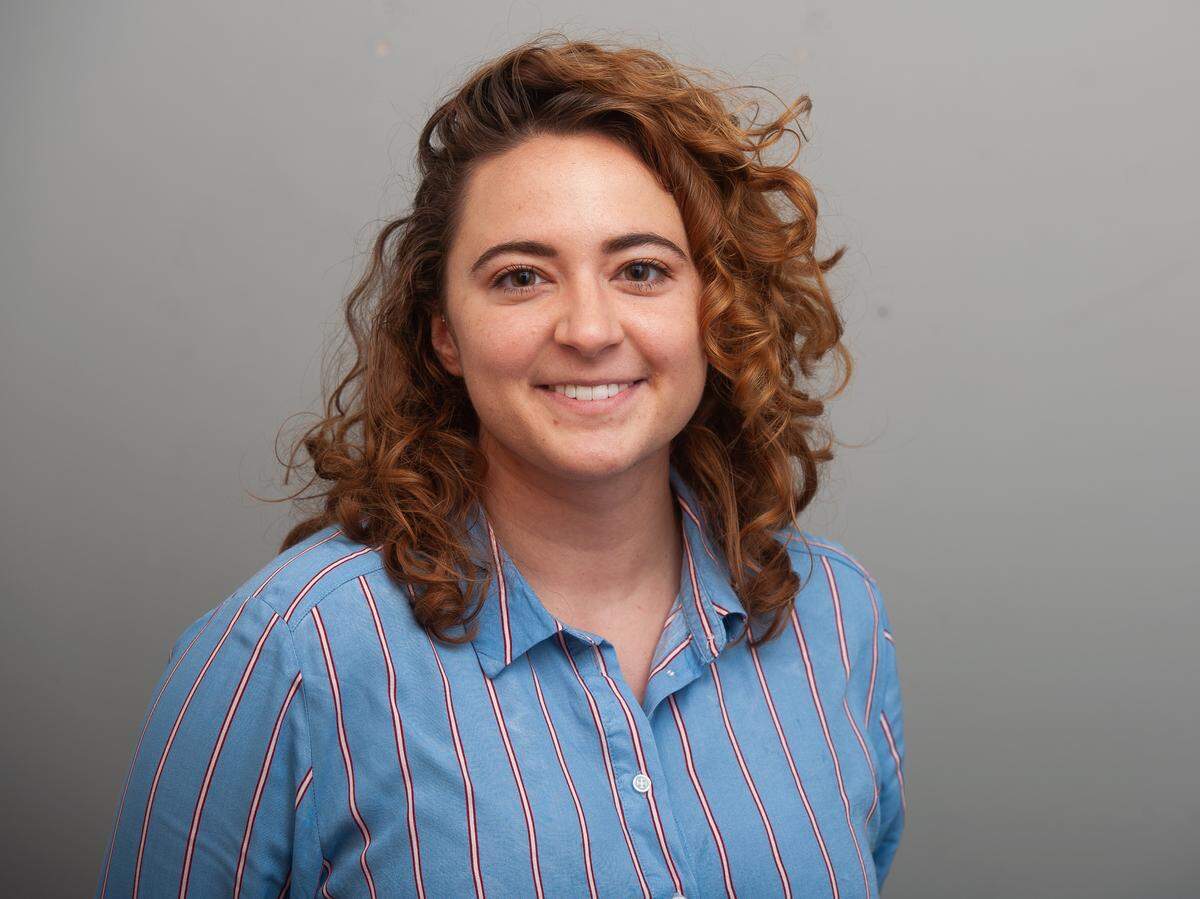
Democratic Rep. Melanie Morgan of Parkland has proposed $200,000 for an incorporation study to be included in the state’s biennial budget. The two-year budget has yet to be voted on in the state Senate.
“We have to deal with this, because everything, and we’ve known this for years, this is a dumping ground,” she told The News Tribune in late February. “There are decent families who live here and work here. There are decent businesses here, and schools that deserve to have the resources as a functioning community. And it is not.”
If passed, the study would review the idea and community interest of turning the unincorporated communities of Frederickson, Midland, North Clover Creek, Collins, Parkland, Spanaway, Summit-Waller and Summit View into a single city.
A city of those combined communities would be about the size of Bellevue, with more than 140,000 residents.
Frustration over lack of investments
Morgan has been frustrated by the lack of investment from Pierce County.
“We’re not getting what we need in terms of crime, addressing crime. We’re not getting it in terms of addressing homelessness. We’re not getting it in terms of transportation,” she said.
She pointed out that the mid-county area has no community center, no hospital and no adequate public transportation.
“God forbid that we should have a natural disaster right now, because this area has nothing. It has no resources to go to to sustain itself for three days,” the state representative said.
Pierce Transit executive director Ryan Wheaton said the agency is looking to invest $200 million in the Pacific Avenue corridor in the coming years, adding bus lanes and increasing route frequency.
“In terms of local service, we recognize that we need to improve that, and we’re certainly trying,” he told The News Tribune.
Fewer dollars for infrastructure projects in the mid-county communities have led to real-life implications. Morgan recalled the 12-year-old girl who was killed in Midland a few months ago while walking on a street with no sidewalks.
“She was walking on the very, very edge of that road on gravel. So it’s very easy to be hit,” she said.
.jpg "04SideStreet(A?).jpg")
Morgan is confident that funding for the $200,000 study will be included in the budget, even though this is her second attempt at the feasibility study. In 2020, her request was approved by both chambers, but removed by Gov. Jay Inslee in his effort to find more funding to respond to the coronavirus pandemic.
Campbell is a Democrat representing South Tacoma and parts of Parkland and Spanaway. He agrees that the county hasn’t done enough.
“I want to recognize the past issues of under-funding and the disproportionate impact it’s had on our community. We need to look through a lens of equity for the mid-county area as a priority for our near term and longer term,” he said in the council meeting.
The Pierce County Public Works Department published a study on the Pacific Avenue/ state (Route) 7 Corridor growth and needs over the next 20 years. The 80 unfunded projects — roadways, sewer and surface water infrastructure, bus routes and parks — are estimated to cost $504.6 million.
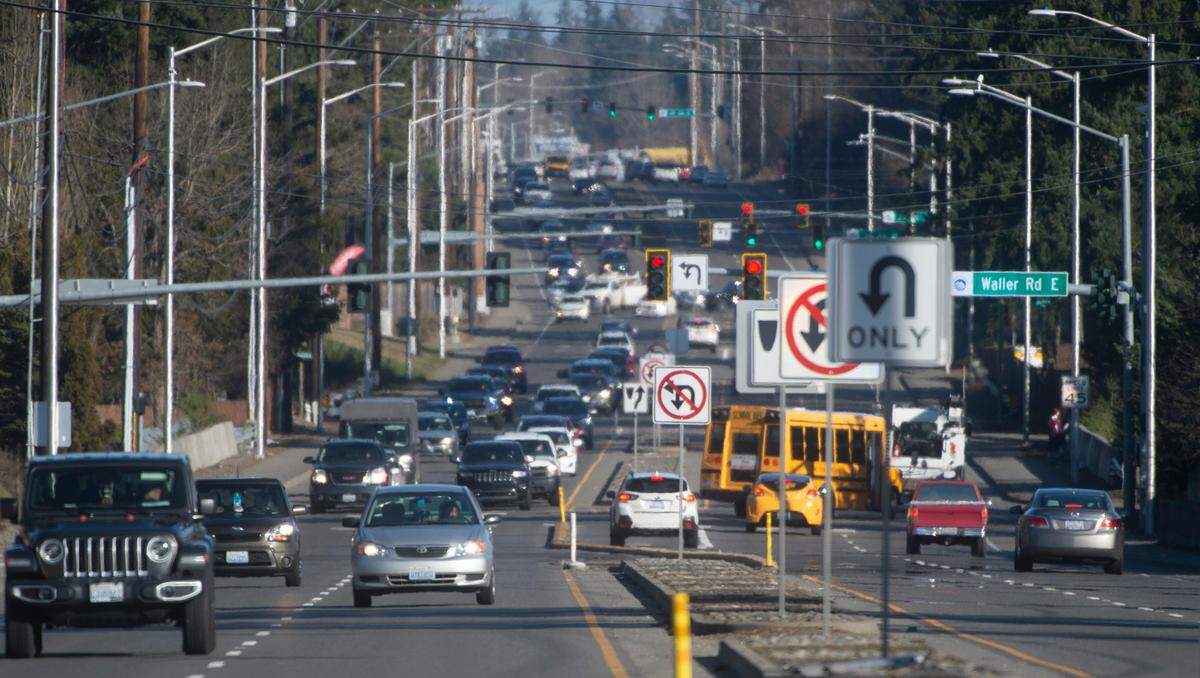
Staff focused on Pacific Avenue between 96th Street East and 208th Street East as a focal point for “future high-density, mixed-use, pedestrian-oriented growth.”
The study stressed the need for public transportation because traffic on Pacific Avenue already exceeds road capacity. State Route 7’s daily capacity is 35,200 vehicles. A county transportation study found that 36,900 vehicles use the road daily. Any potential changes to State Route 7, as Pacific Avenue also is known, would need to be done in tandem with the Washington State Department of Transportation.
“The analysis found Spanaway Loop Road South and State Route 7 experience evening vehicle volumes, which exceed roadway capacities—leading to traffic congestion in both the current and future conditions,” the study said. “Since road widening is not possible on either of these facilities due to physical limitations, these roads were determined to be at ‘ultimate capacity’—meaning that they will not be considered for widening.”
As early as 2026, Pierce Transit has planned a Stream Bus Rapid Transit route from downtown Tacoma to the future Spanaway Transit Center on State Route 7 and 208th Street East.
Other arterial roads were included in the study. The county has planned projects along 168th Street East and 159th Street East to improve ramps and sidewalks. County staff wants to add traffic signals to a road parallel to Pacific Avenue — Park Avenue South — and roads perpendicular to Pacific Avenue — 138th Street South and 152nd Street East.
Campbell told the council during a Feb. 22 subcommittee meeting that study and development plans should have been done 30 years ago.
“I really want to encourage that we move quickly on this, that we recognize the past, systemic issues of under-funding,” he said to the newspaper. “Now we’re embarking on this, we need to make sure that we understand it, and have it all laid out for us, which is what we’ve done.”
Gap between vision and reality
The county has made recent efforts to address some of Morgan’s concerns about homelessness and behavioral services.
Last year, Pierce County allocated its biggest sum to date on homelessness services and started plans to build a shelter in Spanaway.
The county devoted $253 million to triple homeless shelter space, provide more services and build hundreds of more affordable housing units.
The county also has passed a one-tenth of 1 percent sales tax for behavioral health services since Morgan’s initial incorporation study proposal two years ago. Most of the funds collected will expand existing wellness, prevention and early intervention programs, but the county is still looking to contract with providers to offer these programs.
Morgan said those efforts are not enough.
“We can do all the studies that we want to do and find as many budgets as we want to find. But is the money really going to the place that it really needs to reach? At this point, I don’t see that happening,” she said.
She wants the communities to have more localized elected officials, zoning laws that locals approve of, and municipal services like public works.
Pierce County Council also was briefed on a study by an independent consultant regarding economic growth for the mid-county. Consultants were tasked with finding ways to improve the business environment for the more than 800 businesses in Parkland and Spanaway.
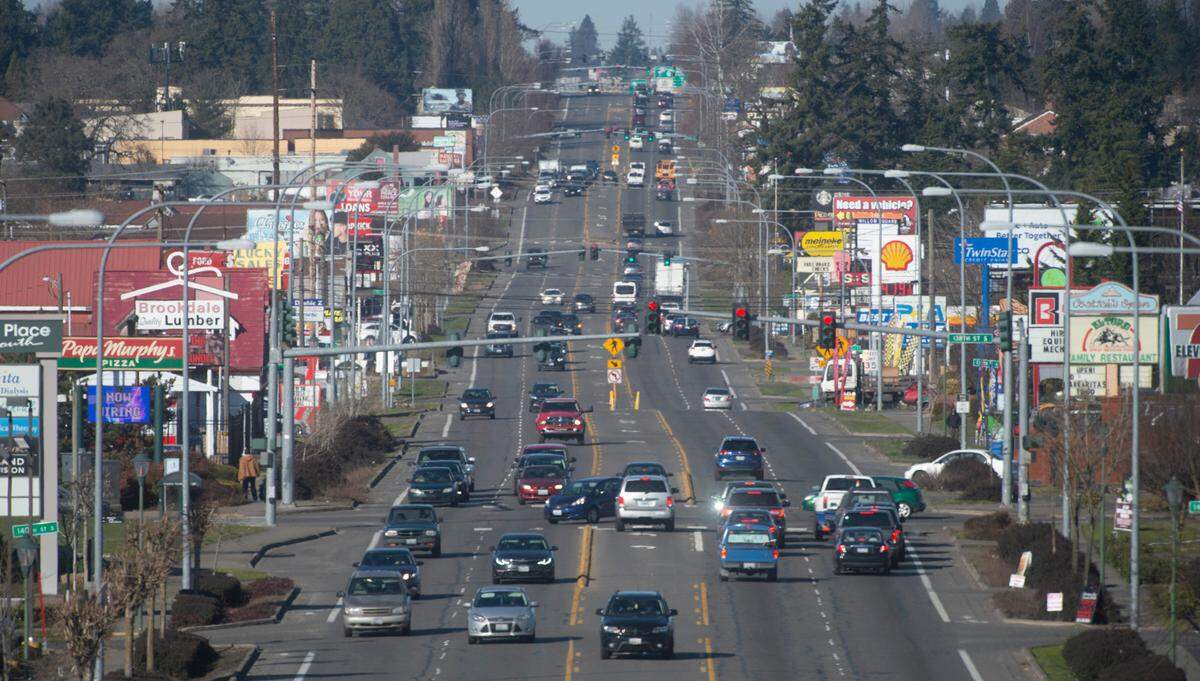
The group concluded that while the community wants a corridor that is economically vibrant, attractive, safe, and well maintained, the current reality is far from desired.
“Stakeholders believe there is a gap between that vision and today’s corridor, which has too little real or perceived investment, maintenance, infrastructure, safety, and other features,” the study said. “Overall, the corridor is characterized by low-density commercial development largely dating from the 1960s to 1980s, and stakeholders have expressed concerns around its appearance, function, ability to retain existing businesses and attract new businesses, crime, and vacancy.”
In addition to addressing infrastructure concerns, the study recommended the county create business associations, install more lighting, install flower baskets and clean up public and private spaces.
Morgan isn’t the first to try creating a city in the mid-county area to address local concerns, but some aren’t pleased with a potential community merger.
Years of effort to create a city have been underway in Spanaway. In 2019, some residents there started the long process of incorporation but ultimately fell short of the needed signatures to move forward.
Spanaway resident and advocate for incorporation, Marianne Lincoln, does not like the idea of the eight communities merging into one single city. She doubts $200,000 is enough for a comprehensive study.
“Larger is not better. In fact, for a new city, it is more complicated,” she said in an email. “There is so much to get set up in a new city: buildings, departments and record keeping that have never been done before. A larger city is at a higher risk of making more mistakes, on a lager scale.”
Lincoln said she doesn’t know of a single resident who would support a “mega city.”
“Frederickson doesn’t want to be Parkland. Spanaway doesn’t want to be South Hill., etc,” she said. “ It has a population eager to vote no on anything that might add to their tax bill because all the new housing over 50 years has made them ante up over and over for more schools and firehouses.”
Morgan understands the apprehension but said the communities need to think about the value of a larger tax base.
Lincoln hopes to start back efforts to make Spanaway a city when it’s safe to reconvene in person.
Campbell stressed that the decision to become a city is in the hands of residents, but he intends to use recent county studies as a catalyst for the county to start making needed changes.
To hold the county accountable for the area’s growth, Mello suggested that staff provide two to three updates on progress annually to council members.
“Ultimately, it’ll be watching to see what we find, holding us accountable,” Campbell said. “What you haven’t had before now is us zeroing in on an area and saying, show us everything. Watch us work through setting the priorities of those issues and funding.”
This story was originally published March 8, 2022 at 5:00 AM.