Tacoma’s renovated glass palace, with dart frogs and a living wall, set to re-open soon
From a distance, a wall in the W. W. Seymour Conservatory looks like it’s been recently covered with floral wallpaper. It’s actually hundreds of living plants, some in bloom, stretching from the floor to the peak of the 114-year-old glass palace.
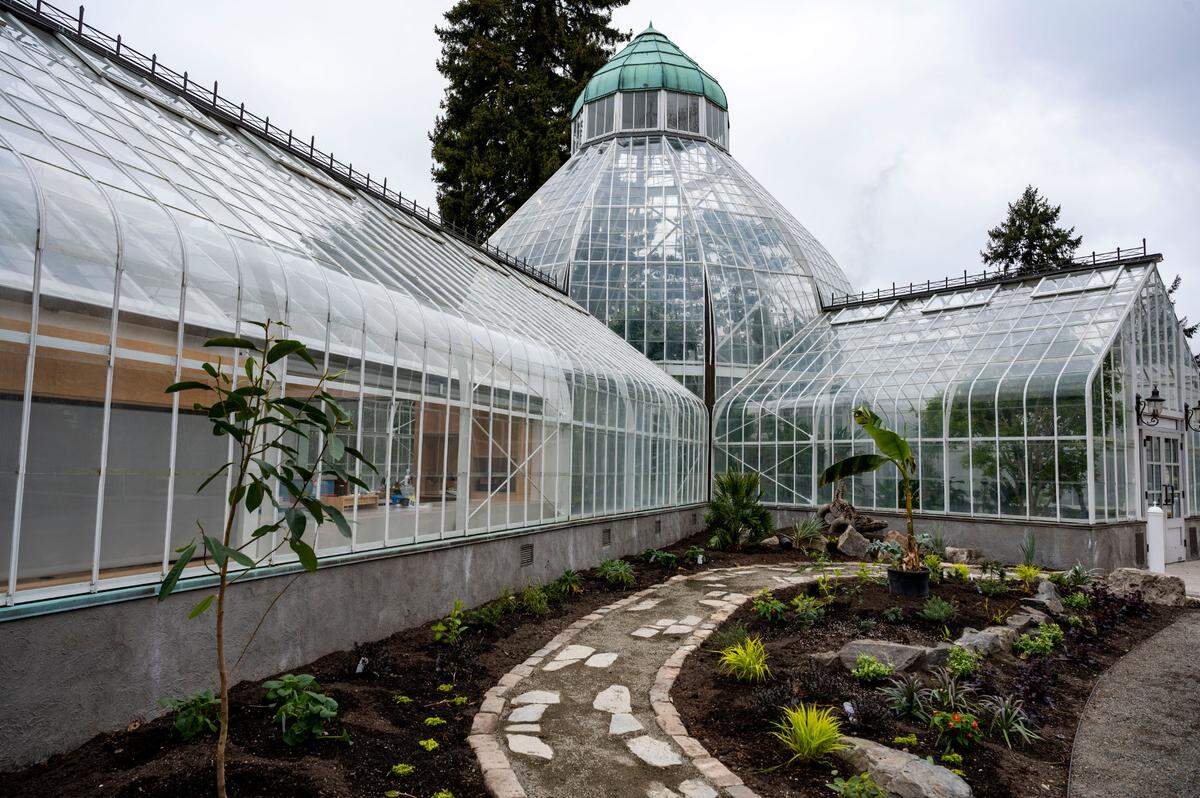
The new wall is one of several additions to the building in Tacoma’s Wright Park.
The conservatory is coming back together as Metro Parks Tacoma finishes a $2.73 million renovation that has kept the building closed for a year.
Seymour is one of only three public Victorian-style conservatories on the West Coast.
When it reopens May 14, the glass palace will have more plants and more animals than when it closed in March 2021. It also will have a new boiler, a stone-clad and repaired foundation and new structural supports.
They were necessary improvements, Metro Parks said. But, it’s the plants that draw people to Seymour.
LIVING WALL
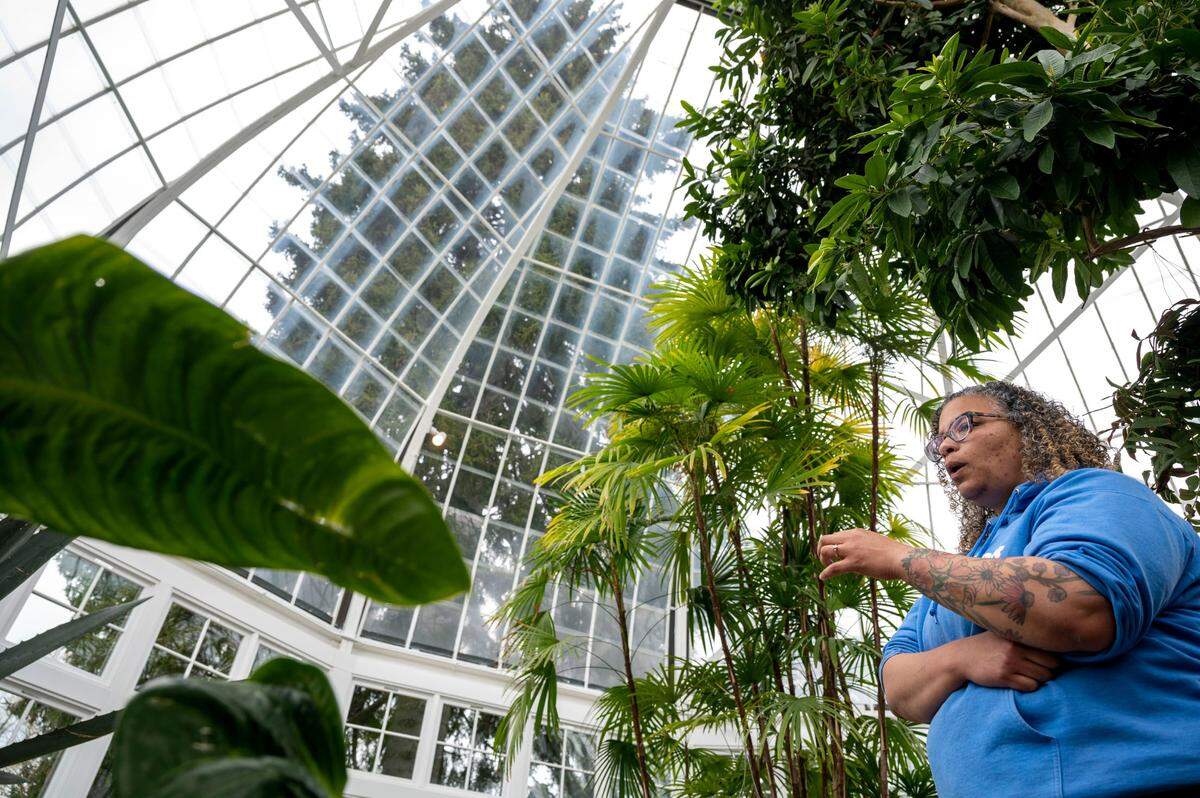
“We are a relatively small conservatory but we try to pack a punch with a lot of plants from all over,” said horticulturist Tyra Shenaurlt, Seymour’s manager.
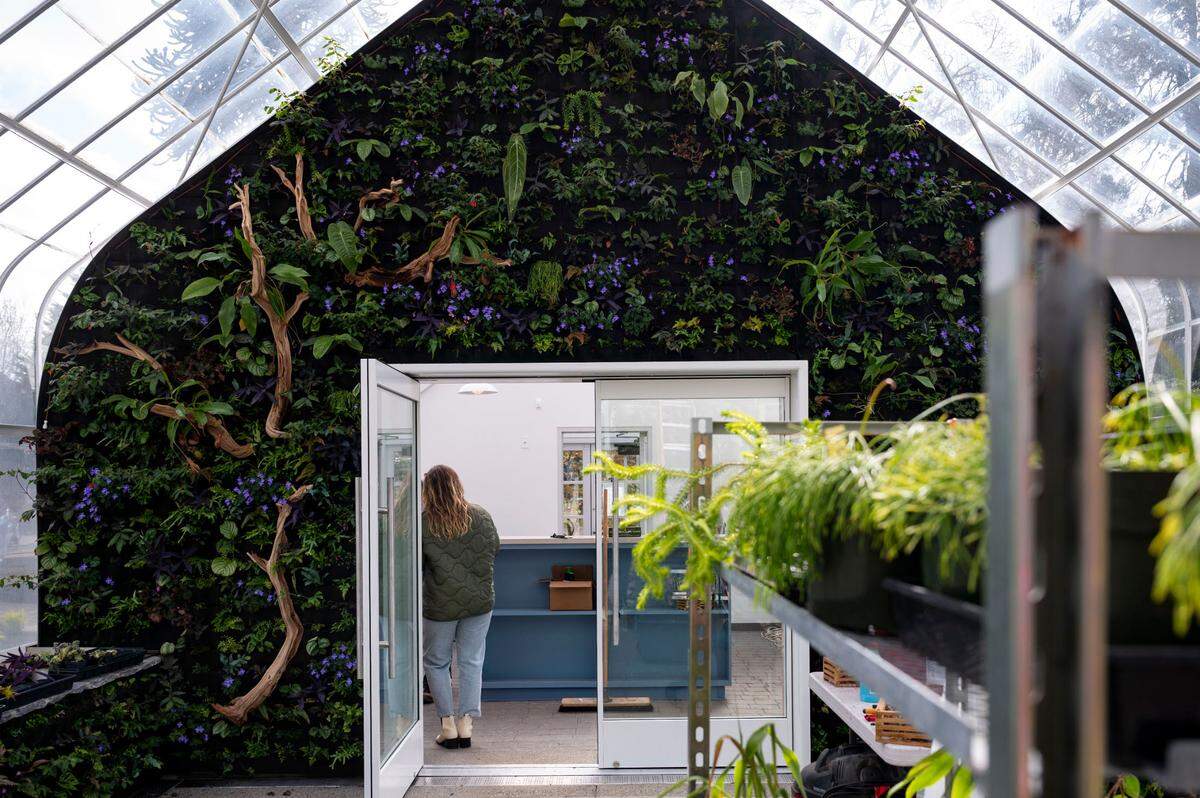
Nowhere is that more evident than the 1,200 plants on the living wall. Plants representing 30 varieties are tucked into mesh pockets, giving it the look of a gigantic shoe organizer.
It’s the most visually striking addition to the conservatory, and Shenaurlt said the plants will eventually grow to cover the black cloth and pockets. The plants are watered hydroponically.
DART FROGS AND FISH
Seymour’s koi and goldfish are at their winter residence in a Metro Parks greenhouse as their pond is refurbished. New koi have been donated to conservatory and will join the old school in a rehabbed indoor pond.
New to the facility is a vivarium — a large terrarium usually seen in zoos. It will be home to poison dart frogs.
Members of the Dendrobatidae frog family, the brightly colored amphibians are traditionally used by indigenous people in South and Central America to coat the tips of weapons.
Seymour’s frogs will be poison-free, Shenaurlt said, because the frogs don’t eat the particular rain forest bugs that give them their toxicity. Still, they’ll be safely behind glass.
PLANT VACATION
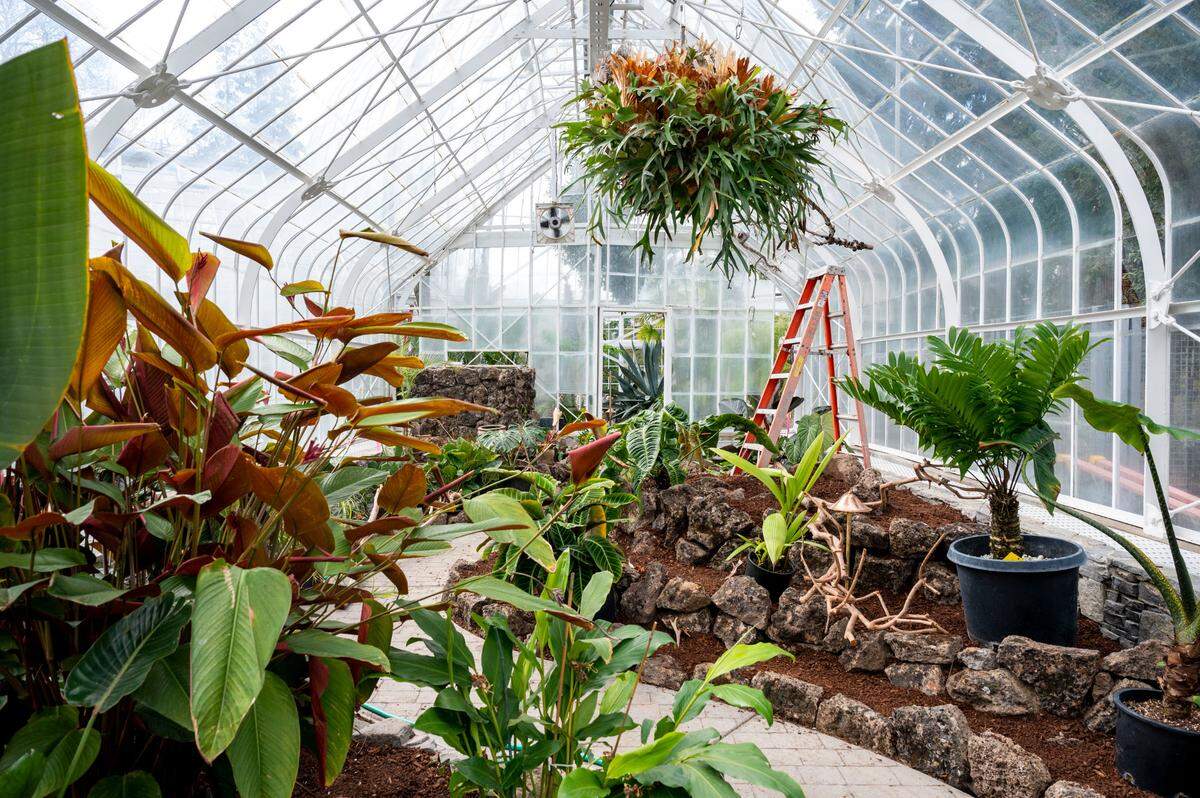
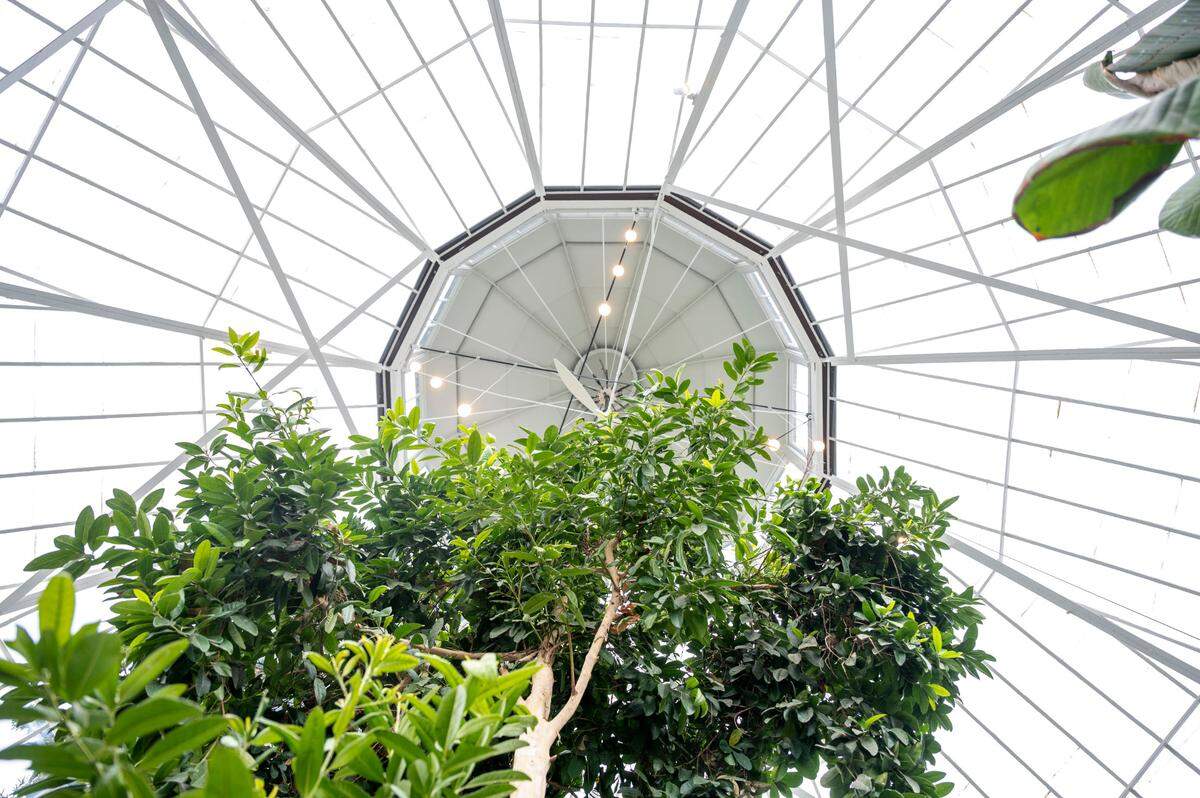
To accommodate interior construction, Seymour’s smaller plants were moved to offsite greenhouses while its Audrey II-sized plants were left in place. Look up to see the sky-scraping allspice tree, lending its presence and aroma to the conservatory.
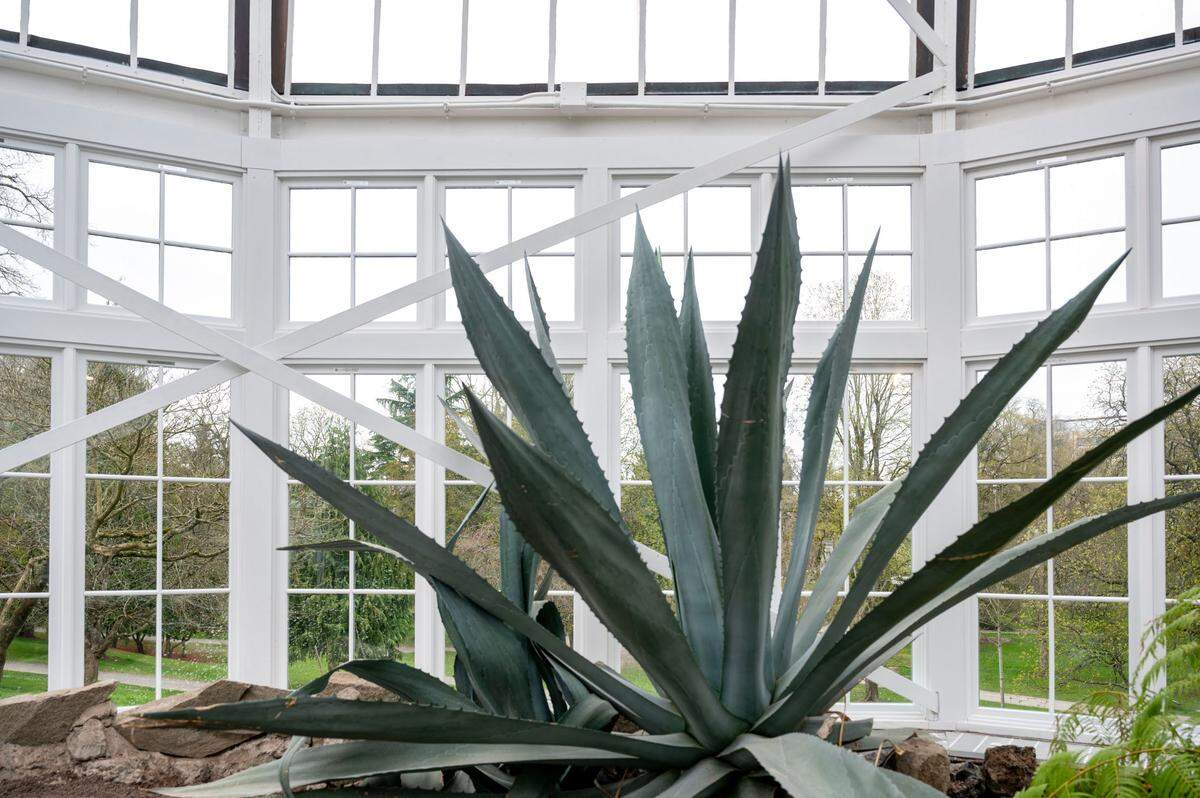
No visitor entering the building can miss a 10-foot-tall agave with its blue, sword-like leaves. Also known as a century plant, this one was planted in 1988. One day it will send up a 20-foot-tall stalk and bloom, Shenaurlt said. Then, it will die.
The crowd-pleasing lemon tree near the front door is still there, but missing is the Spanish moss that hung from branches. No worries, Shenaurlt said, it will return before opening day.
What she hopes doesn’t return are the occasional plant thieves and clippers who help themselves to Seymour’s greenery.
“We just have some people who really, really love plants,” Shenaurlt said. “Some folks will take cuttings surreptitiously. It’s a little heartbreaking when you have invested your time and energy and funds. And then, also, other people can’t enjoy it anymore.”
STATUES
Because of foundation work, plants had to be removed along the building’s exterior. New, tropical-like but hardy plants have been installed by Point Defiance Park crews. New paths have been built so visitors can take a closer look.
When the outside plants were removed, concrete statues dating from 1940s were revealed. They were created by, Clarence Deming, the second director of the conservatory.
Now, it’s easy to see the life-size alligator striking a whimsical tail-up pose to the left of the main entrance.
But some of the statues are problematic, Shenaurlt said. They borrow from indigenous cultures and are presented without context.
“He was an artist, he traveled around (the world), he got inspiration,” she said. “He wanted people to feel like they were traveling in these different countries.”
Intended to represent Polynesian designs, some of the figures might be better suited today watching over patrons in a tiki bar than a public garden.
“Do we remove them? I think that will be a conversation down the road,” Shenaurlt said.
NEW PLANTS
Rebuilt beds are filling up with new plants, many donated by Amazon in Seattle where its plant-filled spheres are a new city landmark.
A carnivorous plant bog is new to Seymour. Several pitcher plants were waiting to be installed this week. A few insects were buzzing above them, soon to meet their fate.
New plants were purchased from plant explorer Dan Hinkley’s nursery in Indianola and Far Reaches Farm in Port Townsend.
Begonias, a plant known for both its showy flowers and leaves, are filling up a bed with a variety of specimens.
New volcanic rock was brought in to line and build up the planting beds. Formerly, they were made with slag from the old Asarco smelter, Shenaurlt said.
In a corner, a coffee bush waits to be planted, its branches covered with “cherries” — the red fruit that contain the bean. Nearby is a pepper bush with green peppercorns blushing to pink.
Shenaurlt estimates 60 percent of the plants will be new when the project is complete.
MAY 14 PARTY
Seymour’s coming out party May 14 will feature community partners, food and festivities.
When it reopens, Shenaurlt hopes the conservatory will once again be a haven for visitors. She often asks them what they like about Seymour. Some say the lemon tree or the koi pond but often it’s not any one particular feature.
“They say, ‘I just need a moment. I just need a moment of calm around greenery and foliage. I need to be transported to some place,’” she said. “And I think that’s what the conservatory brings to our community.”