‘The people are fighting.’ Ukrainian students in Tacoma feel weight of war at home
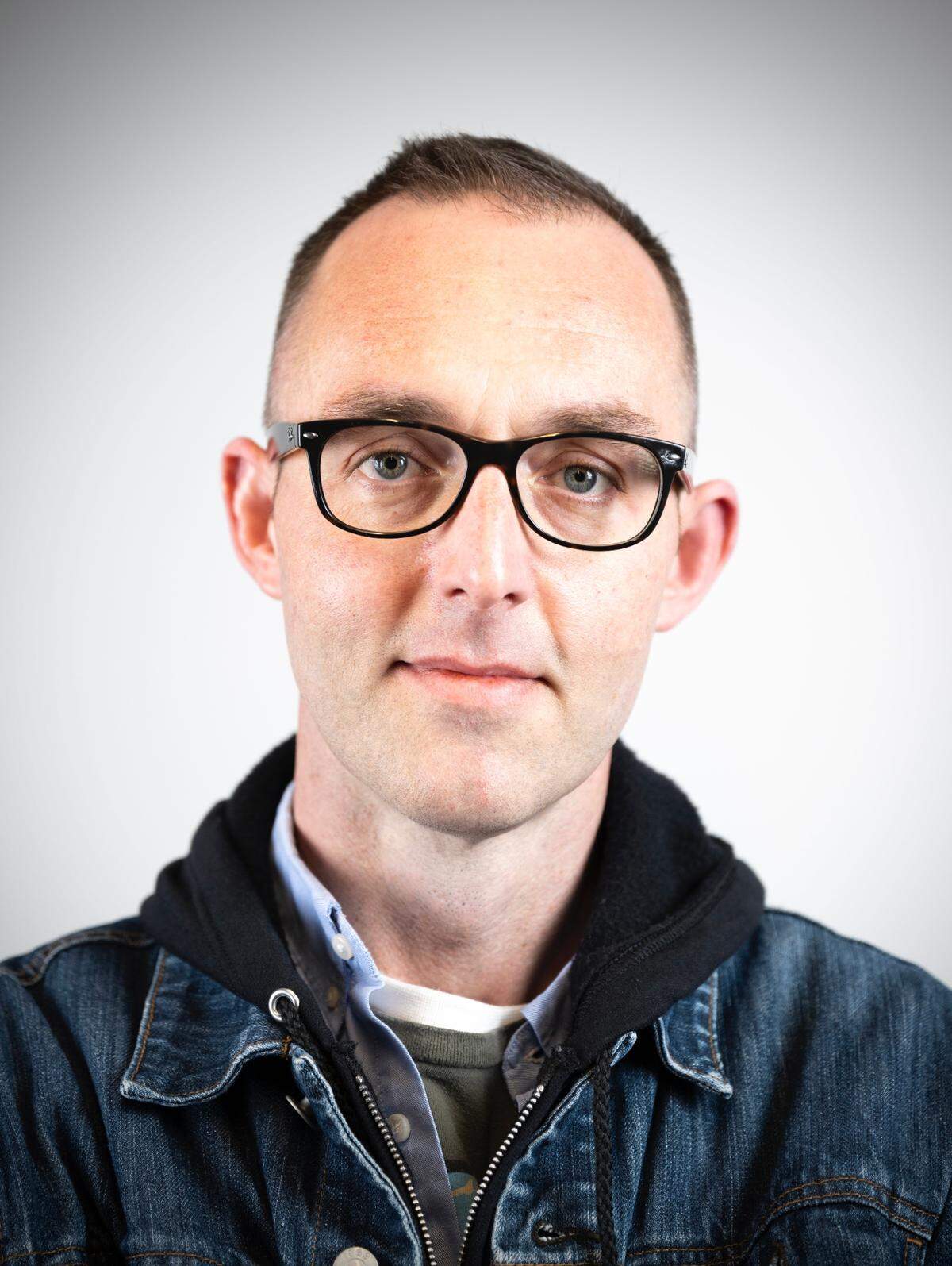
Illia Meserenko was at the gym when he heard the news. A 22-year-old international student from Ukraine studying information technology at the University of Washington Tacoma, Meserenko said the stories and messages that started to appear on his phone didn’t surprise him, but they shook him all the same.
It was Feb. 24, and Russian President Vladimir Putin had just announced the start of a “special military operation” in the country where Meserenko was born and raised.
As night fell in Tacoma, it was early morning in Ukraine. Meserenko recalls messaging and calling his friends and family back home to alert them — including his mother and father.
“I called all my friends or my relatives who live there — just in case to wake them up, and ask them, ‘What are they gonna do? — and everyone was awake. They heard the explosions,” Meserenko said.
As the conflict in Ukraine enters its second month, Meserenko is one of many living in the Tacoma area with deep ties to a country under attack. His family is from Kyiv — a pronunciation and spelling he stresses, given the history and his country’s proud independence from Russia — and the all-consuming reports from home he closely follows have often made him feel stranded and helpless, he said.
With war raging 5,000 miles away, The News Tribune spoke with Meserenko and 19-year-old Anastasiya Lemesh last week. Both are living and studying in Tacoma — Meserenko at UWT and Lemesh at Pierce College in Lakewood — and each expressed a range of complicated emotions, from disbelief and grief to anguish and steadfast resolve.
While their perspectives differed, Lemesh and Meserenko, whose fathers are both fighting in the war, agreed on at least two things:
They’re worried about their friends and family back home, and each believes Ukraine will ultimately maintain its independence from Russia.
“I’m proud of the people (of Ukraine) because — even though, like every other country we’ve got problems — the people are fighting,” Meserenko said.
“It shows that one of the most important ideas of the Ukrainian identity is freedom … and nothing and no one can take it from you.”
A long way from home
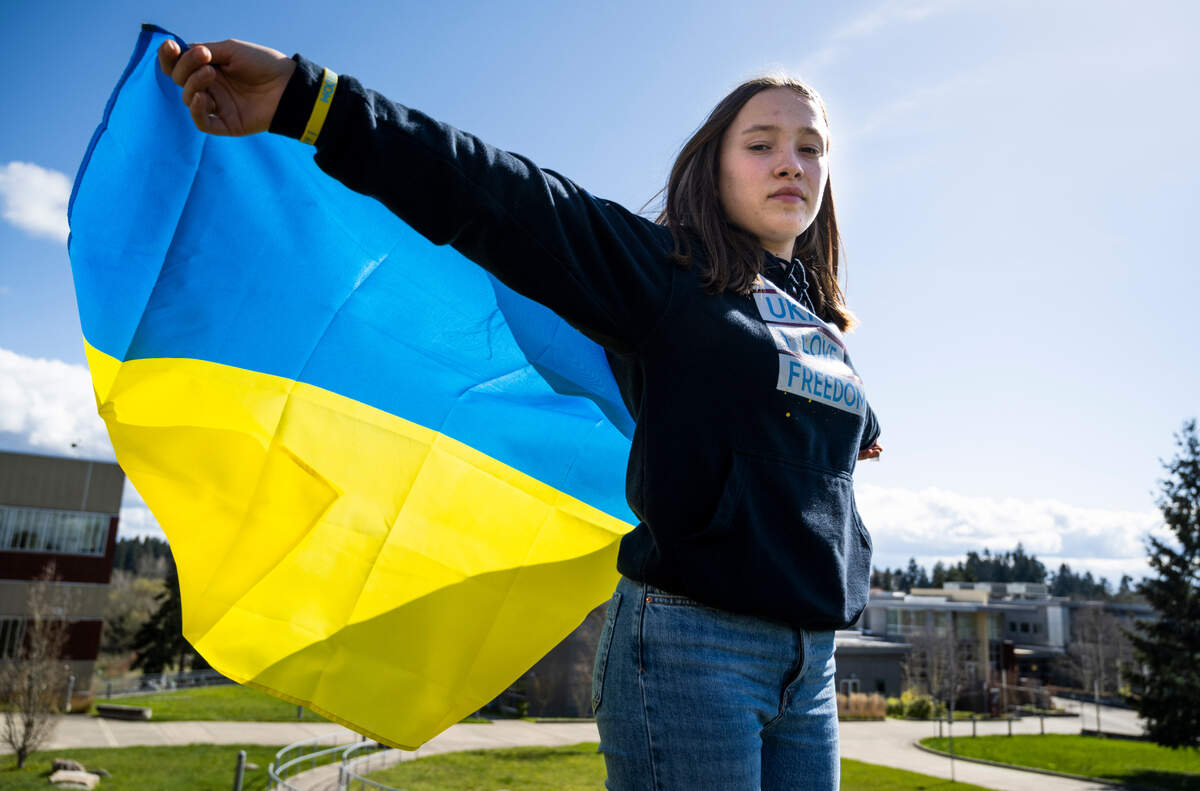
Lemesh sends every text to her parents or friends as if it’s the last they’ll ever see.
They live in Ukraine, surrounded by invading Russian troops.
Lemesh, 19, grew up in Chernihiv, a city about the size of Tacoma, 60 miles northeast of Kyiv and less than 60 miles from Russia. Ana, as she calls herself, came to the U.S. in December to study business management.
“If I were in Ukraine now … it would be much more dangerous for my life,” she said. “But, emotionally, it’s really hard to know that … I can lose my friends or family, or people who are important for me, like any minute.”
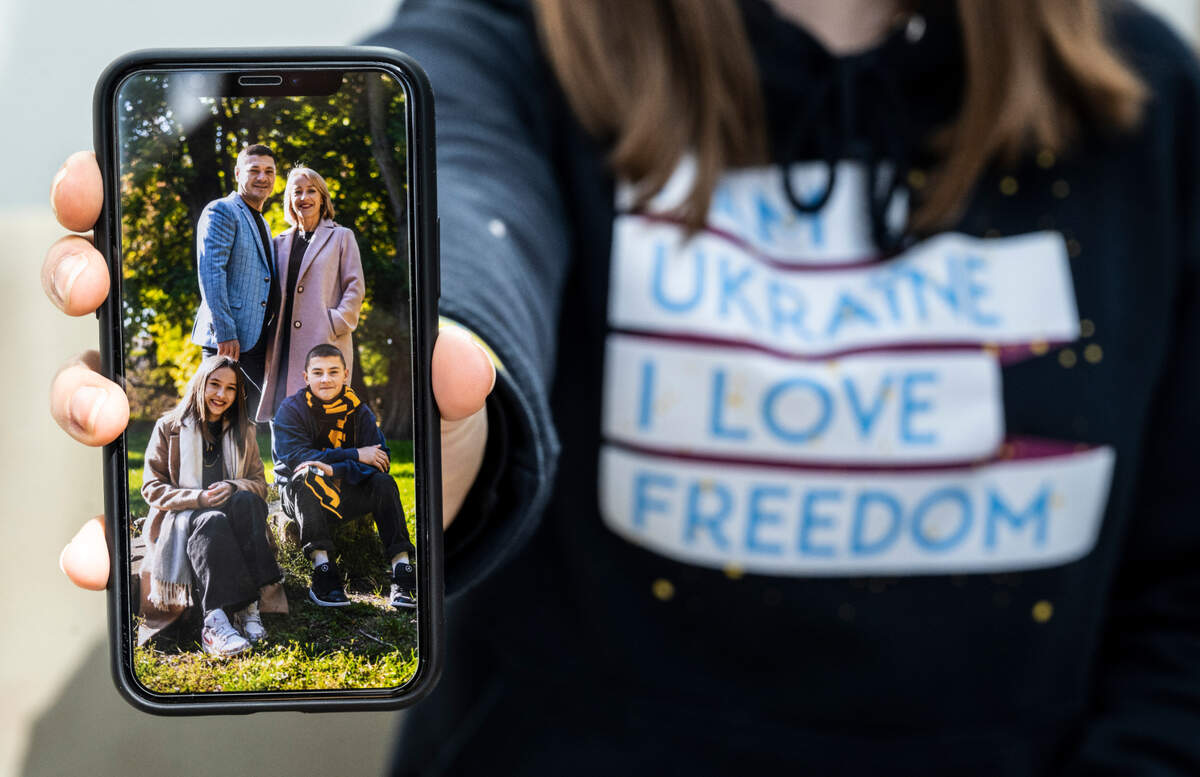
When she left her home, her father, Volodymyr, 47, was working for the Ukrainian equivalent of the Internal Revenue Service. Now, he’s serving in Ukraine’s military. Her mother, Nina, 49, and 14-year-old brother, Artem, had to evacuate their house with only minutes to spare during the first week of the invasion.
Bombs hit moments later, killing two neighbors, Lemesh said.
Her family now lives in an apartment building without electricity, heat or running water. The text messages they send to Lemesh are short, but reassuring.
Seated inside a building on the Pierce College campus, Lemesh pulls out her phone and reads a recent message from her father, first in Ukrainian, then in English.
“I want to fight for Ukraine,” her father’s text begins. “And if I die, I will know for sure that my daughter can be only proud of me. I can’t just go somewhere or sit at home and don’t do anything. I will defend our Ukraine for my kids, for future, for Ukraine. People say that I get older during this war, but I’m alive. I’m alive. Love you.”
Accustomed to conflict
For Meserenko, fighting between Russia and Ukraine is nothing new. While many Americans are only now learning about the tense history between the two countries, he’s been witness to bloodshed since 2014, and Russia’s invasion and annexation of Crimea.
Meserenko’s father, Vasyl Meserenko, who he described as a businessman, took up arms at the time — traveling to the Crimean Peninsula and drawing on the military training all young men growing up in the Soviet Union received.
When Russia invaded Ukraine in February, Meserenko said his father, who’s 54, returned to battle once again, helping to defend Kyiv.
At the same time, Meserenko said that his mother, Vasyl Meserenko, 50, fled the city, relocating to western Ukraine.
“A lot of people went from places like Kyiv … to the western part of Ukraine, where it’s safer,” Meserenko said. “We’ve got inside migration of people; more than 10 million people have moved from their home, and three million of this 10 million moved abroad, to Poland and Germany and all the countries that are our neighbors.”
Meserenko said that communicating with his family during the conflict has been challenging, but together with his two siblings — a sister studying in Vienna and a half brother living in Barcelona — he’s managed to stay in close contact.
Keeping tabs on his father, fighting outside Kyiv, has been the most difficult. There have been long periods of time when his phone is turned off to avoid detection by the Russians, Meserenko explained.
During what he described as his most recent mission, his father was wounded by a nearby explosion and ended up in the hospital with multiple ailments, including a head injury, a damaged lung and a broken leg.
Initially, Meserenko said his father hid his injuries from the family, to avoid causing concern.
“He was supposed to lay on the ground as soon as he understood that something was shooting near him, but because of that he got shrapnel on the left part of his body,” Meserenko said.
“I was just talking with him. He feels better. He’s probably going to go home. But, I didn’t know (if he was OK) for a long time.”
Casualties and heartache
Lemesh honed her English skills as a student at Bethel High School in the 2019-2020 school year. Her expenses were paid by the U.S. State Department. The program also involved volunteer work.
It wasn’t her first stint as a foreign student. She’s studied for shorter periods in Greece, Poland and the nation of Georgia.
“I always was interested in the world and in other cultures, in other countries and other people,” she said.
She returned home to graduate from her high school in Chernihiv, then spent a year in Kyiv while studying at the Ukrainian Leadership Academy.
Situated on the Desna River, Chernihiv is a city with a 1,000-year history, punctuated with ornate churches and monasteries topped with onion domes.
It’s no stranger to invading hordes. A grandson of Genghis Khan sacked the city in 1239. Nazis occupied it during World War II.
Now, Chernihiv is once again under siege.
Lemesh said Russians have the city surrounded on three sides, but the situation changes daily, if not hourly.
Her father doesn’t share military news with Lemesh for security reasons. But, she said, he’s near Chernihiv.
Lemesh’s mother and brother keep busy delivering food, water, clothing and medical supplies to those in need. Her mother joyously told Lemesh that she recently took a hot shower at a friend’s house, her first in weeks.
Less than two months after Russia’s invasion of Ukraine, Lemesh already has a growing list of injured and dead friends.
A friend, also named Ana, lost a leg when her house was hit by a bomb. The amputation had to be carried out in an unheated hospital.
“But she’s alive,” Lemesh said.
In the texts she exchanges with friends and family, they usually avoid talk of the war and stick to pleasantries. It’s their way of injecting some light into a harrowing time.
That was a case with a recent message she sent to her friend, Ivan, 19, a soldier in the Ukrainian military. They had met at the Leadership Academy.
“And he was like, ‘Hi, how are you?’,” she recalled excitedly, sounding a bit like the teenager she is. “I sent him like a video message and he was like, ‘You can’t even imagine how I’m happy that you sent video message because I’m just so happy to see you’.”
It was the last exchange she had with Ivan. He was killed a few days later.
Support at school
Meserenko first visited Washington state when he was 15.
His family has friends in the area, he said, and it was during that trip that he started thinking about the possibility of pursuing his education in the United States.
Meserenko arrived as a student a year later, a 16-year-old, and studied at Edmonds Community College — where he sharpened his English skills — before applying to all three branches of the University of Washington.
The University of Washington Tacoma was the first to accept him, Meserenko said, so he relocated to the area and enrolled. He’s now in his second quarter at the school.
Initially, Meserenko planned to study sociology, but after two years of community college, he changed his major to information technology. He’s hoping to use the skills he acquires to pursue a career back home.
“My plan right from the beginning was to come back after graduation to Ukraine,” Meserenko said. “I think there are a lot of possibilities that I can do with my knowledge that I will gain here. After studying here for such a long time, I’ll have different perspective of view … and I think it will be helpful in the future.”
Since Russia invaded Ukraine, Meserenko said concentrating on schoolwork has often been impossible. His teachers have been supportive, he said, granting extensions on assignments and giving him the space he needs to process what’s going on back home.
“For the first week, I almost didn’t sleep, because we got different time zones,” Meserenko said.
“I didn’t sleep because the news came during the night, and I just didn’t feel it’s right to go to sleep until I understand what’s going on right now.”
Returning to Ukraine
When Lemesh left Ukraine just before Christmas, a war still seemed unfathomable, she said.
Now, she doesn’t know how the war will end. But, she said, the Ukrainian people are fighting for more than independence.
“I know how much they value freedom, dignity, human rights, honesty, and like all the things that Ukraine is fighting for,” she said.
Lemesh said Russian president Vladimir Putin will have to kill 90 percent of the Ukrainian people before the country will fall. They will not become slaves to a dictator, she said.
“I’m not doubting that Ukraine will win,” she said. “It’s just the question of price. And time.”
“I never considered Russia to be our brother nation,” she says. “I do respect Russian people because it’s not their fault.” But, she added, her respect is only for Russians who don’t support the war.
Lemesh is disappointed that so many Russians support Putin’s invasion, the killing of civilians and the breaking of humanitarian laws.
She hopes the world will give more support to Ukraine. The consequences of the war will spread far beyond the borders of Russia and Ukraine if Putin prevails, she said.
Lemesh plans on staying in the U.S. until she gets a degree from a four-year university. She can’t go home until she does. She hopes, by then, Ukraine will be free.
“I don’t want to live in a country where I will be a slave where I will not have any rights, where I will have to do what the government tells me to do,” Lemesh said.
While it’s always been Meserenko’s plan to return to Ukraine — and he’s regularly visited the country during summer breaks from school — his desire is now stronger than ever, he said.
Watching the battle play out from afar eats at him, he said. He sees his friends, family and his fellow Ukrainians standing up to Russia’s unprovoked aggression, and it makes him want to be there to help.
His emotions yo-yo, he explained, depending on the news he reads from the front lines.
“It’s like the mood during the day changes from terrible to wonderful,” he said.
Meserenko said he’s not sure when he’ll be able to return to Ukraine, but he hopes it will be as soon as this summer.
He’d like to volunteer, he said, because he knows “there are lots of things that have to be done — rebuild something, clean something.”
If Meserenko does return in summer, he’s hoping the fighting will be over.
Like Lemesh, he has faith Ukraine will prevail.
“Everyone believes in victory for Ukraine because of the way people and our army fights,” Meserenko said.
“We really believe it’s going to end soon, because there is no point to continue, only if Putin wants to kill more Russians.”
This story was originally published April 5, 2022 at 5:00 AM.