Thwarted by thuggish frogs, WA newts couldn’t find love until students came to rescue
There’s a march underway in the wild spaces of Lacey. Over leaves and around blades of grass, thousands of tiny feet plod with a single-minded purpose.
It’s mating season for the rough-skinned newt.
The lovelorn amphibians, in search of a mate, have spent hours, maybe days heading toward a group of retention ponds on the edge of Saint Martin’s University where they can finally find a desirable ... fence?
A newt-proof fence, it turns out.
The fences were built to contain an undesirable invasive amphibian, the African clawed frog. But now, biologists have discovered, they’re preventing newts from entering the ponds to breed.
“This is a classic conservation issue where we’re mitigating the negative impacts of this invasive species,” said Saint Martin’s biology professor Megan Friesen. “But in doing so, we’re creating a conservation problem for one of our native amphibians.”
Now, Friesen and her students have started a newt bucket brigade to help the languid amphibians over the wall. More than 1,000 of the salamander species have been transported to their watery love nests.
African clawed frogs
The frogs were discovered in 2015. Soon, fences were installed by the city of Lacey and state Department of Fish and Wildlife to contain them, according to Max Lambert, the department’s “frog guy”.
The frogs aren’t from around here, as their name implies, and aren’t welcome. They eat a lot, Lambert said, and their favorite meal seems to be their neighbors.
“We’re really worried about them eating our native species of amphibians as tadpoles or even young fishes,” Lambert said.
Fish and Wildlife has tried trapping them, but it doesn’t take many to repopulate a pond. The department obtained an Environmental Protection Agency permit to add salt to the ponds in 2017. That killed more than 6,000 of the frogs.
But, some survived.
“The frogs actually crawled up the storm sewers out of the pond,” Lambert said. “And then when the water cleaned up, they recolonized it.”
A gathering of newts
Friesen and Lambert began collaborating in 2021 to study the clawed frogs in the hopes of stopping their spread.
In March, they met at the ponds to perform a routine check on frog developments, Friesen said. But, it was the salamanders that soon dominated their observations.
“We just started noticing that there are all these newts trying to get into the different stormwater ponds and being trapped,” she said.
In some areas, the newts are piling up like a chain-reaction wreck on a salamander highway.
“It was just nuts,” she recalled. “They were walking through gravel, which is a weird place to see an amphibian.”
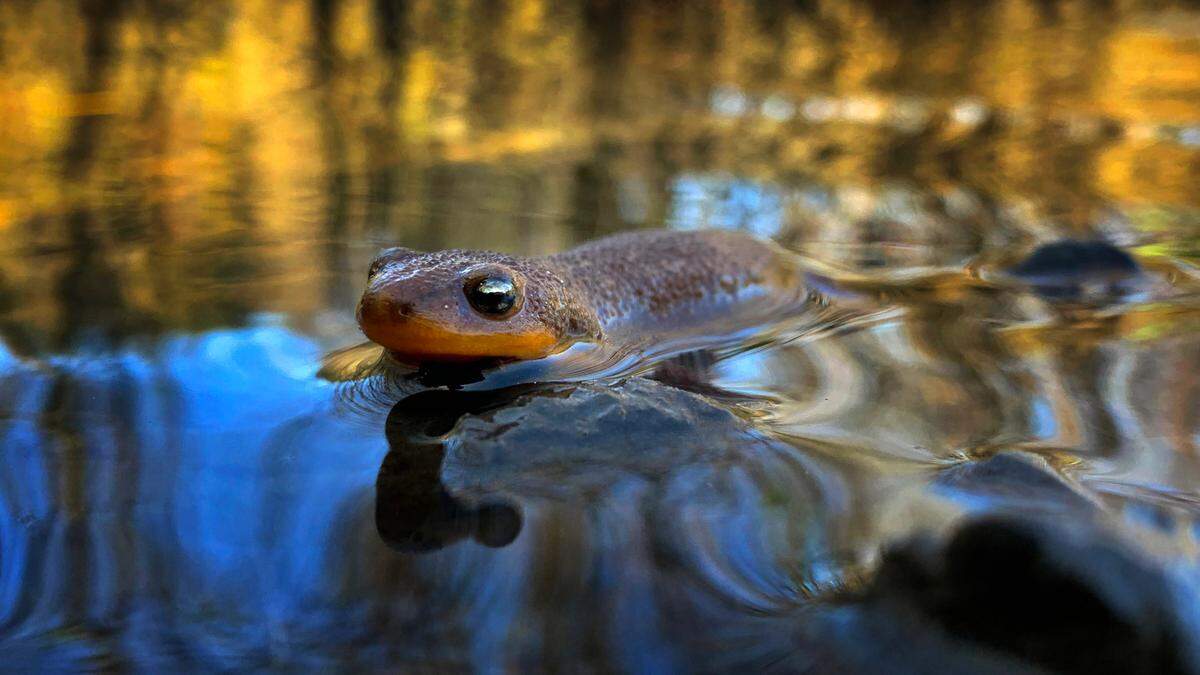
They found over 100 newts that first day.
“Once we moved them over the fence, they all just went straight into the water,” she said. “Like it was clear that that was their natural migratory path … into this waterway.”
The ponds are relatively new, so both Friesen and Lambert think the newts have colonized them.
Take this frog and ...
If there was a most wanted list for invasive species, the African clawed frog would be on it. It’s not the frog’s fault. It was introduced all over the world for a reason that by today’s standards seems bizarre.
“People who wanted to know if they were pregnant would literally pee on an African clawed frog in the doctor’s office, and if they were pregnant, they had enough hormone that would actually cause the female clawed frogs to ovulate and lay eggs,” Lambert said.
The frogs were then released into ponds.
Today, there are over-the-counter pregnancy tests, but the frogs remain coveted by the black market pet trade. They are illegal to possess and sell in Washington.
Non-native species can spread diseases to native species, including salmon. The frogs have tested positive for ranavirus.
It’s not known how the frogs were introduced to the Lacey ponds. Often, a well-intentioned pet owner releases an animal into the wild rather than kill it. But, that action can lead to the death of native species.
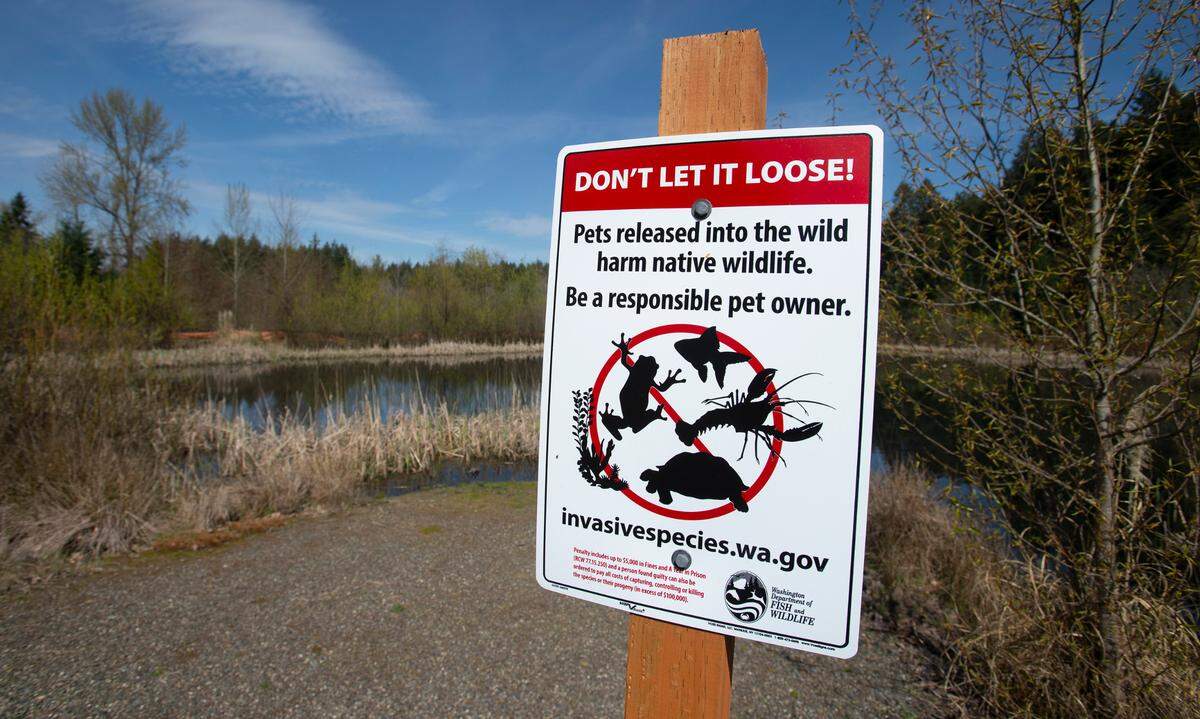
The frogs are almost fully aquatic, Lambert said, and will only cross land if their pond dries or if a poison is introduced.
Other populations of the clawed frog have been found in Bothell and Issaquah, Lambert said.
Newt helpers
Friesen’s students were already set to work at the ponds, trapping the clawed frogs for study.
The problem, though dire for the newts, would become a lesson for the students.
The students collected 250 stuck newts the first day Friesen took them to the ponds.
She asked for volunteers to monitor the ponds. Nearly half her students volunteered.
Now, students go to the ponds nearly every day to rescue and relocate the newts.
Since then, more than 1,000 newts have been collected by Saint Martin’s students and immediately released into the ponds they were desperate to reach.
On a warm day last week, Saint Martin’s environmental studies students Dioni Roberson and Quin Butler were patrolling the fence, buckets in hand.
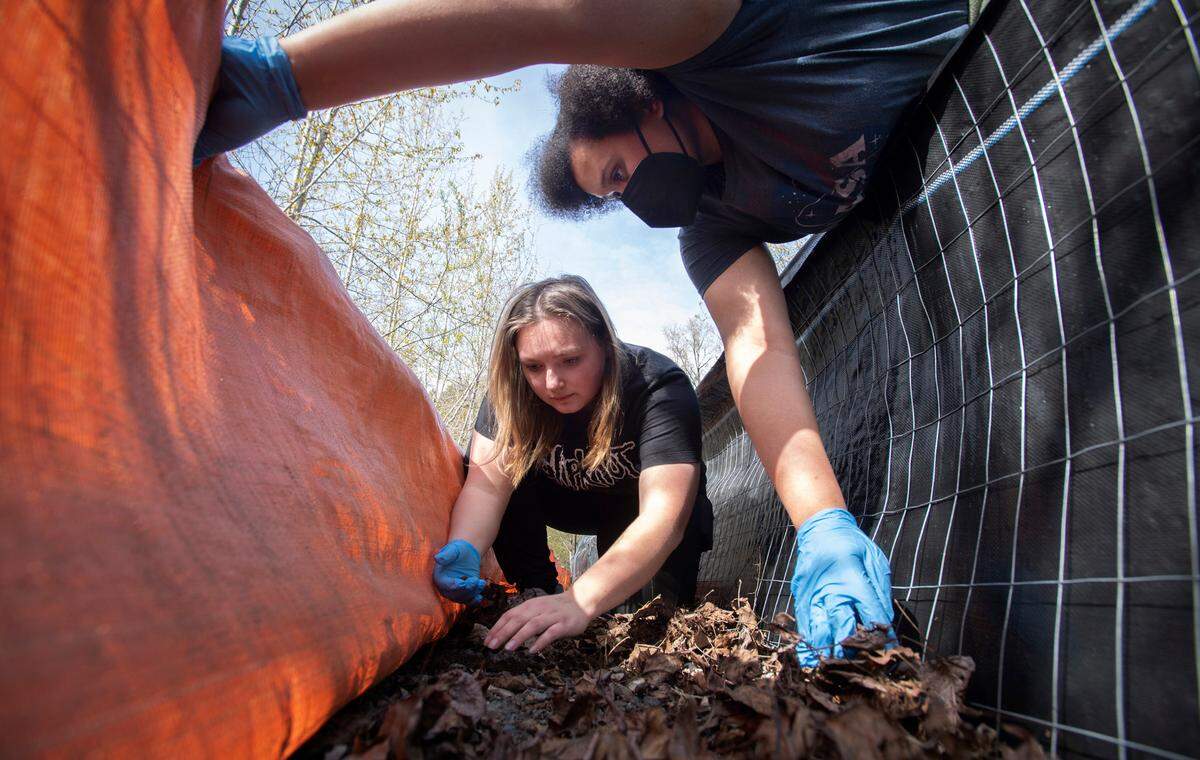
Each of the three ponds is surrounded by two plastic cloth fences just short enough for a person to step over but monumental for newts. Occasionally, the students would find a newt hiding under a fold.
The women said the work helped them understand amphibian life cycles. It was also an extension of their childhood.
“Growing up, I used to play a lot in the mud and dirt and collecting all types of bugs,” Roberson said.
“I would always catch snakes, and we would just have pet snakes and then, obviously, our parents would make us let them go,” Butler said.
Nearby, a garter snake slithered along a fence.
The students were enthusiastic about helping the newts, particularly the young ones, just an inch long.
“I find a great interest in them,” Butler said. “I think they’re really neat. And I think they’re really cute, too.”
Butler is making the newts the subject of her senior research project.
Consider the newt
It’s hard not to like a newt. They are the sloths of the forest, a slow-motion gecko. Their forward facing eyes and hint of a smile seem better suited to a cartoon character than an amphibian.
When they are not making a bee-line to water, they’re often found in the forests of the Pacific Northwest. They are dry to the touch and will squirm slightly when picked up. Their dark brown tops contrast with bright yellow-orange undersides.
All newts are salamanders but not all salamanders are newts. The rough-skinned newt ranges from California to British Columbia and as far east as Idaho and Montana. They eat slugs, worms and any other invertebrates they can find.
The newts, which can reach 8 inches long, use their tails to swim deftly in water but are sluggish on land where they spend most of their lives.
Even the laziest predator could gobble them down with little effort. But the newts live, unmolested, thanks to an effective deterrent.
They contain tetrodotoxin, one of the deadliest natural poisons on the planet.
“You don’t have to be fast if you are really, really toxic,” Friesen said.
Handling the critters is considered low risk, but students wear gloves.
“You could handle a newt and not get sick or poisoned from touching it,” Lambert said.
The Saint Martin’s effort isn’t the only salamander-saving effort underway. From California to Michigan, volunteers shepherd them safely across roads. Cars do not mix well with salamanders.
Unanswered questions
It’s not yet known if, in a few weeks or months, there will be airport-like lines of newts waiting to go through the fences on their return trips.
If so, students will be ready to help them.
There’s also the question if the newts will survive their encounters with the frogs. The frogs might be immune to the effects of tetrodotoxin, which is produced by bacteria that live in and on the newts.
Could the well-meaning students just be delivering newt takeout to the voracious frogs?
Friesen doesn’t know yet.
“There’s so many more questions from a conservation perspective,” she said.
This story was originally published April 15, 2022 at 5:00 AM.