Hidden Tacoma estate boasts observatory, windmill, water views. It can be yours for $5M
An iron gate tucked among a row of homes on Tacoma’s West End marks the inconspicuous entrance to a fantastical estate 70 years in the making. Until now, it’s been one of the city’s best kept secrets.
The Wiborg Estate, begun as a modest honeymoon cottage by a Tacoma industrialist for his wife, has just gone on the market for $5 million.
That 1,200-square-foot house is today a nearly 10,000-square-foot home with a swimming pool, a gentleman’s cave with a 1,000-bottle wine cellar, and jaw-dropping views of the Tacoma Narrows.
But it’s the combination of other features on the 6-acre estate that makes this Tacoma property unlike any other. A farm, astronomical observatory, covered bridge, Dutch windmill, running streams and other unexpected gems fill the acreage.
All of it is hidden within a bustling city.
“It’s one of those places in Tacoma that hardly anybody knows about,” said the estate’s co-executor and asset manager Linda Selfors.
Legacy
The estate located on Tacoma’s western slope at 6608 N. 46th St. was the creation of a brilliant and successful man for his wife and family.
James “Jim” Wiborg was the son of Swedish immigrants. His father was the manager of the Dickman Mill on Tacoma’s Ruston Way. That site is now a city park.
In 1948, Wiborg married Ann Spaulding Rogers. The couple met when Wiborg, a recent University of Washington graduate, tutored the UW sophomore in mathematics.
In 1953, Jim Wiborg started Western Plastics which went on to become the largest plastics pipe company on the West Coast. In 1966, as president of United Pacific Co., he helped merge the company with Van Waters & Rogers to create the chemical distribution company Univar Solutions. In 2020, the company had $8.2 billion in revenue.
The publicity-shy couple were philanthropists. The Greater Tacoma Community Foundation, Mary Bridge Children’s Hospital, YMCA of Pierce and Kitsap Counties and the Tacoma Art Museum are among organizations the couple supported.
One of his four children, John Wiborg, described his father as “energy in motion” when the elder Wiborg died in 2015 at age 90.
The Wiborg Estate is a reflection of a couple who had many interests and the wealth to indulge them. While the couple entertained close friends and family at the home, it has remained unknown to the city that surrounds it.
“It was very understood from the first time I came to work for them — the first day — that their privacy was utmost, and they they cherished their privacy,” Selfors said.
The house
The 6-acre estate is what’s left of an original 100 acres Jim Wiborg’s parents purchased in the 1940s when Tacoma’s West End was only sparsely developed. They gave two acres to Wiborg. He later bought adjoining parcels.
While the couple had other homes, this was their main residence, Selfors said.
“He could have lived anywhere, but he really loved the city of Tacoma,” she said.
Ann Wiborg died in the home in November 2021 at age 93. The couple’s children put the estate on the market in August.
“There’s a lot of memories here that they cherish quite a bit,” Selfors said. “But ... they think it’s time to pass it on and let somebody else enjoy it.”
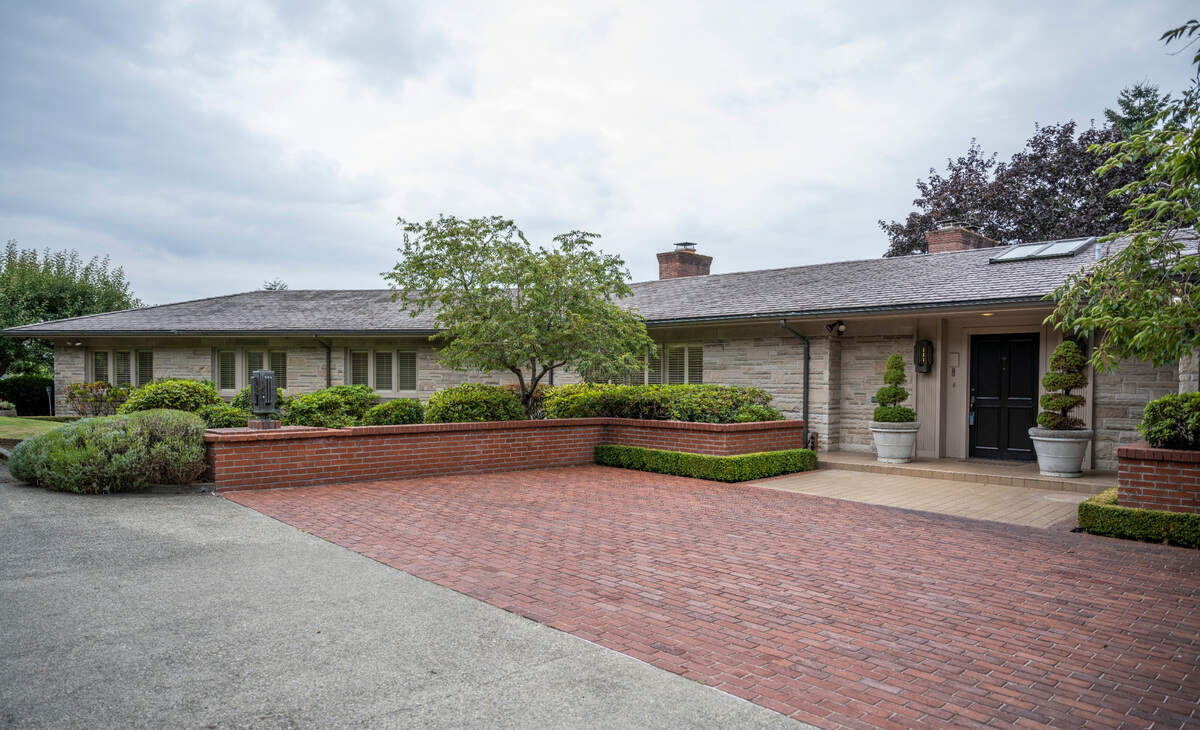
The house is clad entirely in Wilkeson sandstone salvaged from the Tacoma Public Library when its main branch was enlarged decades ago.
The original cottage was expanded in 1952 and then again, and again and again into the 1980s.
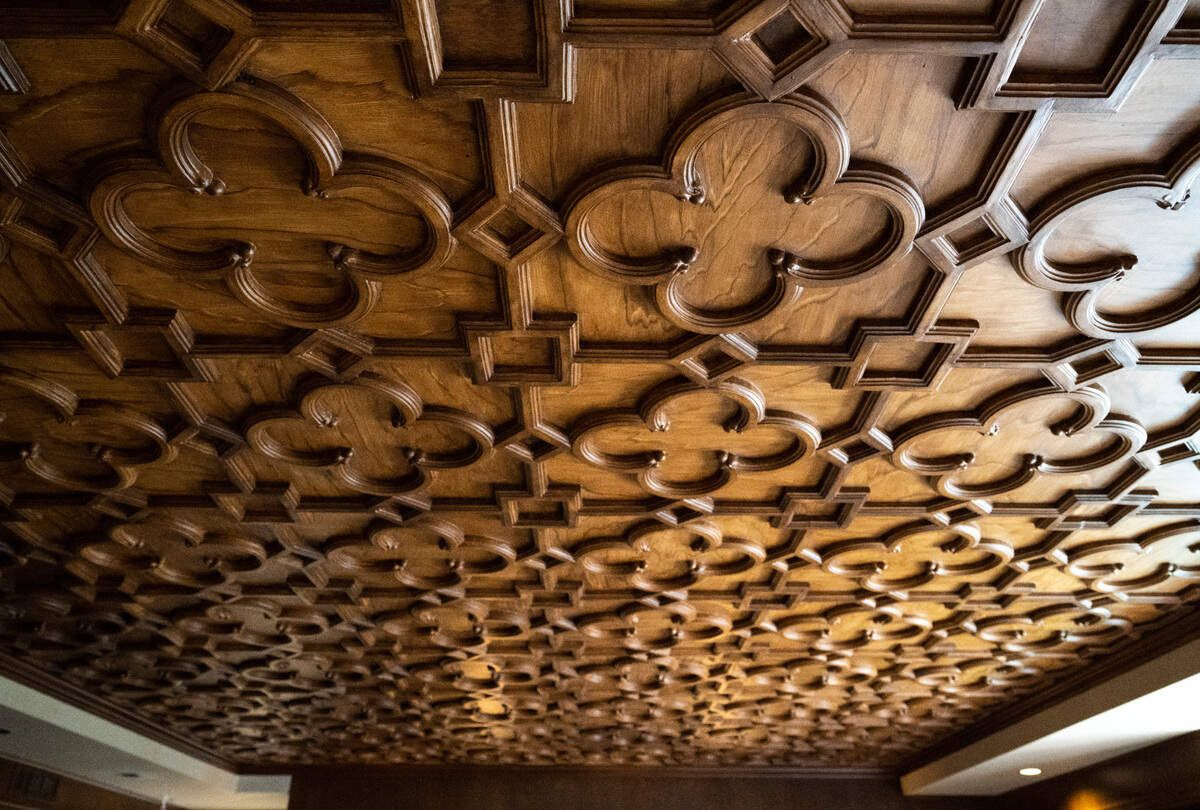
Ann Wiborg’s touch is seen throughout the home but most noticeably in the library where she hired a craftsman to painstakingly create the look of an ornamental wood ceiling, but in plaster. Nearby is a fireplace with custom painted tiles reflecting some of the native flora on the property.
“They just put a lot of themselves into this,” Selfors said. “It wasn’t about what anybody else liked.”
Lower level
The downstairs has a spacious recreation room — pool table still in place — and a full-size kitchen. An entryway to the space contains the original 1920s office door from Van Waters & Rogers with the company name still on it.
Nearby, a hallway painted with a colorful mural leads to a climate-controlled 1,000-bottle wine cellar. The subterranean room is lined in brick and has hand-hewn beams.
“They had lots of wine parties in here,” Selfors said.
A staff member was in charge of caring for the extensive wine collection.
“One of their jobs was every month to come in and turn a quarter turn of every bottle because that’s how you keep good wine,” Selfors said.
All of the wine was recently sold to a private collector for an undisclosed price.
Outside
“It’s pretty incredible to have six acres inside the city of Tacoma,” said Sotheby’s International realtor Michael Morrison.
Despite its heart-of-the-city location, the estate offers an amenity that even money sometimes can’t buy.
“The new luxury, they say, is privacy,” Morrison said.
The sloping property is filled with pathways, stairs and a rushing stream that comes from a well. It provides irrigation and keeps a pond filled.
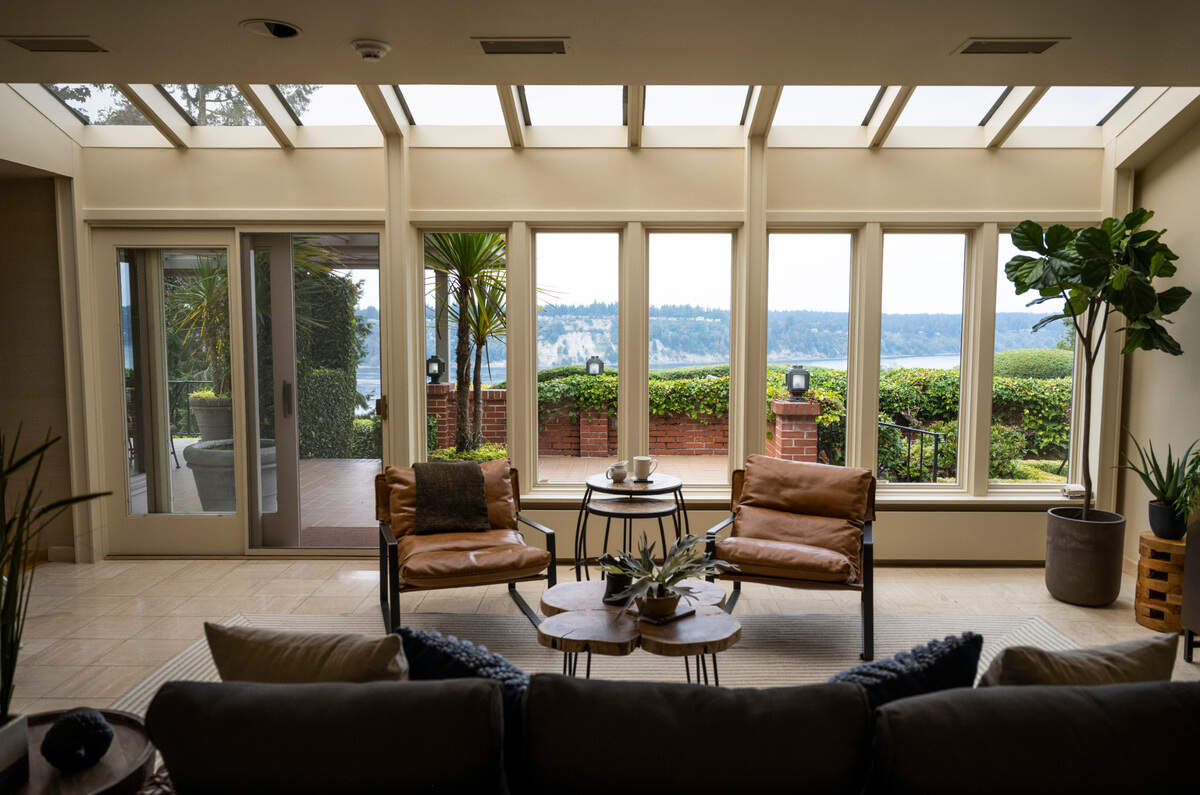
Just outside the home’s lower level, a swimming pool allows one to relax in water while viewing even more water — the Tacoma Narrows with its namesake spans bridging the gap to the south. Views of the water fill nearly every room in the home.
The farm complex is painted in red with white trim. Horse stalls and a tack room indicate the main function of the barn. A hefty tractor is stored inside. It’s included in the sale.
A nearby chicken house looks more like a 19th century one-room school house than a poultry enclosure.
“If you’re going to be a chicken, you want to live at the Wiborgs,” Selfors said.
The only domestic animals currently on the property are three well-fed Suffolk sheep. They also come with the farm.
Observatory
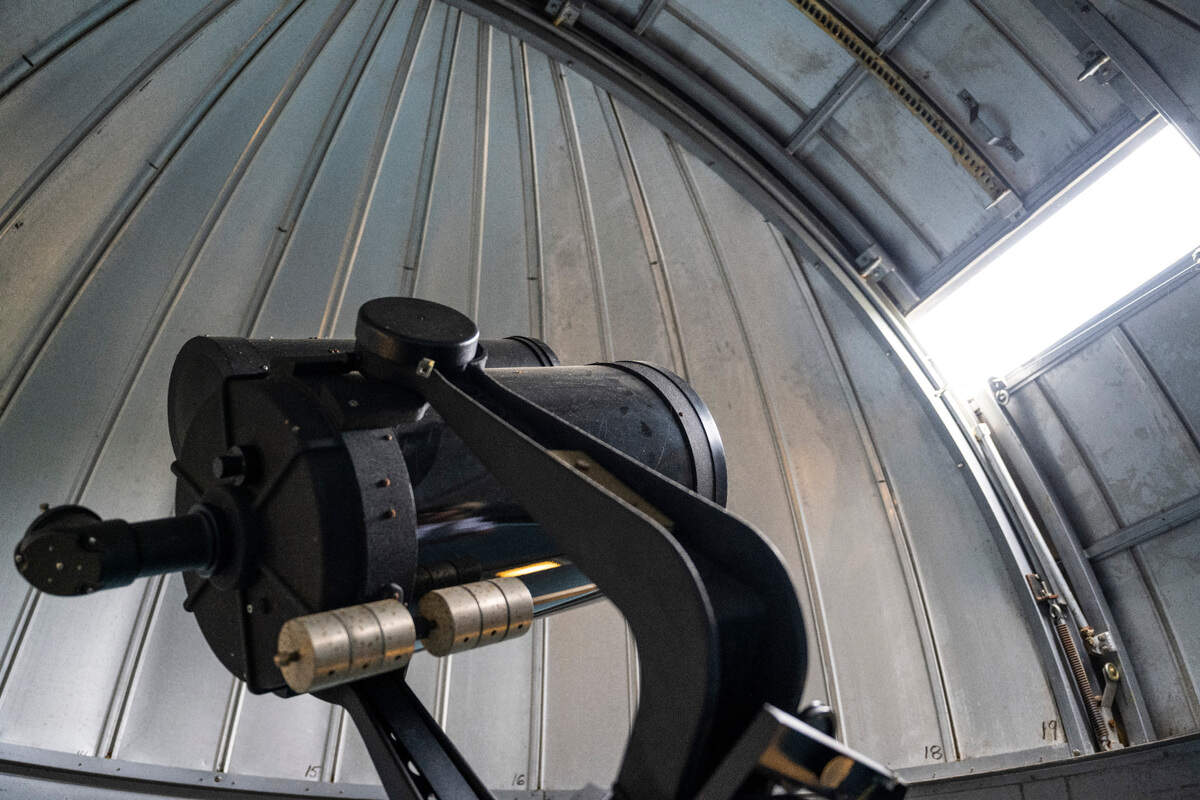
What looks at first glance to be a grain silo erupting from the middle of the barn is actually an observatory.
A narrow staircase leads to the three-story-high viewing chamber, the Celestron 14-inch telescope still in place. Electric controls spin the top of the building and open an aperture for nighttime viewing.
The telescope itself sits on top of a concrete column, providing stability.
Wiborg was an amateur astronomer and studied physics. He funded the Wiborg Physics Faculty Lab at the University of Puget Sound and was a trustee at the school for 30 years.
Wiborg developed a theory about space, time and inertia that he self-published, predicting that subatomic particles called neutrinos have mass. His work later was referenced by some in the physics community, his son John Wiborg said.
“When we’d vacation, he’d work on his math and physics so he could describe his theory,” the younger Wiborg said.
Return to the past
On the edge of the farm is a working Dutch windmill. Wiborg and his son began working on the windmill in the 1970s, Selfors said, but didn’t get far. It was Ann Wiborg who arranged for craftsmen to finish the structure as a gift to her husband in 2012.
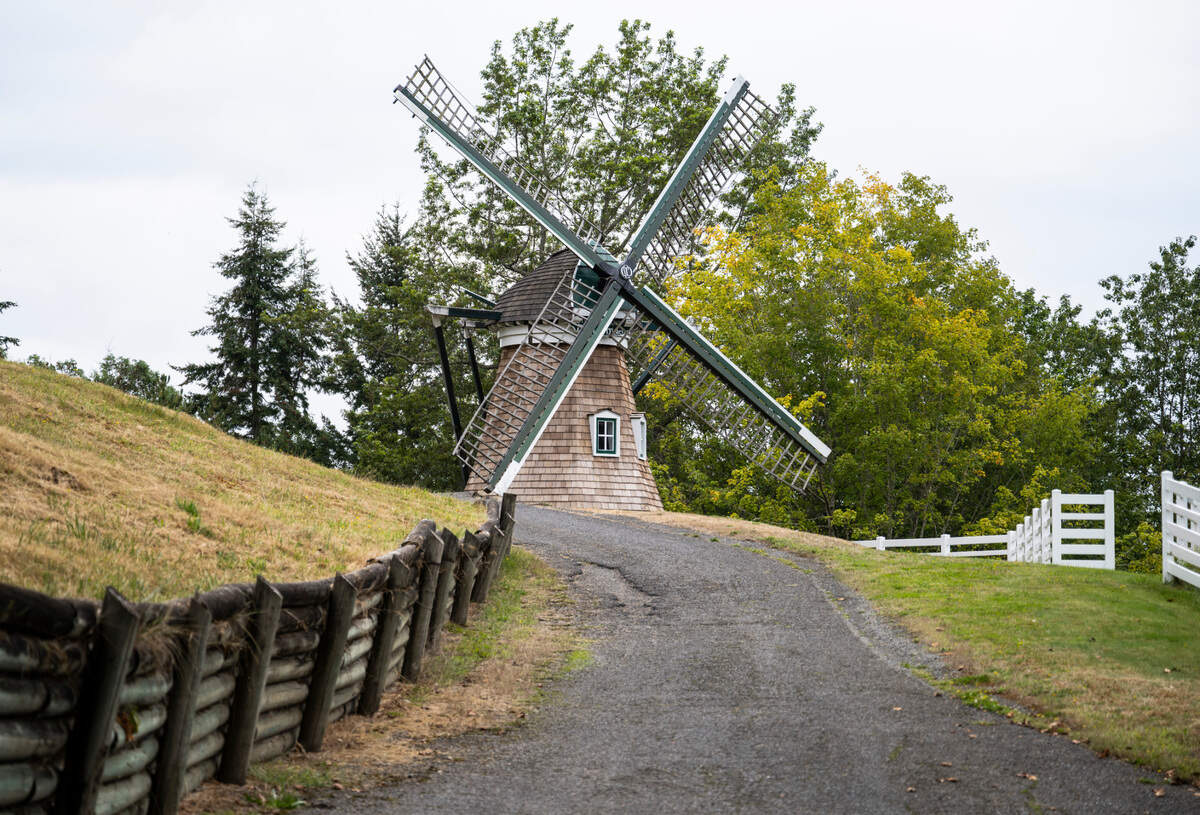
Even though it has the mechanisms to spin, its sails are not deployed and it’s kept in a lock-down mode. The three-story windmill’s blades come nearly to the ground.
“I don’t want anybody hurt,” Selfors said.
Higher up the slope, and perhaps more incongruous, is a 120-foot-long covered bridge. It doesn’t span any ravine or river.
Wiborg used it as a garage to store his car collection of mostly Cadillacs.
“He loved his Cadillacs,” Selfors said.
This story was originally published September 20, 2022 at 7:05 AM.