We were promised a new and improved Point Defiance Japanese garden. What happened?
NOTE: An earlier version of this story described the garden as funded. Only the design phase was funded.
It’s been talked about, designed, redesigned and then put on ice: the long awaited rebuilding of Point Defiance’s Japanese Garden. Plans for a rebuilt garden have been on Metro Parks Tacoma’s drawing board for years.
But little has been accomplished.
The delay, Metro Parks says, is from a combination of factors, but one stands out among the rest: a lack of money.
A needed overhaul
The original garden was installed in the 1960s in two parts: a sunny upper garden and a shady lower garden. The park’s pagoda building divides the two areas.
Metro Parks has long acknowledged that the garden was poorly designed.
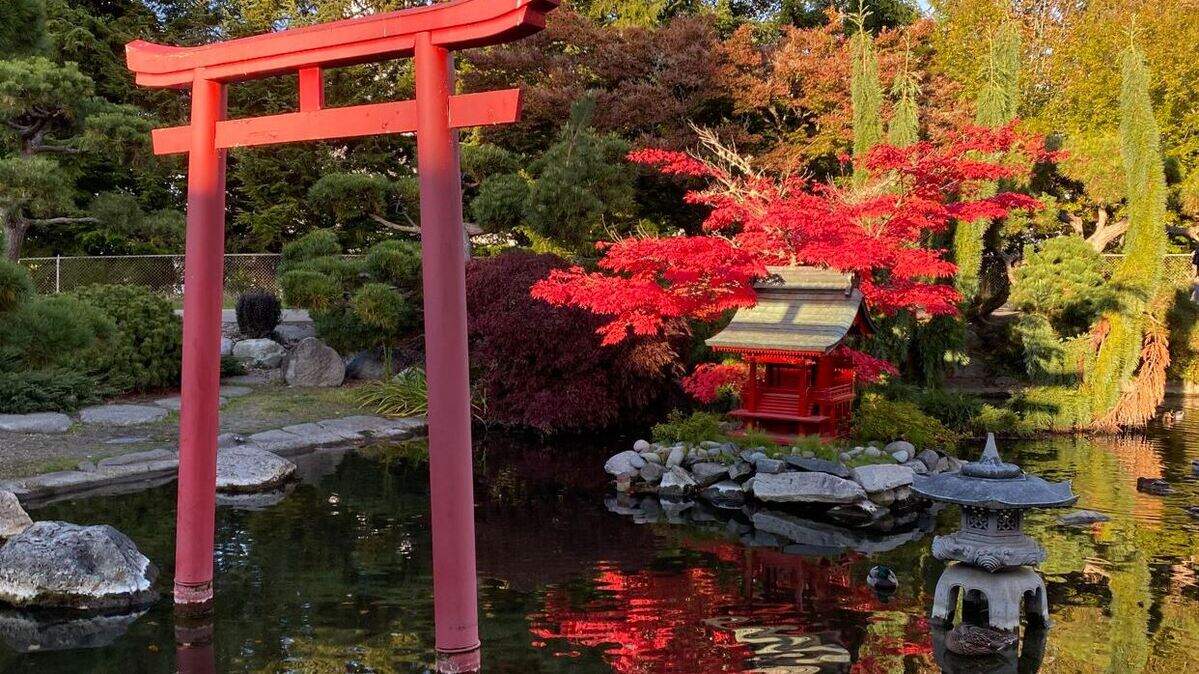
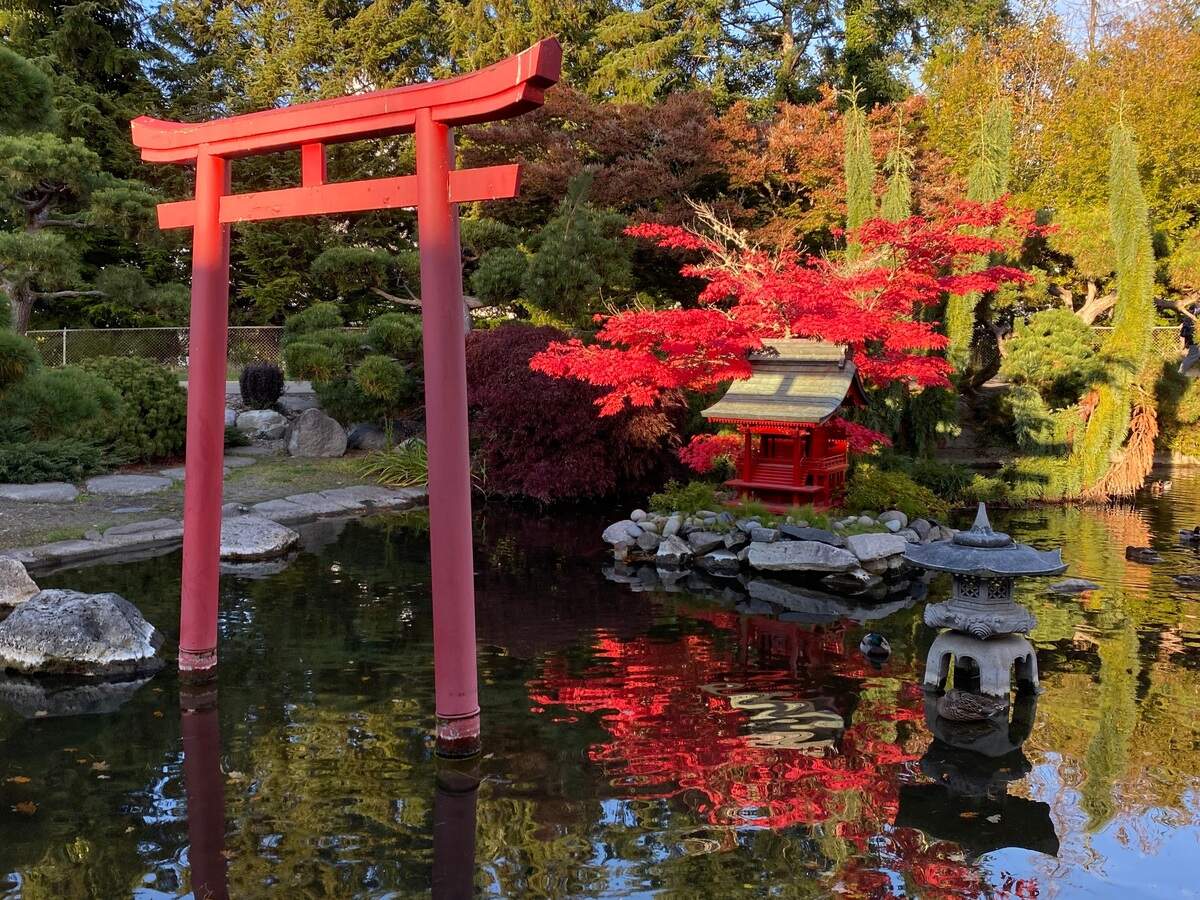
A shrine and torii gate, gifts from Tacoma’s sister city of Kitakyushu, sit within the upper garden’s pond. The gate should be on land, not in the water, according to Japanese designers brought to Tacoma in 2014 to access the garden. And the shrine needs to be accessible to the public, not marooned on an island.
Pathways travel over concrete rounds made to look like stones rather than on real rocks.
“This garden is not very Japanese at all,” then Metro Parks director Marina Becker said in 2014. “We pretty much have to start over.”
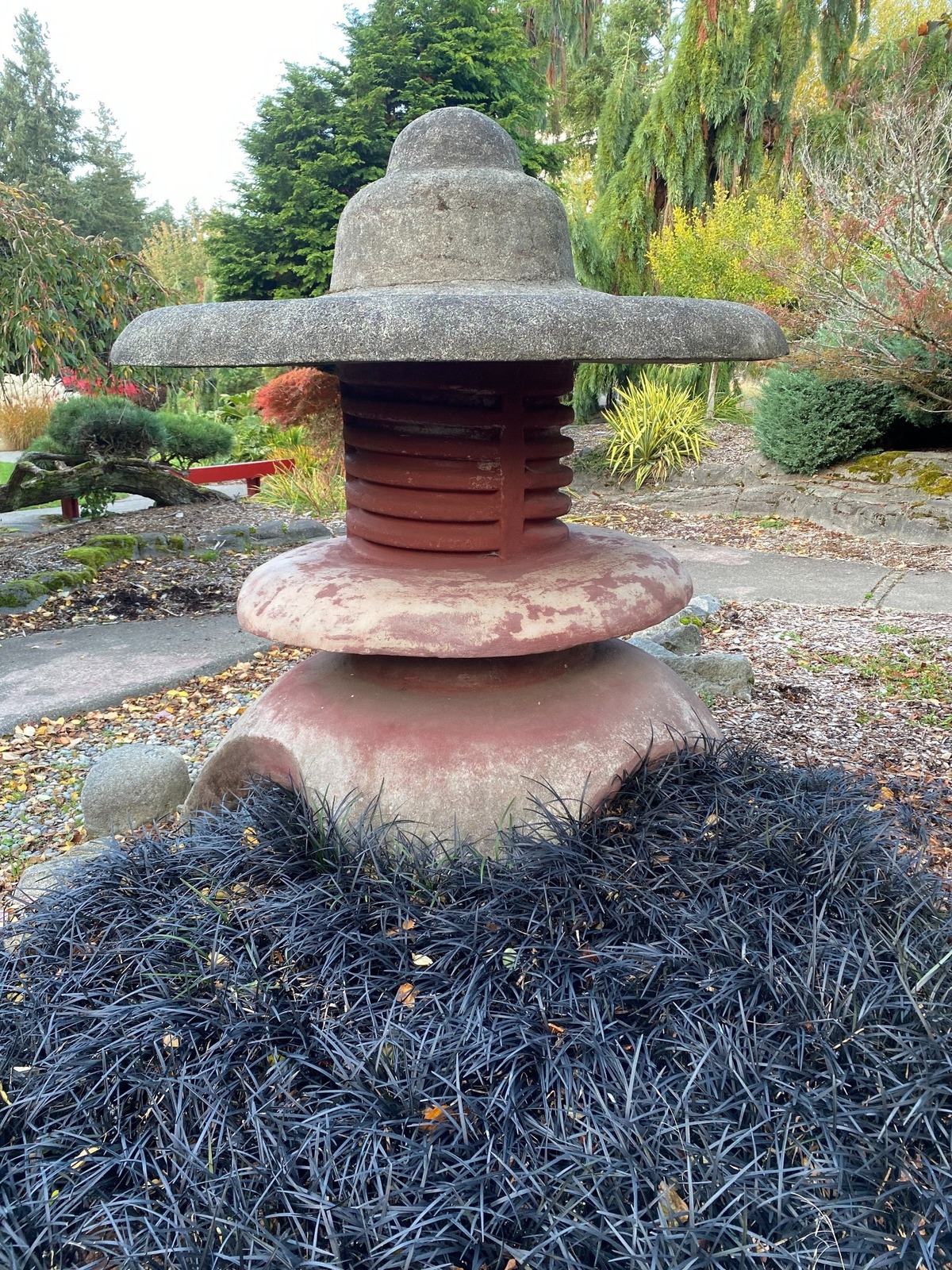
A concrete sculpture made by a park employee tries to replicate a stone lantern but presents more like a giant spark plug.
Metro Parks officials traveled to Japan in 2012 to meet with designers and city officials in Kitakyushu to discuss the redesign. A complete renovation was scheduled to begin in 2016 with the $2.5 million cost to come from fund raising and grants.
Plans in 2016 called for new streams and waterfalls, and a bridge to the pond’s island, which would have a raised the water level. The design came from the Japanese garden designers who also designed the Japanese garden at Tacoma Community College.
In 2016, Metro Parks said it expected to complete the project by 2020.
The garden today
Today, the garden is virtually unchanged from a decade ago. The torii gate and shrine still sit in the pond. This week a fire engine red Japanese maple blazed on the small island. Ducks quacked happily as they swam on the water
And the concrete “lantern” still anchors one end.
Passage of the park district’s $198 million capital improvement bond in 2014 provided money only for a design, Metro Parks spokesperson Rosemary Ponnekanti said this week.
Construction of the garden was put on hold when priorities changed at the agency.
Three other projects that were planned and built between 2017 and 2019 — Waterfront Phase 1 (Wilson Way, Dune Peninsula, Dickman Mill Park), the Eastside Community Center and the Pacific Seas Aquarium — strained staff workloads and the largesse of philanthropic giving, Ponnekanti said.
“There were a lot of projects being built at that moment,” she said. “There’s a limit to the number of projects you can fund raise for.”
A December 2020 update on capital projects lists the reconstruction design as “complete.” Ponnekanti said that refers only to the design phase and not construction.
Loop Trail
A long-planned loop trail that will snake through the entire park is planned to pass by the Japanese garden
The loop trail will link the entrance, Japanese garden, Wilson Way, zoo, Owen Beach and various parking and transit points in a continuous accessible loop.
The loop trail construction will affect the garden but it’s not the source of the delay.
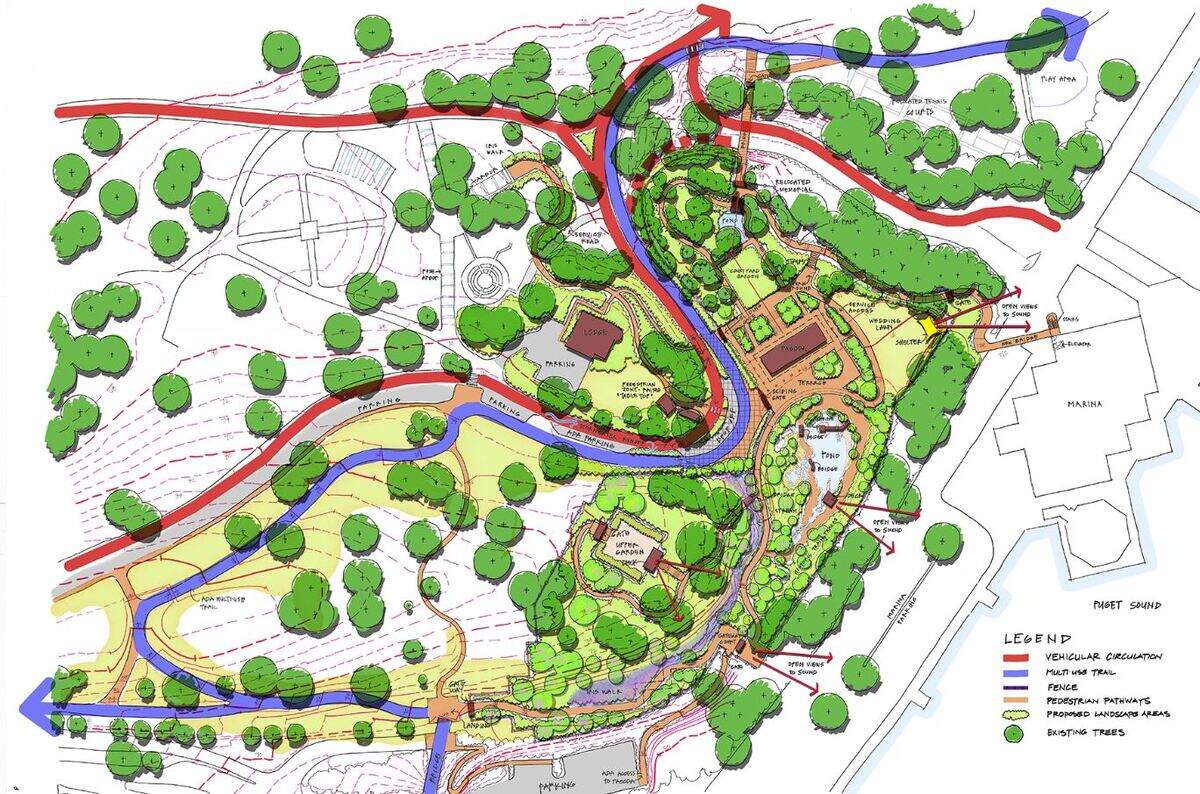
The $3.25 million state Recreation and Conservation Office grant for the loop trail, which originally had to be spent by 2019, has been extended. It will be matched by another $3.25 million from the 2014 bond.
An announcement about the first phase of the loop trail construction is expected soon.
The future
For now, the garden is on hold until money can be found. Past fundraising efforts have yielded approximately $32,000.
“We do have a great (Japanese garden) design but we’re busy making good on our bond promises,” Ponnekanti said.
Joe Brady, Metro Parks’ deputy director for regional parks said the garden is “very high on the list of items that must be addressed at Point Defiance.”
The agency has increased the resources and emphasis of its horticulture team, he said. The garden will be a beneficiary of that boost and of funding sources.
“Engaging the various constituencies that care deeply about the Japanese garden, both here at home and those abroad, is a priority for our agency,” Brady said. In addition, the agency is on the lookout for grants and philanthropic sources.
This story was originally published November 4, 2022 at 8:30 AM.