The Evergreen State is losing its trees. Here’s how Washington DNR aims to change that
Trees shouldn’t be a luxury. Yet, across Tacoma and other Washington cities, far more trees can be found in wealthier neighborhoods compared with low-income areas.
Washington Public Lands Commissioner Hillary Franz wants to change that equation through an ambitious goal she announced Wednesday at an Arbor Day Foundation conference in Seattle.
The state Department of Natural Resources aims to bring tree parity to all of Washington’s urban areas but especially in areas like Tacoma where the urban tree canopy is just 10 percent compared with Seattle’s 28 percent.
“We can’t afford to actually stand where we are right now today with a rapidly changing climate,” Franz said in an interview with The News Tribune.
Through a combination of increased funding, a new youth corps and assistance to local, grass roots organizations dedicated to tree planting, Franz aims to reverse the declining health and number of trees in the state’s urban forests.
She also needs buy-in from people who would benefit from more trees, which is, everyone.
“As people start to see the value and importance of these trees, they see and recognize what the problem is and where the deficit is,” Franz said. That, she hopes, will spur property owners to plant more trees.
The (kind of) Evergreen State
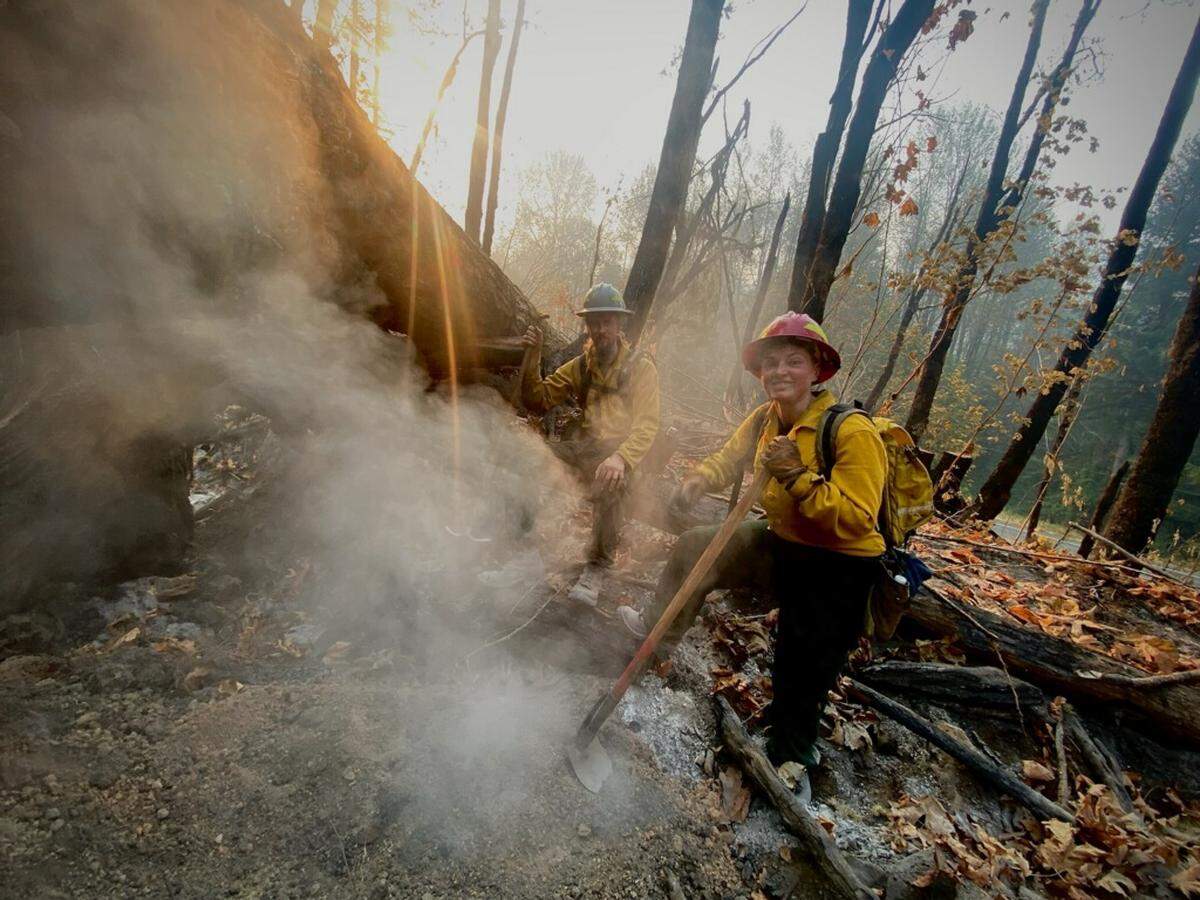
Washington’s forests are under attack from disease, insects, drought and fire. Then, there are chainsaws.
A rapidly growing population has extended deforestation further from cities as developers and government cut down, pave over and build on top of rural and urban forests.
“For the first time in our state’s history, less than half of our state is forested,” Franz said. “We’re literally watching before our eyes the Evergreen State turning charcoal, black and concrete gray.”
Franz said the state has lost 400,000 acres of forest over the past two decades to development and non-timber related agriculture.
Heat Dome
The Pacific Northwest’s deadly heat dome event in late June and early July 2021 was probably a harbinger of things to come, Franz said.
“It is now really, truly going to be our new reality, as we see climate change impacting our communities,” she said.
Trees can help mitigate the damaging effects of events like the heat dome by making cities cooler. They soak up storm runoff and shade salmon-bearing streams.
“We see more and more people suffering from asthma, heart attacks, high blood pressure, diabetes,” Franz said. “We know our urban tree canopy can help reduce those physical health challenges.”
The plan
First, it takes green to make green.
In the most recent legislative session, DNR secured over $550,000 which will fund grants for urban-core, community forest projects. That’s not enough for the $1 million in funding requests DNR received this year, Franz said.
In the coming session, Franz will ask for $8 million. The funds will allow more grants. At least $1 million would be used for community-based non-profits dedicated to local tree planting.
The money would also enable DNR to build a statewide tree equity map illustrating tree coverage in every neighborhood in every city in Washington.
Another $2 million would establish a youth conservation corps that would focus on tree planting, restoration and urban forest maintenance.
Franz hopes the increased efforts will spark an increased interest in forestry-related careers.
“Our urban forests can no longer just be a preferred line item on local and state budgets,” Franz said. “They are truly a testament of whether we are truly fulfilling our moral responsibility to a more socially, racially and economically just society.”
Franz will roll out the complete plan in early 2023.
This story was originally published November 22, 2022 at 5:00 AM.