What does the same-sex marriage bill actually do? What to know after Senate passed it
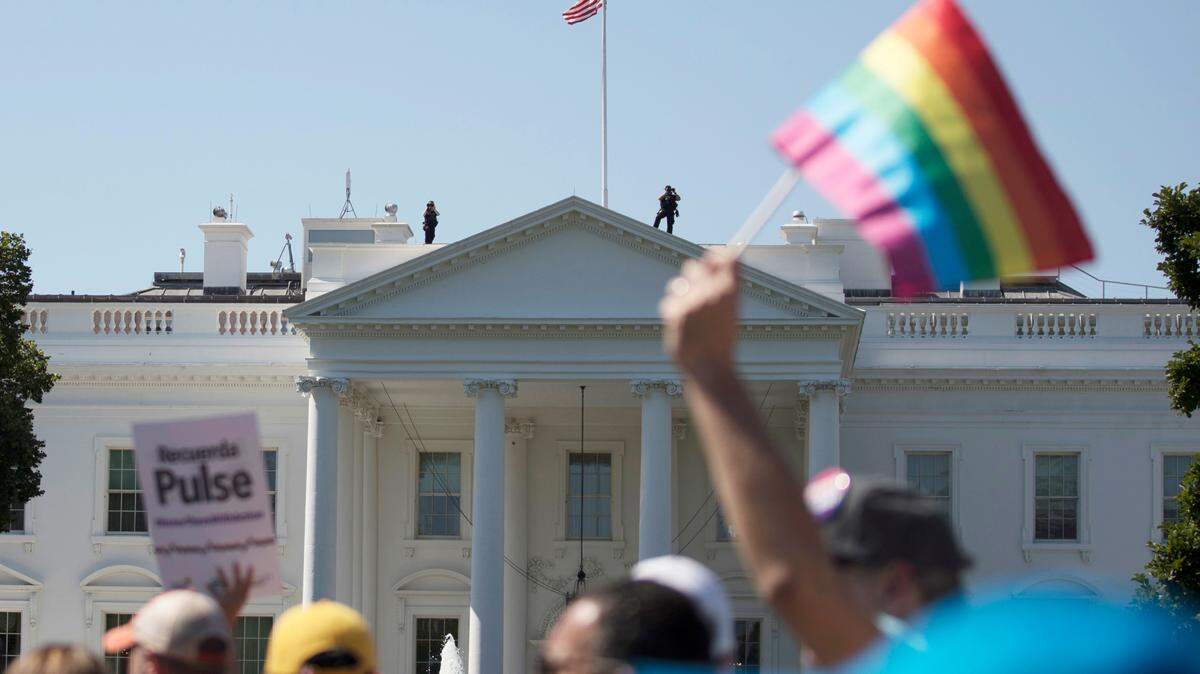
The Senate voted to pass a landmark bill designed to protect same-sex and interracial marriage on Tuesday, Nov. 29. If passed by the House and signed into law by President Joe Biden, as is expected, the Respect for Marriage Act will establish federal protections for both types of unions.
The legislation’s passage marks a significant step in a decadeslong fight for marriage equality, and its Senate adoption follows a sea change in public opinion toward same-sex couples that has occurred in recent years.
Though the Respect for Marriage Act is the culmination of many years of work, the immediate impetus for its passage, according to some senators, was this summer’s Dobbs decision from the Supreme Court striking down federal abortion protections, which included a concurring opinion from Justice Clarence Thomas that signaled a desire to revisit Obergefell v. Hodges, the 2015 ruling that made same-sex marriage legal nationwide.
“[A]s we know, rights that people take for granted, nearly 50 years of Roe v. Wade can vanish with one mark of a pen, with one signature on a piece of paper,” Sen. Amy Klobuchar, one of the bill’s cosponsors, said on the Senate floor on Nov. 16.
The bill passed with 61 votes in favor and 36 against. Twelve Republicans voted for the act, including Sen. Mitt Romney and Sen. Susan Collins.
What does the bill do?
The bill nullifies and replaces federal provisions that establish marriage as being between a man and a woman — instead replacing the language to “recognize any marriage that is valid under state law.”
Also built in is a provision that empowers the Department of Justice to initiate a civil action for violations of the act.
“[W]e won’t go back to the days when a gay soldier killed on the battlefield was denied the respect of official notification of next of kin. And we won’t go back to the days of hospital patients being left to spend their final moments alone, without the person they love most by their side.” Sen. Klobuchar stated on the Senate floor.
It also requires states to recognize same-sex marriages performed in other states, and it contains provisions that “prohibit the denial of full faith and credit or any right or claim relating to out-of-state marriages on the basis of sex, race, ethnicity, or national origin.”
It does not, however, require individual states to allow these marriages to be performed if Obergefell is later overturned.
The legislation also includes protections for religious liberty, including a measure guaranteeing nonprofit religious groups won’t be required to perform same-sex marriages, assuaging concerns of some Senate Republicans.
“Through bipartisan collaboration, we’ve crafted commonsense language to confirm that this legislation fully respects and protects Americans’ religious liberties and diverse beliefs, while leaving intact the core mission of the legislation to protect marriage equality,” Republican Sen. Thom Tillis said in a Nov. 14 statement.
The House passed a similar bill in July, which also came as a direct response to the Supreme Court’s overturning of Roe v. Wade, according to the Associated Press.
The Senate version will now head back to the House, where it is expected to pass quickly before being sent to President Biden, who first came out in support of same-sex marriage a decade ago, according to NPR.
Who supports the bill?
Although a majority of 71% support same-sex marriage, according to a June 1 Gallup poll, views over the Respect for Marriage Act are less clear.
Republicans and those on the religious right say it jeopardizes their religious liberty by forcing them to honor existing same-sex marriages. An amendment already attached to the bill guarantees First Amendment protections for people of faith, but some say it doesn’t go far enough to protect religious entities, The Hill reported.
Senators Mike Lee (R-Utah), James Lankford (R-Oklahoma), and Marco Rubio (R-Florida) had all proposed amendments that focus on adding more protections for religious liberty.
A Heritage Foundation poll found that voters in five states oppose the bill while their senators voted in favor of it: Sen. Todd Young of Indiana, Joni Ernst of Iowa, Mitt Romney of Utah, Shelley Moore Capito of West Virginia, and Cynthia Lummis of Wyoming.
While some online criticized the 12 GOP senators who voted to break the filibuster on the bill earlier this month, others celebrated.
“The great news is that it doesn’t force you to get married to someone of the same sex,” one user wrote on Twitter. “If you’re straight, however, it literally doesn’t [affect] your day to day life at all.”
Still, others criticize the bill for not going far enough to protect same-sex marriages, especially if Obergefell were to be overturned by the Supreme Court like Roe v. Wade.
David Roth, an openly gay candidate who ran against Sen. Mike Crapo for his Senate seat in Idaho, urged others to keep in mind that the Respect for Marriage Act does not codify same-sex protections into federal law — as the provisions lean on existing state laws.
“While I applaud the efforts to put protections in place, let’s not kid ourselves by thinking that this is something that it is not,” he wrote on Twitter. “The Respect for Marriage Act will add a certain level of protection for marriage equality however, it is not a blanket guarantee that states must offer marriage licenses the way that Obergefell does. It is better than nothing, but it is not the same.”
Roth wrote that he believes “renewed challenges” will pop up for the LGBT community, and that those in the community should “brace ourselves for what is likely going to be a rough few years.”
“The RMA is not going to solve everything, but it is going to help stop things from rolling back too far,” he said.
“We know that marriage equality is going to be challenged, and we can all guess how this court will rule,” he said. “The RMA will help to contain the damage. Is it perfect? No. Battlefield solutions rarely are.”
This story was originally published November 29, 2022 at 3:27 PM with the headline "What does the same-sex marriage bill actually do? What to know after Senate passed it."