36K applied for help from Tacoma Housing Authority. Here’s how many got on waiting list
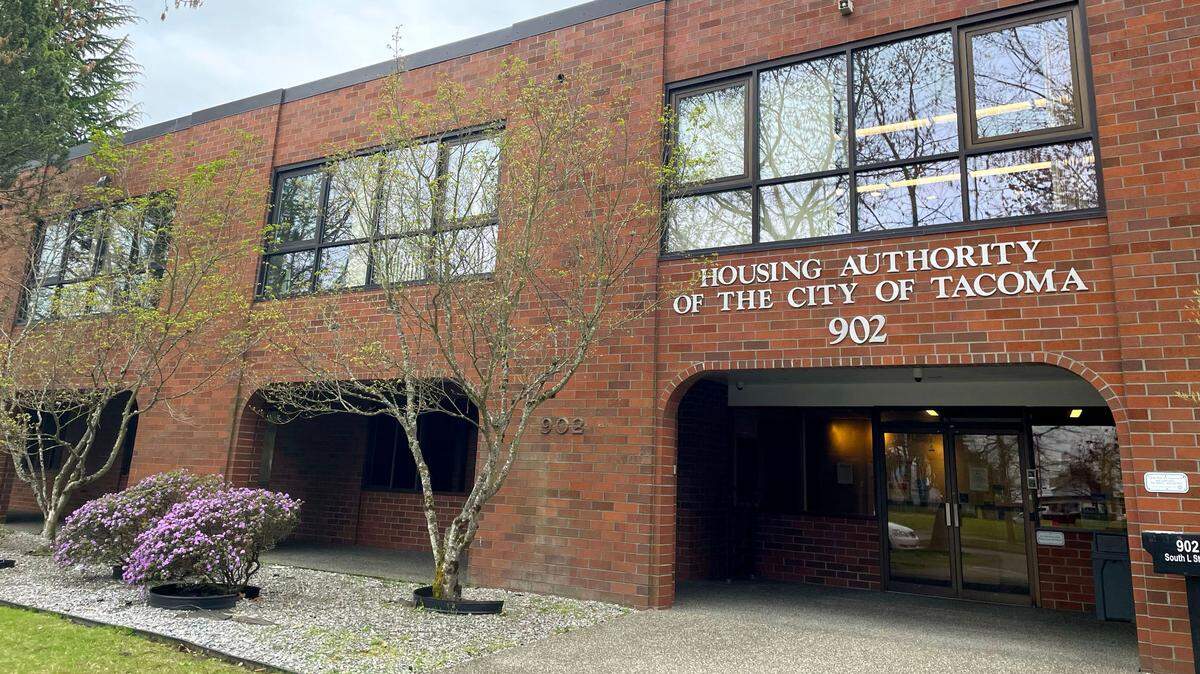
Monday was a day Aley Thompson often looks forward to.
As the director of rental assistance at the Tacoma Housing Authority, it was a time that comes only about once every two or three years: The day THA conducts a lottery to see who among tens of thousands of people might receive life-changing housing assistance.
The day is always bittersweet. Not all who need help can get it, and those lucky enough to get on the waiting list might end up waiting two years or more for a housing voucher to help pay rent or secure a unit in THA-owned affordable housing building.
This year was the first time since 2015 THA opened the list to all household sizes, including three people or fewer. Thompson said the reason THA didn’t expand eligibility sooner isn’t due to need – there’s just not enough available units in that size.
In the two weeks the application window was open – from April 3 to April 17 – 15,494 households (36,222 people in all) applied for 1,825 available spots on the low-income housing waiting list, according to THA.
On Monday applicants were assigned a random generated number, and a computer algorithm randomly selected who would be contacted if something should open up. Applicants would be notified about their status on May 15, Thompson said, who uses they/them pronouns.
“Our wait list was open for about 10 days,” they said. “There’s a lot of folks that fall through the cracks and aren’t represented here that need housing help in our community. It just highlights the importance of the work that we do, the importance of our need for additional federal funding to continue to scale the work that we do.”
Who applied most often
Thompson said many of the people THA helps are single mothers. The data tracks: 70% of the heads of household who applied to the most recent THA waiting list were women.
Half of the households that applied also had children, and 74% of applicants reported having an “extremely low income,” making less than 30% of the area median income. Tacoma’s area median income was $101,800 in 2022 for a family of four, according to the U.S. Department of Housing and Urban Development.
The median household income reported by wait list applicants was $11,280 for all household sizes, according to demographic data collected by THA.
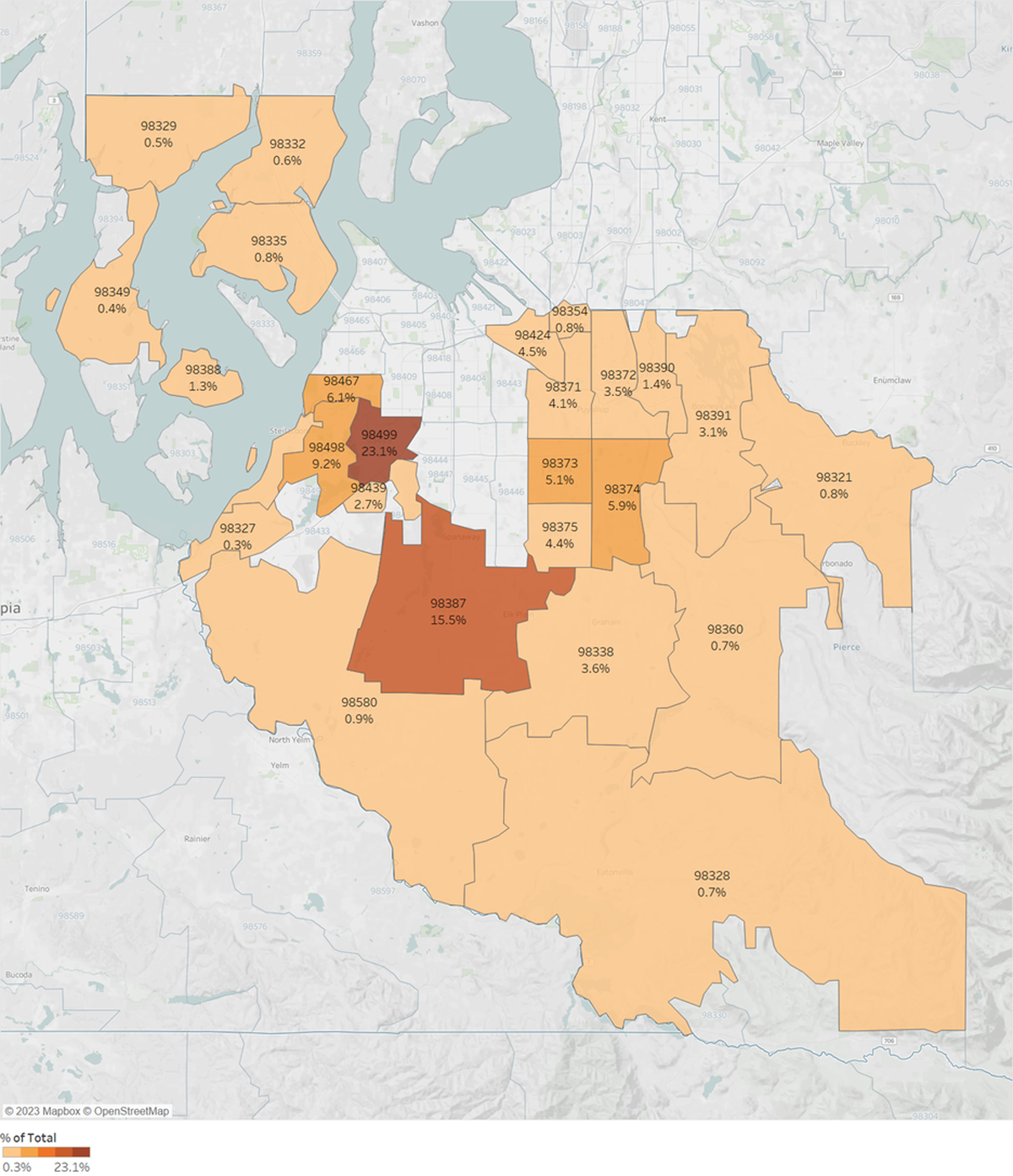
About 60% of wait list applicants lived in Tacoma or Pierce County, with 31% living in Washington state outside Pierce County and 8% living outside state boundaries.
Applicants were looking for smaller housing units: 42% of applicants (6,482 people) described their household size as one; 23% of applicants (3,496 people) described their household size as two; 15% of applicants (2,361 people) described their household size as three.
“It’s not surprising to me, the one- and two-bedroom need, because I work within the leasing department … What we need is more units of that size,” Thompson said. “Especially coming out of the pandemic … if you think about what housing prices were in 2015 versus today, they’ve skyrocketed, right? Housing insecurity has just increased within our community, and so I’m not surprised to see these really high numbers.”
Thompson said many people THA helps are one missed rent payment, one car break down or one missed day of work away from homelessness. Others are behind on rent and hoping to get assistance before they lose their apartment.
Another detail is that 14% of applicants (2,157 people) reported to THA they stayed “in a place not meant for people to live” the previous night, like a car, abandoned building, bus/train station or anywhere outside. Thompson said that statistic is higher than usual.
About 39% of applicants (6,044 people) said they were staying in a house or apartment they currently rent; 29% of applicants (4,453 people) said they were staying with a friend or family; 8% (1,158 people) said they were staying in an emergency shelter or transitional housing.
“A lot of people I was filling out applications for, it was very apparent that they were staying in a temporary situation, using some of their social capital,” Thompson said. “That will likely not last for the amount of time that they have to wait to get housing help from us. So where are they going to go next? Are they going to move down to that next bucket where they’re sleeping outside, because they’ve stayed with all their friends? It’s really important when we define homelessness [to acknowledge] there are folks that are able to find a roof for a period of time, but oftentimes not for long-term.”
More affordable housing units, aid needed in Tacoma, THA says
Thompson said there needs to be more dedicated resources to affordable housing, “because we have a massive need now, and this need is going to continue to exacerbate if we don’t address the supply issue,” they said.
Having a stable roof over your head is life-changing, Thompson said. Once someone doesn’t have to worry about where they’re staying overnight, they can focus on things like working or getting a job, accessing health care, finishing or pursuing education, helping children with school and meeting other basic needs.
“We definitely have seen folks whose lives are transformed and who are just immensely grateful for the housing help. There are folks that are going to always need housing help, folks that may have disabilities who need affordable housing, and we don’t expect them to move on or off of our housing, we expect them to receive affordable housing for as long as they need it,” Thompson said. “Other folks may just need affordable housing for a couple of years to be able to save up or get a better job, focus on their education, focus on their kids and then move off of housing support.”
Thompson said while some people are on housing assistance for longer, sometimes their kids aren’t, which is one of THA’s goals to help the next generation thrive.
The U.S. Department of Housing and Urban Development, which helps fund THA’s services, is recognizing that people need support in terms of security deposit assistance, application fees and landlord incentives, Thompson said.
Without the development of true affordable housing on the market however, “we can give someone a voucher, but they may not be able to find a place to lease,” added Adam Ydstie, Tacoma Housing Authority director of policy, innovation and evaluation.
“I think there’s a really big conversation that we as a community need to have around what is truly affordable, based off of these numbers,” Ydstie said. “Is developing something at 60 to 80% of the [area median income] and saying it’s affordable, really, truly affordable?”
THA’s waitlist won’t open for a few more years. You can visit https://www.tacomahousing.org/ to learn more about other housing or rental assistance that might be available.