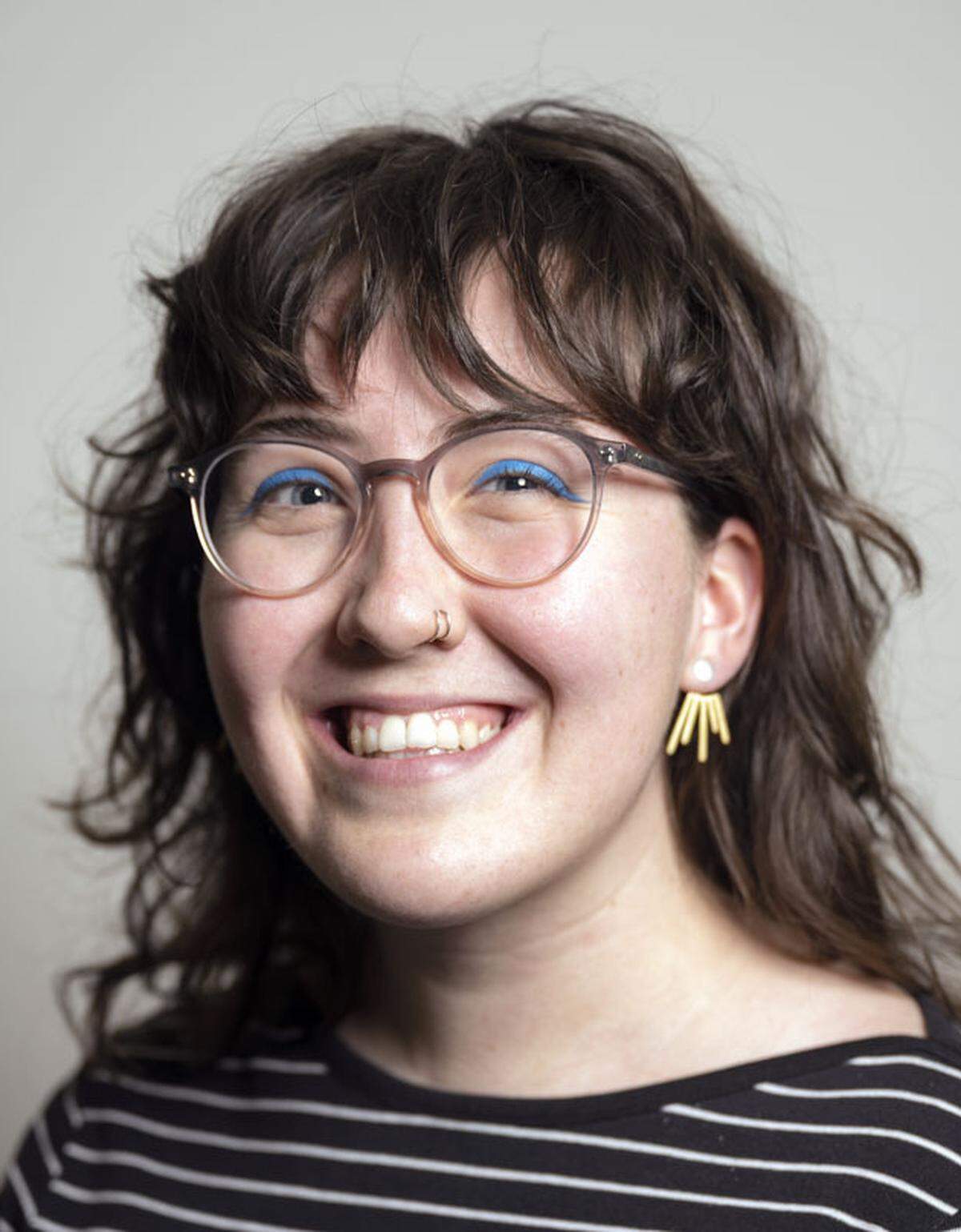
We spoke with 5 transgender people in Tacoma about their joys and fears this Pride
In anticipation of Tacoma’s annual Pride celebrations this weekend, The News Tribune spoke with five transgender people living in the Tacoma area about how they find joy and community amid fear of personal attacks, violent political rhetoric and misinformation about transgender people. As of May 2023, this year a record 540 anti-LGBTQ bills were introduced in state legislatures across the country, including over 220 bills specifically targeting transgender and non-binary people, according to the Human Rights Campaign.
Although Washington state is considered a refuge for many transgender and LGBTQ people, advocates said there is still work to be done.
In building a positive support network and often creating the representation they needed when they were younger, these transgender Tacoma residents find joy in being their whole selves and work to bolster acceptance in the future:
77-year-old Cheryl, a transgender woman from Gig Harbor who declined to provide her last name out of concern for her personal safety.
47-year-old MJ Montgomery, a transgender man and mechanic from Ruston.
30-year-old Charlie Best, a transgender man and educator at the Rainbow Center who lives in Hilltop.
26-year-old Scott Beck, a transgender Tacoma man who wants to create more inclusive medical policies for trans people.
16-year-old Billy, a non-binary 10th grader from Lakewood who declined to provide their last name because some family members do not support their gender identity.
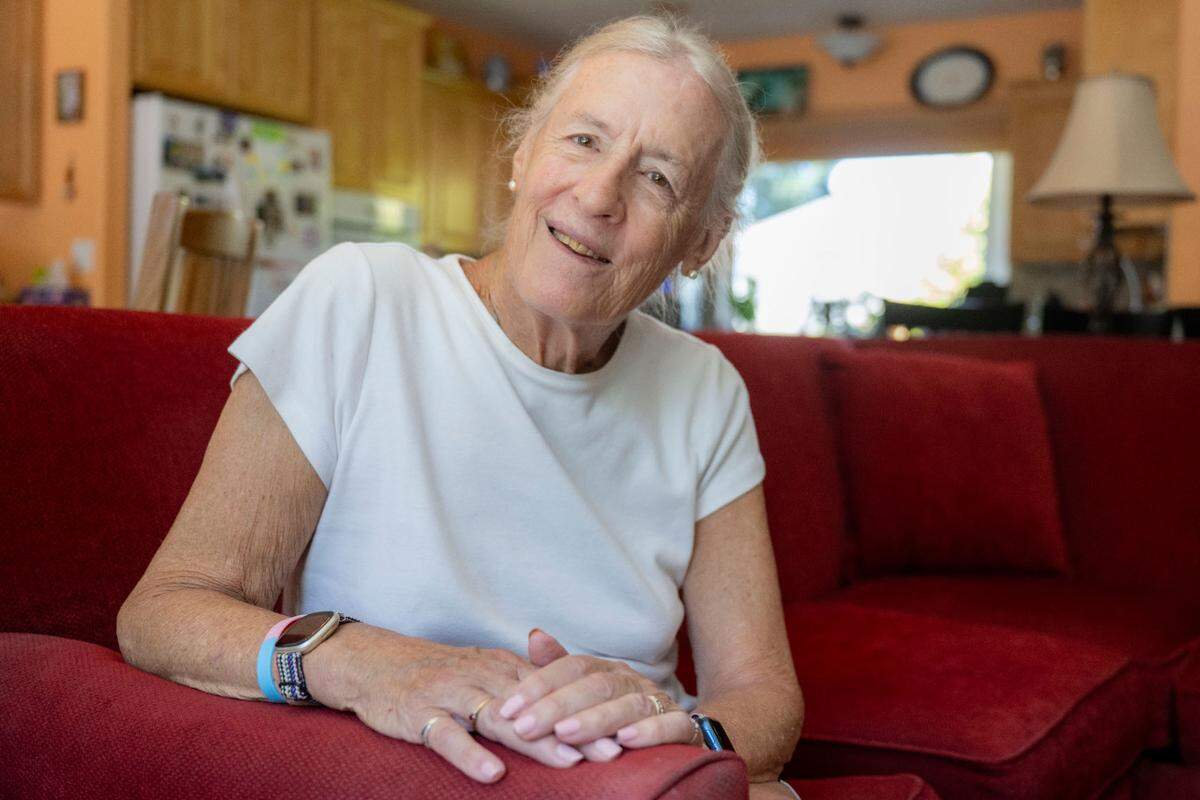
Cheryl, 77, Gig Harbor
Cheryl was born in 1946 to two working-class parents and said she knew she was different at a very young age, even though she didn’t fully understand it or know anyone like her. In seventh grade, Cheryl said she first read an article about people who liked to cross dress and began living her life as a cross-dressing man.
“The only problem for me was while I enjoyed cross dressing very much, it just never felt right. I was just never happy. I was never at peace,” she said. “I had thoughts of self harm. It just wasn’t a joyous life for me, let’s put it that way. But I went about living my life as best that I could.”
After marrying, divorcing and getting a master’s degree in engineering, Cheryl went on to work as a project manager designing water and wastewater treatment plants for about three decades. At age 61, Cheryl decided to transition and told her boss she would be returning to work the following Monday under her new name. She was fired shortly after and since has never been able to find work again as a transgender woman, Cheryl said.
The choice to transition “was hugely important to me,” she said. “I’ve never ever had any regrets. For me it is the best decision I’ve made in my entire life. Living my life as what I regard as authentically me, it was such a profound, profound change. And I just gradually felt more and more at peace.”
Now Cheryl is remarried and enjoying retirement, volunteering, gardening, traveling and walking three to five miles a day. Cheryl said she believes most people don’t perceive her as transgender, so she feels relatively safe but is “a bit nervous” and didn’t want to print her last name in the article due to fear that someone might harm her and her husband.
Cheryl said she’s hopeful for the future of LGBTQ rights but is “very, very concerned” about the state of the world and the possibility of another world war.
“I want people to know and understand that [transgender people] are perfectly normal people,” she said. “We’re kind, we’re caring, we’re loving, we’re compassionate. We have our heartaches, we have our joys. We have issues just like everybody else. But when it’s all said and done, we’re good people. We care about everybody.”
As for advice for young transgender people, Cheryl said, “Believe in yourself, trust yourself, live your life to the fullest. Live it authentically and be proud of who you are now, and who you are becoming. Learn from your mistakes. Do not ever hesitate to make mistakes. Those who never make mistakes, never do a damn thing.”
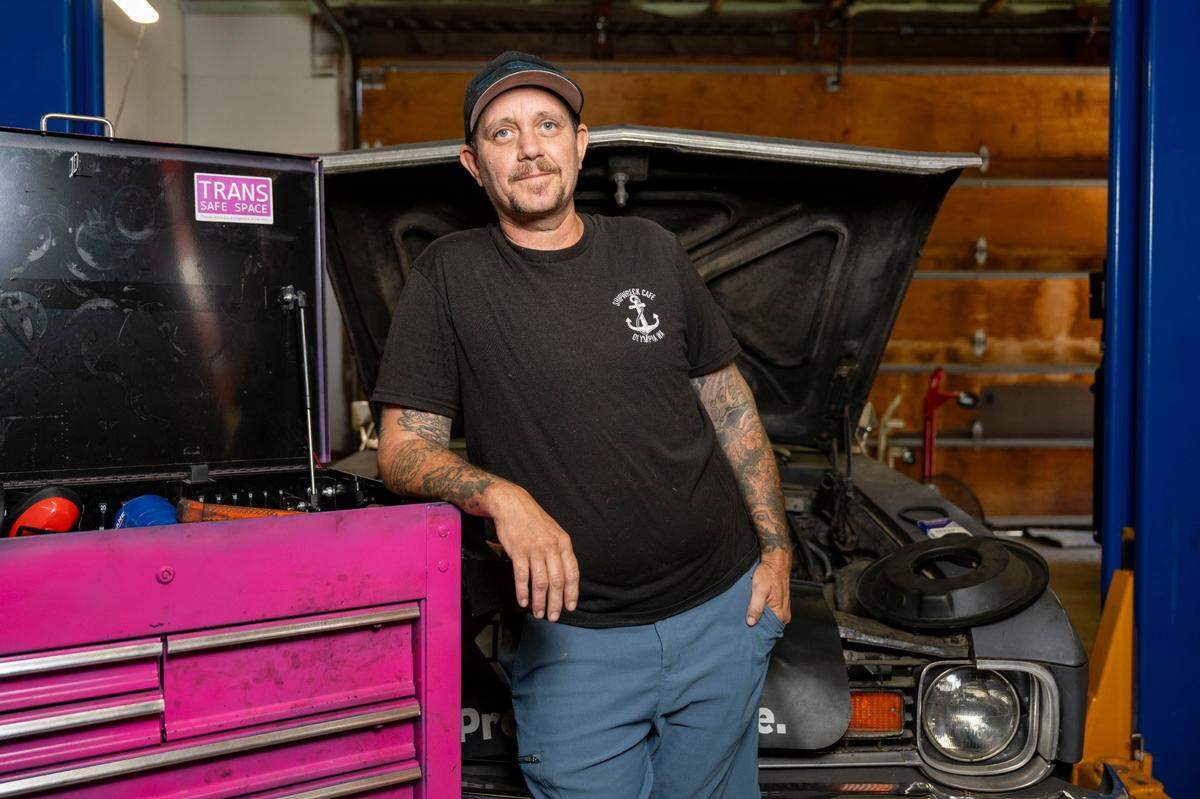
MJ Montgomery, 47, Ruston
MJ Montgomery grew up in San Diego and has lived in Tacoma for about four years.
“I always was a boy, ever since I was a little kid, ever since I can remember,” Montgomery said. “I’d wait for my brother to go to school and then I would go steal his clothes out of his drawers. My mom had a hell of a time ever getting me into cute dresses or anything like that. I got to cut my hair short when I was in third grade, and it has never grown out since.”
Montgomery has been a mechanic his whole career, most recently co-owning Camellia’s Auto Repair – a LGBTQ-friendly auto shop that closed at the end of May.
As a 20-year-old, Montgomery went to trade school before he got into an automotive program and fell in love with the job. He met his partner at Repair Revolution, an LGBTQ-friendly auto shop in Seattle, and founded Camellia’s Auto Repair shortly after to provide a safe space from transphobia, homophobia and sexism they said they experienced in the auto and trade industry.
“I went by he/him [pronouns] for probably a good decade before I actually did anything physically, like before I took testosterone or got any surgery or anything,” he said.
Montgomery choked up talking about his community of buddies in Olympia “who went through this journey with me,” he said. “Just the support was very, very helpful.”
Right now Montgomery said he feels scared about the state of transphobia in the country and worries for his friends in Florida. In Washington, Montgomery said he’s lucky to be able to get the gender-affirming care he needs but said he’s fearful, “if it’s happening elsewhere, it can happen anywhere.”
“It just takes you right back to childhood. It takes you back to people trying to put you in a box that you just cannot fit in,” he said. “And if you can’t fit in that box, it’s suffocating.”
These days Montgomery finds joy spending time with his family. He said there’s a lot of misinformation about trans people and wants people to know, “We’re everywhere. We range from just changing your pronouns to just being completely undetected.”
Montgomery said the advice he’d give to his younger self and young transgender people today is, “Just be yourself. Love yourself. It’s not weird, it’s completely natural.”
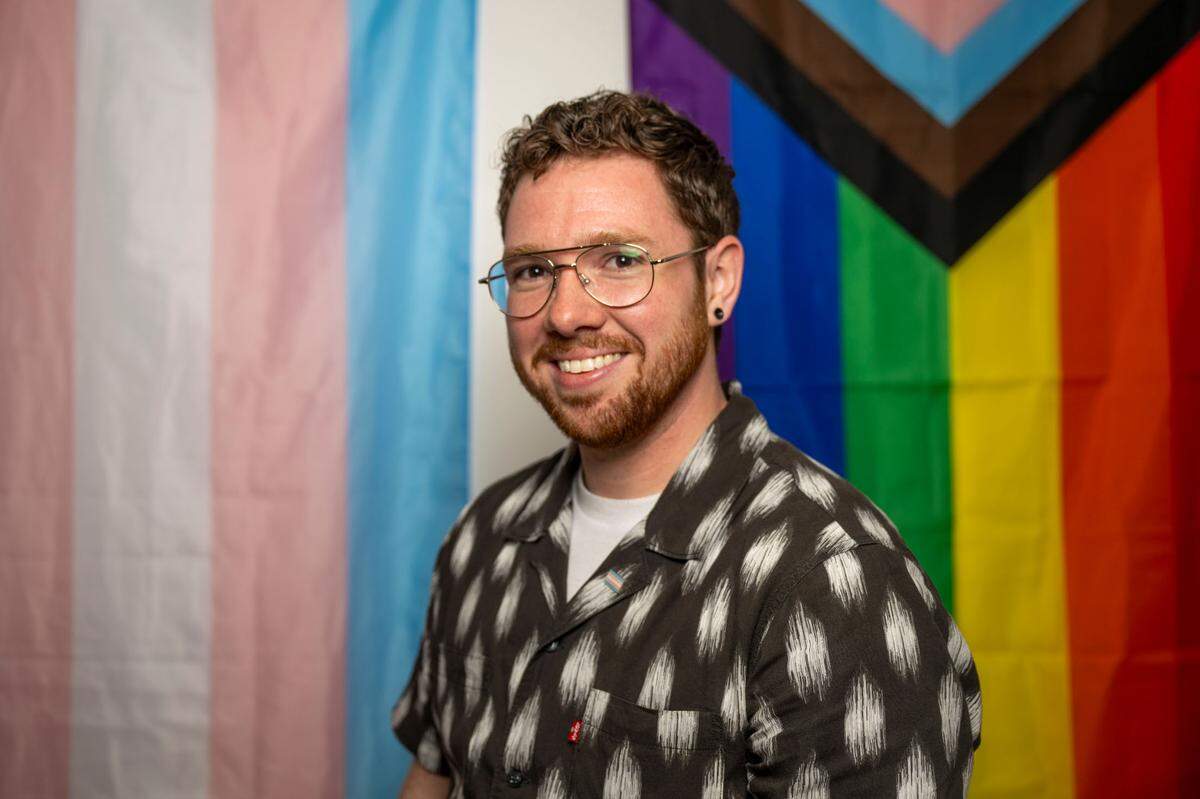
Charlie Best, 30, Hilltop
Charlie Best is a high school history teacher by trade who now works as an education coordinator for the Rainbow Center in Tacoma, using his experience as a queer transgender man to build empathy and foster more inclusive spaces in local government and various workplaces.
“I’m very open about my transition, and it can be really vulnerable,” he said. “But I found that it’s worth it because if I model that vulnerability — people meet me where I’m at.”
Best first came out as bisexual at age 15 and later found a better label as a butch lesbian. Around age 23 was “when the female side sort of started to collapse,” and Best identified as genderqueer for about a year, using they/them pronouns, he said. Around age 24, Best started using the name Charlie and transitioned socially and medically to male.
“I’ve been out as queer in some capacity for half my life. But within that, there’s been five different iterations of self. And I’m sure more to come,” he said. “Looking back, I was pretending to shave with my library card and my dad’s stolen shaving cream when I was like, 5. There’s all these little hidden tidbits, but so many things in society – in my life, internally, externally, so much transphobia – kept me from touching that piece of myself that was always there but I just didn’t want to quite look at. Or didn’t have the words to use to describe it or even investigate it.”
Best said there were moments throughout his transition where he “would get glimmers of gender euphoria, but then I felt like a fraud.” Having the space to experiment with new pronouns and explore new identities “was kind of a great opportunity to reinvent myself,” he said.
Questioning what it feels like and means to be a man, as someone who was bullied by men and raised by strong women, has been a struggle, as has been navigating queer and female spaces while getting sober, Best said.
“It’s kind of like I’ve got a foot in different worlds. So it’s been really a matter of figuring out, OK, where do I feel best?” Best said. “And I think community has started to shift for me to be more chosen family rather than a specific bar or something like that. Community’s become a lot more abstract than physical community space.”
Best said focusing on what he can control and change and setting boundaries when conducting research about transphobic news, helps him find joy amid fear. He also enjoys watching nostalgic movies with his partner and their cats, making banana bread and listening to podcasts.
As for advice to young transgender people, Best said, “I just want to give them a hug … maybe not even give advice, but just hold space. … You’re not responsible for others’ comfort levels. Just be you.”
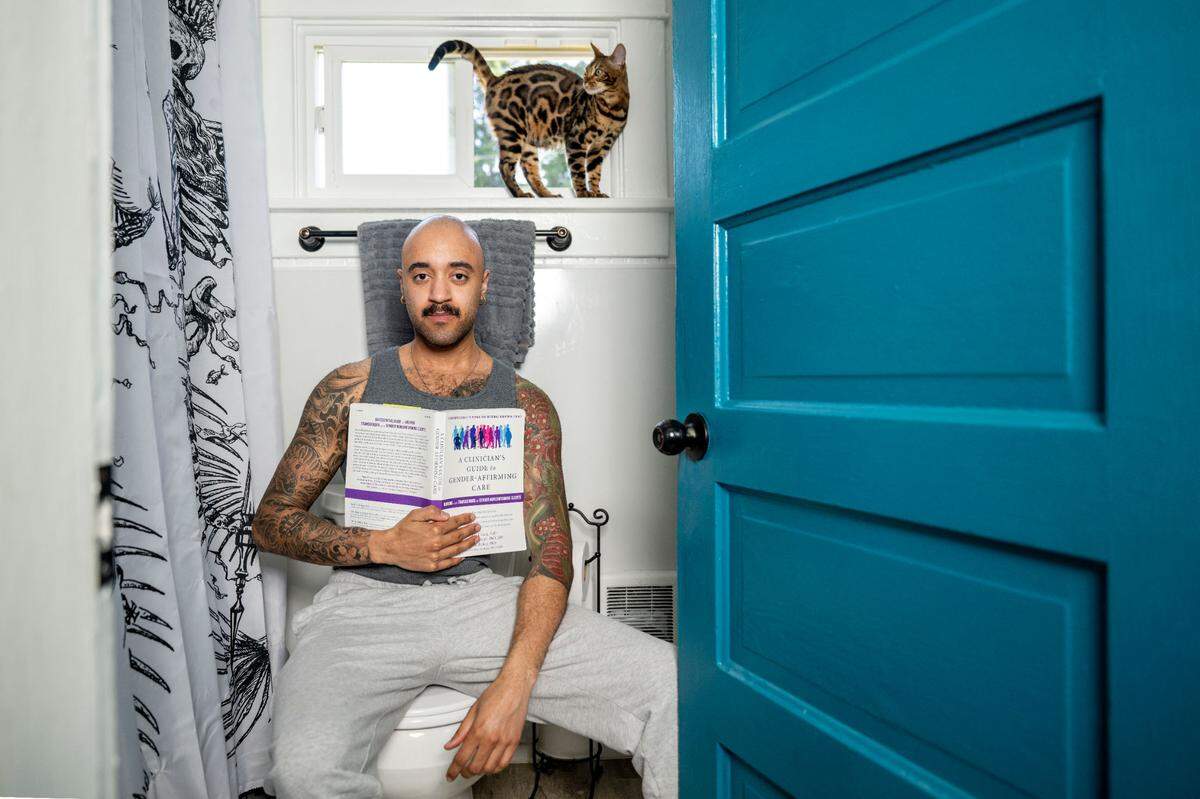
Scott Beck, 26, Tacoma
Scott Beck grew up in rural Georgia before making a “mass exodus” to Washington a couple of years ago for better access to gender-affirming care covered by insurance. Beck is an intern at the Rainbow Center and works helping people in mental health crises. His dream is to work in policy, creating more inclusive medical practices for the transgender community.
Beck didn’t find a word for his transness until age 14.
“I felt a deep sense of being out of place with my body. I felt as if something wasn’t quite right, but I couldn’t put my finger on it,” he said. “When YouTube was first starting, there was a guy on there who was trans, and the moment I saw it, a light bulb went off in my head. I was like, ‘Oh, that explains everything I’ve been experiencing for the past eight years.’ I actually had a word to use that completely changed my life.”
Growing up in a conservative town and family, not a lot of people understood him, and “it was probably one of the loneliest times of my life,” Beck said.
When he could medically transition without parental consent in Georgia at age 18, Beck said it was the first time he had ever felt so much self-acceptance and love for his body, especially growing up with religious shame in the Bible Belt.
“I had so many moments of joy as my body finally was coming to be what I always expected it to be,” he said. “This idea of self-love, it was almost as if it escaped me for the first 20 years of my life.”
In the current social and political climate, Beck said he feels a mix of emotions: “an extreme sense of pride in this communal journey we’ve all taken” but also an “extreme disheartening” to see a wave of bills designed to decrease access to transgender medical care and censor LGBTQ history in the education system.
“There’s this liberal bubble of acceptance [in Tacoma]. But, you know, I have friends who are down in the South who are really terrified even to walk on the streets. Terrified for their safety,” he said. “It’s very bittersweet. This discrepancy we have in the U.S. is very divided right now.”
Beck said it’s hard to find joy, but his work as an advocate and mentor is one of his biggest passions.
“If I can tell anything to my younger self, I wish I would have been more kind to myself a lot sooner. And to learn discernment for people’s opinions,” he said. “To know that I am whole and worthy as I am, regardless of society’s thoughts or family’s thoughts. I wish I would have been much kinder to myself. To know I was not defective, but lovable.”
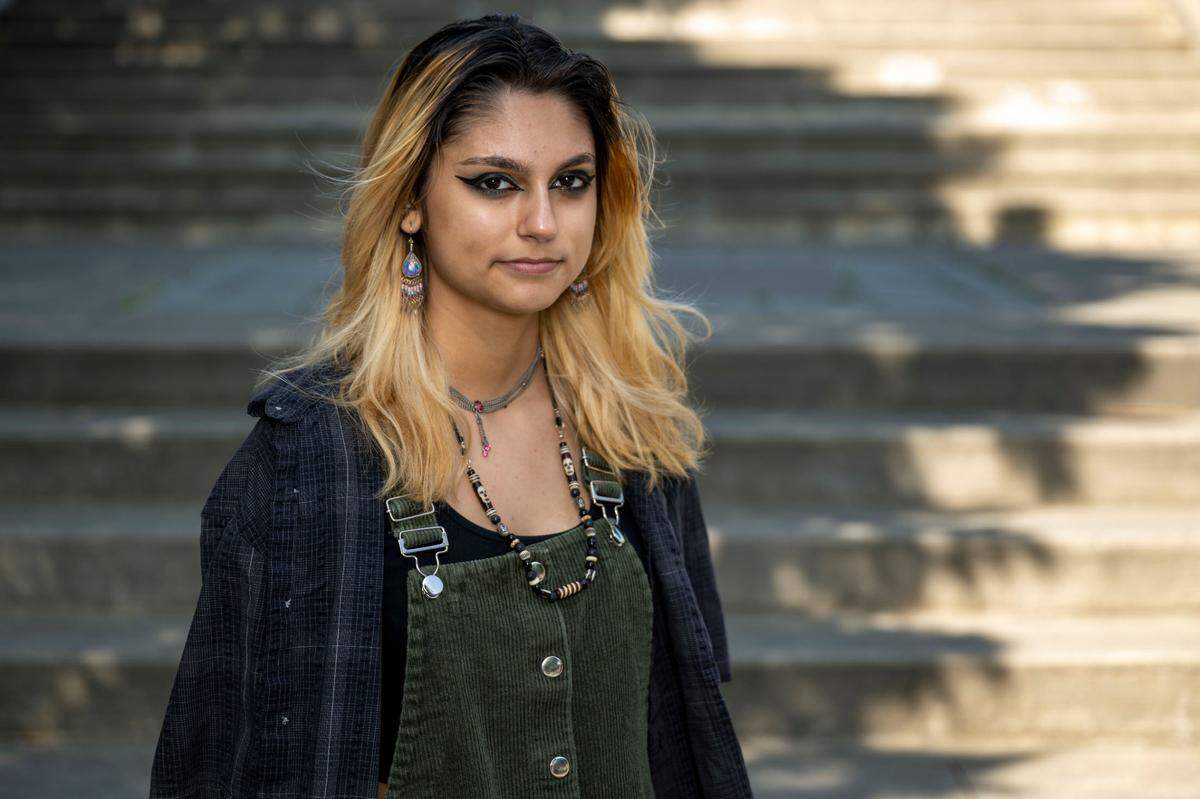
Billy, 16, Lakewood
Billy is a Lakewood junior in the Clover Park School District who identifies as a non-binary trans masculine queer Latino person and uses they/them pronouns. They chose not to have their last name printed because they are bullied in school and have not come out to some family members.
“For me personally, it’s like crossing gender roles and gender norms. Looking how you want to,” Billy said. “I use the term [non-binary] because I feel it fits. I don’t like commitment to one gender. Using the terms both non-binary and trans masc – those both feel good. They feel me.”
Billy said they always felt different than other kids and remembers tucking their hair into a hat and wearing a baggy sweatshirt as a child to trick people into thinking they were a boy. In seventh grade Billy started using they/them pronouns when they met teachers and friends who were supportive.
“I grew up being raised by my dad, and my dad also didn’t believe in raising my sister and I with gender norms,” Billy said. “He would cook and clean, but he also taught my sister and I how to hunt and how to use knives and things like that.”
When the COVID-19 pandemic happened, Billy was in seventh grade. When classes returned in person at the end of eighth grade, they said, “There’s this new ‘us’ versus ‘them’ mentality that’s always sort of been there. But it’s amplified and increased now.”
Billy said they’re trying to disconnect from social media and the news because “it’s just awful opening your phone … and seeing all these people hate you.”
“They think you’re grooming children, just for like, telling your children they can accept themselves. It’s really awful,” Billy said. “Something they tell young people is, ‘Oh, you’re only queer because the internet told you to be.’ And that’s not necessarily true. I’ve always been here. I was born this way … just being on the internet and learning about being queer, it’s given me the words to articulate my identity and put together the puzzle pieces. It’s given me the skills and knowledge.”
Billy said they “feel impending doom whenever I think about” friends and family who live in the South and the Midwest, but said activism has given them inspiration. Watching their mother, a queer Latina woman, get married and help others also brings them joy, Billy said.
“I would tell young trans people not to give up. … Older trans people exist. Trans people have existed for so long, and they’re gonna continue to exist,” Billy said. “Continue being yourself so that you can be the inspiration for others, I guess. Take care of yourself. Because it’s hard, but there’s no one else like you. It’s so important to just love yourself and others unconditionally.”
If you go
What: Tacoma Pride Celebration.
When: Noon-6 p.m., Saturday, July 8.
Where: Entrance at South 9th Street and Pacific Avenue.
Admission: Free.
Information: tacomapride.org/
This story was originally published July 7, 2023 at 5:15 AM.