Vandals keep trashing Pierce Transit bus shelters. But a solution might be on the way
It took just a few minutes for Kris Delano to pop out a pane of glass from a Pierce Transit bus shelter and install a new one on a recent sunny September day.
Delano has had a lot of practice lately. The pane, with a spiderweb pattern of cracks, was just one of several he was replacing that day, a daily task for him and his co-workers.
Increasing incidents of broken glass, trash dumping, graffiti and other acts of vandalism have been keeping Pierce Transit’s seven-person crew of maintenance workers busy the last several years. Another nine-person crew is devoted just to cleaning the agency’s 524 bus shelters and 12 park-and-rides and transit centers.
Those tasked with policing and repairing the system’s infrastructure say it’s a daily problem. But if approval and funding come through, a new, tougher bus shelter could soon be replacing the glass houses at which stones — and bricks and bottles — are regularly thrown.
Rising costs
“It’s frustrating, because it takes time away from other people who could be otherwise helped,” said Chief Ed Roberts, Pierce Transit’s head of security. His team of safety and police officers spend an inordinate amount of time responding to reports of vandalism, making arrests and writing reports.
“Even if we don’t find the offender ... we still have to take the time to generate an official report,” he said. “That can take anywhere up to an hour to get that report completely finished and submitted.”
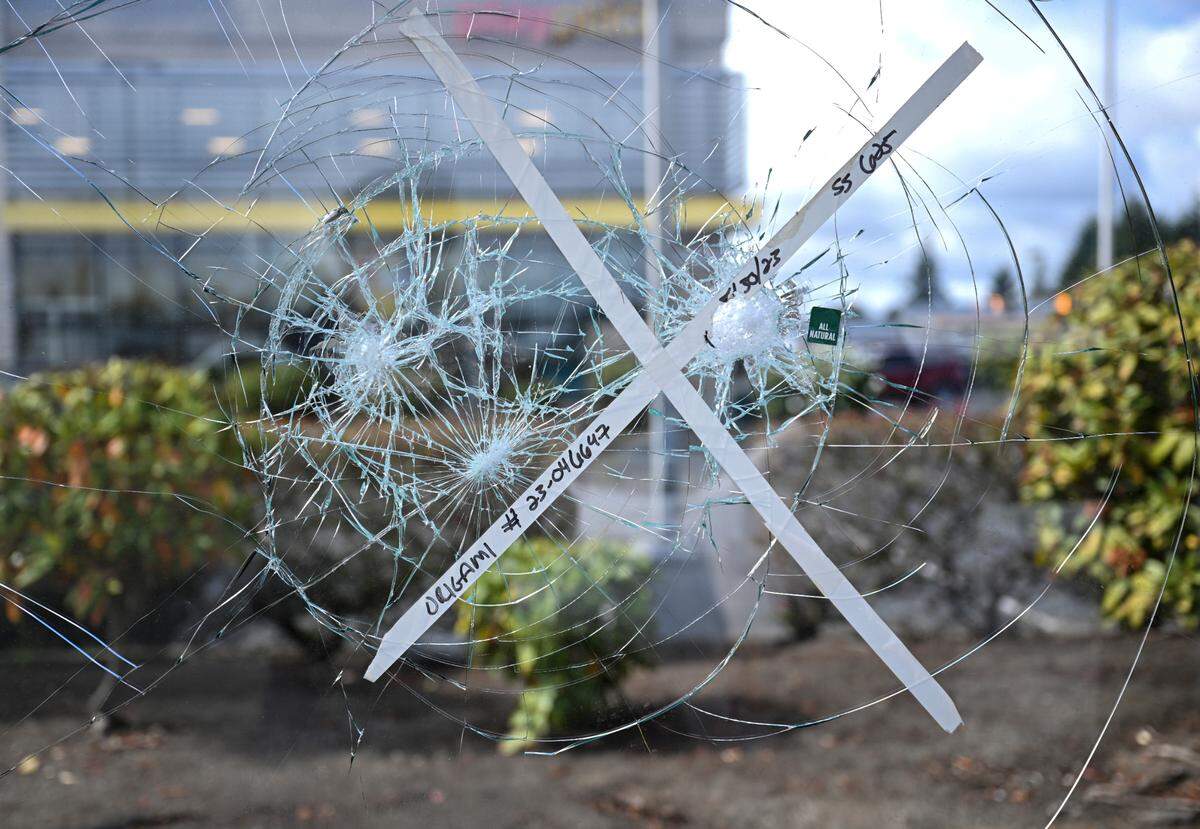
There’s also the cost of glass. By mid-September, Pierce Transit had spent $100,000 on replacement glass alone. Pierce Transit spent $70,000 on glass in 2022. The higher figure for 2023 doesn’t necessarily reflect more broken glass this year, the agency said. It’s taking a more aggressive and quicker response in 2023.
Societal trends
Pierce Transit is neither the only local victim in this era of broken windows nor is it the only transit agency suffering from the phenomenon. Shelter smashing and trashing is happening from Baltimore to London.
In Tacoma, it’s not just bus shelters that vandals target. The city’s businesses and institutions are frequent victims. Sometimes, it’s to gain entry for thefts. At other times, it’s just wanton destruction.
Pierce Transit’s executive director of maintenance, Adam Davis, said vandalism has risen steadily in the five years he’s worked for the agency.
“We’ve had to continuously innovate and come up with new ideas and new approaches to try to combat it,” Davis said.
Those includes strengthening relationships with construction vendors, ensuring spare parts are stocked, increasing overall maintenance levels and adding training for employees, particularly on dealing with the people who might be responsible for breakage.
Who is breaking windows?
Davis and others who work for Pierce Transit said there’s no area of the system that is vandalism-free.
“It wouldn’t be fair to point out neighborhoods,” said Nick Nash, Pierce Transit’s facilities manager. But downtown Tacoma sees more than its share of vandalism, she said.
“There is no pattern, it happens throughout the system,” Roberts said.
There is a pattern when it comes to who is causing the vandalism.
“A common theme is illicit drug use,” Roberts said. “And of course, the mental health issues that accompany habitual drug use.”
Roberts attributes much of the drug-related behavior to fentanyl use.
Anatomy of a shelter
Bus shelters aren’t sexy. They don’t have comfy seats or run on rails. But they are integral to bus travel, offering shelter from the Pacific Northwest’s harsh wind and rain.
Pierce Transit’s shelters come in two types. Both have trash receptacles and benches. Both have three walls and a ceiling, made from glass and metal. One has slightly longer sides and a longer cantilevered roof.
New, each shelter costs about $15,000.
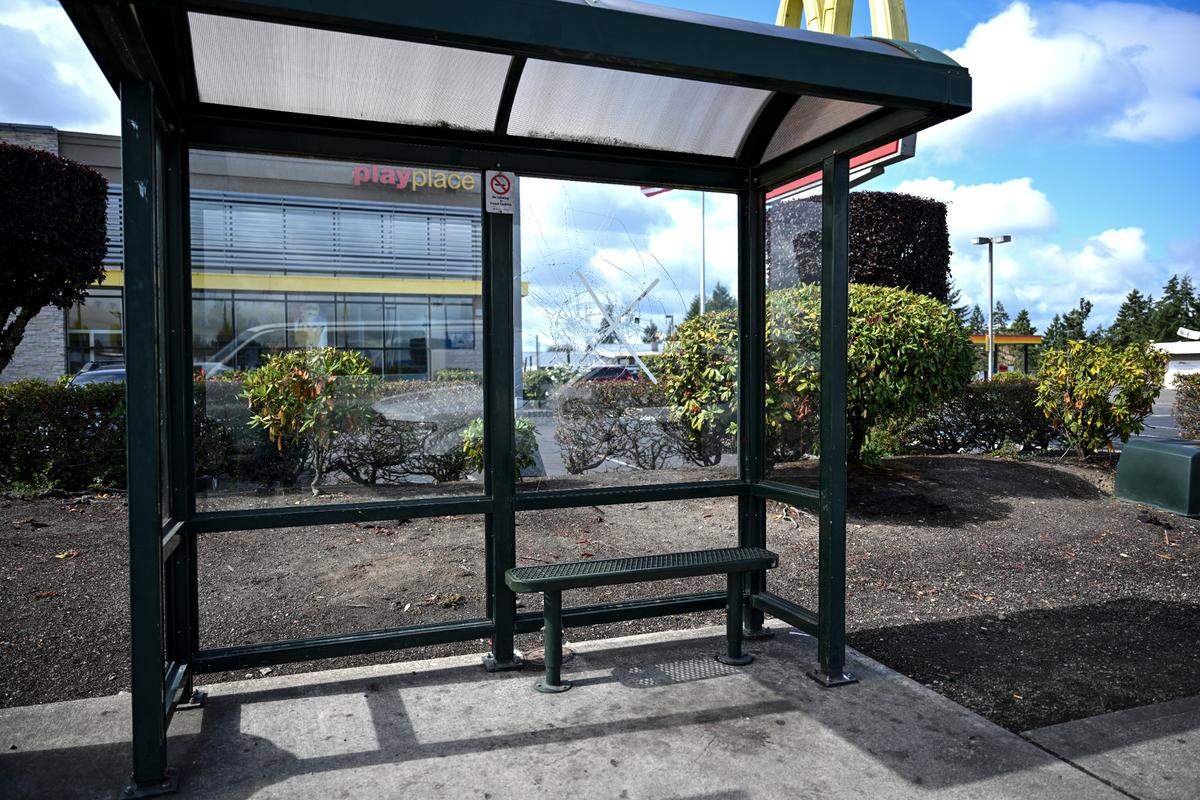
The agency’s more aggressive glass-replacement practices seek to replace broken windows at a quicker pace. Pierce Transit is also replacing some lower glass panels in shelters with metal panels.
“Because they just get broken the minute we put them back in,” Nash said.
While it might seem creating an all-metal shelter would solve the glass breakage problem, that solution isn’t practical. Shelters need to be visible for the safety of their users.
Illegal dumping
Bus shelters have become favorite targets for illegal garbage dumping.
“Our customers are not the ones that our biggest cost comes from,” Nash said of garbage removal.
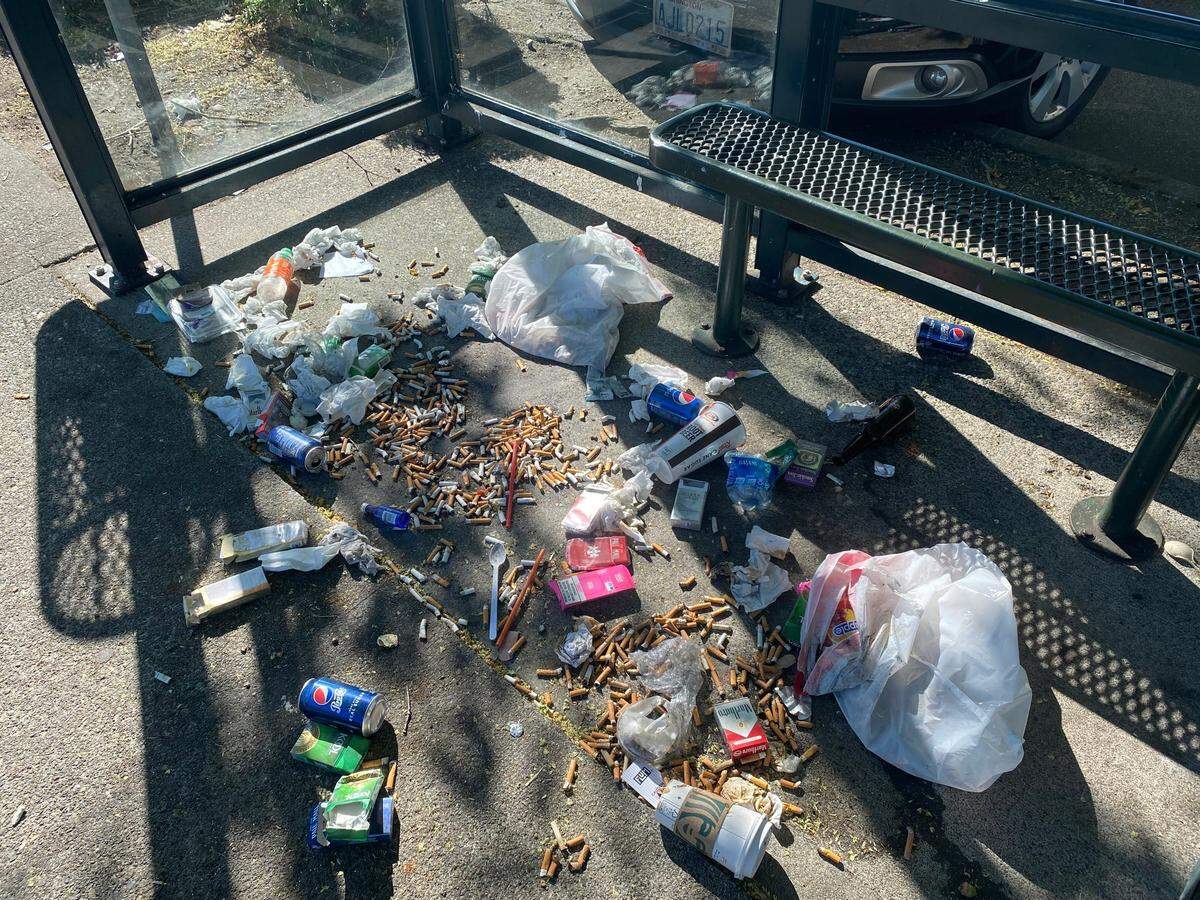
In 2022, 719,000 pounds of garbage was picked up from shelters.
“I figured it out. It’s eight Boeing 737s,” she said.
Pierce Transit’s maintenance crews clean 194 of the agency’s 2,104 bus stops every day. Davis calls the crews unsung heroes.
“Quite often, they’re also ambassadors,” Davis said. “They’re helping patrons with information, they (assist with) medical emergencies, they help coordinate communication.”
In addition, quality assurance employees inspect the system daily for cleanliness, maintenance issues and safety hazards, he said.
Policing
Chief Roberts has 17 public safety officers who do not carry firearms but do have Tasers, batons and the ability to make detentions in situations where life or property rights are at stake. Roberts is a sergeant patrol supervisor with the Pierce County Sheriff’s Department, which contracts its services to Pierce Transit. A PCSD deputy works as an investigator for Pierce Transit full time.
Pierce Transit uses Allied Universal Security employees to provide watchman services.
“We utilize them as kind of a front line eyes and ears,” Roberts said. “They notify us when there’s an issue or a problem, or anything that we need to deal with.”
In addition, the agency contracts with Lakewood, Puyallup and Federal Way police departments and the PCSD to provide fully commissioned officers. Two officers from each department work shifts that cover 6 a.m.-midnight every day at transit assets.
New shelters on horizon
To mitigate the ongoing vandalism, Pierce Transit is in the planning stages of replacing its shelters. The new shelters would have smaller panes of glass. That makes them cheaper to replace and harder to break, Davis said.
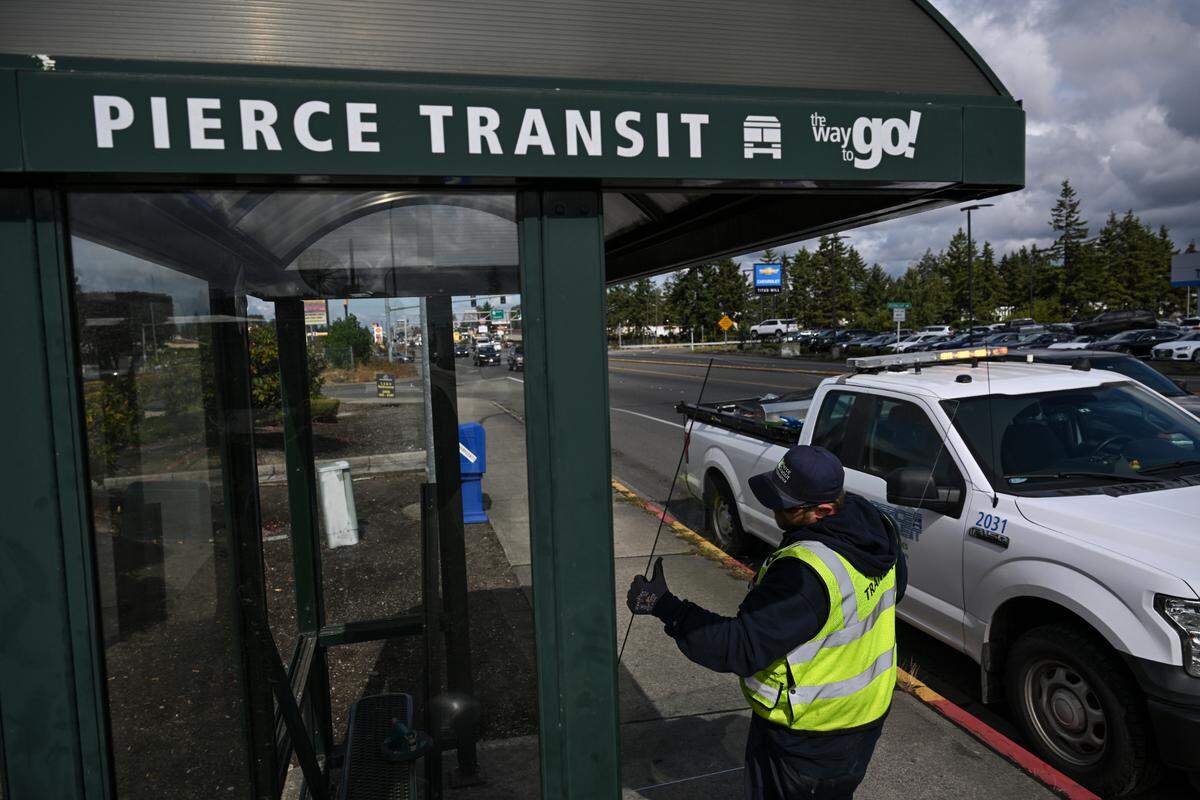
Pierce Transit tested Plexiglass, but the material failed.
“We noticed that they would damage those or light them on fire,” Davis said of vandals.
The new shelters might have expanded metal sheeting in the lower areas. Expanded metal is perforated to allow visibility.
While the shelters could have been retrofitted, Davis said new shelters are more cost effective.
The new shelter plan has yet to be presented to and approved by Pierce Transit’s board. If it goes through, the first phase using $1 million of Pierce Transit funds would only be enough money to replace 20 percent of the shelters. Total replacement would cost $8 million, Davis said.
In addition to the $1 million from Pierce Transit’s capital funds, the agency has applied for a $2.5 million grant from the federal government.
Pierce Transit could not provide a timeline for the shelter replacement.
Optimism
Roberts dares to say what some in the justice system might not.
“We do have a broken system,” he said. “You know that. I know that. I think everybody is aware of that here in the state of Washington.”
In an overburdened justice system, vandals aren’t a high priority.
“It’s a catch-and-release program,” Roberts said. “It’s not meant to be that way. We have to try to understand that there’s been conditions in the last three or four years that have have led to why it’s a catch and release.”
Still, he remains optimistic.
“Don’t I have to be?” he asks.
He urges the public to call 911 if they see vandalism occurring.
“Let us know so that we can get on top of it as quickly as possible,” he said. “Our intent is to try to modify that behavior.”
His team can provide people with resources, be it a phone number for a counselor or a referral to a homeless shelter.
“Accepting (crime) as just part of what a society is today ... it’s not helping us,” Roberts said.