Tacoma’s best band never made it big — and they don’t care. They’re playing Bumbershoot
In all my years in Tacoma — and in all the time I’ve spent writing about this scrappy second-place city and the misfit characters who make it tick — somehow, I’d never been to the Henderson Compound before.
Located just beyond Tacoma’s outer limits, in Parkland, the Henderson Compound sits on an acre of land. It’s a property that doesn’t seem out of place in the area: a thicket of fir trees and overgrown bushes, the kind of Pacific Northwest foliage that seems to suck up moisture and hold onto it forever, obscures a small home that’s been there for generations, several lifetimes of moss collected on its battered roof.
I was told there would be “a ton” of cars in the driveway, which seemed like a helpful detail until I was reminded that in this rough-and-tumble corner of unincorporated Pierce County that often comes with the territory.
From the road, unless you know any better, the Henderson Compound’s place in the annals of Northwest music would be impossible to spot.
It’s where Girl Trouble, the most quintessentially Tacoma band the City of Destiny has ever produced — and one of the most criminally underappreciated groups from a game-changing era of local rock music that’s now known the world over — was born, almost 40 years ago.
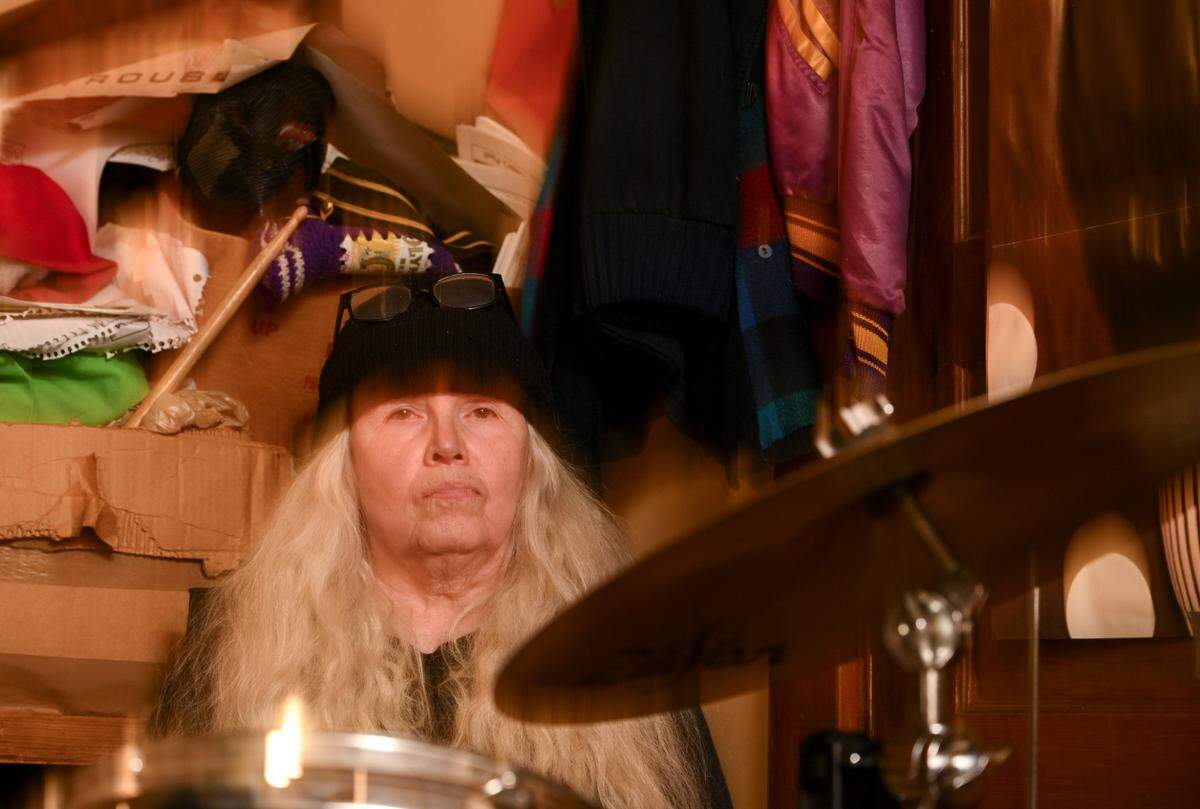
“This is the piece of property that my dad, and my dad’s folks — so my grandmother and grandfather — got when he was 3. He went away to war and then came back and married my mom, and they bought the house from my grandma. Half of this house was built by him,” said Bon Henderson, the band’s drummer, not long after I arrived.
Better known behind her kit as Bon Von Wheelie, Girl Trouble’s eldest member — by more than a decade — was sitting in an old lawn chair just outside the cramped shed where the literal garage rock band has practiced since the very beginning. By her side was bassist Dale Phillips, singer and frontman Kurt “K.P.” Kendall, and her kid brother, Bill Henderson, a guitarist who plays under the name Big Kahuna. There was a half-empty, half-warm case of Rainier nearby.
Tacoma, for all its cracks and jagged imperfections, has given rise to no shortage of important rock bands over the years. There’s the Sonics and the Wailers, the Ventures and Seaweed and plenty of others. More recently, up-and-comers like Enumclaw have emerged.
But for many, Girl Trouble — over the course of four decades spent stubbornly adhering to an old-school punk ethic that has defined their stringent approach to music and art — stands above them all.
Girl Trouble isn’t the most talented or gifted band, even if they’re now recognized as a definitively unique part of Pacific Northwest music history and a group that served as inspiration for no shortage of the local acts that followed.
What they are is a collection of weirdos and outcasts that perfectly personifies the coarse edges, beguiling defects and endearing, dirt-under-your-fingernails charms of this strange place we all call home — a town that’s more accustomed than most to being overlooked and ignored.
In Girl Trouble — which has been eluding fame since 1984, as the band’s well-worn tagline suggests — Tacoma sees itself.
“Tacoma was a tough town,” Von Wheelie told me when asked about how the city shaped the band she’s long kept beat for.
“There were still porno places, and the Fun Circus and dive bars. It was this blue-collar town. … It gave us an edginess,” Kendall interjected after taking a drag on his cigarette, explaining that T-Town’s bad reputation in places like Seattle and Olympia put a chip on the band’s shoulder that’s there to this day.
“You were an outcast because you were a punk, but being an outcast punk from Tacoma was even worse,” Kahuna added.
“That’s part of Girl Trouble,” Kendall said.
“It made us bond tighter.”
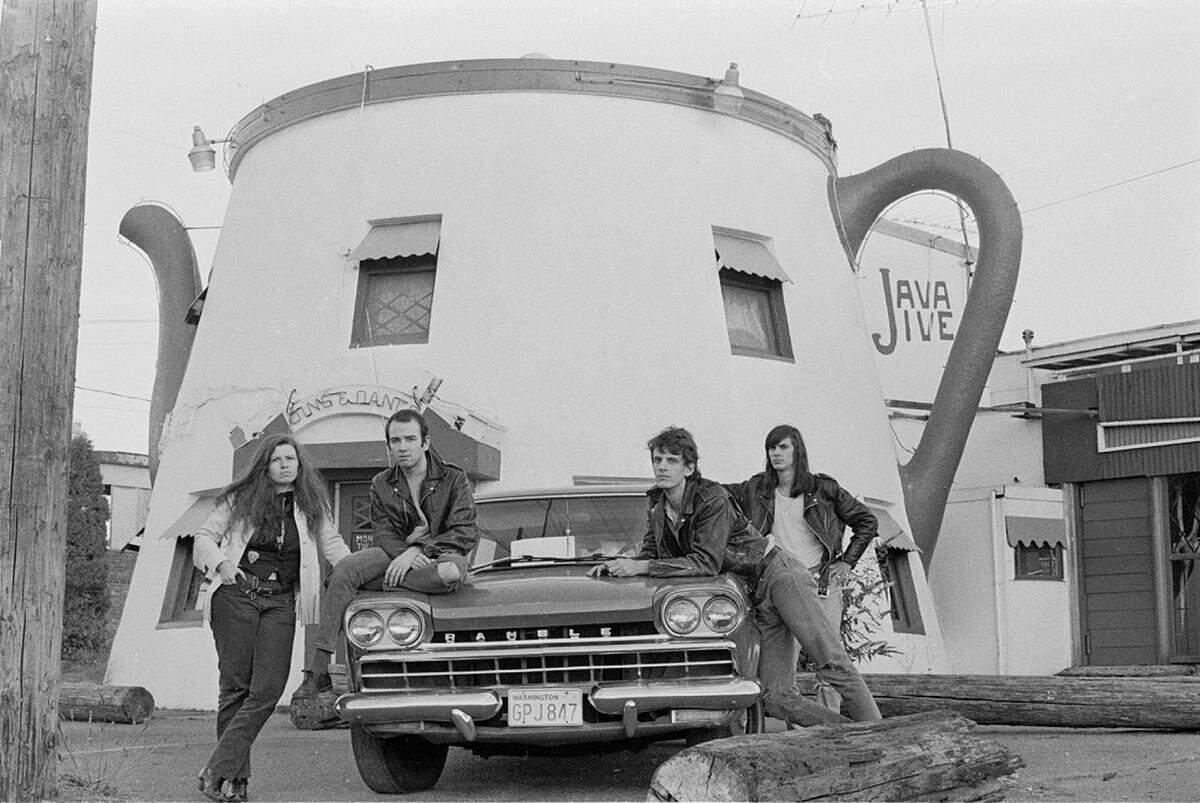
Nostalgia and maladjusted pride
I’ve wanted to write a column about Girl Trouble in The News Tribune for as long as I’ve been with the paper. Over the years, I’ve referenced the band many times, which has come in handy because the mere mention of the group can elicit a precise mix of nostalgia and maladjusted pride that so many Tacoma residents hold in their hearts, but the opportunity never arose.
Then this year’s Bumbershoot lineup dropped, with the long-running Labor Day weekend musical festival aiming to get back to its local roots.
There, at the bottom of the first day’s lineup — in a tiny print dwarfed by Bumbershoot’s famous headliners — was a familiar name, receiving what has become a familiar amount of attention.
Which is to say, relatively little.
Girl Trouble is scheduled to play Saturday, Sept. 2 at 6 p.m. on Bumbershoot’s Vera stage, long before Sleater Kinney, which emerged from Olympia’s riot grrl scene a decade after Girl Trouble played its first show, delivers one of day one’s marquee performances at a much larger venue in front of what promises to be a much larger crowd.
A screening of the definitive Girl Trouble documentary, “Strictly Sacred,” which was directed and produced by local filmmaker Isaac Olsen, Bon and Kahuna’s nephew, will take place at 8:30 p.m. Saturday and Sunday at SIFF on the Seattle Center campus. Featuring four films in all, the program is appropriately billed as “Exceptionally Underrated.”
According to a Bumbershoot spokesperson, all the films focus on a time before grunge and “the careers and rare moments in Seattle’s underground and forgotten music scene.”
“All you have to do is look at the Bumbershoot poster. A band that’s been together for like two months right above Girl Trouble has a font that’s like 10 times the size. But they totally relish in it,” said Jim May, who for a little over a year between 1987 and 1988 operated the all-ages Community World Theater on South M Street near South 56th.
Known by many as one of the forefathers of Tacoma’s punk, hardcore and indie rock scene, May helped bring an eclectic mix of underground bands to town long before grunge became a household word — or a divisive part of the local music lexicon.
The lineup of acts that took the stage at the Community World Theater — which, you guessed it, was a haphazardly converted adult movie theater — includes a long list of influential names still recognizable today. It features national underground touring acts like Fugazi, D.O.A., NOFX and Scream (featuring a young Dave Grohl on drums), as well as many of the local bands that would soon help change the world, like Screaming Trees, Skin Yard, Melvins, Green River and, yes, Nirvana.
Girl Trouble played Community World Theater numerous times, and May said he clearly remembers the band’s origins, in part because he and John Grant — a duo Kendall described as “head honchos … and punk rock leaders” in the fledgling scene — shared a house with Kahuna when Girl Trouble was in its infancy.
Nearly from the get-go, May told me, Girl Trouble was different, both in the music they made — at least after graduating from learning covers of the Cramps, Johnny Thunders and X — and the approach they took to being a band.
With a sound that melded Tacoma’s garage rock roots with elements of surf guitar and an offbeat persona that borrowed heavily from Von Wheelie’s childhood spent idolizing the Monkees, the Beatles and Elvis — a pop-culture reverence that permeates everything the band touches — Girl Trouble had an artistic North Star from the beginning, May said.
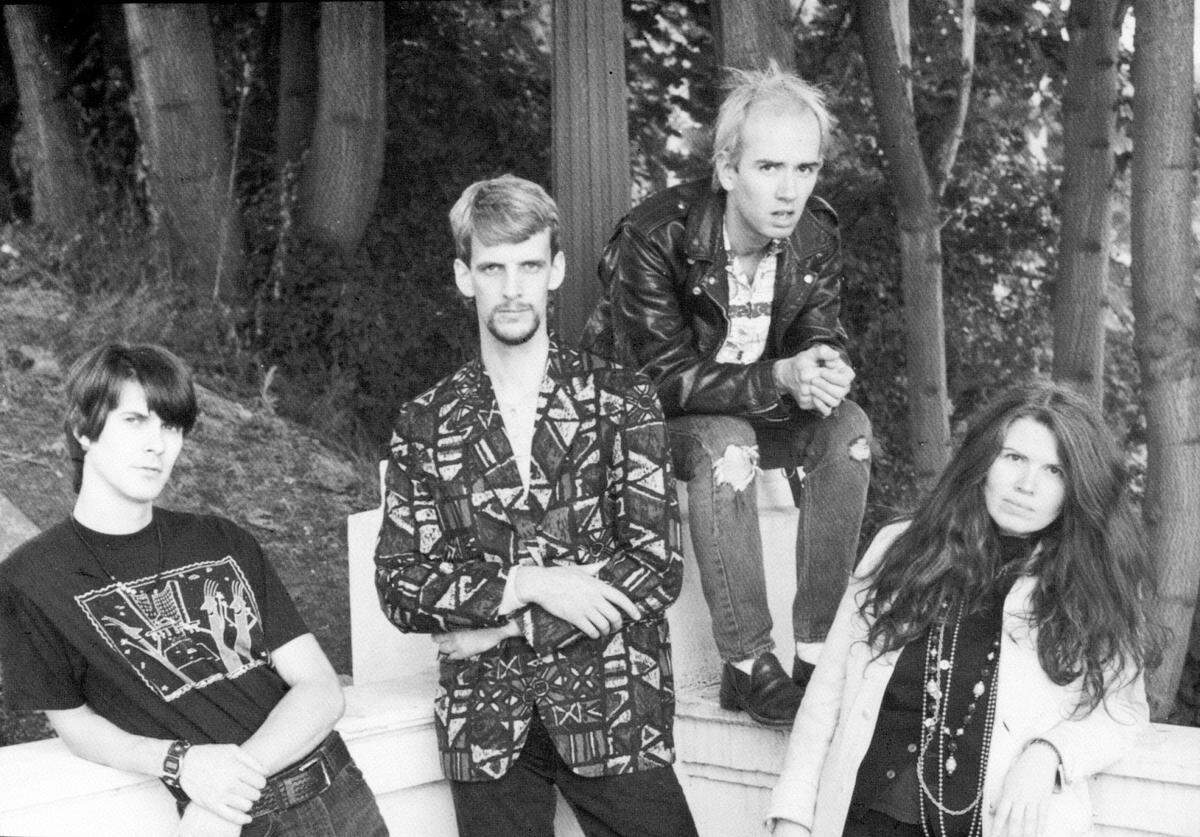
Sometimes Girl Trouble’s unusual approach has meant incorporating a team of go-go dancers at live shows, including two of particular import: Sylvia Eads, better known as Granny Go-Go, who joined the band on stage well into her 80s before her death in 1996, and Neko Case, who stumbled into Tacoma’s punk scene as a teenager and quickly began hanging out with the band — before she worked as a fry cook at the Java Jive and long before she became a massively successful solo artist in her own right.
Other times, it simply meant dodging when so many other ultimately more successful bands weaved.
At its core, May said the band’s attitude is simple. Girl Trouble has always done it exactly the way they want to, building the band and its image from the ground up.
They’re from Tacoma, after all.
It’s the only way they know, May suggested.
“I always loved all of them — and just the whole thing,” May told me by phone, recalling Girl Trouble as a foundational part of Tacoma’s local music scene and an act that stood apart from any of their 1980s and ‘90s contemporaries, including for the outlandish fun and dancing their performances inspired.
“They’ve never sold millions of records, but they are way different than any other band you’ll ever meet,” May said.
“For them, everything is about the end result, and the vision.”
A course all their own
Artist purity — or, viewed through a less-flattering but probably just as objective lens, an obstinate unwillingness to bend — is a quality that hasn’t always made the band’s life easier.
It’s a reality even the band’s members acknowledge.
There’s a self-inflicted rigidness and peculiarity that has always defined Girl Trouble, and with each year that passes, it becomes all the more remarkable — not to mention strange.
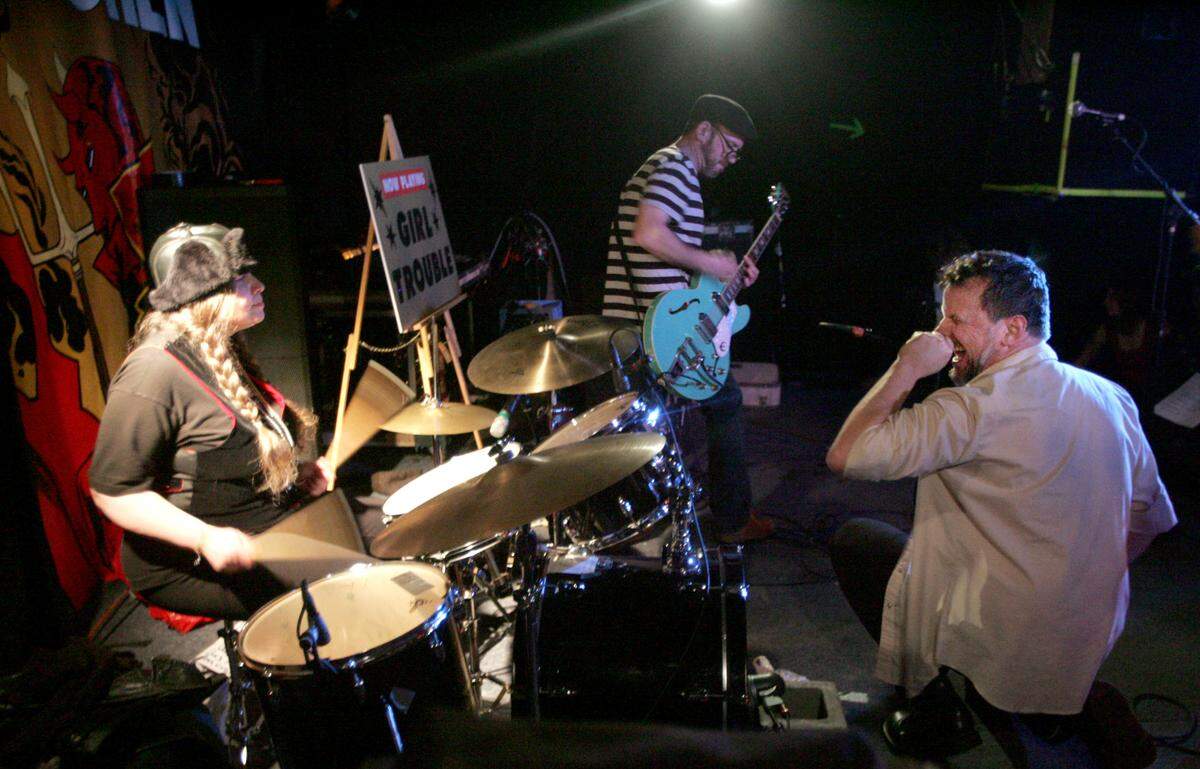
Think about it: Von Wheelie, whose DIY ethos has always provided Girl Trouble’s backbone, is a product of the 1960s who grew up on the Northwest’s soggy brand of disconnected, stick-it-to-the-man flower power. She graduated from Parkland’s Washington High School in 1971 and was in her early 30s when the band got its start more than a decade later (I’ll let you do the math).
Girl Trouble’s other members were young punks fresh out of high school at the time, and drummers were few and far between, so Von Wheelie bought a cheap kit from the Sears surplus store and elbowed her way in — enamored by the energy and accessibility of the emerging scene.
In the decades that have followed, the members of Girl Trouble have doggedly charted a course all their own — for better or worse.
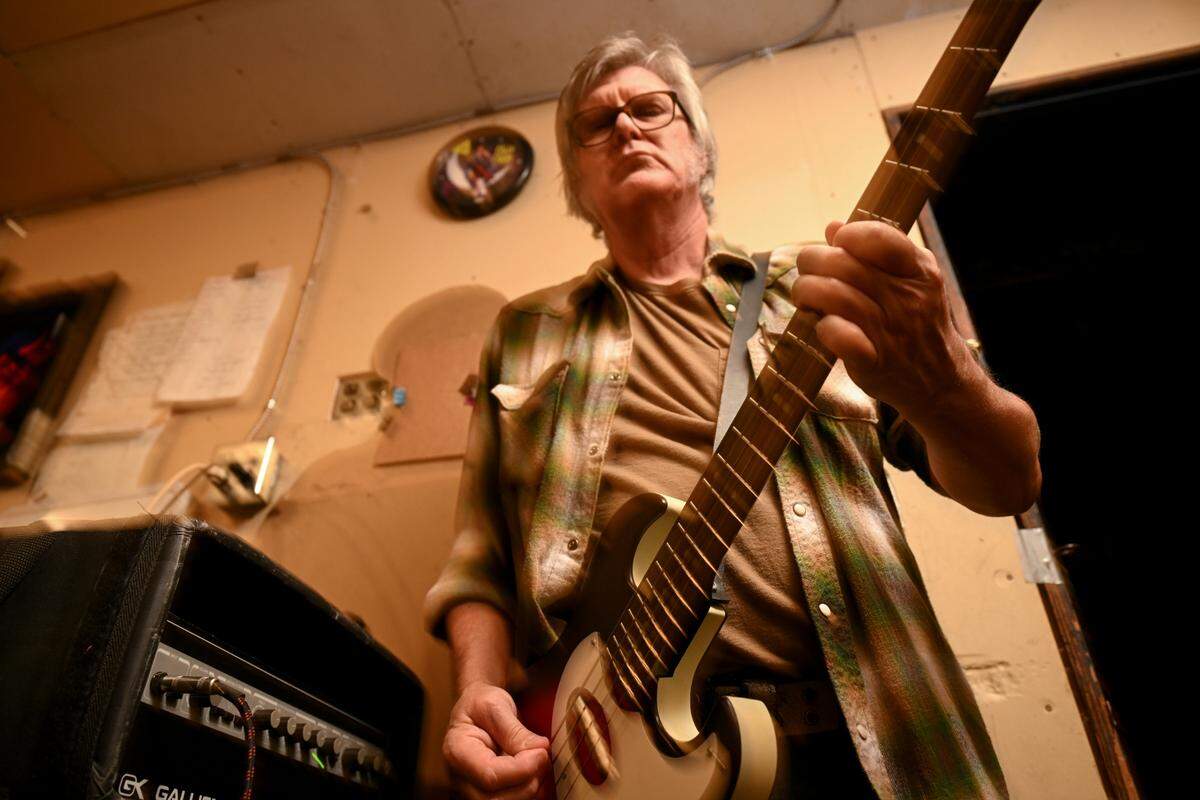
There’s a reason the band’s lengthy catalog features nearly as many records as it does record labels, and also a reason why, almost 40 years later, they’re essentially in the same place they started — right down to the Henderson Compound, where Von Wheelie still lives. In 2013, Bon and Kahuna’s father, a beloved figure in the Girl Trouble universe known as the Powerhouse, passed away. Their mother, affectionately nicknamed the Babe, died nine years later.
There have been no marriages, no kids and relatively few distractions, all things considered — just an underlying dedication to Girl Trouble and all that entails. Outside of a brief period when Kendall left the band, only to quickly return, things are unchanged.
Girl Trouble is unwilling to compromise, in life and in art.
“What can I use as a comparison? If I said Charlie Manson or I said Jonestown, everyone would think they’re some (expletive) death-murder cult, and they’re not. But they’re some kind of cult,” said Rick King, a longtime fan of the band and the owner of Guitar Maniacs downtown.
King is a self-described “proud Tacoman” who has known more than his fair share of influential musicians over the last three decades.
“I’ve been in a lot of bands, and I love my band members — and a few of them I look at as family — but man, those guys are beyond family,” King said.
Olsen, drawing both on his experience growing up with Girl Trouble and the research that went into his 2014 documentary on the band, put it another way:
“It is a little precarious, and it is a little bit broken,” he told me.
“I think it’s interesting to study Girl Trouble, because it is what happens when you’re punk rock forever.”
‘Happy with what we have’
With the late-August sun starting to disappear, my sprawling conversation with Girl Trouble reached a natural conclusion.
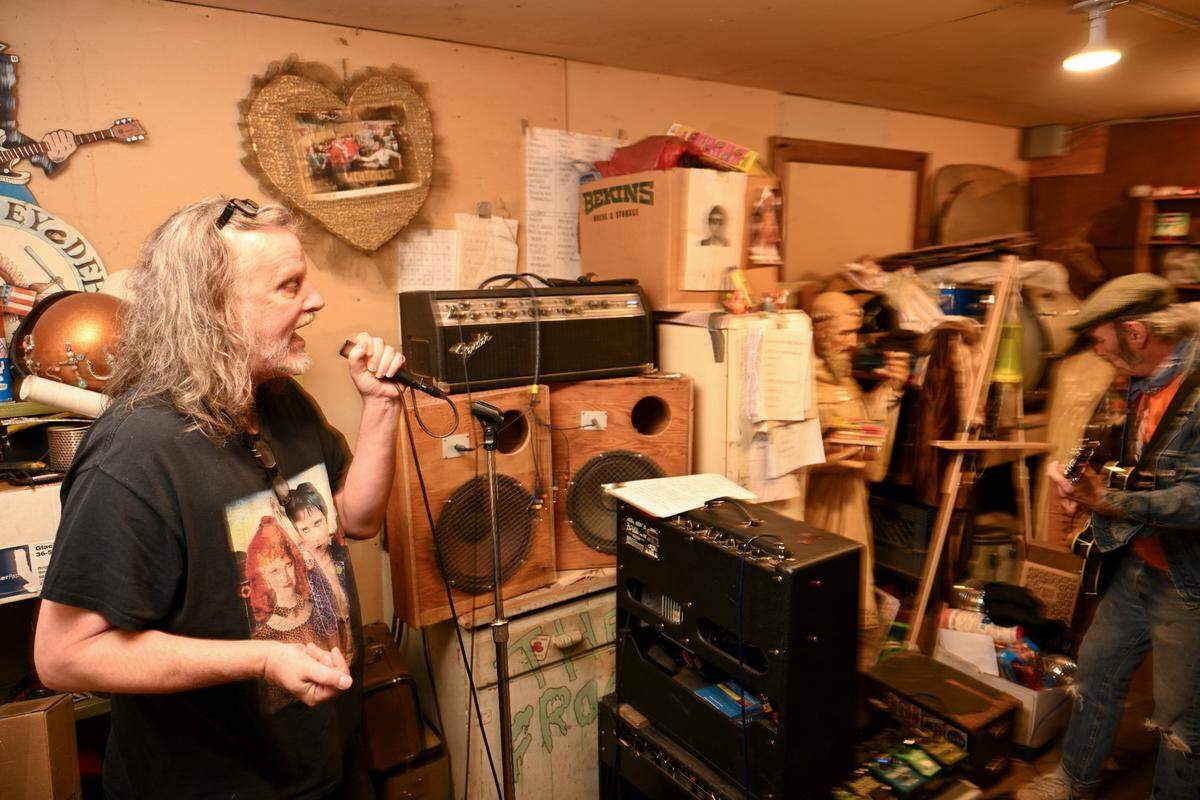
It was probably for the best since they still had a few songs they hoped to work through in preparation for their upcoming Bumbershoot gig and it was getting late, even in a place where a band can play well into the night without disturbing the neighbors.
Collectively, the members of Girl Trouble were as surprised as anyone when an organizer reached out and asked if they wanted to play, more than 20 years after the first and only time they’ve previously played the well-known Labor Day weekend festival, they told me.
They’re far less surprised that they’re still doing what, in retrospect, was the only thing they ever wanted to do, they said — be a band from Tacoma on precisely their own terms.
“Everyone has an idea of what success is going to look like, and that matures along with age. I think your ideas change and sometimes maybe you feel like the ignorance of your youth (held you back) or if things had gone another route, I wouldn’t be standing now here in the same spot — following these ideals that I had as a young kid,” said Phillips, known for being the most introverted member of the band.
“But I think our idea of success is just putting out stuff that we like, and mixing it to a degree that we enjoy, and having everything presented in a way that we all agreed on,” he continued.
“Just stuff we’re very proud of.”
After a rare break in the banter, Kendall reached his hand into the case of Rainier and came up empty.
Before inviting me into the shed for an intimate glimpse at what the band has done religiously every Tuesday and Thursday since they were kids — practice — Von Wheelie attempted to sum up Girl Trouble and the indelible mark it has left on Tacoma.
Indirectly, she could have been talking about Girl Trouble’s relationship with an imperfect and complicated city — and the similarities they share.
“We saw other people getting famous, but it wasn’t always good,” Von Wheelie said.
“Looking back, I think we’re happy with what we have.”
This story was originally published August 29, 2023 at 5:00 AM.