WestRock mill closure: What happens next for the workforce and site potential?
The end of the WestRock mill operations Sept. 30 in Tacoma could be an inflection point for the city and affected workers to enter a new phase of growth.
Redevelopment potential for the site and rehiring potential for the workers both look promising, business leaders and employment experts told The News Tribune in recent interviews.
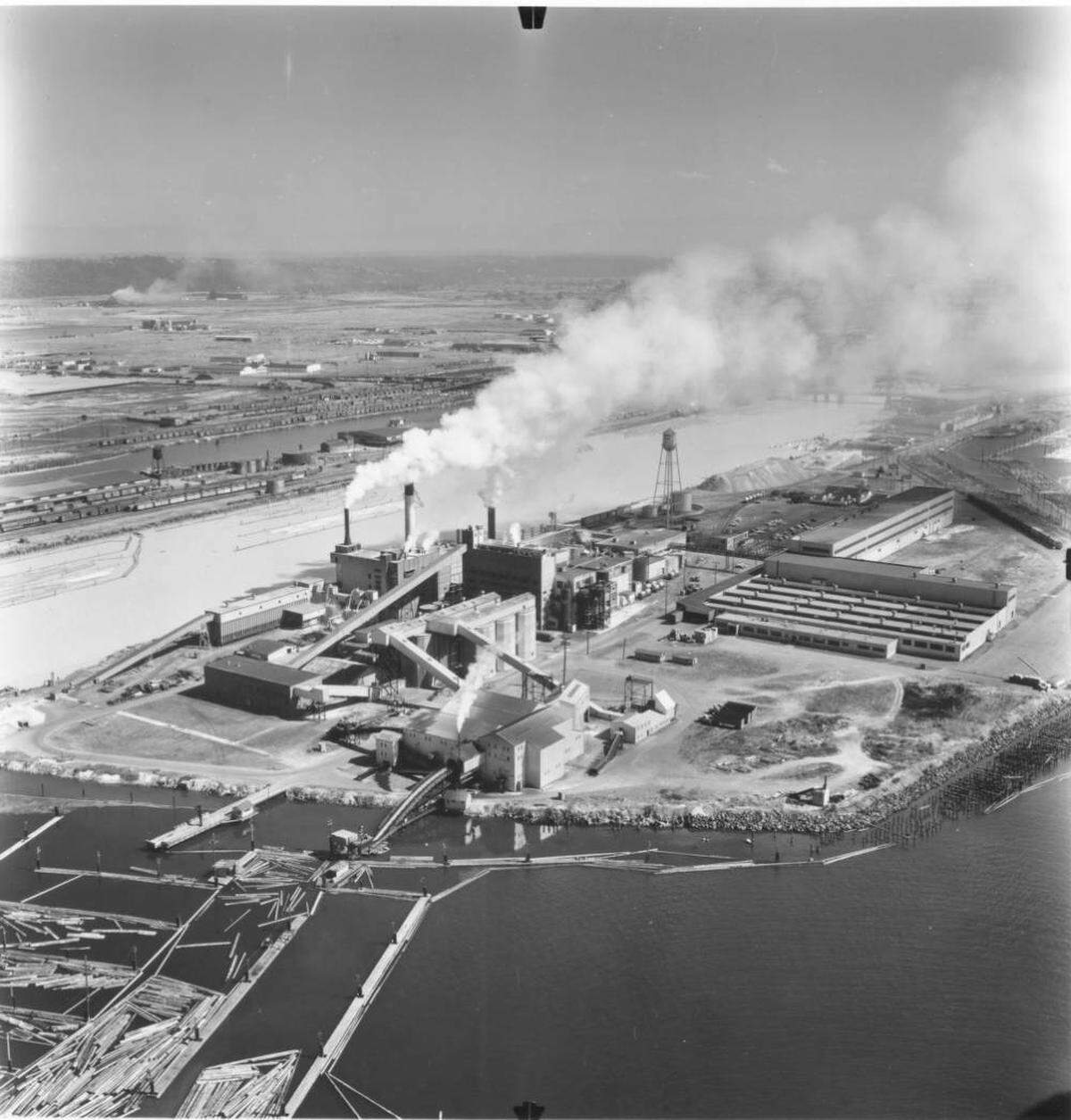
WestRock, a corrugated packaging company, is the result of a July 2015 merger of MeadWestvaco and RockTenn. RockTenn purchased the former Simpson Tacoma Kraft mill in May 2014 for more than $368 million, and the mill itself dates back to 1929, according to county records.
WestRock announced the closure of its Tacoma mill, 801 Portland Ave. E., at the start of August.
In a statement emailed Friday in response to questions, company media representative Robby Johnson wrote, “We are continuing to track according to plan.”
He added that he did not have any employment numbers to share regarding how many workers might transfer to other WestRock sites.
WestRock estimates the mill’s closure will cost them upwards of $345 million, partially offset by the eventual sale of the site. According to estimates from Tacoma Water on the shutdown, while the mill is set to close at the end of September, the official shutdown will take longer, potentially to the end of 2024.
Meanwhile, the site’s future potential has been on the minds of local officials.
Formerly a leading contributor to the city’s infamous “Tacoma Aroma,” the mill had taken steps to eradicate its odors. However, it faced an initial $52,000 fine in December 2022 for violating the company’s air-quality permit. According to Washington Department of Ecology, the WestRock site failed a performance test on April 17, 2022, when it insufficiently reduced hazardous air pollutants in the mill’s wastewater streams. WestRock passed a subsequent performance test May 11.
In July, the mill agreed to pay Ecology $32,000 and complete a performance study as part of settlement terms. One month later came the closure announcement.
In its closure announcement, WestRock said, “The combination of high operating costs and the need for significant capital investment were the determining factors in the decision to cease operations at the mill.”
Clean, green economy
Eric Johnson is executive director of the Port of Tacoma. While making clear that the mill is not port property, it’s “across the river from our marine terminal property. So I don’t think it would become a marine terminal type of property. But there are other potential uses that I could envision.”
“WestRock is in the driver’s seat as far as next steps on that go,” he said. “But the port is always going to be interested in any large piece of industrial property. That’s going to be something that we’re always going to be looking at. But right now, it’s too early for us to say anything definitively.”
Speaking from his own point of view and not on behalf of the commission, he said, “I think there is potential for a high quality industrial manufacturing campus. When I say high quality, I mean one that’s planned that has nice buildings that dives into some of the some emerging technologies in the clean economy. Hydrogen, wind, offshore wind power. I don’t want to promise anything because I don’t know if it’s suitable for that type of use.”
He added, “It’s obviously got a huge supply of power and water. So those are natural attributes that you want to try to take advantage of if you can.”
Tacoma Port Commissioner Don Meyer, speaking near the end of the Aug. 15 commission meeting, said the closure was personal for him, working at the mill back when it was the St. Regis Paper Company.
“My very first job on the waterfront was working when the chip mill was called St. Regis,” he said, “and the impact to our community is just very significant. Those are good paying jobs. … hopefully we can find a way to find a replacement.”
He added, “I think there is a role for the port to play. I don’t know what that is yet. But … maybe in the sad news, there’s an opportunity.”
Commissioner Kristin Ang, following Meyer during the meeting, also spoke of getting the community at large involved in what’s next.
“This is not just for the port, this is for our entire community to have this discussion,” she said at the meeting. “And my heart does go out to the 400 people that are being displaced.”
Ryan Spence, director of the Manufacturing Industrial Council, and Andrea Reay, CEO of the Tacoma-Pierce County Chamber, recently spoke with The News Tribune on their outlooks for the site.
“Part of what’s important to remember is that we’ve been proactively working on strategies for economic development around our manufacturing, industrial and maritime uses, and the Tideflats and in South Tacoma, and broader Pierce County,” Spence said. “This is all tied into a broader state initiative to double manufacturing over the next decade. We certainly think that there’s a huge opportunity, in Tacoma and Pierce County, to take on a lion’s share of that opportunity.”
He noted that the work is in tandem with the city’s June 13 adoption of a green economic development resolution, “which identified manufacturing as one of the strong candidates for accessible living wage jobs in Tacoma,” he said.
“I think the timing for all of this fits into those broader strategies.”
Reays agreed.
“The only constant is change, right? So we know our economy is dynamic, we know things are changing. How are we able to take the challenge of the closure and turn it into an opportunity?”
She noted that businesses and organizations her agency looks to recruit are those “community minded, with building a legacy here in Tacoma, and the South Sound … that cares about the triple bottom line — people, planet and profit.”
She added that “We’re looking for businesses, who are interested in, yes, creating solutions for their customers, building a legacy, and being a good steward of the resources that we have to provide here.”
Spence also touted the site’s “unique characteristics.”
“It’s very accessible. You can still come across the 11th Street Bridge from downtown, and with all the growth that we’re seeing in Stadium District, Downtown, and through the Dome District, it’s a very accessible location that can support easy access to living-wage jobs,” Spence said. “And that’s another reason we’re really interested in advocating for an advanced manufacturing footprint at that site.”
First, clean it up
Environmentalists also have some ideas for what should come next for the site.
When asked what they’d like to see go into the WestRock site, Communities for a Healthy Bay representative Phyllis McElroy said via email that “Communities for a Healthy Bay would like to ensure that the WestRock site is first cleaned up.”
“We believe the site should undergo thorough decommissioning and remediation to ensure it is primed for sustainable future use,” she wrote. “Afterward, we hope it will be acquired by a pioneering green enterprise, dedicated to providing safe, green jobs with livable wages. In line with Tacoma’s newly adopted Green Economy strategy, it’s vital that the city uses this site as a stepping stone in transitioning away from an economy dependent on fossil fuels and heavily polluting industries.”
An 81-page report to the city on a Green Economic Development Strategy released in March noted that “Tacoma is poised to take advantage of this generational opportunity to put its economy on a new trajectory and establish itself as a national model of inclusive economic development.”
One of its “strategic objectives” noted: “Many green economy strategies focus primarily on traditional green jobs, which are largely in the public sector or dependent on public sector spending (e.g., utility jobs, energy retrofit occupations). But growing the traded sector is important — a vibrant, growing traded sector will create green jobs in local-serving sectors, including government. The reverse is not true. Therefore, job creation in traded sectors should be valued more highly than job creation in non-traded sectors.”
‘I’ve got really high hopes’
On Aug. 24, the first Rapid Response team from WorkForce Central in Tacoma came to the mill.
WorkForce Central provides access to employment services for job seekers, workers and businesses, and the team provides wraparound services for laid-off workers.
The agency’s Business Solutions Manager Samuel Bradshaw told The News Tribune he is optimistic for the workers’ future prospects, meeting with about 60 workers at the Thursday session — the first one for the mill.
The presentation given showcases “all the different services that are available to them here in the county locally,” he said, including access to the Dislocated Worker Program through WorkSource and retraining programs at local colleges, among other programs.
“Bates (Technical) College was on site,” he said. “We bring out the Employment Security Department to talk about unemployment insurance benefits and answer any questions.”
The team also introduced them to the Washington Health Plan Finder, explaining “different health insurance options that they will have upon separation.”
He added that workers “had about 30 minutes worth of questions.”
Information on future potential employers was also made available, according to Bradshaw. That list included American Structures, Tool Gauge, Weyerhaeuser, International Paper, Toray Composite Materials, Alliance Packaging, Urban Accessories, James Hardie Industries, the Department of Corrections, and Port Townsend Paper Corp., among others.
He added that many of WorkForce Central’s manufacturing partners “are hiring and looking to pick these folks up.”
The Rapid Response team will return Aug. 29, he added. “We’re working with the organization to do whatever the needs of the employees in the organization are.”
Bradshaw said the WestRock session was the team’s first one for this year in Pierce County, in contrast to the hundreds during the pandemic and “a few dozen” last year.
“But this is a big one,” he added. “Thankfully, the manufacturing sector as a whole is hiring heavily. So I’ve got really high hopes on this one.”