Architect who designed iconic Tacoma buildings has died. T-Dome was his pride and joy
In the twilight of his life, Lyn Messenger jotted down in a notebook every time the design project he was most proud of appeared on TV.
“He was keeping track of how many times he saw the Tacoma Dome in ads on TV during the day, or how many times on the news or the weather or something,” said his wife, Lynn Eisenhauer.
She found the book only after Messenger, the man who co-designed the Tacoma Dome, died Oct. 30 of natural causes. He was 81.
“He would want to be remembered for the affordable housing work that he began doing in the early 1990s,” Eisenhauer said Friday. But it was the dome that he was most proud of, she said.
Raised in Idaho
Lyn Messenger was born Oct. 12, 1942 in Fairbury, Nebraska. Within a few years, Messenger’s father had purchased land in Idaho from the Bureau of Land Management and turned it into a ranch. He soon moved his family there.
“He has lots of stories of 4-H and raising cattle that he sold to pay for his way through college,” Eisenhauer said. Messenger’s mother made money by selling chicken eggs at Mountain Home Air Force Base.
He attended both The College of Idaho and the University of Idaho. Except for a short stint in California, Messenger spend the entirety of his architecture career in Western Washington.

Eisenhauer and Messenger met at her parents’ home in the early 1990s. They were married in 1994. She described her husband as a creative and passionate dreamer.
“(We were) just kind of kindred spirits in that way of approaching the world and seeing things through imagination and creativity and the possibilities of things,” she said.
A career in blueprints
While working with architectural firm Johnson, Austin & Berg in the late 1960s and early 1970s, Messenger designed a number of Tacoma churches. It was at the firm that he met Jim McGranahan. The pair would eventually go on to found McGranahan Messenger Associates, now known as McGranahan Architects.
The Tacoma Dome was a highlight of Messenger’s partnership with McGranahan, who died in 2009.
Messenger also designed the headquarters for foster care advocates Treehouse in Seattle. The building has a treehouse motif over its main entrance.
In Tacoma, he worked with the AIDS Housing Association of Tacoma on its Three Cedars housing project, and he designed Tacoma Public Library’s Wheelock branch in the Proctor and the Foss Waterway Seaport.
One of Messenger’s last big projects was the renovation of Cheney Stadium.
“The only way to have my career really take off would have been to go to work for a much bigger firm that specializes in big athletic facilities, and that’s just not me,” Messenger said in a 1994 interview after he returned to Tacoma from a year in California. “I just see the potential here, and when the time comes, I want to be part of it.”
In addition to commercial projects, Messenger occasionally would design homes, including the couple’s second home on the Oregon Coast, near Manzanita.
“Wherever he was, there was always a sketchbook, or more often a napkin, and a pile of pens to choose from,” Eisenhauer said. “He captured the world around him through sketching what he saw as well as what he imagined was possible.”
The Dome
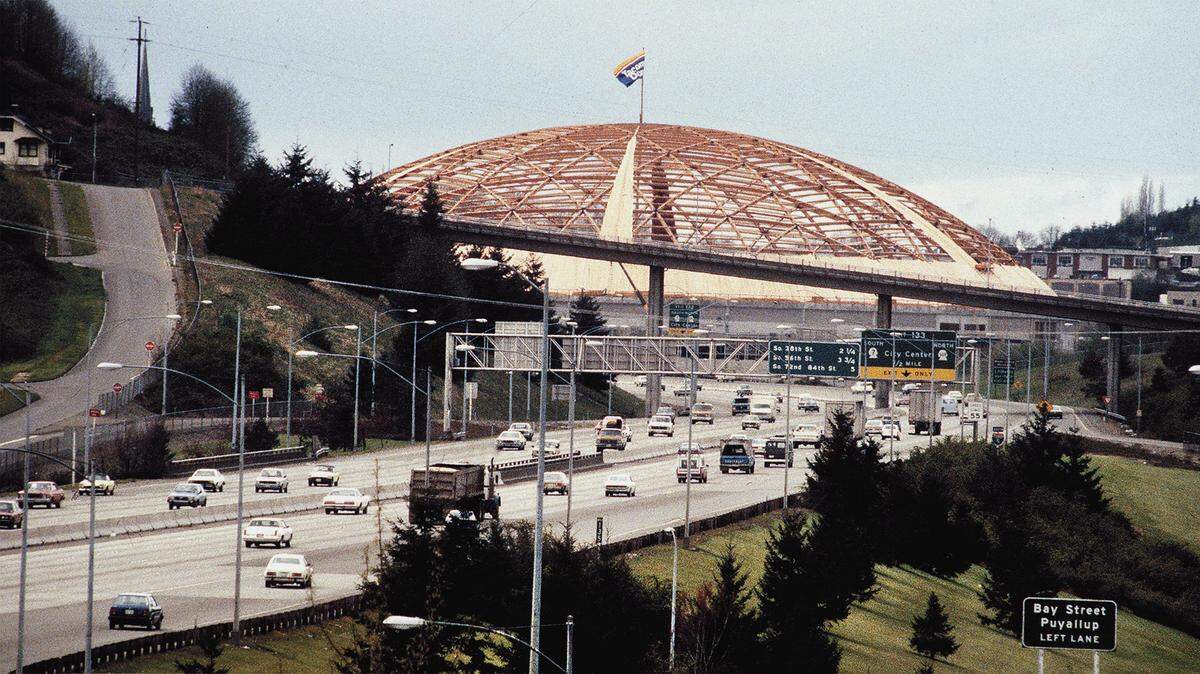
Messenger and McGranahan were co-architects on the Tacoma Dome. When it opened its doors in 1983, it was one of the largest wood domed structures in the world.
As it was being built, a contest was held for a design for the roof. Even famed pop artist Andy Warhol submitted a design. But, it was Messenger’s design of repeating blue triangular designs that was chosen.
“Which was meant to mimic Mount Rainier,” Eisenhauer said. “He was super proud of that.”
The completion of the dome was seen as the beginning of Tacoma’s turnaround, according to a 1994 story by former News Tribune columnist Art Popham.
“At that time, new community pride and the need for Seattle residents to come to Tacoma for concerts in the dome spurred a shift in attitudes,” Popham wrote. “The building also broke new architectural ground in wooden structure size, flexibility of use, acoustical quality and the ‘design build’ concept used to create it.”
At the building’s 10th anniversary event in 1993, Messenger found himself standing next to architect Scott Harm.
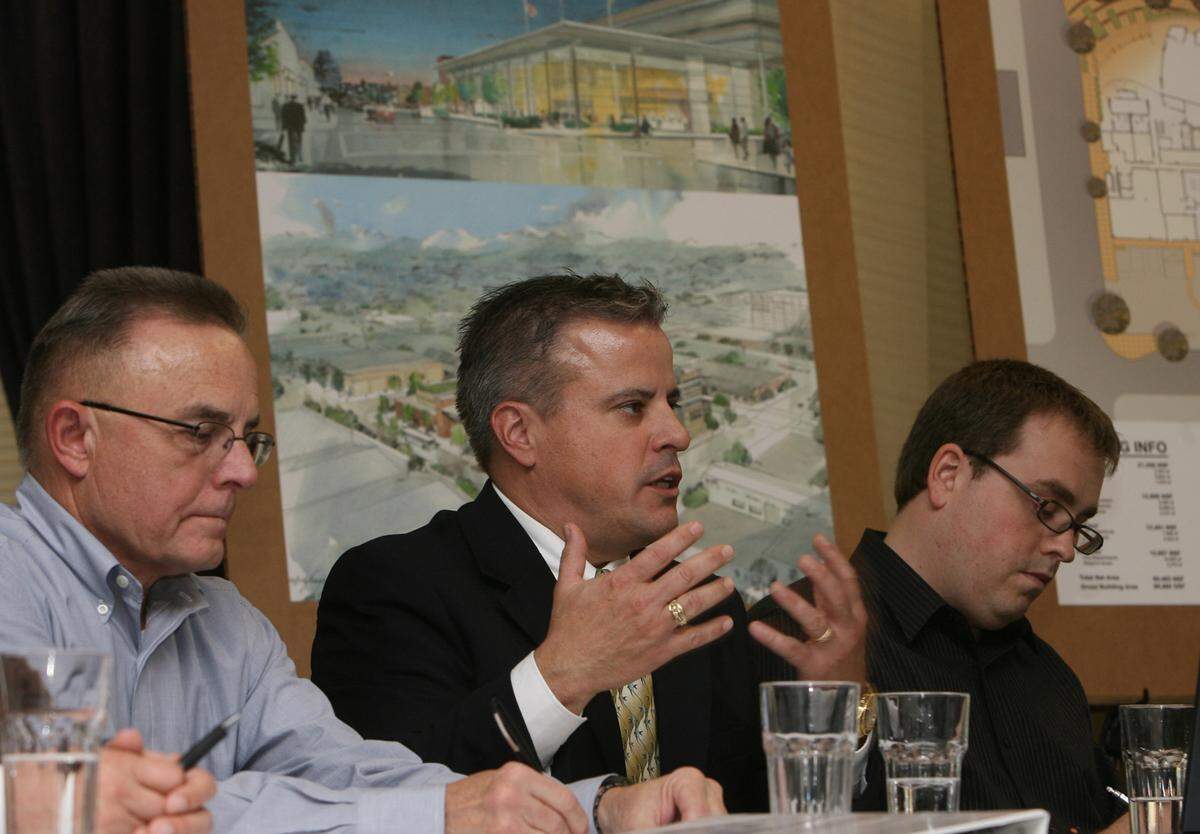
“I had never met him before,” Harm said Friday. “Ultimately, he joined me at my firm, and I fell in love with the man. We became much deeper than an employee-employer kind of a thing, almost kind of a mentor for me. Super talented. Didn’t suffer from a big ego.”
Trained before the age of computer-aided design, Messenger could sketch a building’s floor plan and elevation by hand while seated across from clients and have it appear right-side up to them, Harm said.
“It was magical to watch it happen,” he said.
Retirement
Messenger retired on his 69th birthday.
“His identity was so wrapped up with being an architect that he struggled to figure out what was next, which was hard to see,” Eisenhauer said.
Messenger spent some of his retirement years designing and building sets for productions at Lincoln High School where Eisenhauer teaches theater and music.
The couple were sometimes called Mr. Lyn and Mrs. Lynn by some who were amused or sometimes confused by their similar first names and different last names.
“We had friends who thought our last name was Lynn, because people would refer to us as the Lynns,” Eisenhauer said.
In addition to Eisenhauer, Messenger is survived by two adult children and an older sister.
A celebration of life for Messenger will be held at 2 p.m. Dec. 2 in the Tacoma Dome.
This story was originally published November 7, 2023 at 2:00 PM.