For disabled people, taking Tacoma’s extended streetcar line isn’t always a smooth ride
Wanda McRae doesn’t look like she has a disability.
“Do I have a disability? I’m old,” McRae said when asked. She’s 71.
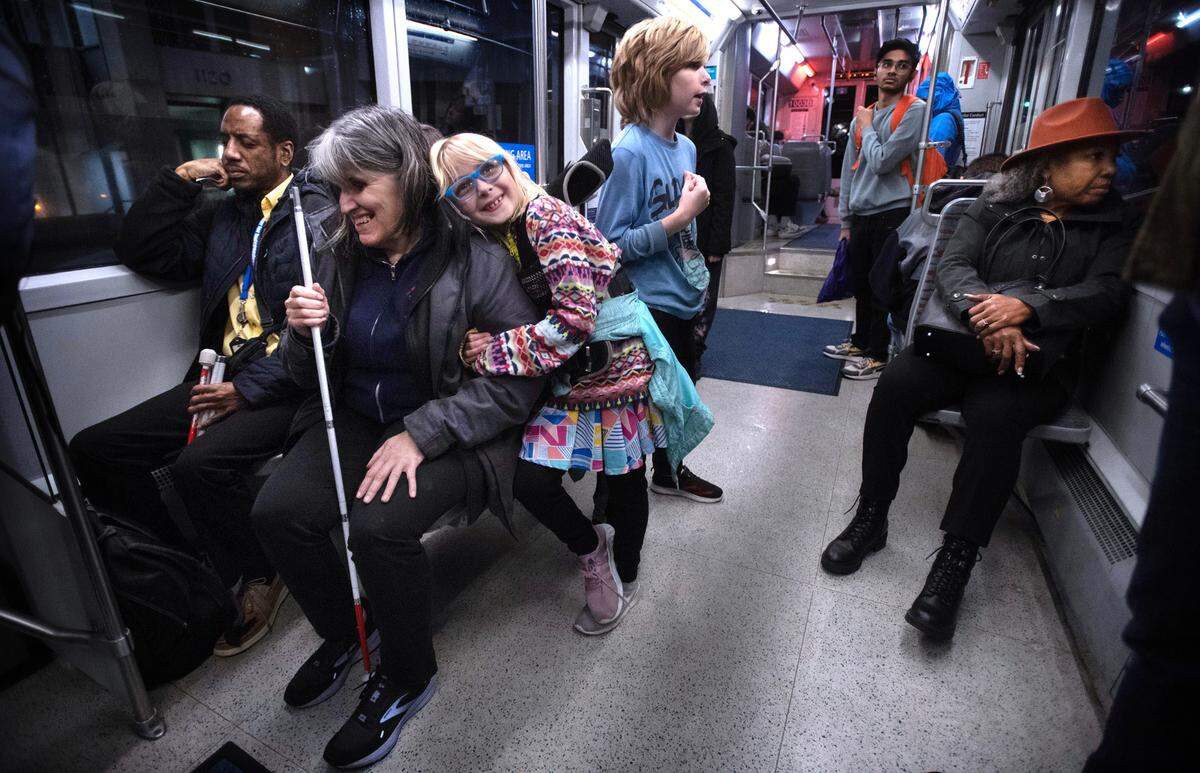
McRae serves as a commissioner on the Tacoma Area Commission on Disabilities. On a recent November evening, she and two other commissioners were about to board a Tacoma Link streetcar. The roving meeting was to assess the Americans with Disabilities Act (ADA) access on the system which was recently doubled in length.
McRae has been a commissioner since October. It was her first time riding the trolley. Like many, McRae lived most of her life without a disability. But no longer.
“As a senior person, I have issues with even going into stores,” she said. Signage and labels become a little harder to read. Disabled friends she shops with have a tough time finding parking, even with a disability pass.
“There’s always not enough parking for them,” she said. Disabled parking, though required by law, diminished or moved further away during the pandemic when stores and restaurants turned the spots into food to-go and grocery pick-up spaces, she said.
“The disabled have to park down further or around the corner, which is not accessible for them,” McRae said.
Accessibility
Access for people with disabilities should concern everyone, McRae said.
“People don’t realize, you’re going to be old one day,” she said. “And you’re going to need more of these services the older you get.”
Sound Transit, the agency that operates Tacoma Link, wasn’t involved in the commission field trip but was aware of it, said spokesperson David Jackson.
“Sound Transit considers the needs of all its passengers and actively engages with accessibility advocates to hear their concerns and find solutions for meeting community needs,” the agency said in a statement to The News Tribune.
Sound Transit is conducting an online passenger experience survey through Wednesday. The agency said it wants to know how passengers from a wide array of backgrounds are using its system.
Seeing the signs
Tacoma lacks braille. That’s the assessment of commissioner Hayley Edick. Braille, the system of raised dots that can be read by fingertips, helps the visually impaired access everything from books to street signage.
Edick and her husband David, both visually impaired, boarded the trolley with children Matthew, 10, and daughter Emily, 7.
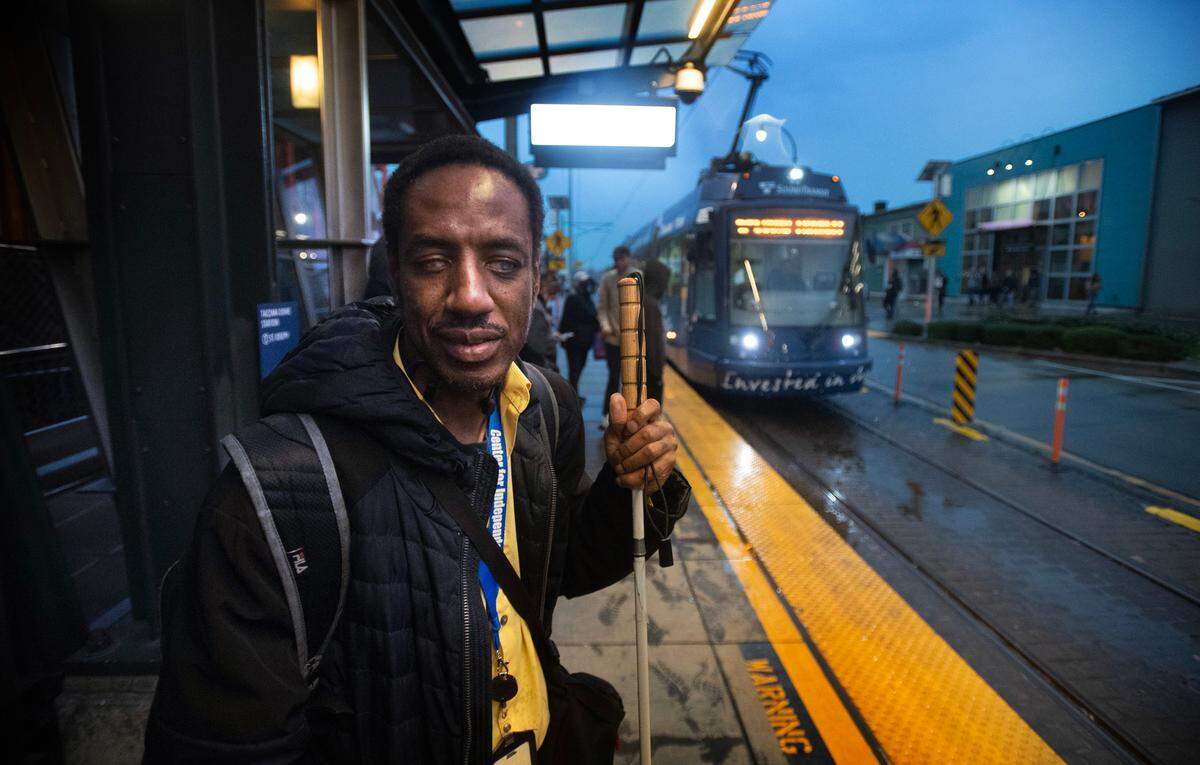
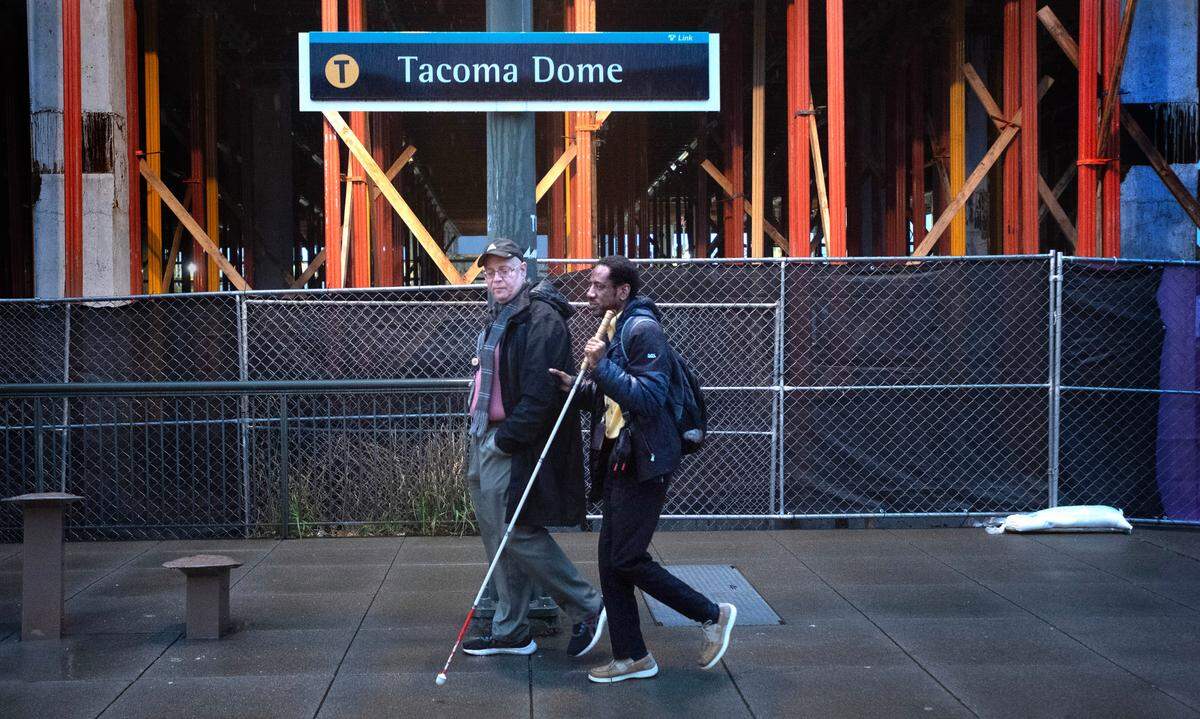
The trip began at the Tacoma Dome Station, the eastern terminus of the line. Before departing, the Edicks, commission chair Amin Tony Hester and several sighted people looked for braille signage for over a minute before finding a small placard on a support column.
“It says, ‘Tacoma Dome Station. St. Joseph.’ That’s where it’s going,” Hayley Edick said as she read it.
“Would you be able, as a blind person, to better locate this sign?” Lucas Smiraldo, the city’s liaison to the committee, asked her.
Edick didn’t have any immediate solutions.
Uniform policy
Edick joined the commission in September. She wants to see a more uniform approach to disability access for transit riders across the dozens of agencies operating in Puget Sound.
“There’s all these avenues to talk about disability,” she said. “But it’s really important that they all talk to each other. So we’re not reinventing the wheel and working in opposite directions.”
Disabilities come in a variety of modes: vision, hearing, mobility, sensory input and others. Not every person has the same level of severity. Correspondingly, the resources people with those disabilities use to increase accessibility can differ.
“Oftentimes, they’ll say, ‘We put it in large print. What else do you want?’ or ‘Everybody’s who blind reads braille.’ And that’s not how it is,” Edick said.
Pedestrian crosswalk signals can give verbal directors (“wait”), countdown remaining crossing time, provide an audible beacon and speak street names. Edick says she can encounter any combination of those — or none at all — as a pedestrian.
“And then they make a clicking noise because if you touch the arrow, it vibrates,” Edick said. “So my deaf blind friends can cross the street safely because they want to be as independent as possible.”
That intersection of disabilities is often overlooked, David Edick said. After spending a few months in a wheelchair as a teen, he became aware of narrow store aisles and the lack of curb ramps.
Rocky Road
When the Tacoma group disembarked at the Hilltop District Station, they found the sidewalk leading to their planned meeting place at Ice Cream Social under construction and blocked off. Signage — accessible only to the sighted — suggested a detour.
“As a blind person, it’s kind of daunting,” Edick said of such unexpected challenges. “How do I get around this? If there’s someone there to help, it’s great. If there’s not, then you kind of turn around and retrace your steps.”
Instead, Smiraldo took the group to the Vietnamese cuisine restaurant Pho King for a post-trip discussion and meal.
Findings
Overall, McRae was happy with the Link system but found the electronic signage inside the cars confusing. It displays the last station visited long after the trolley has left that station.
“That was really confusing for me,” she said. “And so, if I was dependent on that, then I would have been at the wrong stop.”
Hester said the system could be improved with more wayfinding aids. He was unsure where to find the doors of the trolley when he boarded and where to locate braille signage.
He said King County Metro is more friendly to the blind. He thinks Metro staff is well trained in assisting disabled users.
“Down here, you’re not as accustomed to seeing visual impairments,” he said. Because people with disabilities often live on fixed incomes, Hester said, Pierce County is more likely to draw the disabled than King County.
“But progress is progress,” he said. “So I’ll take it when I can get it.”
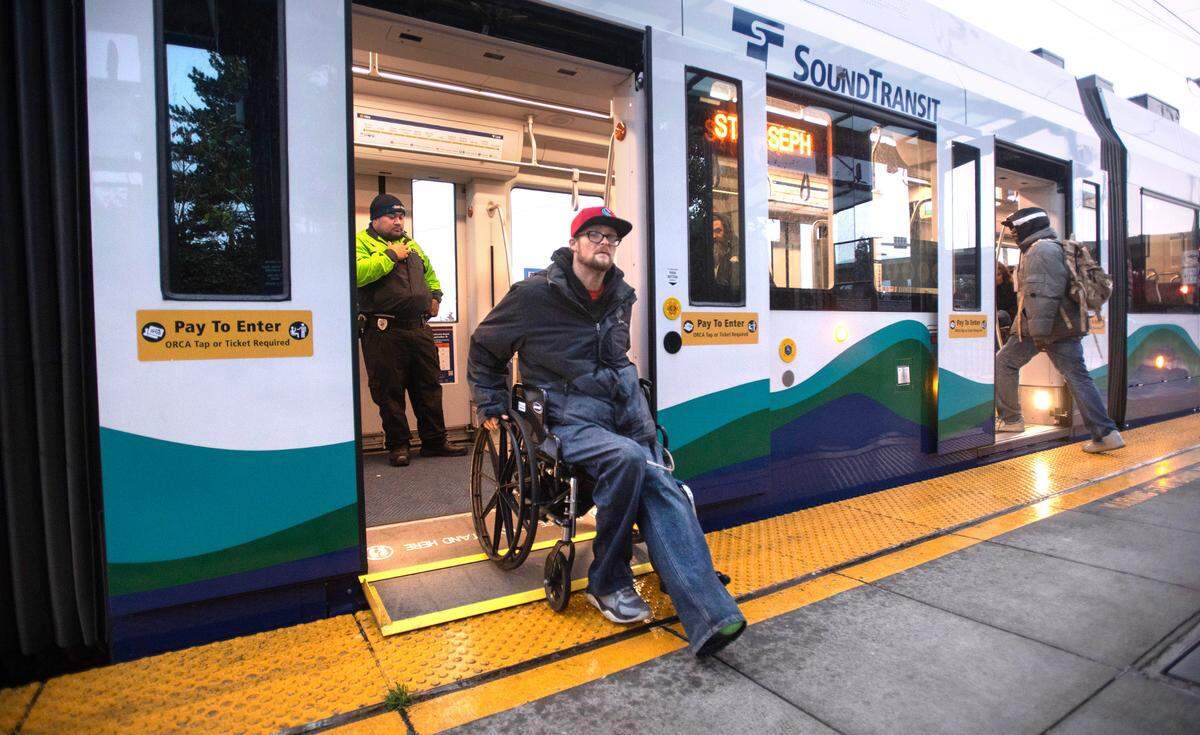
As the group dined, passenger Gilbert Weaver Jr. was riding the trolley to his destination that evening: St. Joseph Medical Center. It’s the end of the line for the new extension.
Weaver uses a wheelchair to navigate the streets of Tacoma and its public transport. When the trolley arrived, he pressed a button inside the streetcar that deployed a ramp, allowing him to maneuver over the gap between the car and the station’s platform.
“As far as light rail goes, it’s awesome,” he said as he rolled out into the evening air.
This story was originally published November 21, 2023 at 11:55 AM.