Nice marmot — greedy Mount Rainier resident joins Northwest Trek as ‘ambassador animal’
The Northwest Trek Wildlife Park in Eatonville has a new tenant.
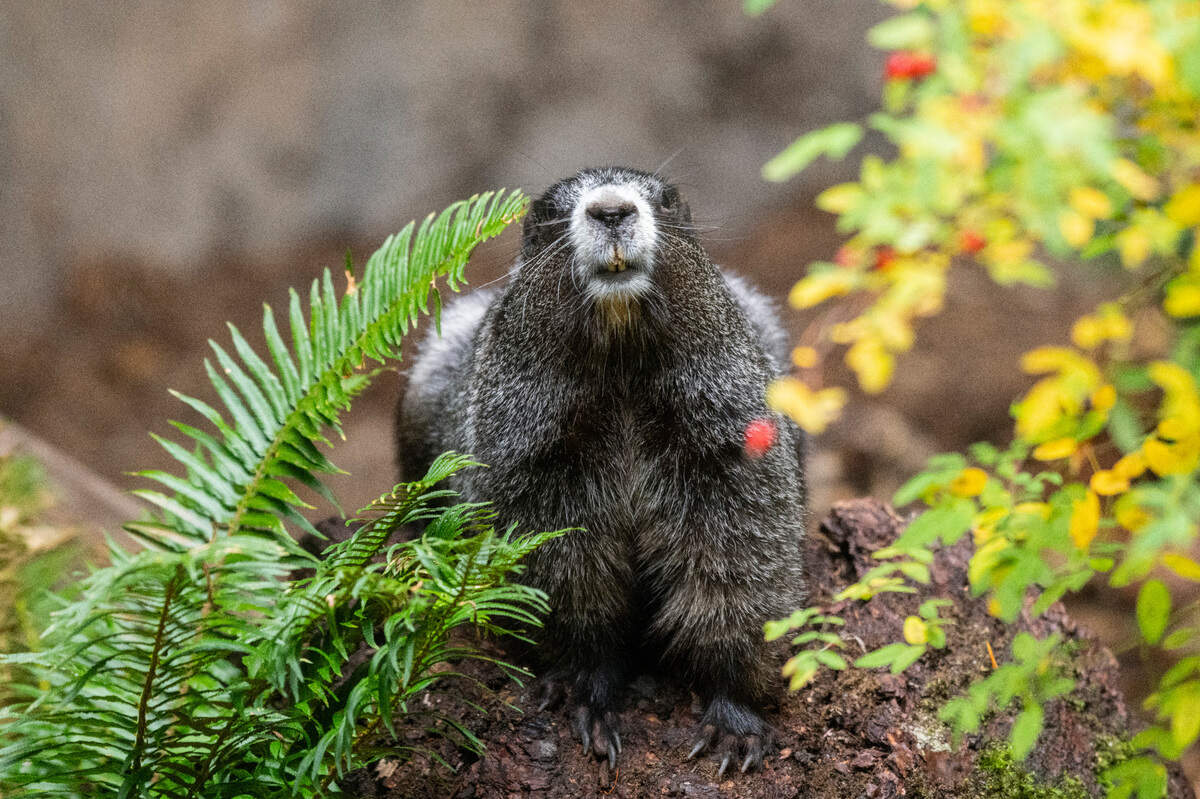
The tenant’s name is Chestnut. He weighs 9 pounds. He’s a hoary marmot who used to live at Mount Rainier National Park.
Hoary marmots are the biggest members of the squirrel family. They can be large and bulky. They live in the subalpine regions of the national park, according to a news release from the Northwest Trek Wildlife Park.
Chestnut’s day-to-day activities at the national park included “aggressively begging for food from people,” according to the news release.
“Food-conditioned animals ... may bite, causing serious injury and possible infection to people,” Tara Chestnut, former wildlife ecologist for Mount Rainier National Park, said in the news release. She is also the marmot’s namesake.
Tara Chestnut said food-conditioned animals are euthanized in most cases.
However, the wildlife park’s head veterinarian decided Chestnut would be a good ambassador animal. An ambassador animal teaches visitors “how to be good stewards of public lands,” according to the news release.
Chestnut is the first of his kind to live at the wildlife park. He received a makeover upon his arrival — a nail trim and essential vaccines, among other things.
The wildlife park at 11610 Trek Dr. E is open 9:30 a.m. to 3 p.m. Friday through Sunday. Chestnut can be found around the wetlands habitat.
Park visitors shouldn’t feed animals human food because it is unsafe. Wildlife depend on natural behavior to survive — supplying them with human food reduces their natural fear of people and public spaces, according to the news release.
Food-conditioned animals are more likely to be involved in vehicle collisions, according to the news release. Human food can also attract larger predators such as coyotes and bears.
Park visitors must store food and beverages in vehicles, food lockers or bear-resistant containers. Garbage must go in an animal-proof garbage can or dumpster, according to the news release.
This story was originally published November 11, 2023 at 1:05 PM.