She survived Holocaust, became matriarch of Mount Rainier. Bronka Sundstrom dies at 98

Bronka Sundstrom, who survived the horrors of Nazi concentration camps and later become an icon on the trails of Mount Rainier National Park, died Nov. 29 at 98.
Sundstrom and her husband, Ake, served as volunteer rangers at the national park and became minor celebrities. She set a record as the oldest woman to reach the mountain’s 14,411-foot summit in 2002. Despite her accomplishments, it was her caring nature that won her admirers and lifelong friends, say those who knew her.
“People gravitated to her,” said veteran Rainier guide and longtime friend Jason Edwards. “She was like a magnet.”
Longtime friend Josephine Johnson once asked Sundstrom why she was drawn to the mountains and wilderness.
“She looked at me and she said, “For the freedom,’” Johnson recalled Nov. 29. “She said, ‘When I’m in the mountains, there aren’t any doors or keys or gates or fences. It’s just freedom.’”
Sundstrom died of congestive heart failure at the Panorama Convalescent and Rehabilitation Center in Lacey, according to Johnson and the other friends who cared for her in her final days. Ake Sundstrom died in 2010.
Holocaust survivor
Bronka Czyzyk was born Aug. 15, 1925, in Sandomierz, Poland, to a large Jewish family. Her childhood was brief.
She was 14 years old when Nazi Germany invaded the country in September 1939. The town her family was living in at the time, Lodz, was designated as a Jewish ghetto by the Nazis, according to a page dedicated to Sundstrom at the website for Seattle’s Holocaust Center for Humanity.
“The Nazis forced Jews from all of the surrounding areas into this small town, which quickly became overcrowded, and disease and starvation were rampant,” the Holocaust Center states.
From there, Sundstrom and her family were sent on cattle cars to the Auschwitz concentration camp.
“I saw my father marching to the gas chamber, and as he was walking he was saying, ‘Sh’ma Yisrael Adonai Eloheinu Adonai Ehad.’ That was the last time I saw him,” Sundstrom said, citing a Jewish prayer.
“Every day you lived, you thought it would be your last day,” she said in video interview made by the Holocaust Center.
Before she was liberated from the Bergen-Belsen concentration camp by British troops in April 1945, five of her seven siblings and both parents would die in the Holocaust. A brother was killed serving in the Polish Army, and a sister fled to Russia where she later died.
Coming to America
Along with other Holocaust survivors, Sundstrom was relocated to Sweden to recover. There, she was befriended by a local girl who soon introduced her to her brother, Ake Sundstrom.
The couple soon married.
“She described him as her rock,” the Holocaust Center states. “He taught her almost everything: to cook, ride a bike, drive a car and ski. He made her first pair of downhill skis by hand.”
When the Cold War began to create waves through Europe, Sundstrom felt she couldn’t take another war. The couple moved to the United States in 1948, eventually settling in Tacoma, where Ake had relatives. Their son Allen was born in 1954.
In the 1980s, the couple moved full time to their Scandinavian-style cabin in Ashford.
Mountaineer
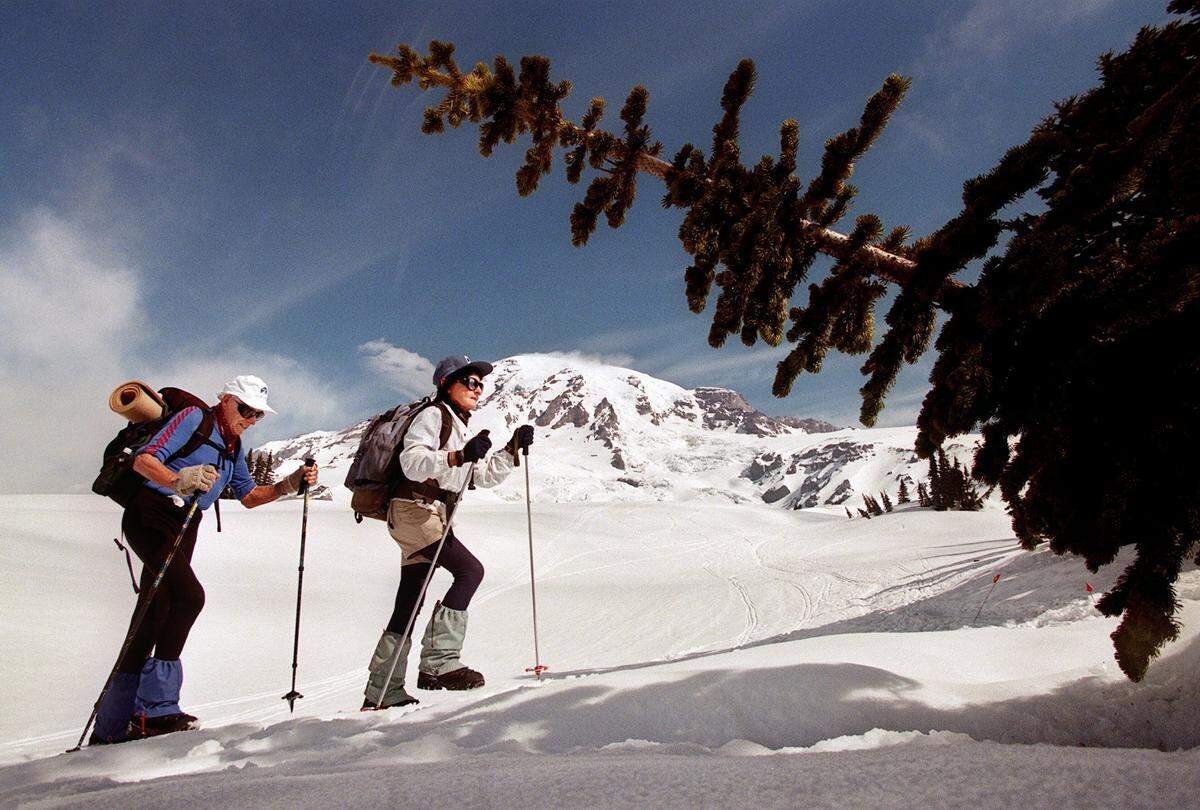
In the mid-1970s, Sundstrom set off with several friends to hike the entire Wonderland Trail, which circumnavigates Mount Rainier. Cold rain drenched the party, forcing them to turn back after five days. The extra water made Sundstrom’s pack weigh 90 pounds — roughly her own weight.
“When we came back, I started to spit up blood,” she recalled. “I would never go on a hike for four or five days in Washington again. I learned my lesson.”
What Sundstrom gave up in backpacking, she embraced in day hiking, climbing and skiing.
It’s difficult to find a photo of Sundstrom in which others — and the mountain — don’t tower over her 5-foot-tall frame. Despite her diminutive stature, she often outpaced younger hikers.
“It was just very overwhelming at times to be with her because she’s so little, but she’s so big in so many ways,” Johnson said.
Edwards met Sundstrom in the 1980s. As a guide on the mountain, he couldn’t miss her.
“She was doing 30, 40, 50 trips to Camp Muir every year, for years,” he said. Sundstrom lost track of how many times she had climbed to the 10,188-foot-high camp.
The Sundstroms’ reputations spread far beyond Washington. Visitors would come to the park to seek them out, Edwards said.
“She would have many of them down to her home to visit and share a meal with them,” he said.
Rainier record
In 2002 and at age 77, Sundstrom finally decided to try for the 14,411-foot summit. Edwards persuaded her to make the climb and accompanied her on it.
“I just never thought I could do it,” she joked at the time. “I’m an old lady.”
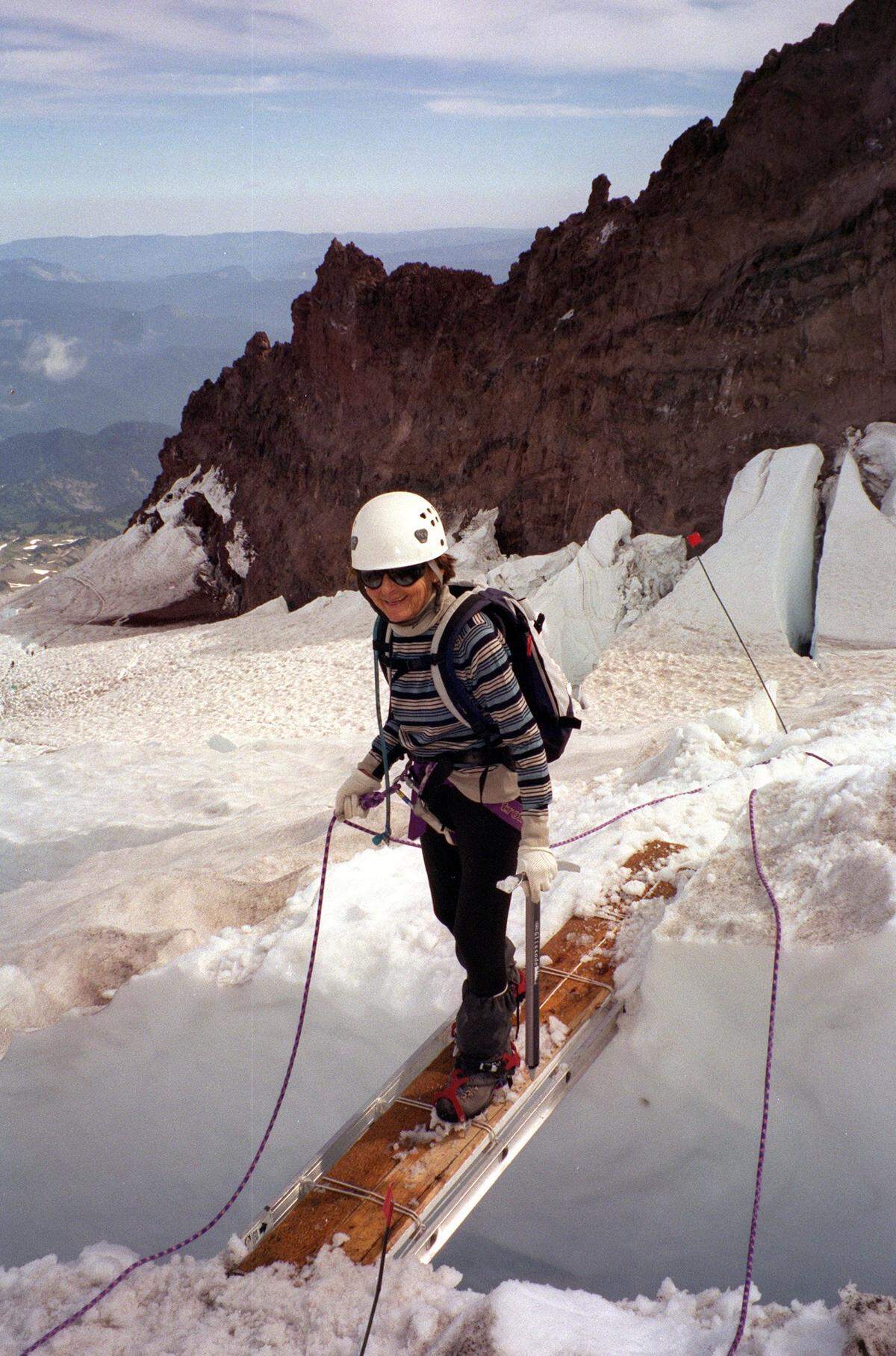
What made the climb even more daunting was that Sundstrom did it as a day hike — from Paradise. Most climbers spend a fitful night in bunk houses at Camp Muir before making the final push to the summit. Edwards said Sundstrom refused to stay in them. He thinks it was because they reminded her of the Nazi camp bunkhouses she nearly starved to death in.
“I’m not doing that,” Edwards recalled her saying. He told her she would have to climb it in one day. “She said, ‘No problem.’”
It took nearly a full day to make the trip up and down.
The feat changed her life, Edwards said. She was a sought-after speaker at schools, corporate banquets and other events, he said.
“She thrived on her accomplishment in the sense that it allowed her to connect with a lot more people and encourage them,” he said.
Sundstrom’s record stood for 21 years until 78-year-old Rose Vanderhoof, a friend of Sundstrom’s, climbed the mountain this past July.
Ambassador
Johnson met Sundstrom while hiking up to Camp Muir one day, more than 20 years ago. Sundstrom was descending.
“She was all by herself. How brave is she?” recalled Johnson. “When she got close enough, I realized, oh, my goodness, that’s Bronka Sundstrom.”
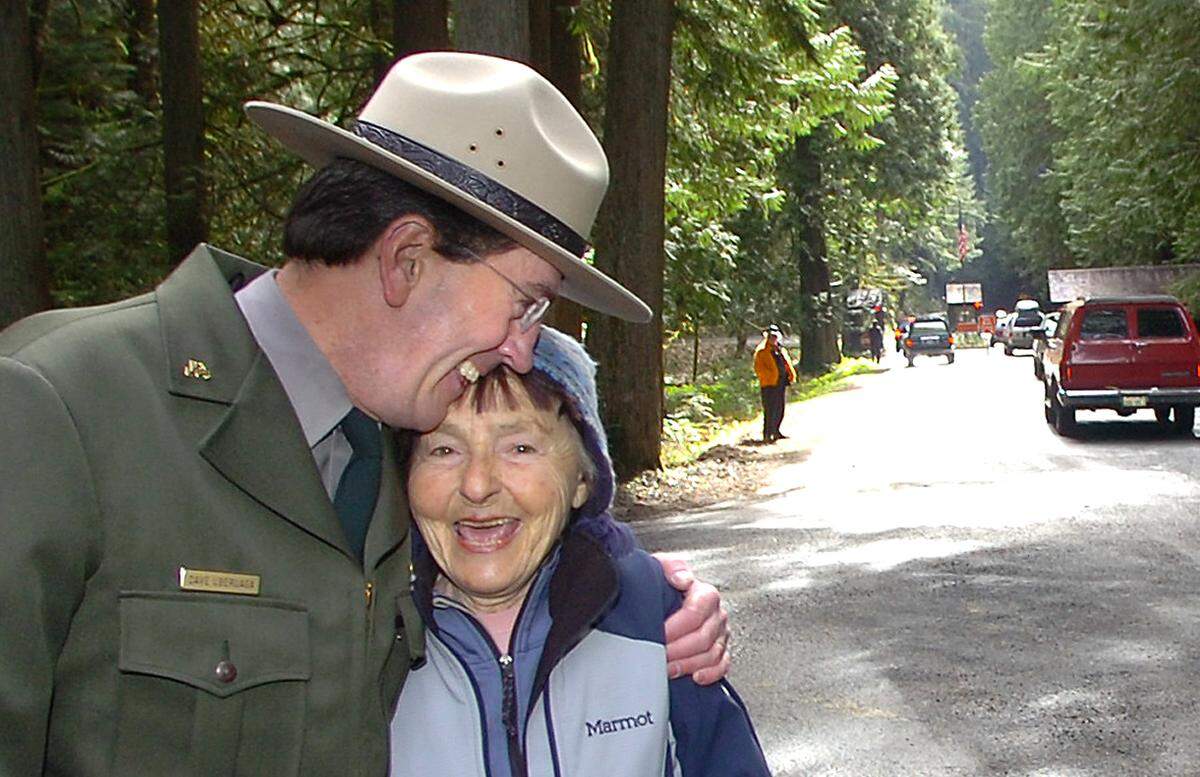
Sundstrom invited the star-struck Johnson on a hike and the pair soon became fast friends. She described it as almost a mother-daughter relationship.
“Although she has tons of mountain daughters,” Johnson said. “She just makes people feel special.”
Sundstrom had a large group of hiking partners, most of whom she met on the mountain, Johnson said.
Move to Panorama
Ake Sundstrom died in 2010 and their son Allen died in 2013.
Until recently, Sundstrom hadn’t spoke much of her time in the concentration camps.
“I think that the trauma that she went through was unacceptable, just horrific,” Johnson said. “And she just wanted to forget it.”
Both Edwards and Johnson said Sundstrom couldn’t sit still for long.
“Her way of blocking out all of those horrible memories was to keep busy,” he said. “Move and walk.”
But Sundstrom realized that if she didn’t relate her history, it would be forever lost. She gave a long recorded history to the Holocaust Center and other interviews.
Shortly after the COVID-19 pandemic gripped the country in 2020, Sundstrom moved to Panorama retirement community in Lacey to be closer to care facilities. Her friends say she was walking up to five miles a day on the nearby Chehalis Western Trail as recently as summer. The city dedicated a bench on the trail to her and proclaimed May 21 as Bronka Sundstrom Day.
In early November, Sundstrom’s congestive heart failure symptoms became worse and she entered hospice. Her concern for others continued even though she was suffering, Johnson said.
“She didn’t like to see me crying because I was suffering for her,” Johnson said. “That’s just who she was.”
Memorial services have yet to be finalized, Johnson said. Sundstrom is survived by two grandchildren.
According to her wishes, Sundstrom’s remains will be cremated and her ashes spread on the slopes of Mount Rainier, where she put Ake’s ashes.
“We spent 30 years in the mountains,” she said after he died. “We belong to the mountains.”
This story was originally published December 1, 2023 at 5:30 AM.