Washington state facing an increase in spread of the new coronavirus variant, flu and RSV

Respiratory illnesses increase across the country in a cycle every year during certain months. Along with the natural ebbs and flows that come with sickness, there are certain time frames where illness is more prevalent.
The CDC expects increased respiratory illnesses around late summer and after New Year’s each year.
While data is still coming in, it looks like the pattern will hold for the winter 2024 season, with increases in recorded flu, RSV and coronavirus cases across the country.
Is Washington state matching these trends?
WA state RSV and flu cases
Each year, the RSV season peaks between late December and mid-February, according to the CDC. It is most dangerous in children and adults 60 and up, especially if they have underlying conditions.
One of the biggest concerns is the possibility of contracting other illnesses while the immune system is fighting RSV.
While cases were relatively low in October, there has been a significant increase in Washington state cases since mid-November.
However, there is a much greater presence of influenza, which follows similar trends.
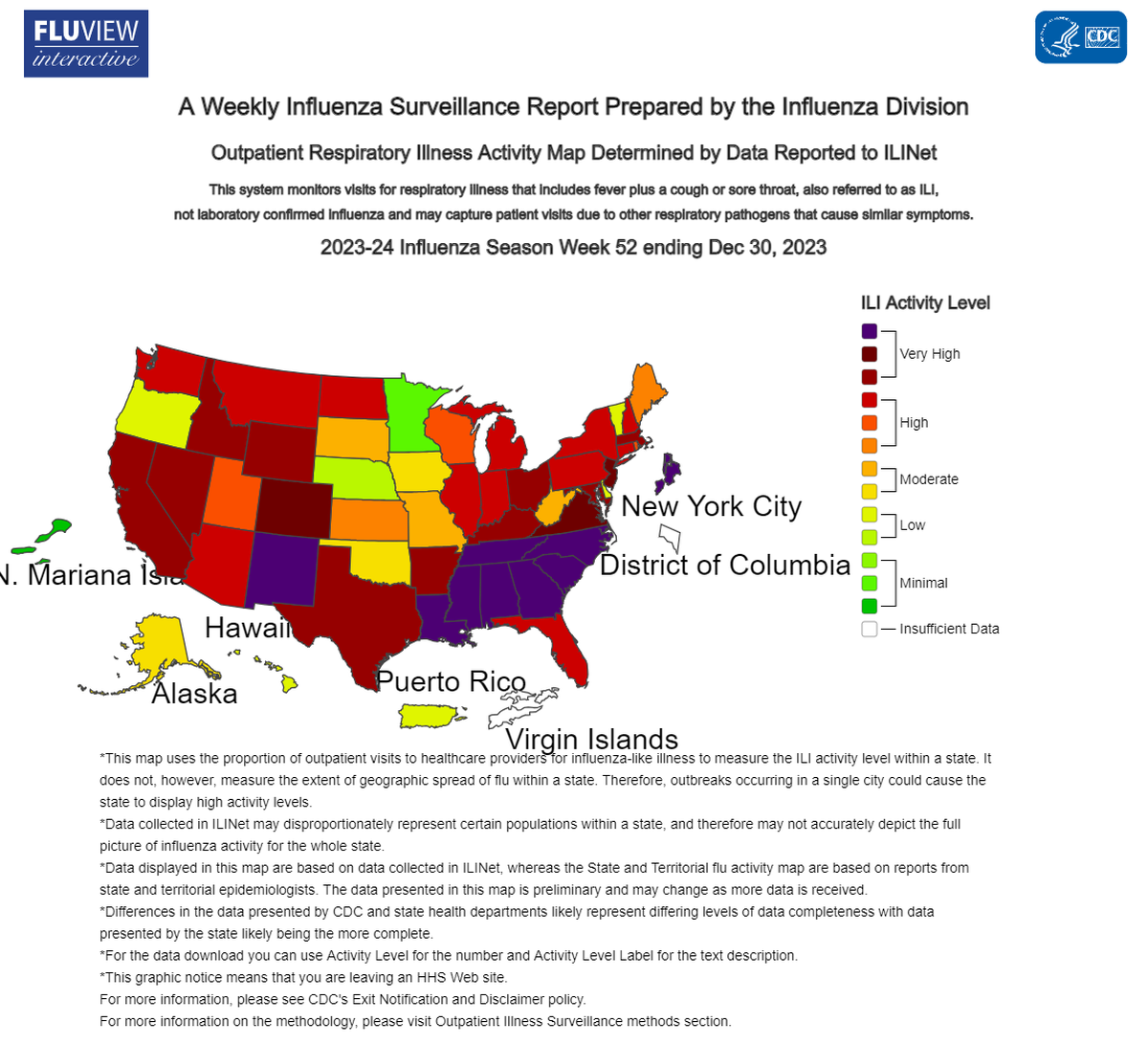
According to the CDC, Washington is among the states with a high rate of respiratory illnesses.
Infectious-diseases specialist Helen Chu stated in a University of Washington Medicine press release that the transmission of COVID-19 and influenza is increasing in Washington state and will probably peak in the next several weeks.
“We have some data from last year when we saw all three viruses [including RSV] circulating, and it’s looking like having two infections at the same time is worse in both children and adults,” Chu said. “Having COVID and flu simultaneously increases the amount of time you are on the ventilator and increases your risk of death in the hospital.”
According to the Washington Department of Health, there have been 16 lab-confirmed influenza deaths and 14 RSV deaths in the state for the 2023-2024 season.
COVID in Washington state
Approaching four years of coronavirus in the United States, the presence of the virus is picking up again.
This time, a new variant is a frontrunner again. One of the latest variants of concern, JN.1 makes up for more than 60% of infections in the country, according to recent data from the Centers for Disease Control and Prevention.
JN.1 is gaining dominance over other variants at an alarming rate and is the fastest-growing variant in the country. The CDC does not believe there are additional health risks posed from the variant compared to other strains.
“JN.1 was first detected in the United States in September 2023. By the end of October, it made up less than 0.1% of SARS-CoV-2 viruses,” the agency states on its website.
While strain-specific data is not available for Washington state or the region, it can be inferred that a national increase in JN.1 would be reflected in state cases.
CDC data shows the presence of JN.1 in the region (grouping of Washington, Oregon, Idaho and Alaska) has increased rapidly since November. Near the end of November and early December, Omicron was the most prominent variant, but JN.1 was quickly catching up.
Latest data from California follows the same trends as Washington, but with newer information showing a continued increase in JN.1 prevalence.
“The proportion of JN.1 continues to increase more rapidly than other variants,” the CDC states. “Based on laboratory data, existing vaccines, tests, and treatments work against JN.1.”
Vaccinations are available for each of these illnesses and encouraged by the CDC.
This story was originally published January 6, 2024 at 5:00 AM.