It literally cut Tacoma in two 60 years ago. Now the city has $1.3M to study fixes
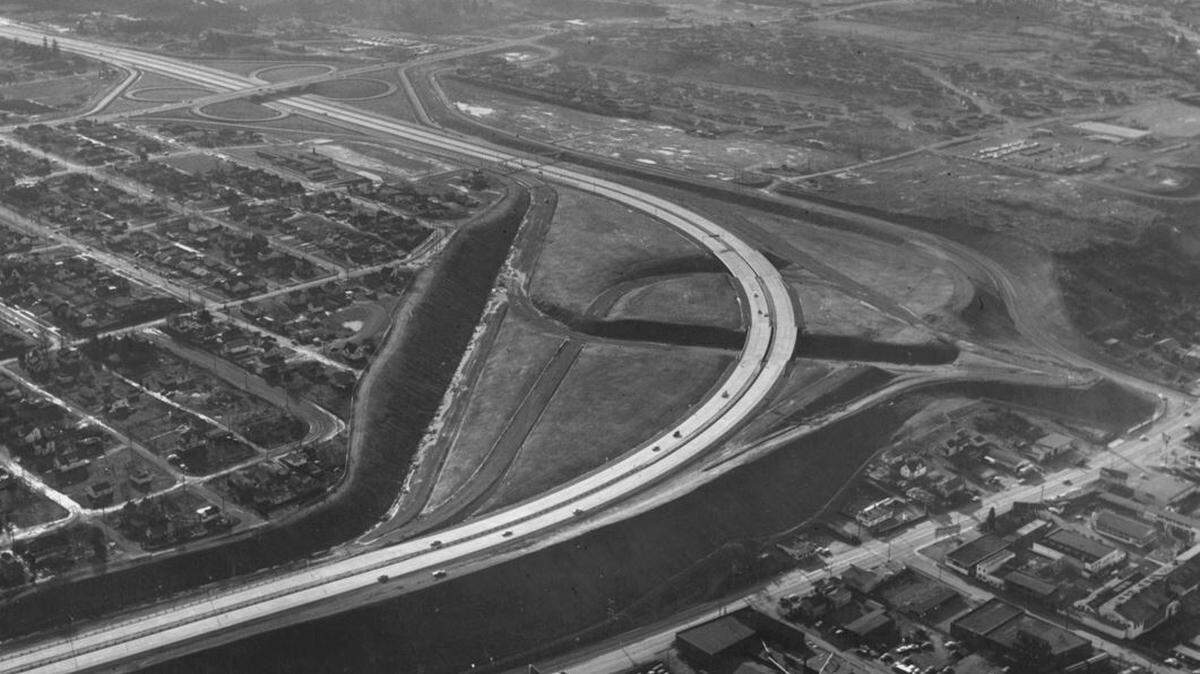
When Interstate 5 was built through Tacoma in the 1960s, it cleaved the city in two. Now, the Biden administration is providing $1.3 million to the city of Tacoma to study ways to improve connections between the city’s eastern and western halves.
On Wednesday, U.S. Rep. Derek Kilmer announced the grant from the U.S. Department of Transportation’s Reconnecting Communities Pilot and Neighborhood Access and Equity program.
“Infrastructure should be about connecting people to everyday destinations — not separating them from their community,” Kilmer said in a statement.
The study will identify where and how improvements can be made along Tacoma’s 6-1/2 miles of I-5 in order to get pedestrians, cyclists and transit users of all mobilities safely across the divide.
“In particular, I-5 bisected the Puyallup Indian Reservation and harmed the land and communities that live here,” the U.S. Department of Transportation said in a statement.
The I-5 divide
Construction of what would become a nonstop roadway from the Mexican to Canadian borders began shortly after President Dwight Eisenhower’s signing of the Federal Aid Highway Act of 1956. The plan, dating from the 1940s, was to build a nationwide system of multi-lane roads free of intersections — the modern freeway.
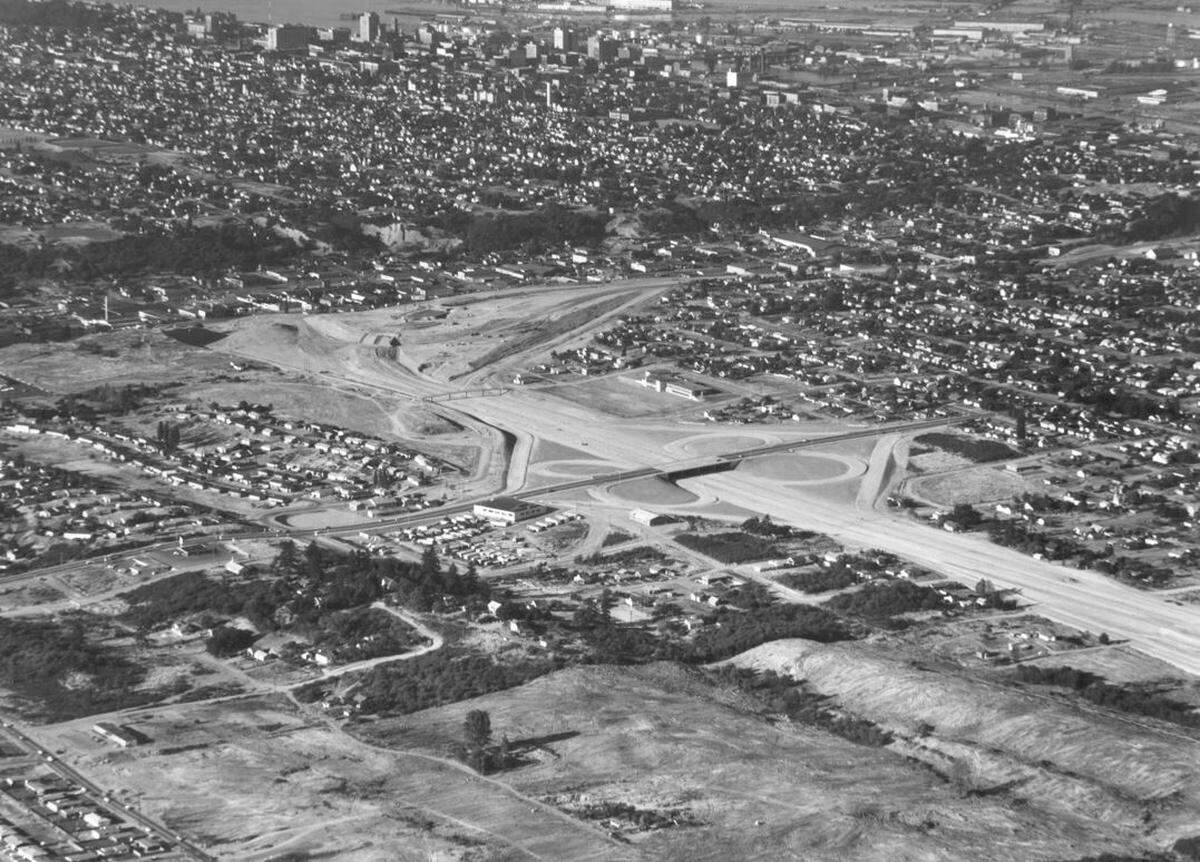
By the time the first section of I-5 opened in Tacoma in 1960, the oldest Baby Boomers were just about to get their driver licenses.
At first, 21,000 vehicles a day used I-5. Today, more than 200,000 vehicles per day travel the same route — a tenfold increase. In 1963, three lanes in each direction on I-5 carried traffic past the Port of Tacoma road interchange. When new HOV lanes opened in 2022, five lanes in each direction carried traffic on the same route.
I-5 served as a virtual moat running through Tacoma. Pedestrian over-crossings didn’t exist. Overpasses were built with skinny, death-defying sidewalks.
Building better crossings
The state Department of Transportation recognized the problem years ago. Safer, wider crossings are a major component of its Complete Streets program.
Today’s rebuilt overpasses might be unrecognizable to the engineers and planners of the 1950s when car culture was king. When the HOV project was built through Tacoma recently, the L Street overpass was rebuilt with a much wider sidewalk. Older overpasses, such as 47th Avenue Southwest in Lakewood, still have sidewalks barely wide enough for one person to use.
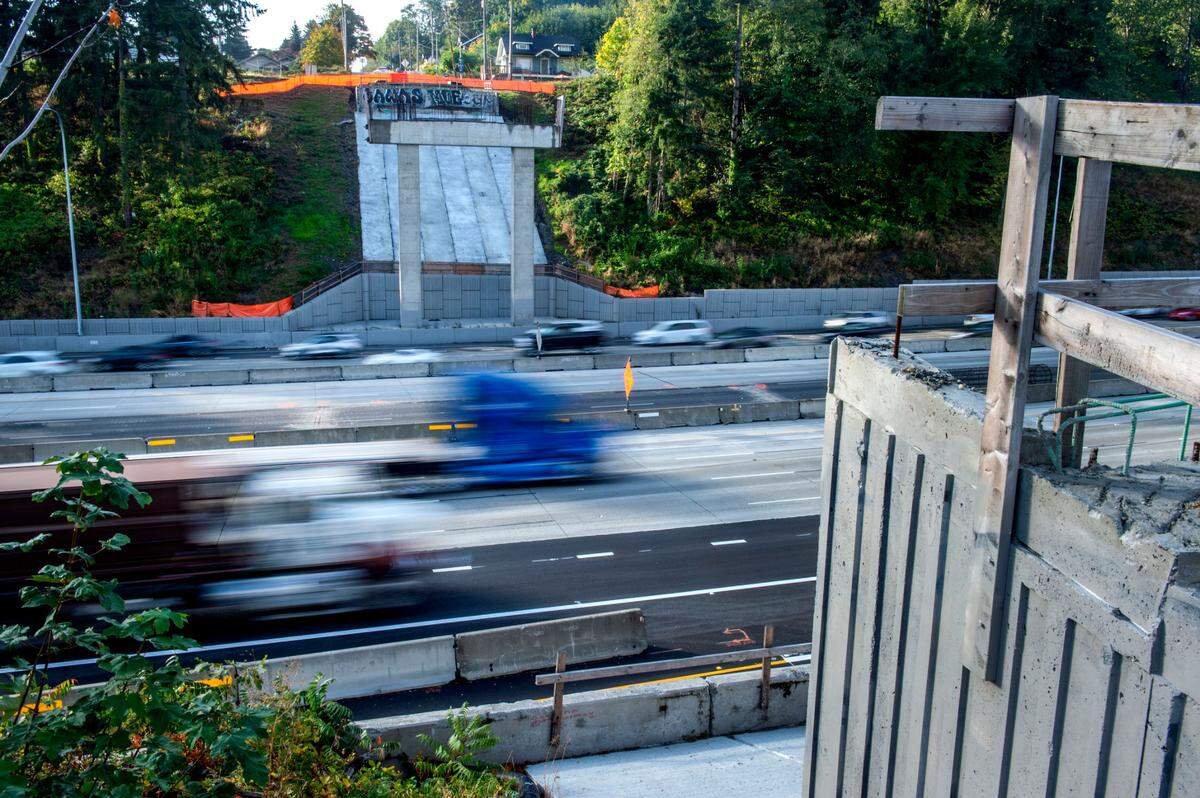
Pedestrian-only crossings, like the one near South 38th Street, were built decades after I-5’s completion.
Accidents involving pedestrians trying to cross I-5 on foot are hard to track, according to the Washington State Patrol. Pedestrian-versus-vehicle collisions could involve someone trying to cross the freeway on foot, a person wandering into traffic, suicide and other reasons.
In 2023 on I-5 in Pierce County, the State Patrol reported six collisions involving pedestrians. Three were fatal and three were injury. In 2023, 43 collisions on interstates and state routes in Pierce and Thurston counties involved a pedestrian.
This story was originally published March 17, 2024 at 6:00 AM.