Some homeless folks to get portable toilets. Will they help curb disease, pollution?
_fitted.jpeg "A deployed mobile toilet kit. The City of Tacoma will be handing similar kits out this summer to homeless people.")
The City of Tacoma is planning a pilot program that gives portable toilets to people living in homeless encampments as a way of improving sanitation and reducing pollution from human waste.
Sayde Heminger is senior community resource analyst for Tacoma Environmental Services. On May 31, Heminger gave a presentation on the city’s “mobile toileting kits” during the Tacoma Pierce County Coalition to End Homelessness meeting.
Heminger said this summer the city will distribute mobile-toileting kits that include items like hand sanitizer and antibacterial wipes as well as a folding bucket with a seat that can be used as a toilet. She said the kits will include kitty litter to absorb fluids, and the buckets can be lined with bags from the city’s Purple Bag Program.
That program distributes purple-colored bags to homeless encampments around the city to contain garbage, human waste and hazardous materials. According to the city, tens of thousands of purple bags have been distributed.
Heminger said the waste through the Purple Bag Program can be collected by contracted biohazard specialists through regularly scheduled pickups or by using the city’s 311 line.
According to Heminger, the mobile-toileting pilot is expected to begin in mid-July, with about 10 kits distributed over an 8-week period. Over that period the city will collect feedback from users to see if the kits are useful and if it would be worth it to expand the program. The pilot also will be used to make sure the bags are being picked up and disposed of regularly.
Shauna Hansen with Tacoma Environmental Services also spoke about the plan at Pierce County Coalition to End Homelessness meeting. Hansen said the city is partnering with the health department to provide educational materials on hygiene and communicable diseases as part of the kits.
On June 6, Tacoma city manager Elizabeth Pauli gave a report on the pilot program to the City Council. Pauli said the approximate cost for supplies is $100 per kit, not including the hand disinfectant and disinfectant wipes being provided by the Tacoma-Pierce County Health Department. The total materials cost is reported to be approximately $2,100 and is being funded by the Environmental Services Department using stormwater fees.
The kits will include a small privacy tent, adjustable bucket with purple bag liners and kitty litter, toilet paper, sanitary wipes and other personal hygiene products.
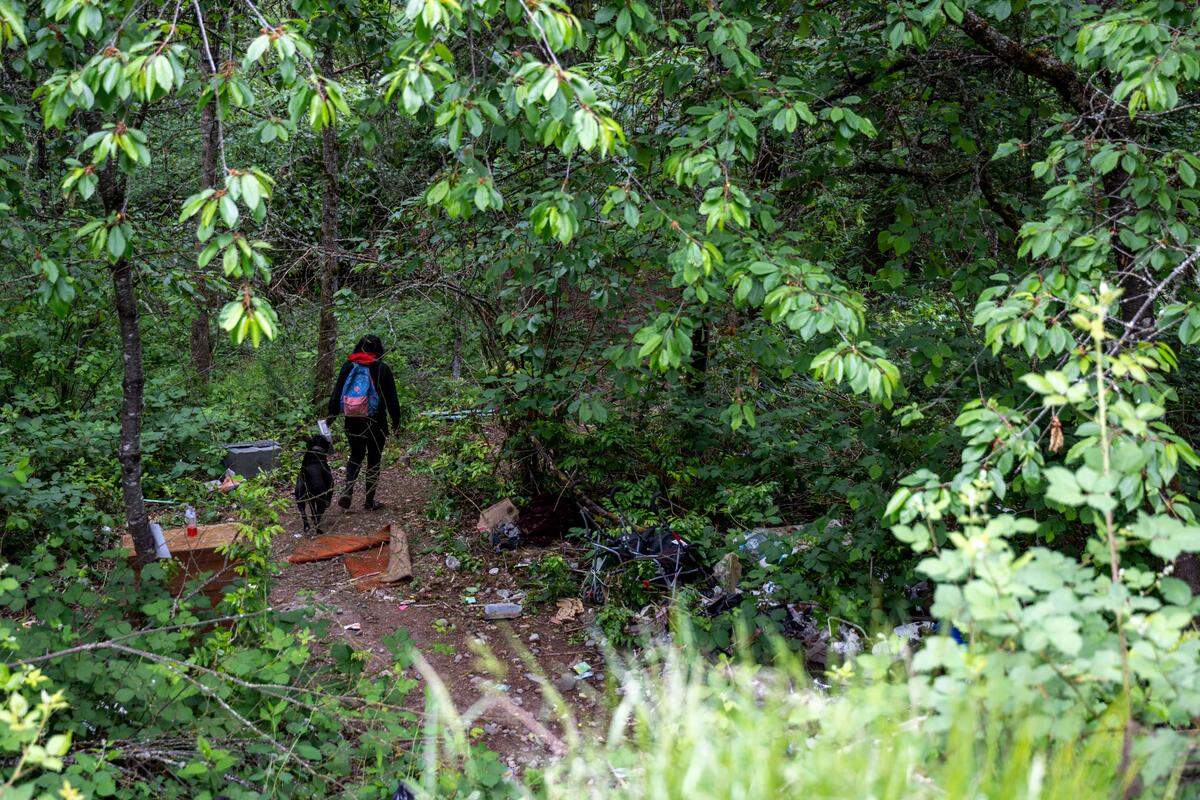
Pauli said that the pilot would involve encampments in various locations around the city where bathrooms are not available to the unhoused, depending on who agrees to participate and use the kits through the trial period.
“Just having an individual toilet option for people is going to be, we hope is going to be, very helpful for people to support individual health as well as water quality downstream of these encampment sites,” Hansen said.
According to the city’s frequently asked questions page regarding the Purple Bag Program, garbage, human waste, hazardous materials and other improperly disposed items can negatively impact environmental quality by damaging vegetation, increasing erosion and contributing to pollution. Hazardous waste can end up in surface water, which can damage delicate watersheds and marine ecosystems.
The News Tribune recently reported that a Tacoma waterway is among the most fecal-polluted bodies of water in the region, believed to be due to a combination of factors, including stormwater runoff.
A community organizer involved with the Tacoma Pierce County Coalition to End Homelessness, Theresa Power-Drutis, asked if giving out the mobile-toileting kits was consistent with the city’s ban on public camping in certain areas — as it might invite people to continue camping in the same area.
“I think our goal is, as the policies kind of change with where encampments can and can’t be, is to make the kits mobile, so if someone has to move they can bring the supplies with them,” Hansen responded.
Another concern was raised about whether the kits could be misused for sex and drug use as portable bathrooms deployed during the pandemic reportedly were.
“One of the things that I think is different in this case is that they’re more of a personal kit,” Hansen said during the meeting. “Each individual would have their own, and be able to kind of maintain the sanitation of their own, instead of a shared space where the maintenance could be more challenging.”
According to the city manager’s report, if the pilot is successful, additional funding and funding partners would need to be identified to pay for the larger number of kits to run the program city-wide.
This story was originally published June 10, 2024 at 5:15 AM.