Pierce County’s only reentry center for DOC prisoners shifting focus after nearly 50 years
A Tacoma nonprofit that has helped formerly incarcerated people reenter their communities since the 1970s has ended its relationship with the state Department of Corrections to pursue a bottom-up approach to helping people affected by the criminal justice system.
The Progress House Association operates the only reentry center in Pierce County, one of 13 the DOC has spread across Washington that offer work-release opportunities and help former prisoners reconnect with their families, among other services. About 80 percent of the 90 beds at the facility are being used, according to a department spokesperson, and the process of moving residents to other reentry centers is ongoing.
People nearing the end of their prison sentences can be transferred to a reentry center if they meet certain criteria. Chris Wright, a DOC spokesperson, said people from Pierce County will now be placed in King, Kitsap, Thurston and Cowlitz counties. He said the department hopes to find another provider in Pierce County, but it might take some time.
Cynthia Fedrick, CEO of the Progress House Association, said the decision to end her nonprofit’s contract with DOC — worth $1.7 million annually — was not an “easy sacrifice.”
Fedrick took over leadership in 2021 from her late father, the Rev. Leo C. Brown, who started what eventually became Progress House in the early 1970s in a church in Tacoma’s North End. In a phone call with The News Tribune, Fedrick said she wanted the transition to return the nonprofit to its original mission of providing holistic, community-based programs. Fedrick wants to serve not only people exiting the criminal legal system but also folks recovering from substance abuse, living with mental illness or transitioning from homelessness.
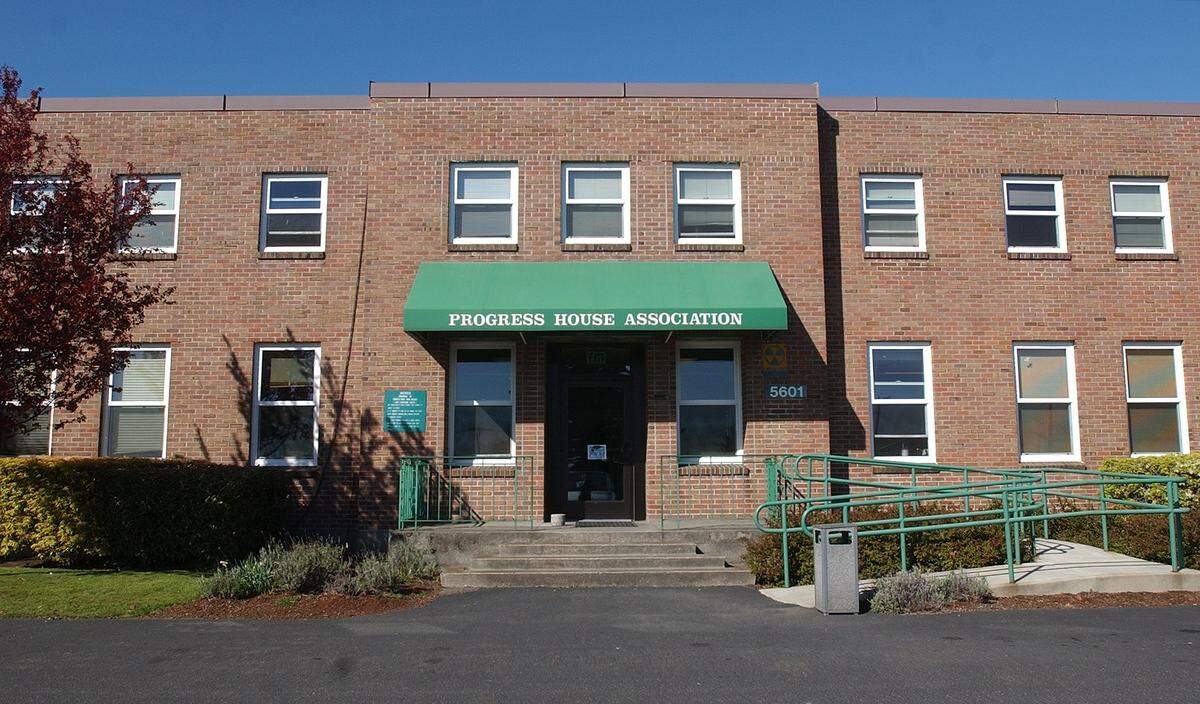
Helping people get housing and employment as a contracted facility for DOC came with limitations, according to Fedrick. She said she wants those who work as facility monitors — employees who oversee the activities of people going through reentry — to be retooled to offer 24-7 life coaching and mentorship.
“I would rather walk away from this and embrace what I know is right for the community than to limit myself,” Fedrick said. “I want to be limitless and try everything that I’ve learned. And restoration, I believe, is the key.”
Wright said DOC was informed in April that Progress House was ending its partnership with the agency to pursue a strategic shift in focus. Its contract with the department expires June 30.
“They’ve provided services in Pierce County for nearly 50 years and have been an integral part in helping people as they successfully transition back to the community after serving their prison sentence,” Wright said in an email. “We wish them the best of luck.”
Beds at the facility at 5601 6th Ave. will become part of a new transitional housing program serving Black and indigenous people. Progress House has always welcomed former prisoners of all races, and, according to its website, it has provided services to more than 16,000 people. But helping men of color, who have historically been disproportionately incarcerated, has long been a strength of the organization.
Called Palaver House, the new program will offer life-skills training, educational workshops, trauma treatment and relapse prevention training alongside housing and employment assistance. The name comes from West African tradition, according to Fedrick, a custom of bringing a community together to listen to all voices while talking through a problem.
“It’s considered a sacred place that you would come and really seek restoration,” Fedrick said. “So if you are in disagreement with someone or you have been estranged from your community, this is the place that you would come for healing and restoration.”
Palaver House was born out of the nonprofit’s Change Program, which Fedrick said she developed with her husband about four years ago. Based out of an office in Lakewood, the Change Program is a reentry program for people of color in Pierce, King and Snohomish counties that provides mentors to help individuals work through trauma and offer housing and employment opportunities as they transition from prison.
Fedrick said her position as CEO kept her busy with maintaining “status quo,” but sitting in on Change Program meetings helped her connect with the people they were serving on an intimate level. Talking to them and seeing what made some people more successful in their transition than others kept bringing Fedrick back to the idea that to really change lives, she needed the community to come together.
“We’ve never really been an open-door community program because we couldn’t be,” Fedrick said. “We’re now opening ourselves up to say ‘No, community, you do have a space in here, you have a part of this.’ You can’t just throw this problem to someone else and say it’s their problem to fix. No, it’s our problem to fix.”
Beyond bed space, Progress House has ample office and conference spaces, and Fedrick said she wants to make the organization a “one-stop shop” where those affected by the criminal justice system and people who want to help them can come for guidance.
Fedrick noted that the Washington State Department of Commerce announced last year a plan to invest $200 million to address disparities created by the war on drugs. The plan includes 17 grant programs, and Fedrick said she thinks many people don’t know opportunities like that exist or how to access them.
As Progress House works through the transition, it will be seeking new sources of funding. According to ProPublica’s database of nonprofit filings to the IRS, Fedrick’s organization reported about $2.07 million in expenses in 2022. Fedrick said she’s seeking grant funding from the federal government and “all the way down to the city.”
The CEO said she wants people in Tacoma and Pierce County to know that Progress House needs help, whether it be financial or through partnerships. She said she hopes to see help from the county, the city and community groups.
One philosophy Fedrick says she learned from her father was to create an environment where people are not only given things, but to ask for something in exchange to create a personal sense of agency. She said the people they help are given services because they know it takes time to build back a life, but in the meantime everyone has something they can give back, whether it’s help in the kitchen or a skill they can offer.
“We feel in that exchange is where you really get your empowerment,” Fedrick said. “It’s not from being given. It’s from being a part of something that you feed into as well as receive from. That’s the model that we think works best.”