CA-based blood bank is moving into Pierce County. Will it send our blood out of state?
Within days, a new blood bank will be operating in Pierce and King counties, but the blood it’s collecting from donors will be going to California for processing, at least for now. It’s unclear how much will return to Washington.
Southern California-based LifeStream has set its sights on former donors to Cascade Regional Blood Services, which closed in February and supplied blood and blood products to Pierce County hospitals. The new-to-Washington nonprofit will take all the blood it collects to its California facilities for testing and processing, according to the state Department of Health.
LifeStream told The News Tribune on Wednesday it has a contract with Providence Health System, which does not have any facilities in Pierce County. The nearest is Providence St. Peter Hospital in Olympia. The Olympia hospital is part of Providence’s Puget Sound division, Providence Swedish. The parent organization has hospitals spread over seven states, including California.
Mary Mach is senior director of Clinical Laboratory Services for Providence Swedish and oversees its relationships with blood banks. Mach was unaware of any contracts with LifeStream on Thursday, she said through Providence spokesperson Ed Boyle.
LifeStream spokesperson Michael Shepherd emphasized to The News Tribune that the need for blood is nationwide, and it goes where it’s needed.
“The notion that every drop of blood collected locally stays locally is quaint, but inaccurate,” he said Wednesday.
While some donors want their blood to be used wherever it’s needed around the nation, others prefer their donations to stay local.
“That’s why I donated, because I want to help people in our community,” former Cascade Regional blood donor Diana Drury said Tuesday.
What is LifeStream?
LifeStream serves 80 hospitals and medical facilities in the San Bernardino region. It has hired 20 employees of the now defunct Cascade Regional Blood Services, which closed after nearly 80 years in service.
When it closed, Cascade Regional transitioned its blood bank operations to another longtime nonprofit, Bloodworks Northwest. Bloodworks picked up Cascade Regional’s contract for MultiCare Health System.
The new Washington arm of LifeStream will be called LifeStream Blood Bank — Cascade Region, according to Shepherd. It is appealing to former Cascade Regional donors.
In a news release announcing its arrival, LifeStream said the former Cascade Regional employees it has hired “... have long relationships with donors and deep roots in the community, having spent much of their lives and careers working in Pierce and South King County.”
In the clients section of its DOH application, LifeStream listed “none at this time,” according to DOH spokesperson John Doyle.
Shepherd said Wednesday that statement reflects the start-up nature of their organization and more clients will be added. Until Wednesday, LifeStream hadn’t been forthcoming with its client list.
Kick off
LifeStream said it will begin collecting donations using mobile blood drives in Tacoma and surrounding cities beginning Aug. 15. On Aug. 22, it will open its new offices at 909 S. 336th St. in Federal Way — a former Cascade Regional donation site. Despite the similar name, use of Cascade Regional’s donation center and website, LifeStream Cascade is a completely different operation, Shepherd said.
“What LifeStream saw with the closure of CRBS was there were 70 people that did not have an opportunity to continue their career,” he said. “There’s a trained, qualified base there. We can come in and save those jobs. And grow with the community. They saw it as an opportunity.”
Cascade Regional’s website remains active, and phone calls placed to its listed number now take donors to LifeStream. At least one blood drive in September with Cascade Regional branding is recruiting donors. Nowhere in the online scheduling portal does it state that the drive is a LifeStream event. The organizer did not return repeated inquiries from The News Tribune.
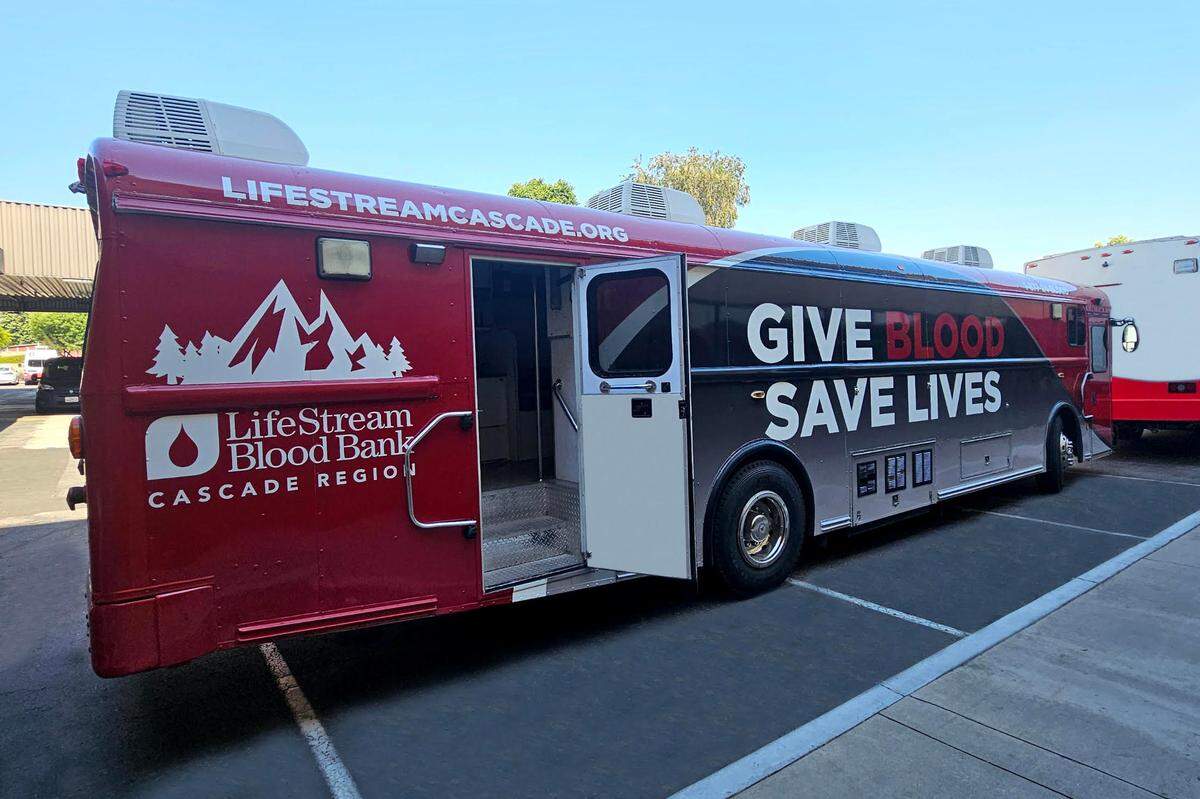
Who needs blood the most?
Blood banks are constantly in need of donors who can provide life-saving blood and blood products, particularly in areas hit by heat waves and natural disasters, according to Seattle-based American Red Cross spokesperson Betsy Robertson.
“We’re dealing with a critical and emergency situation right now,” Robertson said Wednesday.
The Red Cross has 10 mobile blood drives scheduled in Pierce County during August. It processes its blood in Portland and uses it wherever it’s in short supply, Robertson said.
“Blood needs to go where it’s needed,” she said. “One of the things that we really pride ourselves on is always meeting the local need, but then supporting the areas where it is also needed.”
Only three percent of eligible Americans donate blood, Robertson said.
Robertson was unaware of LifeStream’s move into the South Sound but said the Red Cross is always open about where its donors’ blood goes.
“I think transparency is critical in any business endeavor, and certainly the kind of relationship that we want to have with our donors,” she said.
Asked last week by The News Tribune what hospitals and clinics would be getting Lifestream’s blood products, Shepherd declined to say, citing contractual agreements.
“The blood that we are collecting is aimed at providing or going to the people who need it in the community,” he said.
He refused to confirm if the blood or blood products would be used anywhere in Washington state.
“I will tell you that there is dialogue going on with several providers,” Shepherd said.
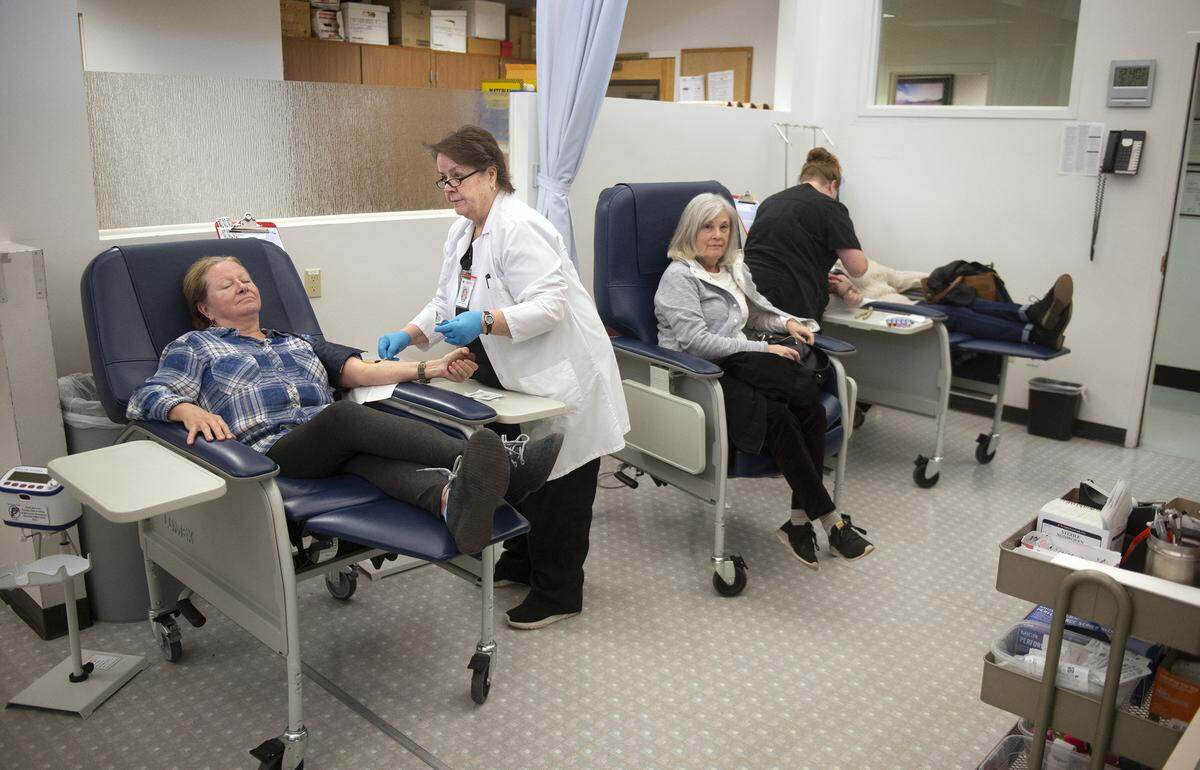
Collection only
“LifeStream Cascade’s goal is to fulfill local needs by connecting donors with patients — especially when the community’s blood supply runs dangerously low,” the blood bank said in its release.
This is LifeStream’s first foray into Washington. It does not operate in Oregon.
The state Department of Health confirmed with The News Tribune on Wednesday that LifeStream has applied for registration as a Blood Establishment.
“Their main facility is operating out of California, and they are planning to operate as a ‘collection only’ facility in WA and will send the collected blood and blood products back to California,” Doyle said in an email.
What Bloodworks does
In Pierce County, Bloodworks supplies all of MultiCare’s hospitals along with all of Virginia Mason Franciscan Health’s hospitals, including St. Joseph Medical Center. It also supplies blood to Providence Swedish.
All told, Bloodworks supplies more than 50 western Washington hospitals and medical facilities. The nonprofit does send some blood to Alaska, according to CEO Curt Bailey.
Bailey said there is frequently a net need for blood in Washington. His blood bank regularly brings blood from outside the area to make up the deficit.
Cascade Regional’s closure was its decision, Bailey said, as was MultiCare’s decision to begin using Bloodworks as its main supplier. Bloodworks purchased some equipment from Cascade Regional, but nothing more, he said.
“CRBS did some emailing to their donors on our behalf, with links to our website encouraging folks to register and find an opportunity to donate,” Bailey said.
Currently, if donors make an appointment with Bloodworks, they’ll know it, Bailey said. The blood bank’s branding is on all its sites.
Blood testing and products
Wherever a donor gives blood, it’s tested for a variety of diseases — including syphilis and HIV, the virus that causes AIDS. Cascade Regional’s Federal Way location lacked the equipment to test blood and separate it into blood products such as platelets and plasma. Instead, blood was tested and processed in Tacoma.
“This is going to be a fully, self-sustained, self-managed facility,” Shepherd said of LifeStream’s Washington operations. “We’re investing in the community, we’re going to grow staff. And our relationships with providers will grow.”
But LifeStream is in the same situation as Cascade Regional was in Federal Way, Shepherd said. It can’t test or process there.
In an initial phone call with The News Tribune, Shepherd refused to say where testing and processing of collected blood would be conducted or if the company even used a lab in Washington state. He cited security reasons.
“My answer to that is, the blood is being transported to a LifeStream facility,” Shepherd said. “And I don’t want to go any deeper than that.”
Bloodworks testing
Bailey said his organization tests and separates its blood in a facility near IKEA in Renton.
“And from there, we hold our centralized inventory,” he said. “Every day, blood components for transfusion are trucked out to the hospitals that we serve up and down the I-5 corridor.”
He doesn’t know why a blood bank would need to keep the location of its testing facilities a secret.
“No security concerns from blood centers I’ve ever heard of before,” he said. “Blood centers are very upfront about where they’re processing.”
It’s unknown if LifeStream will be trucking or flying donors’ blood to California. While whole blood has a roughly 42-day shelf life, platelets must be used within 5-7 days.
“Those are the ones that are really tricky to ensure that you can test that and you can do whatever processing you need to do to it, and still get into a hospital with enough days left on the shelf that it’ll get used,” Bailey said.
Donor desires
Platelets are what saved the life of Helen McGovern-Pilant’s mother while she was fighting leukemia. It’s why she became a regular donor more than three decades ago. She’s given at least 15 gallons to Cascade Regional over the years.
“I had been an irregular blood donor before that, but when I saw what a difference ... it gave her life,” she said.
McGovern-Pilant isn’t opposed to her blood leaving the state — but only if there is an excess.
“Of course you want to save somebody’s life,” she said.
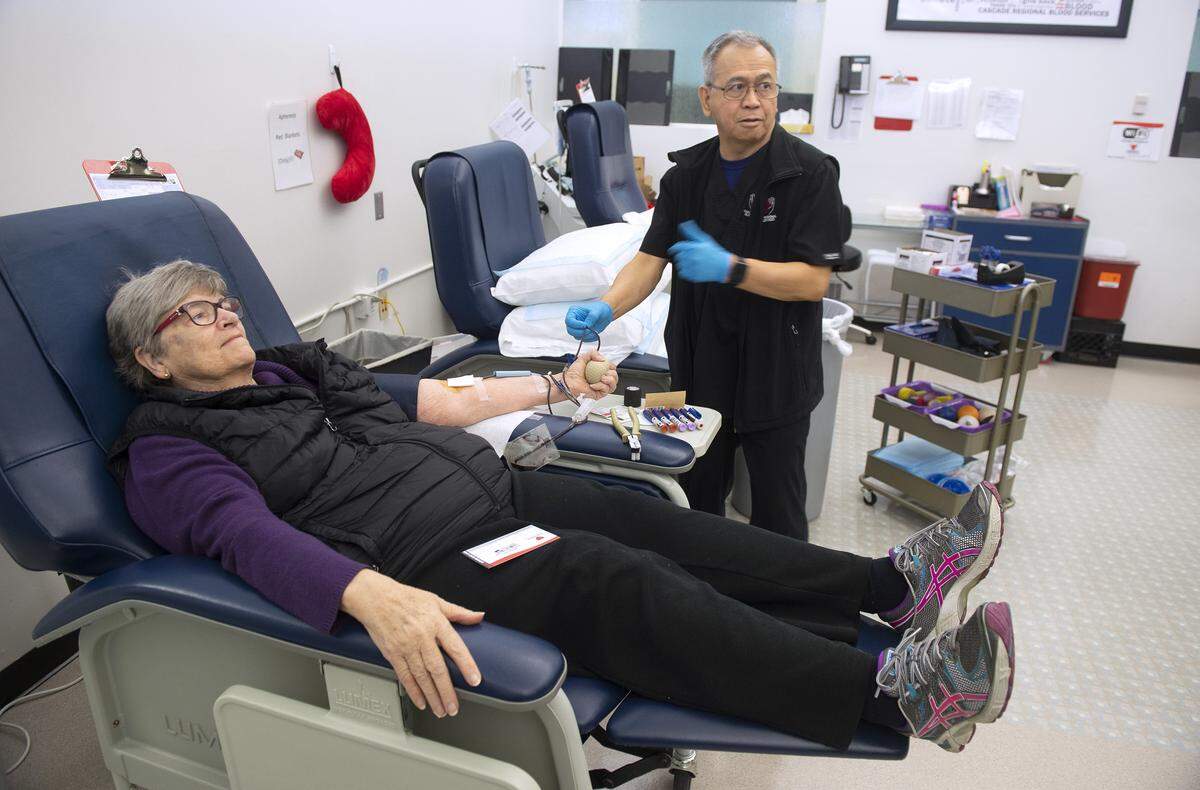
South Tacoma resident Diana Drury donated several times to Cascade Regional after a friend organized blood drives.
“I was afraid of needles, so I’m like, ‘Oh no, I’m not doing it,’” Drury said. “And then she made a (social media) post saying, you could save three lives.”
Like other donors, Drury understands that blood can be transferred to other blood banks around the country in times of crisis or shortages. But, she wouldn’t donate if a blood bank regularly sent her blood out of state, she said.
Halley Knigge began donating blood to Cascade Regional as a student at Stadium High School. Now, 38, she gave over five gallons to the local blood bank. She now gives to Bloodworks and describes herself as a passionate donor.
“Every 56 days, I plan my calendar around making sure that I can hit those donations,” she said. “In my point of view, it’s like, literally, the bare minimum I can do is go sit in a chair for 20 minutes and save up to three lives with a pint of blood.”
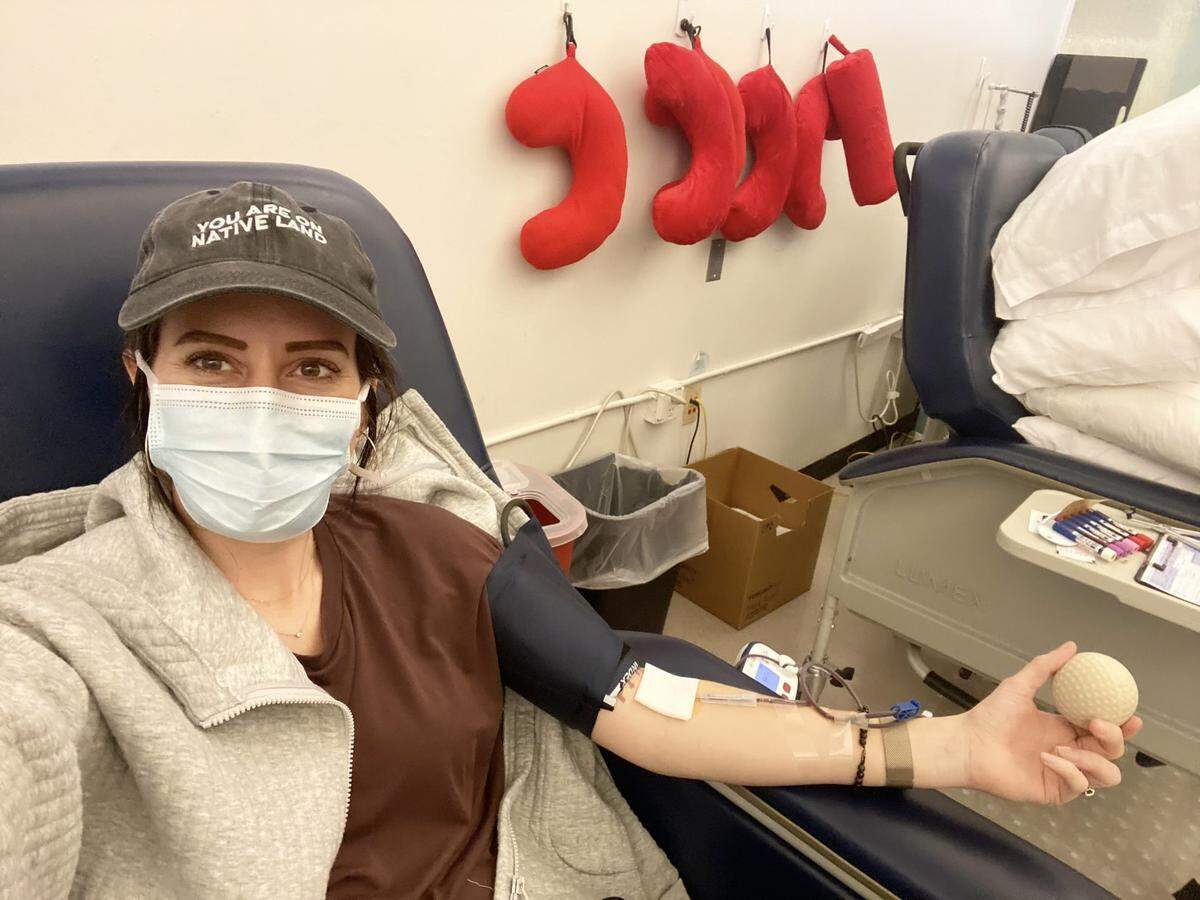
Knigge said she liked having a hometown blood bank and seeing her name and friends’ names on Cascade’s donor milestone wall. She has friends who have been helped by local blood donations.
“The idea that someone would come in and kind of capitalize on the community helping community — and the blood products wouldn’t even be staying here — feels disturbing to me, because we need that,” she said.
Donation models
When the Red Cross ramped up blood donations during and following World War II, it established its nationwide donor and recipient system. That system accounts for about 40 percent of blood donations in the U.S.
Another 40 percent is provided by local and regional blood banks that primarily use donations in their area, like Bloodworks in western Washington and LifeStream in southern California. Those systems appeal to people who donate with the desire that their blood will be used in their community.
“Those two models coexist sort of happily, side by side,” Bailey said.
Pierce County
Prior to Cascade Regional’s closure, Bloodworks had very little presence in Pierce County, Bailey said. Cascade Regional handled all of MultiCare’s needs.
“Cascade was doing it, and we saw no good purpose to kind of interrupting that,” he said. “And so we very happily coexisted.”
Bloodworks had only a few months notice in late 2023 of Cascade Regional’s impending demise.
Since then, Bloodworks has spent “millions” in Pierce County, Bailey said, ramping up its blood-collection infrastructure. It recently opened a donation center in Puyallup and will soon open another in Tacoma.
It’s also purchased two new blood mobiles at $500,000 each.
“We’re hiring aggressively to try and build out our team of phlebotomists, and we absolutely hope that former trained phlebotomists from Cascade are applying,” he said.
The loss of Cascade Regional donors in Pierce County and the addition of MultiCare as a client has upset the equilibrium in the county, which it’s working to rebalance, he said.
“And so if an organization were to come here and collect blood and then send it out of the state, you can kind of see how damaging that is, and also what a ridiculous thing that is,” Bailey said. “That doesn’t help anybody.”
This story was originally published August 9, 2024 at 5:00 AM.