‘That’s peace.’ Pierce County town goes back to its roots with a new community garden
What happens when your town decides to get out of the public water business? You turn the waterworks into a community garden, of course.
It took 14 years, but that’s what the town of Steilacoom did this year when it created the Steilacoom Historical Community Garden. It’s the first community garden for the small Pierce County community and, judging by the size of the tomatoes and squash, a success. But the garden is more than just produce for families and food banks.
“There’s something really special about growing things to nourish others, and you’re meeting people from all walks of life in your community, and you’re working together,” said gardener and retired nurse Debbie Rivera. “That’s peace. I wish the whole country could experience something like this.”
Carol Saynisch is the garden coordinator. She came up with the first rough sketches for the design in September. Nearly a year later, the garden contains thriving vegetables, flowers and sections devoted to native plants used by the Steilacoom Tribe and a historical settlers garden.
The town gave up the public-water business around 2010 and instead gets its water from Lakewood. Now, its former waterworks at 2402 B. St. in Steilacoom are surrounded by apple trees and arugula. Gone is the water tank that once towered over the site. In its place is a patio with chairs. An old pump house is now a tool shed and another is where gardeners leave extra produce.
Settlers garden
Bright red blooming scarlet runner beans grow up a trellis in the garden’s center. The patch — the settlers garden — is what puts “historical” in the garden’s name.
Plant lists and seeds came from Fort Vancouver and Fort Nisqually which were, like Fort Steilacoom, provisioned by the Hudson Bay Co. Additional research came from circa 1845 recipes from Fort Vancouver and from the Thomas Jefferson Center for Historical Plants.
Steilacoom is the first incorporated community in the state, and organizers wanted that history represented in the garden. Fort Nisqually supplied heirloom kale and carrot seeds. Yes, they ate kale in the 1800s. Fort Vancouver supplied cardoons and flower seeds.
“In settler gardens, they planted a lot of flowers among their vegetables to encourage pollinators,” Saynisch said.
Donations
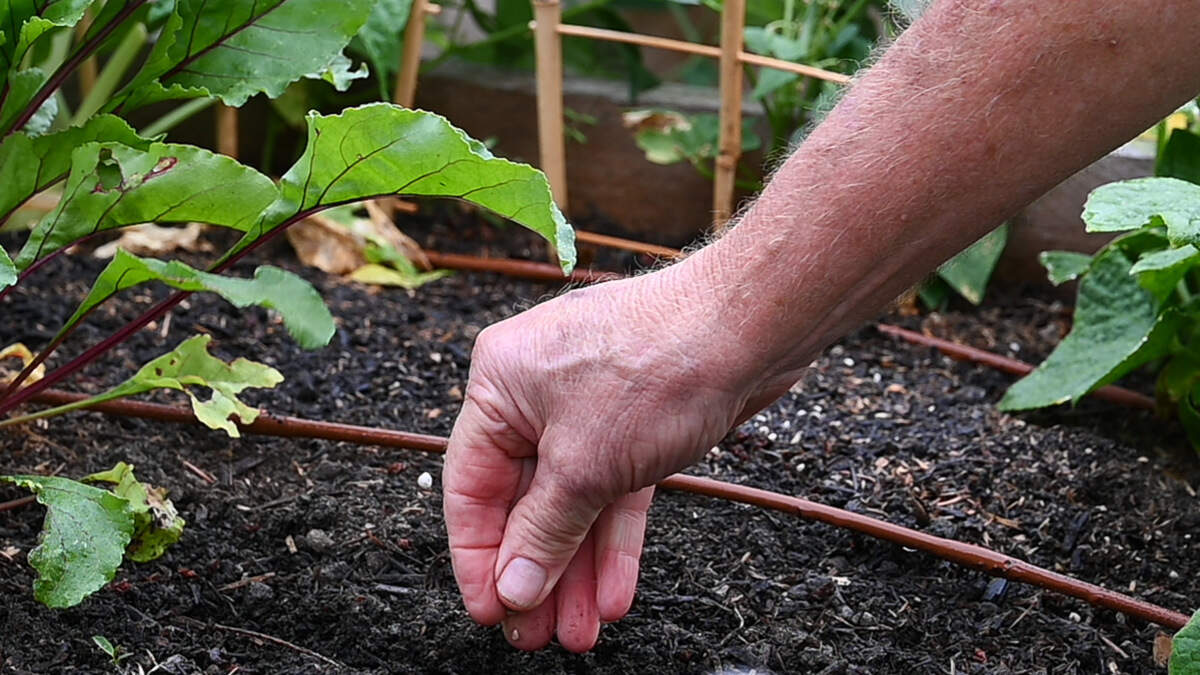
All of the food from the settlers garden goes to the local food bank. By mid-August, the garden was donating 40 pounds per week, Saynisch said. The We Love Steilacoom Association’s food bank is held on Saturdays at the Steilacoom Community Church.
Steilacoom Mayor Dick Muri said the garden was paid for with monetary donations and donated labor and materials. The total amounted to $40,000, according to Saynisch, with no tax dollars spent. Another $100,000 in donations will be spent to build a nearby pavilion, Muri said.
Much of the volunteer work has been covered by the local Kiwanis club.
“We have people who like to do stuff,” explained member Harley Moberg, who was working at the garden last week.
Garden beds
Plants are grown in raised, wooden beds. Taller beds are reserved for people with mobility issues. The raised beds and the trucked-in soil donated by Walrath Landscape Supply that fills them keep roots away from dirt contaminated from the Asarco smelter which polluted much of the region.
The former waterworks came with a fence, which was handy, as deer would soon have wiped out the garden. The chain link construction wasn’t tall enough so another three vertical feet of flags were strung above it. But gardeners didn’t anticipate a smaller, low-to-ground vegetable nibbler: rabbits. Chicken wire was quickly added to keep Thumper and friends out.
Now, an ever expanding pumpkin patch grows below a quince tree as lemon cucumbers twine past yellow crook-neck squash. All of it unmolested by wildlife.
Gardeners play $20-30 per year to garden in a bed. There is a waiting list, Saynisch said.
Gardening with kids
Two beds have been adopted by children from nearby Cherrydale Primary School. Another is a flower bed for native pollinators.
Joanna Clark and her two sons, Arlo, 11, and Olin, 8, Clark-Gamble, use one of the beds for their gardening needs. The boys said they like seeing the fruits of their labors.
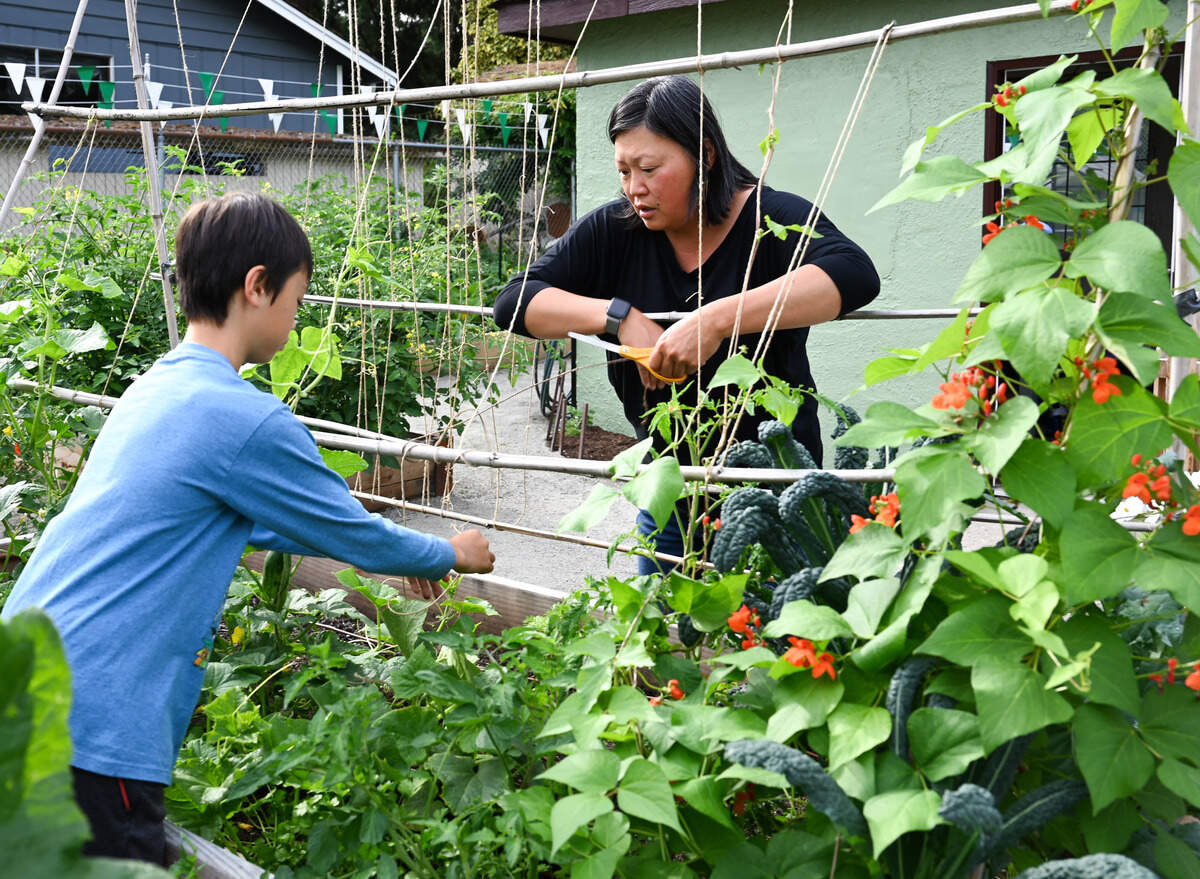
“I liked the picking the food part when I was younger,” Arlo said. “But I learned to like everything now. I’m starting to realize that it’s OK to wait just a few more months.”
The boys like cucumbers, carrots and tomatoes, which, they say, taste better than store-bought.
“The ones at the store have been sitting there and sometimes have been processed,” Olin said. Although his family grows it, he’s not a fan of kale.
Native bed
Steilacoom flowers, elderberry, camas, evergreen huckleberry and sword ferns all grow in the garden’s indigenous section. It’s more than just native plants. The beds are cared for by Steilacoom tribal members. Labels give the plant names in the Lushotseed language.
Sakari Schlehlein heads the Steilacoom Tribe’s junior council. Her mother, Rebecca Unzueta, is the tribe’s chairperson. Both are active in the community garden. They say the garden not only represents the tribe but also the cultural significance of its native plants.
“(We are) able to teach the little ones in public, and to be able to have a space for us to show that as a tribe, we have these things and we have our cultural practices, and being able to welcome people to share them,” Schlehlein said.
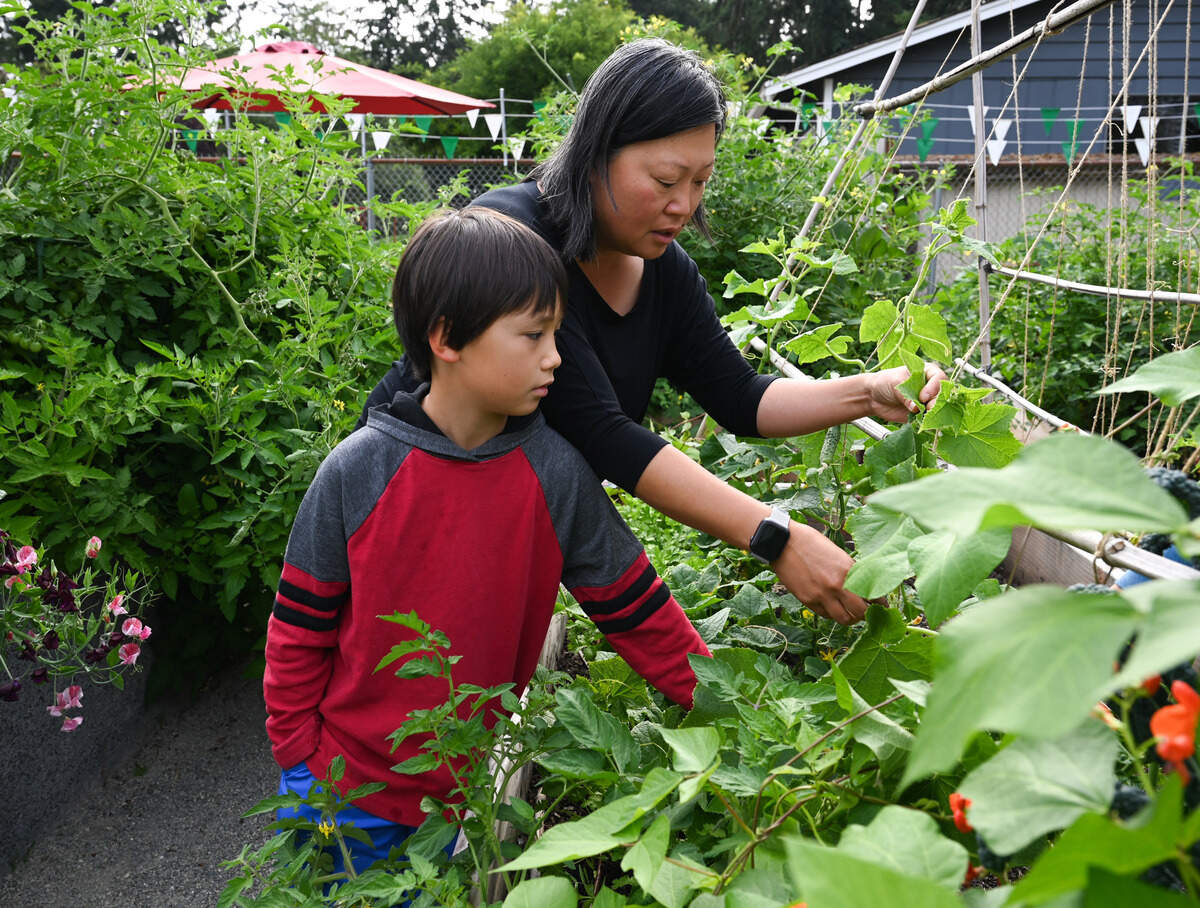
While some of the plants seem like obvious food sources, others, like sword ferns, do not.
“You can roast them, or you can take them straight out of the ground and eat them,” she said. “I haven’t tried that yet, but I have had them roasted.”
Unzueta notes the importance of passing on the knowledge of native plants and gardening to younger generations.
“Make them a little bit more aware that you can go to a garden and find your produce instead of in the store,” she said.
This story was originally published August 22, 2024 at 1:58 PM.