Program has been changing kids’ lives — maybe helped save one — for the past 20 years
When Mason Winchell turned 14, he became sick. The kind of sick that would be traumatic and life-changing for any adult, let alone a teenager.
With his kidneys failing, Winchell walked into Mary Bridge Children’s Hospital overwhelmed by what was happening to him. Then, he noticed a display case holding a half lion/half crab made from glass. It was the kind of art that could only spring from a child’s imagination.
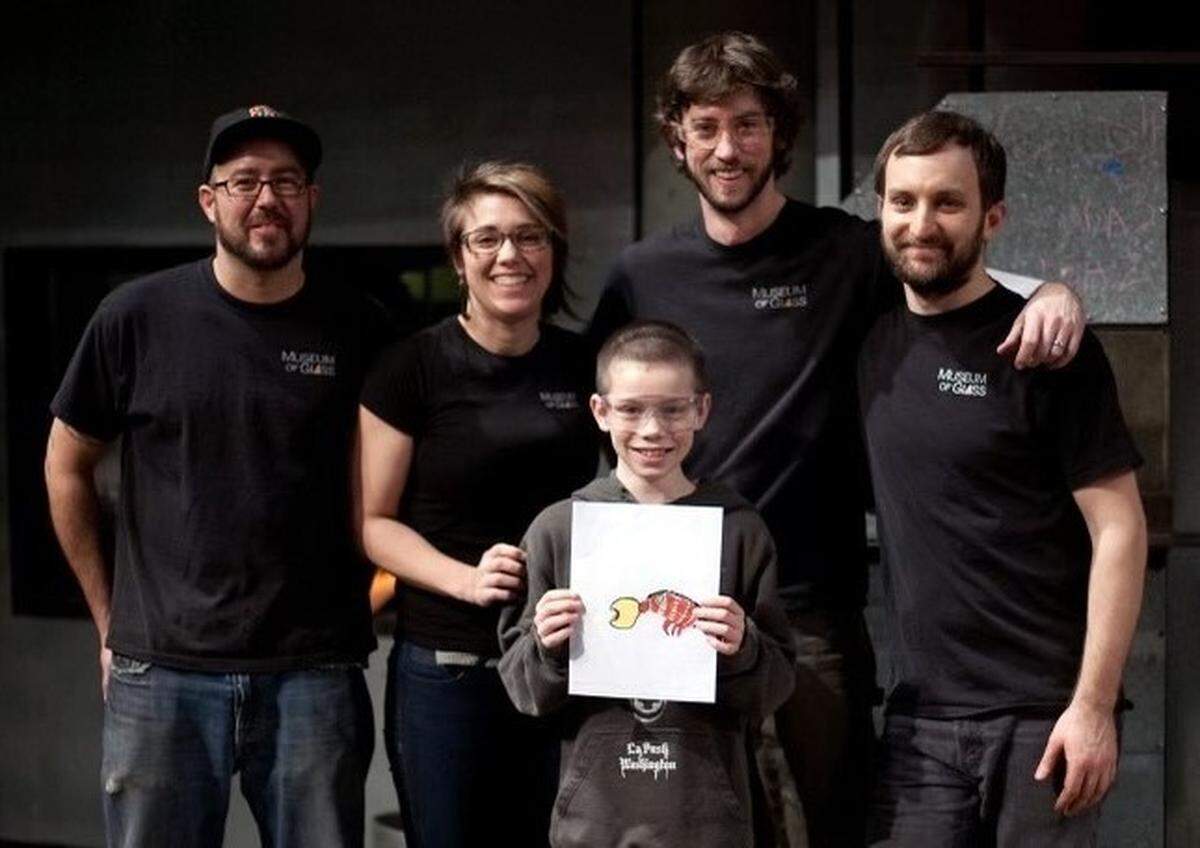
In this case, it was Winchell’s own imagination from four years earlier. That’s when glassblowers at the Museum of Glass had created the sculpture from a drawing the then 10-year-old had submitted to the Tacoma museum’s Kids Design Program.
Unexpectedly finding his work on display in Mary Bridge that day boosted his spirits, the now 24-year-old said this week.
“I was so scared and so, like, in a bad place, physically and emotionally,” he recalled. Seeing his art, “... pulled me back to a few years earlier when I was just happy and fine.”
Program
Winchell’s art was one of over 100 that MOG’s hotshop has produced since the program’s inception in 2004. Every month, its glassblowing team pores over a stack of drawings submitted by children age 12 and under. The team then invites the winning child back to the museum to watch their design become reality.
The MOG team creates two versions of each selection — one for the child to take with them and the other for MOG’s permanent collection.
In addition to the drawing, kids are encouraged to write a backstory for their ideas.
Susan Warner is MOG’s curator of education and the person who came up with the program 20 years ago. At first, she said, the museum made just one piece that was given to the child.
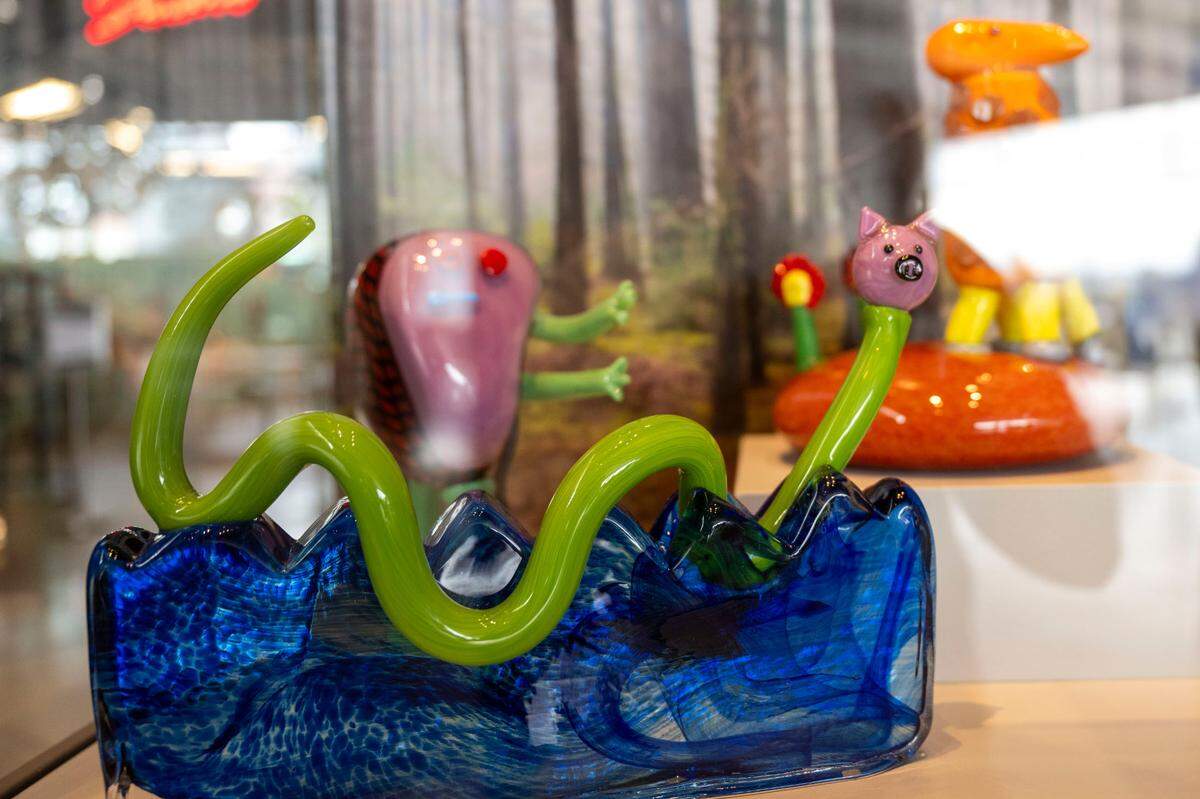
“We started looking at the creatures and thinking, ‘My goodness, we’re onto something quite unique and special. So let’s start making two pieces so that we assimilate a collection.”
Pieces travel for temporary displays at schools, libraries and hospitals.
The program has been so popular it’s been copied by other museums around the world, Warner said.
MOG recently opened a show in the museum’s lobby to celebrate the program’s anniversary. “Earthlings and Extraterrestrials: 20 Years of Kids Design Glass” is a nod to the sometimes terrestrial, sometimes otherworldly choices of budding child artists.
Maya’s story
Maya Matsumoto was seven years old when her design was chosen. Now a researcher at Western Washington University, she was just a kid visiting MOG with her family from their Seattle home in 2006.
“I didn’t really care about looking too much at the exhibits,” she recalled. “Spent a good amount of time in the hot shop, and then there was a room in the middle of museum that had a bunch of pieces of paper everywhere, and it was encouraged that kids would draw something, whatever they wanted to, and could submit it.”
Before the family could even get back home that evening, MOG had called them to say Matsumoto’s design, “Bird of Free Colors,” had been chosen and could they come back the next day to watch it be created?
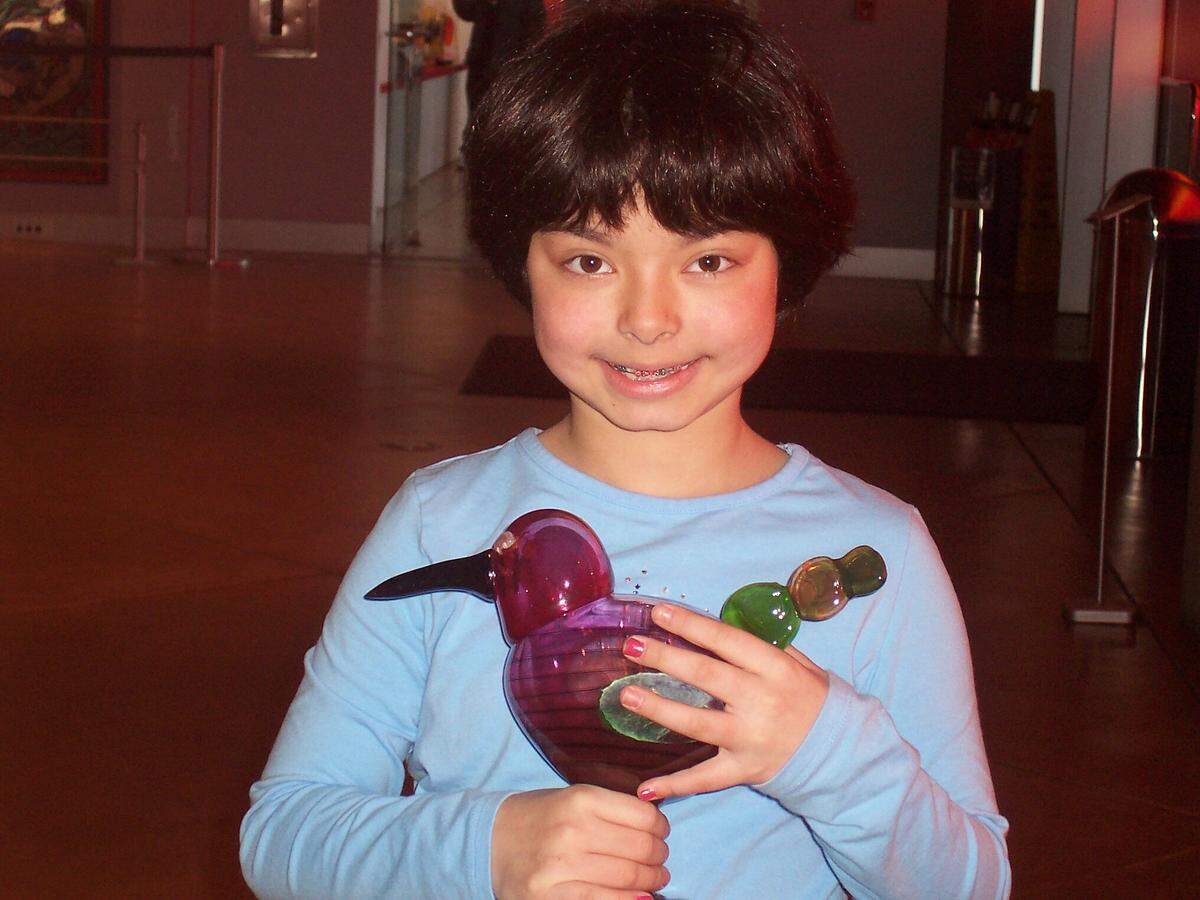
“I got to sit in the front row in the hot shop,” she recalled. “They had my drawing up on the projector over top of the artists. I was just mesmerized by the fire. It was so cool to watch the science behind how the glass blowing works, and that was kind of my first step into being like, oh, wow, there’s all this other stuff that goes on behind the scenes of making these.”
When she returned to school, she couldn’t stop herself from bragging.
“I was excited to tell everyone and share what had been happening and be like, ‘Everyone come over to my house. You can see my bird’.”
The experience was, she says, a blend of art and science that she carries to this day. In addition to her lab work where she studies damage to DNA, she makes science themed stickers she sells on Etsy.
Glass blower
Sarah Gilbert has been blowing glass in MOG’s hotshop for 17 years, nearly the entire length of the Kids Design Glass program.
Despite — or because — the designs are drawn by children, they can often be challenging, Gilbert said.
“It’s a really hard process,” she said. “There’s some pretty amazing submissions.”
The winners, Gilbert said, usually have a feature that sets them apart.
“It could be something really funny in the story, or some crazy design feature on the drawing,” she said.
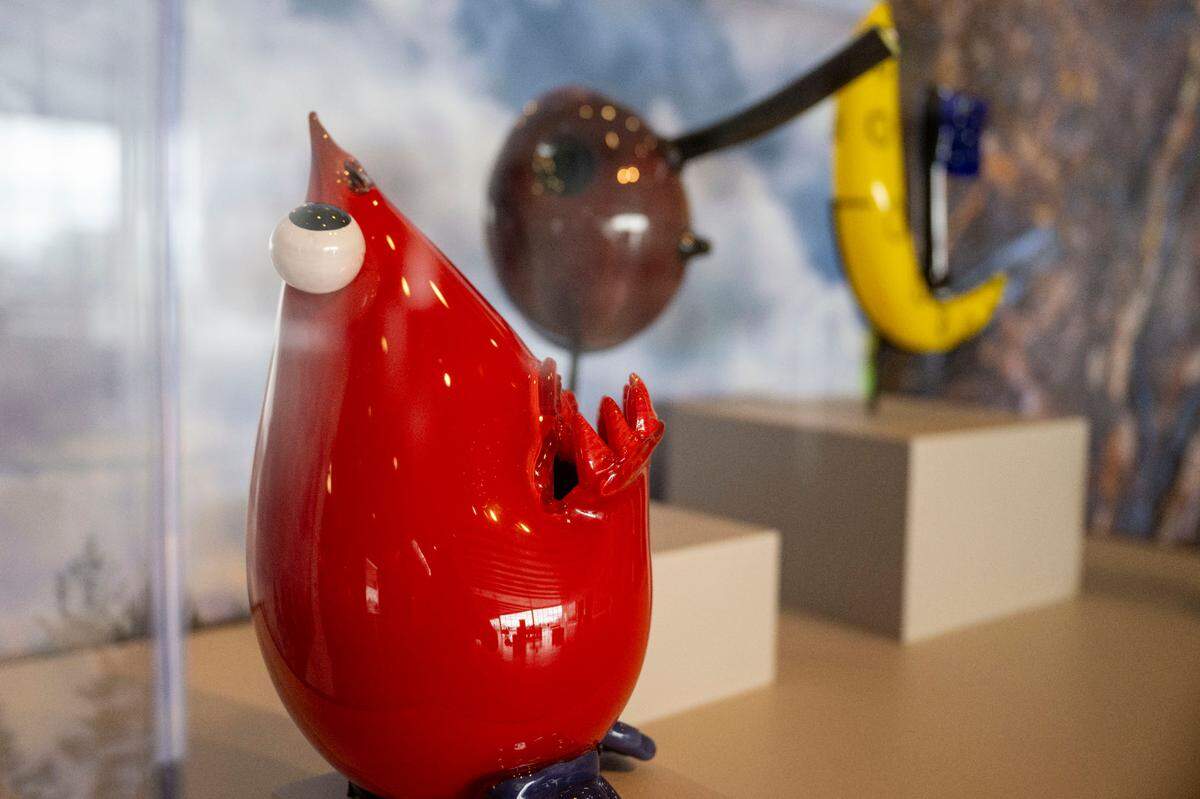
Some of the designs are unforgettable, she said. Like “Pizza Cat,” a cat made from pizza parts, and “Monster President.”
Turning a two dimensional drawing into a three dimensional glass object requires strategy and interpretation. Children’s imaginations are fertile grounds that can yield spectacular creations, she said.
“I absolutely get jealous of some of the ideas,” she said.
Making the kids’ art has improved her technical skills and expanded her own creativity, Gilbert said.
“17 years later, I’m still entertained, fascinated by the program,” she said. “It’s such an interesting opportunity for a young child to get chosen and get to see this drawing transformed into a three dimensional object.”
Mason’s story
Winchell is now a systems analyst for Boeing. The Roy native now lives in Tacoma. One kidney and liver transplant later, he’s healthy, he said. He’s also a glassblower, albeit an amateur one. It was a direct result from his MOG experience, he said.
“I have a really good time with it,” he said. “I’m not any good, but it’s fun to work with and it’s kind of challenging.”
He can still recall the “surreal” experience of getting the call from MOG that his design had been chosen above all the others submitted, including his four siblings. It was, he said, like being a celebrity.
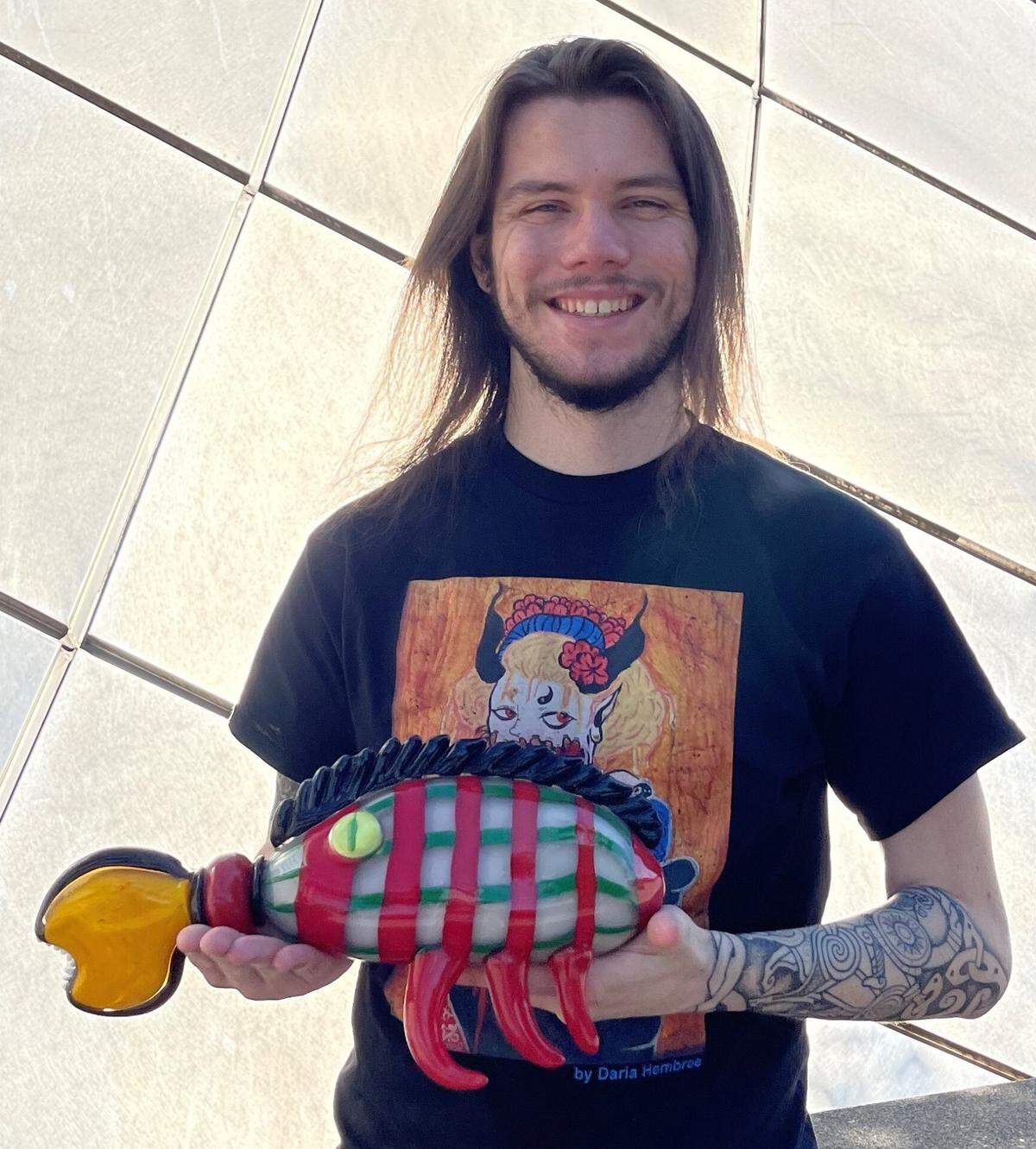
Now, he is a MOG member and has gotten to know the hotshop glassblowers at MOG.
“Every time I go in there, we talk, and they recognize me,” he said.
Even as an adult, Winchell is amazed by his youthful creation.
“Every time we go, I can’t believe that my 10-year-old self was able to really put myself out there on a piece that now everybody can see,” he said.
If you go
What: “Earthlings and Extraterrestrials: 20 Years of Kids Design Glass”
Where: Museum of Glass,
When: 10 a.m.-5 p.m. Wednesday–Sunday.
Admission: $22 adults, $20 seniors (65+)/college students (18+)/military (active and veteran), $13 children (6–18), free for children under 6.
Information: museumofglass.org/
This story was originally published August 26, 2024 at 9:00 AM.