Mount Rainier is getting shorter. Here’s what is happening with WA’s highest point
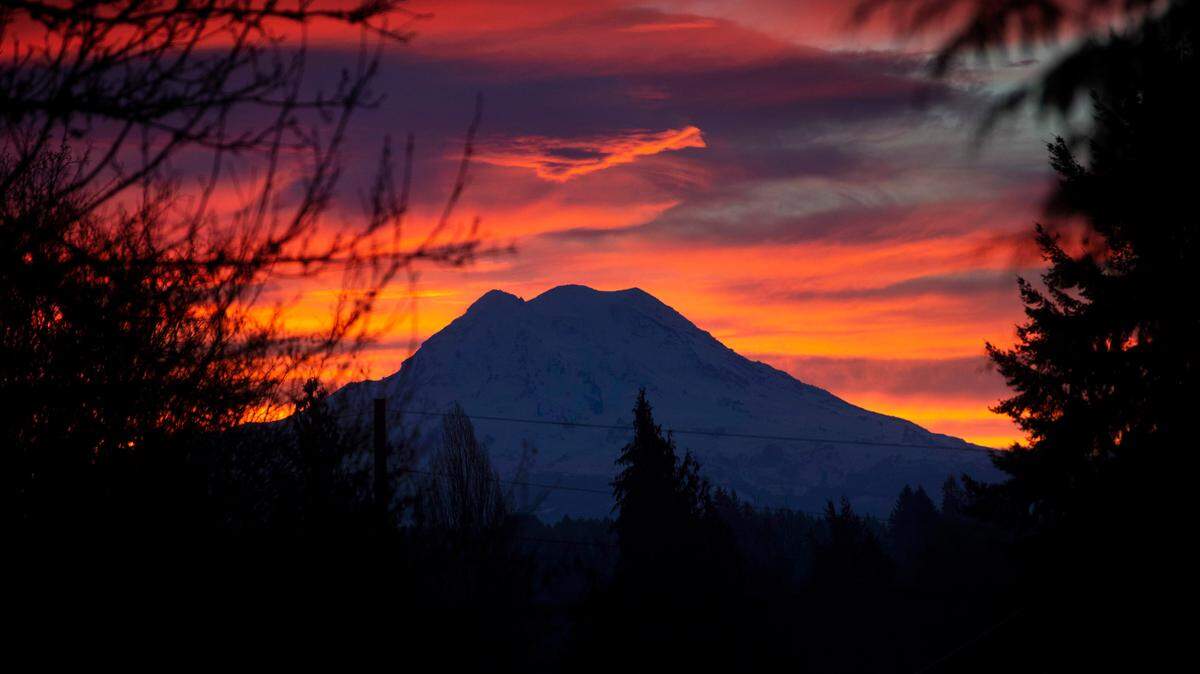
New measurements suggest that Mount Rainier, Washington’s tallest peak, has shrunk.
The reason? Melting ice, likely caused by climate change.
The mountain has gotten roughly 10 feet shorter over time, down from 14,410 feet, according to scientist and mountaineer Eric Gilbertson. He recently took measurements indicating that the southwest side of Rainier’s crater rim is the new apex at 14,399.6 feet.
The previous high point, the Columbia Crest, was 14,389.2 feet, per the new reading. Since 1998 that crest has declined by more than 20 feet, as noted in an article on Gilbertson’s website, countryhighpoints.com.
The piece states that the elevation-survey findings aren’t considered official unless Mount Rainier National Park (MRNP) approves them. The park still lists the high point as 14,410 feet on its website.
An MRNP representative told The News Tribune via email Oct. 9: “The National Geodetic Survey (NGS) operated by the National Oceanic and Atmospheric Administration (NOAA) is responsible for determining the official height of landforms such as Mount Rainier.”
A geologist for MRNP told The Seattle Times that Gilbertson’s results are being considered. It’s unclear what steps will be taken next, the geologist said, such as adopting his measurements or completing a separate Rainier survey.
Gilbertson, a teaching professor in mechanical engineering at Seattle University, posits that Rainier’s true summit switched about a decade ago, as reported by Seattle Met. He borrowed equipment from the school’s civil engineering department to help measure the mountain although “this was more of a personal project.”
Gilbertson and his twin brother aspire to scale the tallest mountain in each country, according to countryhighpoints.com. So far they’ve collected results in 145 countries.
Here in Washington, Gilbertson has also investigated how climate change is likely affecting other mountains in the Cascade range, according to Seattle Met.
“I think people should probably care that the mountains are changing that significantly,” he said, adding that losing 20-plus feet on Rainier’s Columbia Crest in recent decades “is kind of a big deal.”
Editor’s note: This article has been updated with comment from Mount Rainier National Park.
This story was originally published October 9, 2024 at 5:00 AM.