Atmospheric river will bring heavy rain and strong winds to western WA this weekend
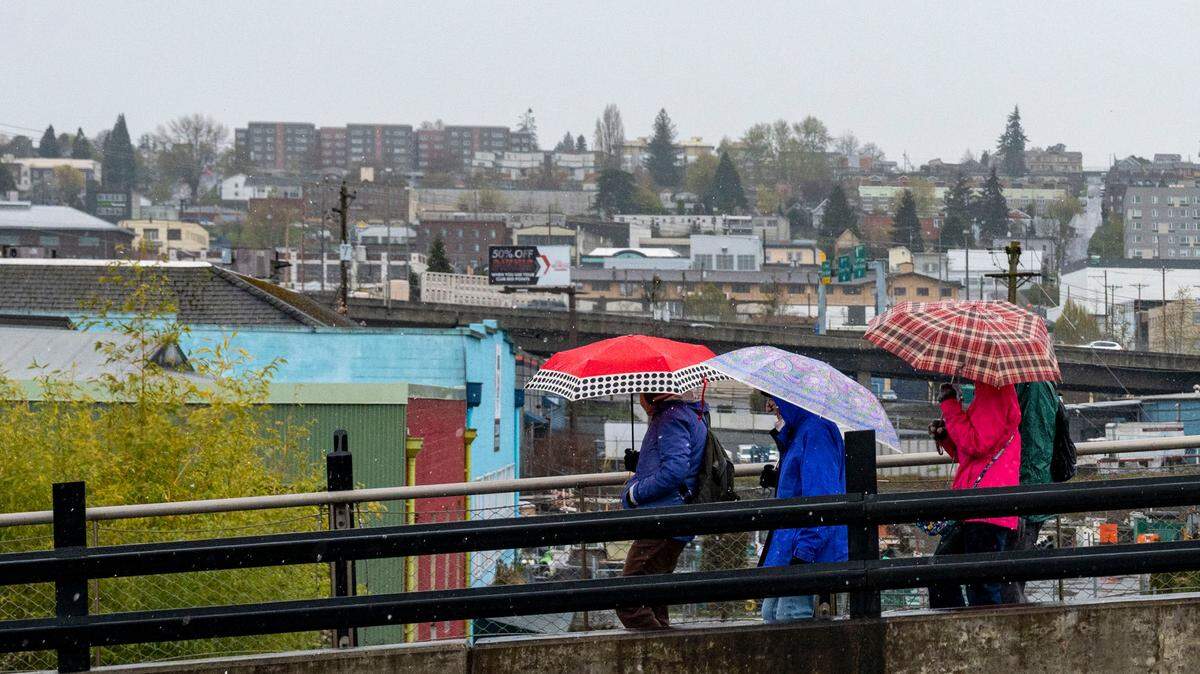
This past week brought what will more than likely be some of the last sunny days in the Evergreen State for a while.
The fall season has officially settled in, and the first atmospheric river of the season is expected to bring heavy rainfall and strong winds to western Washington beginning the afternoon of Friday, Oct. 18, according to the National Weather Service Seattle.
Temperatures in South Puget Sound, including Tacoma and Olympia, are expected to reach a high just below the 60s on Saturday and a low in the mid-40s by Sunday night, according to the NWS. Tacoma and Olympia are expected to get between 0.5 inches to 1 inch of rain between Friday afternoon and Sunday night.
But this is only the start of the rainy season in western Washington.
Harrison Rademacher, a NWS Seattle meteorologist, previously told The News Tribune that this weekend’s weather is preparing the region for potential flooding later in the season as November, statistically speaking, is the rainiest time for western Washington.
The National Oceanic and Atmospheric Administration released their winter outlook on Thursday, Oct. 17, showing that Washington can expect slight changes in the normal winter temperatures as La Niña is expected to influence conditions for winter across most of the country.
Here is what to expect.
How does La Niña affect the weather?
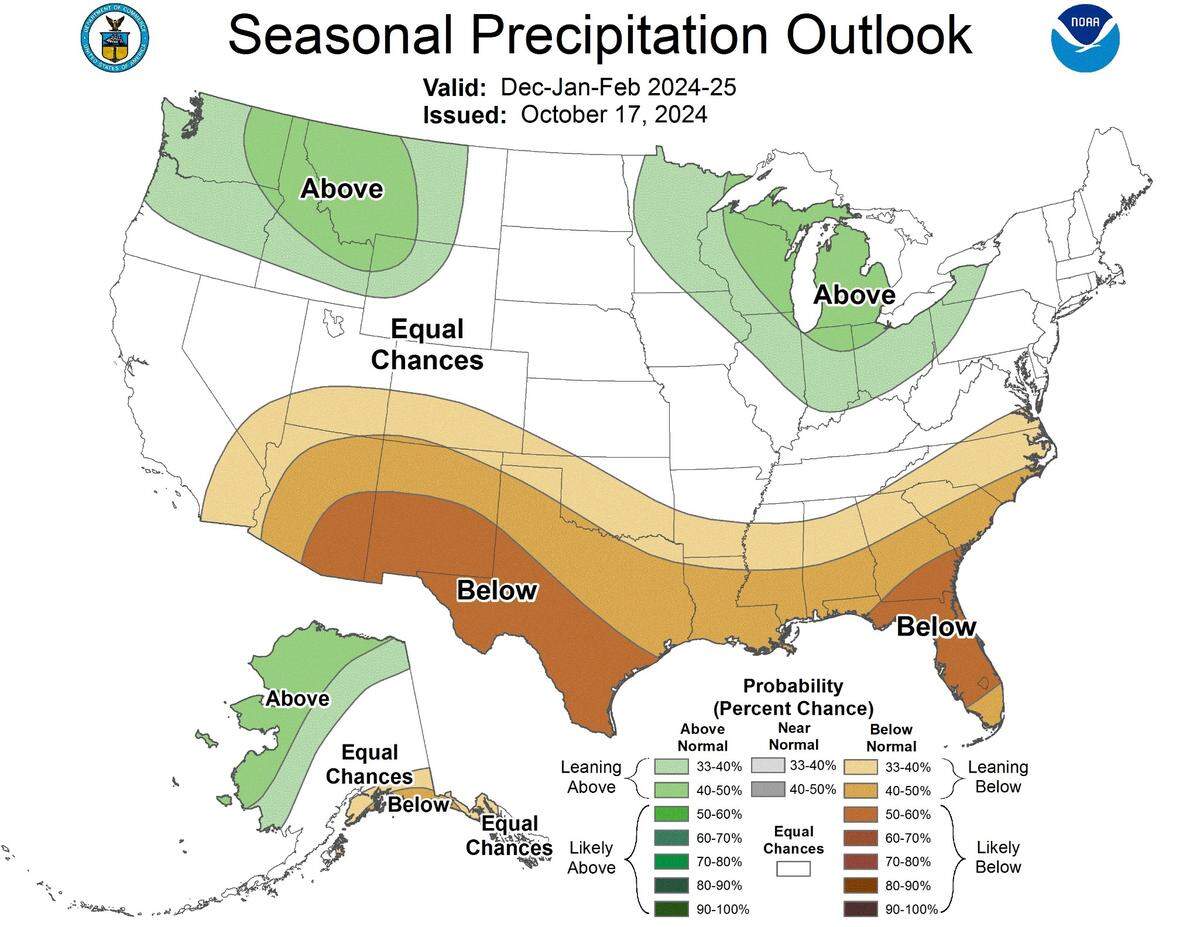
A La Niña is when the temperature of the sea is cooler in the eastern Pacific Ocean, leading to less evaporation, weaker storms and less moisture in the atmosphere, according to NOAA. The Pacific Ocean’s colder waters move up to the surface, pushing the jet stream farther north toward Alaska before dipping southward into the northern United States.
“La Nina conditions are expected to develop later this fall and typically lead to a more northerly storm track during the winter months,” according to the 2024-2025 winter outlook from NOAA.
While the southern United States is expected to have a drier and warmer winter, northern states like Washington can expect temperatures slightly below normal and slightly more precipitation.
This story was originally published October 18, 2024 at 10:59 AM.