This Tacoma shelter takes in people discharged from the hospital with nowhere else to go
Every Wednesday, the Nativity House homeless shelter in Tacoma hosts a free foot-health clinic to help address wounds and infections that are common among the unhoused population.
Katherine Arnold, a nurse who volunteered at Nativity House for two years before recently being hired full-time, said trench foot caused by moisture in socks and shoes can cause the flesh to decay. It is a common ailment among those living outside, who often wear the same socks for extended periods.
Arnold said the rates of trench foot and other foot injuries increase in the cold, rainy winter months.
Jan Runbeck is a nurse who organizes a program intended to give health services at Nativity House and other shelters after the City of Tacoma declared homelessness an emergency. She said the free foot clinic was established to address a common health issue among the unhoused.
“We came to realize pretty early on that we were going to be doing a lot more than feet,” she told The News Tribune on Oct. 16.
The health issues Runbeck and her team have screened at the clinic range the full spectrum. She recalled finding leaking cellulitis, what she said was evidence of advanced cardiac failure, infected ulcerations that neared sepsis, even pregnancies complicated by urinary tract infections.
Runbeck said the health resources available to folks at the shelter are dependent on an individual’s background and circumstances. For example, veterans have access to certain resources that others do not.
Nativity House also participates in a medical-respite program through which beds are reserved for folks discharged from local hospitals with nowhere to live, sleep or heal.
Runbeck told The News Tribune that Nativity House has 12 beds reserved for medical-respite referrals. She said patients discharged from the hospital can use a bed for 30 days before they have to be treated like everyone else who comes to the shelter and receives a bed on a first-come-first-serve basis.
With most shelter staff being medically untrained, outside of the nurses offered through Runbeck’s program, she said discharged patients are offered “guaranteed a bed only.”
She said the program is intended to reduce rates of rehospitalization for the same diagnosis the hospital previously treated.
Faatima Lawrence is the director of Homeless Adult Services for Catholic Community Services of Western Washington, which runs the Nativity House shelter.
Lawrence told The News Tribune the shelter is on pace to have nearly 300 medical-respite guests by the end of 2024.
The shelter has about 10 staff members, including case managers to help manage the program, according to Lawrence..
She said the medical-respite program is funded through contracts with Virginia Mason Franciscan Healthcare and MultiCare Health System. Most of the respite referrals come from patients in St. Joseph Medical Center and Tacoma General Hospital.
When asked about details regarding the compensation and total value of the medical-respite program, a spokesperson for Multicare Health System told The News Tribune the contracts may prohibit the disclosure of details.
“This is a shelter, not a nursing home,” Runbeck told The News Tribune. “But in reality, it is acting like a nursing home.”
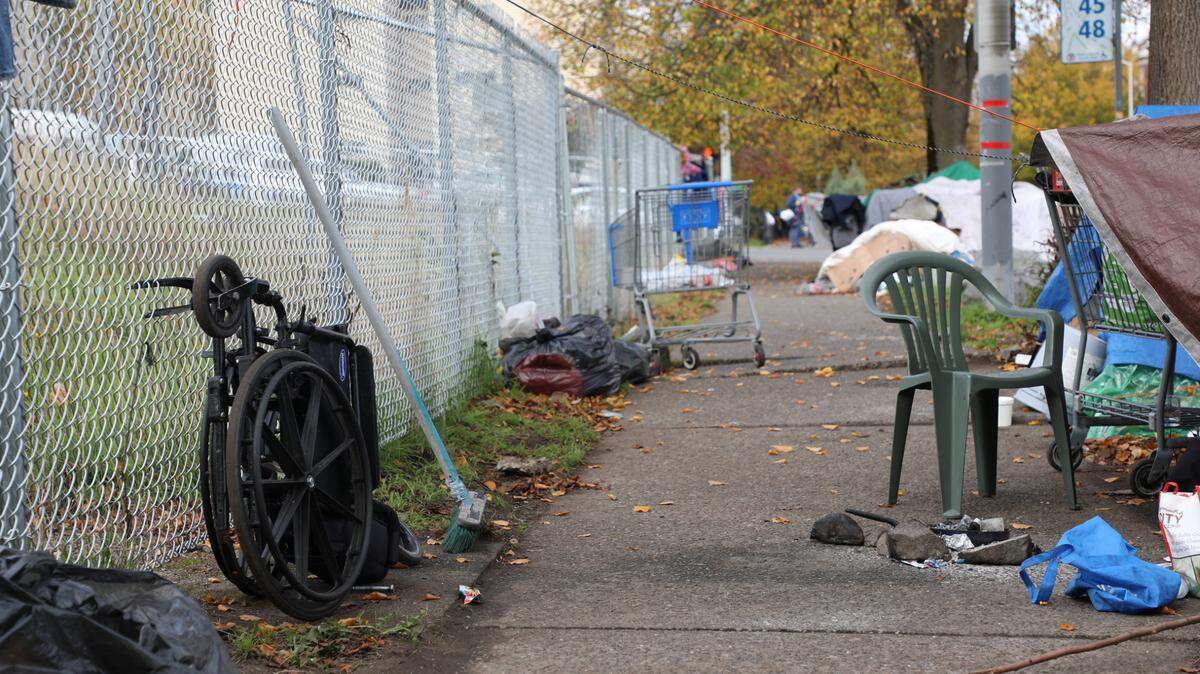
Arnold said on any given day, the shelter hosts more than a dozen people who are using wheelchairs or other mobility-assisting equipment.
During Pierce County’s annual survey of those living unhoused, 2,661 people were counted living in shelters, vehicles or outside on a single night in 2024. Of those surveyed, 22% reported a physical disability and 25% reported a chronic health condition.
In 2023, 25% of those surveyed reported a physical disability and 29% reported a chronic health condition.
“This isn’t a great lifestyle to heal in,” Arnold told The News Tribune.
Runbeck said she believes that the rates of illness and injury are no different among the unhoused population than they would be in the general population, and the difference is what she called “network poverty.”
She described the idea of network poverty as the circumstances and social support folks have to fall back on when they need help. For example, she said not having a family or significant other to support you when an injury causes you to lose your job and you end up uninsured could be the difference between losing your home or not.
Runbeck recalled one individual who worked for decades delivering appliances as an independent contractor. When an injury caused him to require a walker, his status as an independently contracted worker prevented him from having insurance and caused him to lose his home.
“He was not part of a union,” Runbeck told The News Tribune. “There was no one to speak on his behalf.”
She shared other similar stories like one about a man who worked for a landscaper and was riding his bike to work when a vehicle hit him and broke his back and his legs. He also was uninsured.
Runbeck said the circumstances and connections are such an important part of why someone ends up unhoused.
“All the stereotypes are exaggerated,” she told The News Tribune.
This story was originally published October 26, 2024 at 5:00 AM.