Half of homeless people contacted by Tacoma outreach team refuse help. Why is that?
Since implementing a ban on public camping, the City of Tacoma maintains that it uses a “services first” approach to enforcement, according to a city spokesperson.
In Oct. 2022, the Tacoma City Council passed an ordinance which prohibits camping and the storage of personal belongings in a 10-block radius around temporary shelters and all public property within 200 feet of Tacoma’s rivers, waterways, creeks, streams, and shorelines. Under the ordinance, violators face fines of up to $250 and up to 30 days of imprisonment
To enforce the policy, the city uses both police and homeless-outreach staff, known as the HEAL team, who make contact with individuals living in encampments that have been reported to the city. Their job is to get folks living unhoused to accept offers of shelter and services that help them get off the streets.
According to a city manager’s report on Sept. 5, outreach staff had made 5,472 contacts with individuals living unhoused. Of those contacted, 48% expressed interest in services, with 9% placed in shelter as a result of outreach contact.
What happens when those experiencing homelessness refuse the help they are offered?
Through September and October, the city’s HEAL team has made contact with 401 individuals living in encampments around the city. Of those 401 contacts, about 51% were reported to have refused offers of services.
City of Tacoma Spokesperson, Maria Lee, told The News Tribune that the city cannot compel anyone to accept services when they decline.
“The city respects individuals’ rights to self determination,” Lee said in an interview. “We focus on offering support that respects their autonomy.”
Lee said the city understands the concerns of local businesses and residents and recognizes the impact homeless encampments can have but maintained that the city has prioritized “voluntary compliance” and is committed to outreach as a long-term strategy.
Lee told The News Tribune the outreach work that the HEAL team is a part of is an ongoing process, focused on building trust and relationships with those living unhoused to try to better understand their needs and challenges.
Why refuse help?
Kevin Ruby works as an outreach specialist for the HEAL team.
“It’s important to understand that people experiencing homelessness are individuals with unique and complex circumstances,” Ruby wrote to The News Tribune in a statement. “Declining offers of help, while it might seem counterintuitive, often has underlying reasons rooted in personal experiences and challenges.”
Ruby said there are a number of factors that might contribute to someone not accepting services when offered.
He said some individuals have experienced significant trauma, such as abuse, violence, or the loss of loved ones, and shelters or other group settings can be triggering for them.
Mental health challenges like depression, anxiety, PTSD, or schizophrenia can make it difficult to navigate social situations, follow rules, or trust others, according to Ruby. He said those conditions might also impair judgment and decision making.
“Addiction creates its own set of challenges, and some individuals may prioritize obtaining and using substances over seeking shelter or other services,” Ruby told The News Tribune. “Shelter rules can feel constricting to someone who has already experienced a profound loss of control over their life.”
He said some people have pets and worry they may not be allowed in the shelter, putting them in a position where they feel like they have to choose between shelter and companionship.
Others may just feel shame or stigma related to accepting help, Ruby said, even when facing the hardship of homelessness.
“It’s crucial to remember that an individual declining services is not a sign of their unwillingness to change. It’s often a complex response to difficult circumstances and past experiences,” Ruby told The News Tribune.
Ruby said offering consistent support, building trust, and respecting individual choices are “key” to eventually helping people find pathways out of homelessness.
According to Lee, the city is in the process of developing a by-name list of everyone contacted by the HEAL team as a way of recording better information about individuals and tracking their interactions with local resources and authorities.
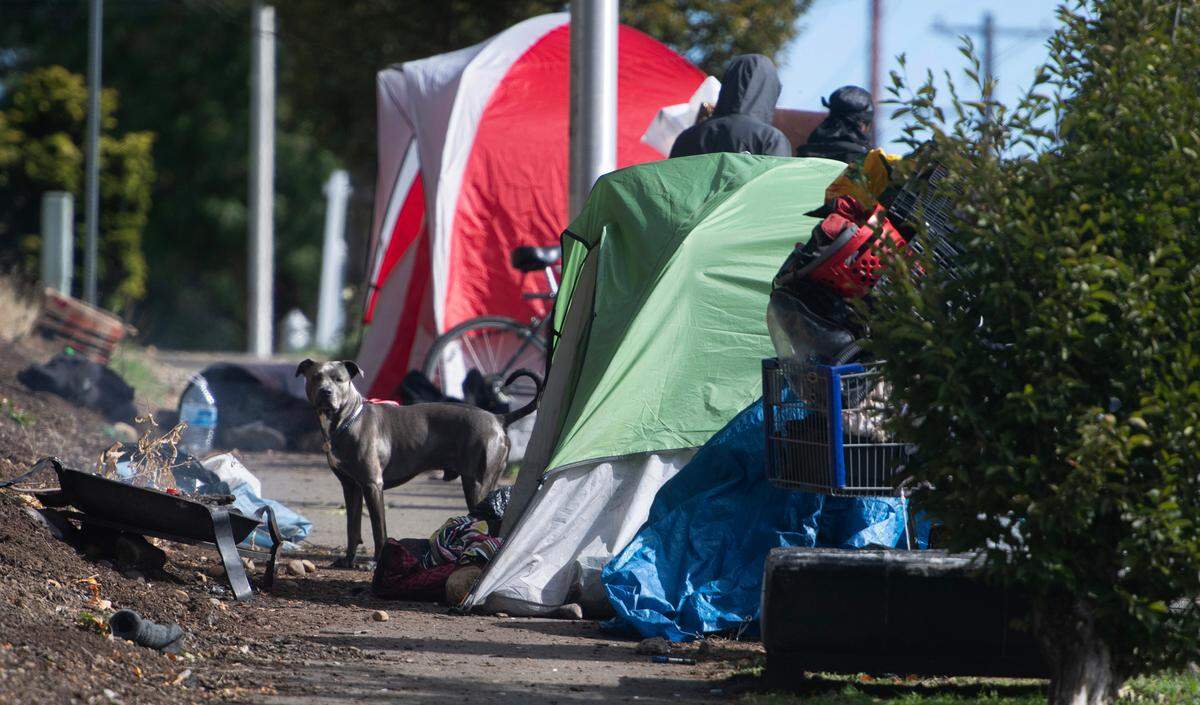
What happens when homeless folks decline help?
In most cases, individuals who decline services relocate voluntarily, Lee said in an email to The News Tribune.
In some parts of town, like at the end of South Hosmer Street, local business owners have complained that the city’s policy does not do enough to protect their businesses and property from the effects of chronic encampments, public drug use and vandalism. Recently, the Hosmer Business Association hired a private security force to sweep the area and remove stubborn homeless encampments.
Allison Griffith is the director of Tacoma’s Neighborhood and Community Services — the department which runs the city’s HEAL team.
In a statement to The News Tribune, Griffith said the city understands the diverse perspectives regarding how encampments should be dealt with and the concerns about how they impact the surrounding community.
In July, people living near a undeveloped gulch in West Tacoma pleaded with the city to remove homeless encampments in the wooded area that caused frequent fires. A spokesperson for the city told The News Tribune on July 29 the HEAL team had made contact with people living in the gulch but was not able to get any of them to accept services.
Those living next to the gulch continued to report fires even after the HEAL team made contact.
“While we work tirelessly to address these barriers and work to make services more accessible, we also acknowledge the need to balance compassion with community concerns,” Griffith wrote in an email to The News Tribune.
She said the city’s perspective is that criminalizing homelessness does not address the root causes of the problem and can often exacerbate challenges for individuals in vulnerable situations.
According to Griffith, arrests can create additional barriers to accessing housing and employment, further entrenching cycles of homelessness.
“However, we also understand that there are situations where enforcement may be necessary to address significant public health or safety concerns,” Griffith wrote in a statement to The News Tribune. “We are committed to utilizing enforcement judiciously and only as a last resort after all other options have been exhausted.”
According to a Sept. 5 report from the city manager’s office, the city has made one arrest at an encampment since the implementation of the camping-ban ordinance, and that was because the person had arrest warrants. As of Sept. 5, the city had removed more than 400 encampments since the implementation of the camping-restrictions ordinance and had disposed of more than 7 million pounds of encampment debris.
Griffith told The News Tribune the crisis requires strategies that address the underlying causes of homelessness, while also developing pathways and supports for permanent solutions.