Parkland mobile-home park was being sold. County ponied up $750K to help residents buy it
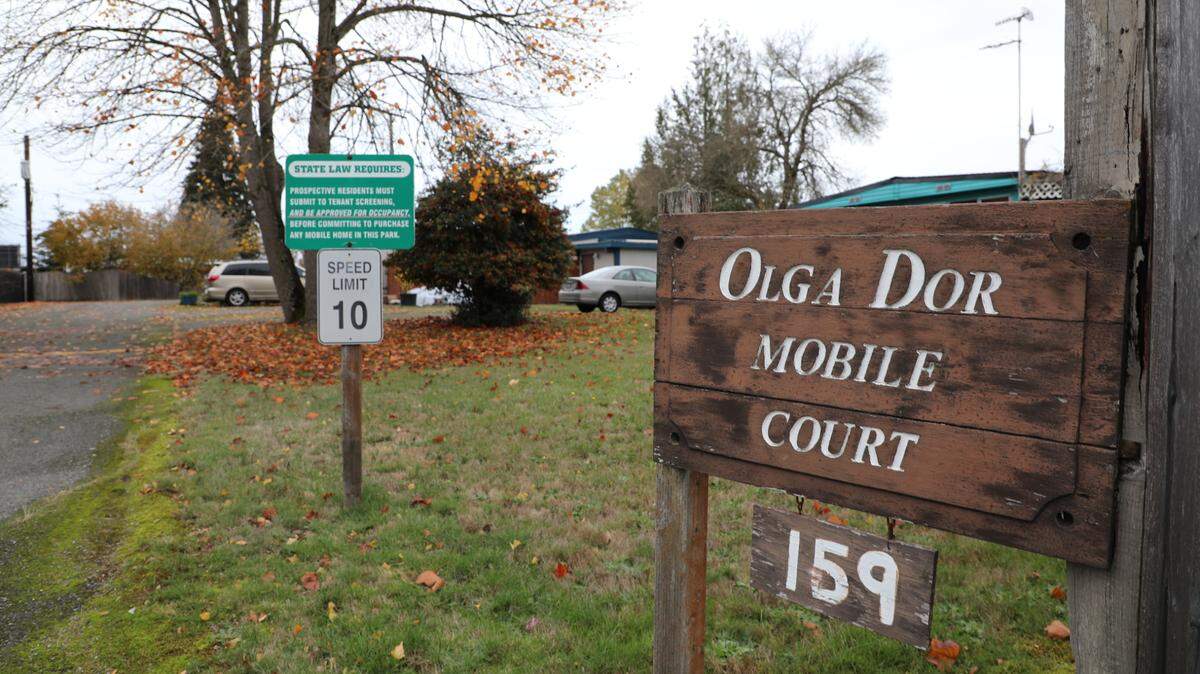
Pierce County is investing to prevent the displacement of residents at a mobile home community in Parkland that was nearly sold and redeveloped.
Olga Dor Court has nearly 50 homes for people over 55 years old. Residents were notified earlier this year that the property owner intended to sell the community.
Pierce County invested $750,000 from the Pierce County Community Development Corporation (PCCDC) fund, which set aside $2.75 million to invest in and maintain affordable-housing stock in the region. The money helped partners preserve the affordable housing the community offered.
In a statement regarding the acquisition, Councilmember Robyn Denson (District 7, Democrat) said situations like Olga Dor Court are exactly what the PCCDC was envisioned to address when the council passed the 2024-2025 budget.
The ROC Northwest program at the Northwest Cooperative Development Center, a nonprofit specializing in cooperative development, formed a resident-owned cooperative to purchase the property and prevent the displacement of its residents.
“Our top priority was keeping housing affordable for the people here,” said Ben Ward, president of Olga Dor Homeowners Cooperative in a statement regarding the transaction. “Without this opportunity, many residents couldn’t afford another rent increase. Cooperative ownership lets us manage our community — setting our own rules, overseeing the budget and securing a stable future.”
Victoria O’Banion, a spokesperson for the Northwest Cooperative Development Center, told The News Tribune the nonprofit has helped create nearly 30 limited-equity housing cooperatives across the state. She said Olga Dor Court is their sixth in Pierce County.
According to O’Banion, residents of Olga Dor Court will now pay shares of the total cost of the property and will collectively own the community. They will make collective financial decisions about how to manage the property and share its costs.
“Residents are members of the business, owning and operating the community,” she told The News Tribune in an interview. “They now have greater control of the finances, and they know where every dollar is going.”
O’Banion said that because of the limited-equity cooperative model, residents can expect their lot fees to stay more consistent as they collectively manage the operating costs and mortgage for the property.
She said her nonprofit heard of the property through a public notice of it being for sale and identified the mobile-home park as a perfect opportunity to apply the cooperative model and preserve affordable housing.
O’Banion said the model works at sites such as mobile home parks because of the limited cost. She said Olga Dor Court was purchased for roughly $6 million, which was calculated to be a financially feasible cost for the cooperative model. She said if the property cost closer to $9 million, for example, it would not have worked as costs would have been too high for residents.
Sandy Howard has lived in Olga Court for about two years, but she told The News Tribune she has family who has lived there for decades. Howard is serving as treasurer for the Olga Dor Homeowners Cooperative.
She said residents of the community were concerned when they were notified the community was going to be sold about four or five months ago.
Howard said many of the residents are retired and on fixed incomes or disability.
“Many of the people here wouldn’t have anywhere to go if this place closed or if rents were raised too exorbitantly,” she told The News Tribune.
She said at first, some residents fought the idea of becoming a housing cooperative because they did not understand the concept. She said eventually the broad majority of residents got on board with the idea to collectively own the community, instead of allowing someone else to.
“Now, the lot fees are in our control, and it is up to us to figure out what needs to be fixed or maintained,” Howard said.
After what she described as a long process of coordination to get everyone on the same page, the community feels optimistic about its future.
“We are going to get the community together and help each other out more,” she told The News Tribune. “It’s a positive thing.”