Lines are down across western WA, here’s what to do if you encounter one, generator safety
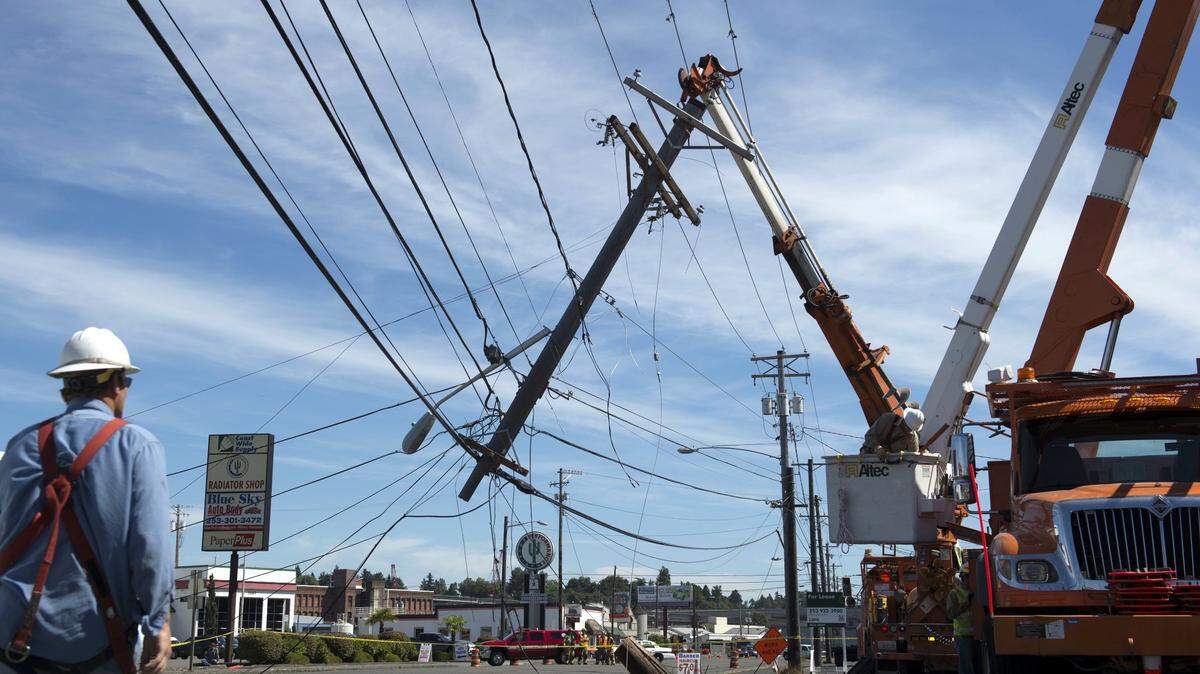
Over 1,000 outages have been reported across western Washington, leaving more than 279,000 people without power into the late afternoon on Wednesday, Nov. 20.
The bomb cyclone on Tuesday, Nov. 19 brought strong winds reaching up to 74 miles per hour in some areas such as in Enumclaw, which caused the outages. Several outages were caused by fallen trees on power lines, according to the Puget Sound Energy website.
As crews continue to work to restore power across western Washington, you may come across downed power lines. If you are affected by the power outages, you may want to use a generator to power your home.
Here’s what to do if you come across downed power lines, and how to safely use a generator to power your home.
What do I do if see a downed power line?
Coming across downed power lines could be more common in the wake of Tuesday’s bomb cyclone, and several safety measures should be taken to ensure you don’t get electrocuted.
Anyone who comes across a downed power line is advised to practice safety above all and do the following, according to PSE:
- Always assume the power line is energized and stay at least 35 feet away
- Do not attempt to rescue a person or pet near a downed line
- Call 911 or the utility serving the location to report the downed power line
- Do not drive over power lines
- Stay in your car is a power line falls on your vehicle or if you have to evacuate from your vehicle, jump away from the car, land on both feet and do not touch the vehicle then proceed to take small shuffling steps until you’re at least 35 feet away.
How do I safely use a generator?
If you’re among those left without electricity due to the bomb cyclone, you might be interested in using a generator to power your home while the electricity is being restored.
A generator sure can be handy in this situation, but it can also be deadly if it is used improperly.
According to the Washington State Department of Health, using a generator incorrectly could lead to carbon monoxide poisoning and electrocution and can cause a fire. Carbon monoxide poisoning from a generator can kill a person within minutes since one generator can produce the same amount of carbon monoxide as hundreds of cars, according to the U.S. Consumer Product Safety Commission.
The safest way to get power during an emergency is through a permanently installed stationary generator, but if you don’t have a stationary generator, a portable generator works, too.
Here is how to safely operate a portable generator, according to the DOH:
- Never use a portable generator indoors since the toxic engine exhaust can lead to carbon monoxide poisoning
- Place the generator outside and at least 20 feet away from any windows, doors and vents
- Keep the generator dry and do not use it in rainy conditions unless it is under an open canopy type of structure
- Make sure your hands are dry before operating the generator
- Turn the generator off and allow it to cool before refueling it as spilling gasoline on hot engine parts can cause a fire
- Plug appliances directly into the generator
- Never try to power house wiring by plugging the generator into a wall outlet as it can lead to the electrocution of utility workers or neighbors that use the same utility transformer
- Have a qualified electrician install a power transfer switch in order to properly and safely connect the generator to house wiring