200 acres of forestland will be thinned under approved Pierce County plan. Here’s why
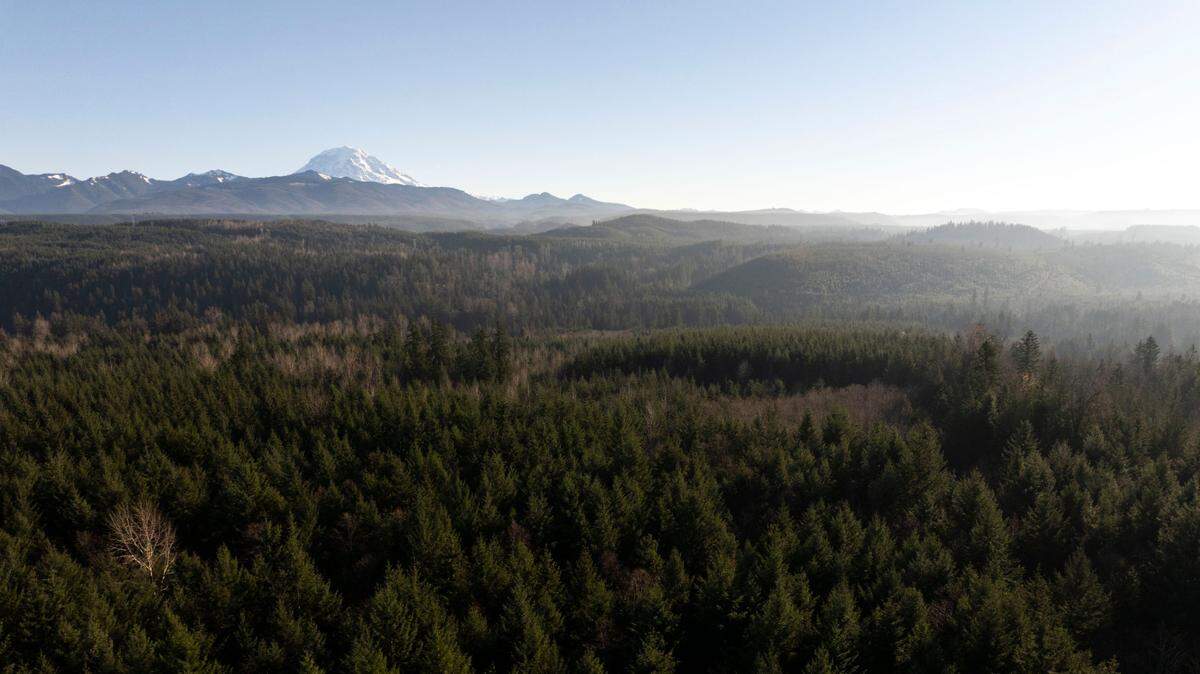
After tabling a decision on whether to allow the thinning of 200 acres of forestland preserve in Buckley earlier this month, the Pierce County Council unanimously approved the ordinance Dec. 17. The council had originally tabled the issue to address concerns about whether a nearby road had the capacity to make that happen.
The forest land near 28703 134th St. E. was purchased by Pierce County in 2012 through the Conservation Futures program “for the purpose of forest protection, fish and wildlife habitat and passive recreation,” according to the ordinance.
Pierce County expects to make at least $131,000 from selling the timber at public auction, according to county documents. The county plans to use that money to improve the health of the Buckley Forestland Preserve, in addition to increasing its passive recreational capacity. Timber harvest would be completed by Oct. 31, 2026 and logging would not happen during the wet season of November through April, staff told the council Dec. 17.
Over time the forest has grown “to such density and species composition” that thinning the trees would be beneficial to the growth and health of those that remain, the ordinance said.
It’s a perspective supported by the Buckley Forestland Preserve Management Plan, which recommended thinning timber sales as “the first forest health treatment” for the site.
“Forests that are overly dense and dominated by a single tree species are at risk of decline and mortality due to climate change,” the plan summary reads. “Trees at [Buckley Forest Preserve] are currently competing for the resources they need to survive, and there are not enough resources to support the dense forest, resulting in tree stress and mortality.”
Stressed trees are more likely to die from drought, are more at risk for severe effects from wildfire and more at risk for insect and disease attack and mortality, the plan said.
“In the 1980s and 1990s, prior to Parks’ ownership, the majority of BFP was clearcut and densely replanted with Douglas-fir tree seedlings,” according to the plan summary. “No tree monitoring or forest management occurred after the seedlings were planted, resulting in a forest that is overly dense and dominated by either Douglas-fir or red alder trees.”
Forest management recommends increasing forest resiliency by reducing tree density and increasing tree and plant biodiversity, according to the plan.
Most of the trees identified for removal will be smaller trees from the most abundant tree species, Douglas-fir and red alder. Larger, healthier trees will be able to accelerate their diameter growth and develop better resiliency to stressors, according to council documents. Some parts of the forest have an understory dominated by invasive Himalayan blackberry, which would be treated after thinning.
Funds from the timber sale would go to support the diversification of the forest and combat invasive species, staff said Dec. 17.
At the council meeting Dec. 3, several people raised concerns about the state of 134th Street East and its ability to withstand logging trucks and increased traffic. Council member Dave Morell, who sponsored the ordinance, voted to table the issue until Dec. 17 to give staff more time to analyze those concerns and find solutions.
Staff didn’t address the condition of the road at the Dec. 17 meeting but said the contractor would maintain the road.
This story was originally published December 6, 2024 at 5:00 AM.