Pierce County’s plan to tackle homelessness in 2025 includes $30M in spending, plans show
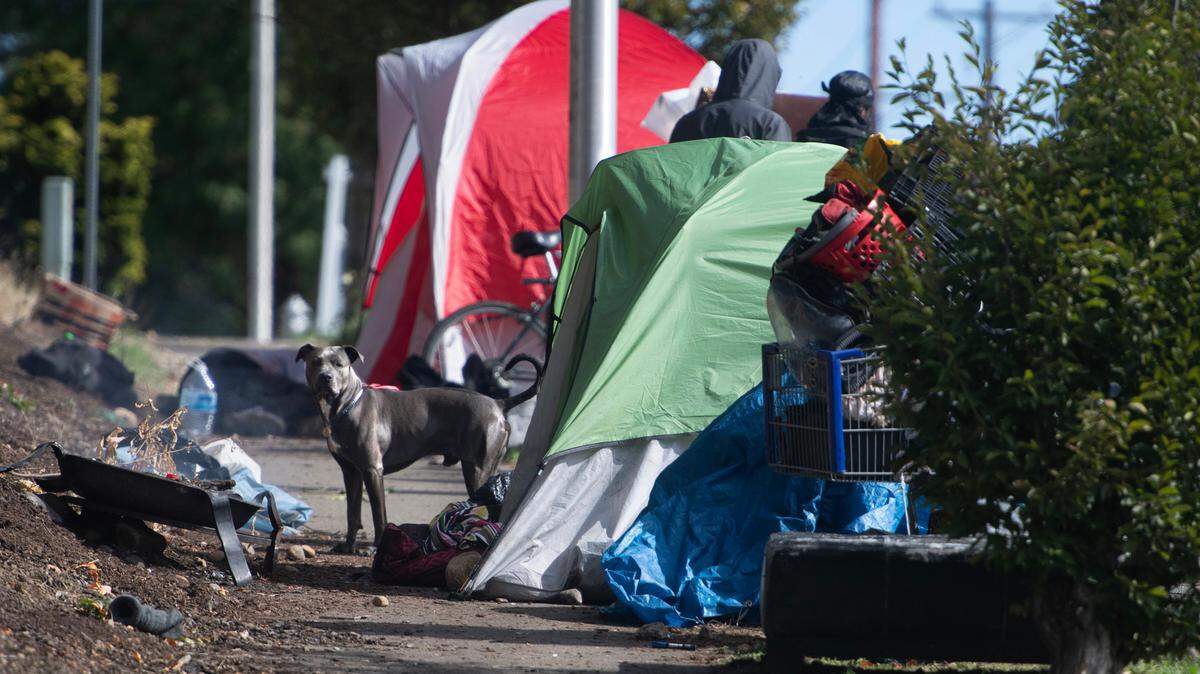
As a new year approaches, Pierce County’s Human Services Department is planning how to address the homelessness crisis in 2025 with new emphasis on improving existing systems and tackling youth homelessness.
On Dec. 11, Human Services supervisor Devon Isakson gave a presentation to the Pierce County Council’s Select Committee on Homelessness outlining the department’s upcoming efforts to mitigate homelessness in the region.
Isakson said the department is preparing to contract an estimated $33 million in services during 2025. She said the total amount is a conservative estimate based on what has currently been budgeted and could be subject to change.
She said there is speculation that state funding for the programs could be reduced in the upcoming legislative session.
According to Human Services, the department is preparing to contract an estimated $3 million to $6 million in eviction-prevention services in 2025. A spokesperson for the department told The News Tribune that as of Nov. 20 it had distributed $6,691,335 in 2024 to cover debt on rent and utilities.
Human Services has received more than $10.3 million in eviction-prevention assistance requests during 2024.
According to Isakson’s presentation, the county is expecting to contract about $4 million to $6 million to fund the region’s Continuum of Care (CoC). The U.S. Department of Housing and Urban Development (HUD) awards money to coalitions that coordinate housing and services for homeless families and individuals. Those regional planning bodies are called Continuums of Care. There are more than 400 such organizations across the country competitively applying for billions in grant funding.
The funding Pierce County’s CoC will receive from the federal government is dependent on HUD’s evaluation of its application for the new year. Between 2021 and 2023, Pierce County’s CoC received an annual average of just over $4 million.
This year, a consultant’s review of Pierce County’s CoC found that it lacked organizational structure, leadership and transparency, which could impact the funding it receives from HUD. HUD scores regional CoC’s annually. While Pierce County’s 2024 CoC score will not be released until 2025, the county received 48% of the total points the previous year.
On Dec. 11, Human Services program specialist Valeri Almony told the council the CoC is working to improve its structure with clearer roles and responsibilities for its members and to increase collaboration.
According to the presentation, Pierce County’s CoC requested $11 million from HUD to fund future projects that include permanent supportive housing, rapid rehousing, transitional housing and the county’s Coordinated Entry system.
Coordinated Entry is the county’s “front door” to the homelessness response system, which is intended to intake anyone who is experiencing or at-risk of homelessness in Pierce County.
According to Isakson’s presentation, the county expects to contract about $2 million to $4 million to operate Coordinated Entry in 2025. According to data from Pierce County’s Human Services department, Coordinated Entry had an average annual operating cost of about $1.6 million from 2017 to 2021.
Beginning in 2022, the county made huge investments in Coordinated Entry, spending more than $3.426 million over the next 18 months. Nearly $2 million of Coordinated Entry’s funding increase was made possible by federal American Rescue Plan Act funding during that time.
Some have criticized Coordinated Entry as a difficult-to-navigate bottleneck where thousands in need of supportive housing and services wait indefinitely for help. Coordinated Entry includes a priority pool waiting list for those waiting to be referred to housing. Housing referrals are not first come, first served but are chosen based on how vulnerable they are.
During Isakson’s presentation, she said the department is looking to hire a third-party consultant to evaluate the prioritization tool.
“We assessed that tool and we identified disparities for people of color and special populations,” she told the council. “We will be changing our prioritization tool in 2025.”
Isakson said a separate Coordinated Entry specifically for youth experiencing homelessness will be created as well.
At the beginning of November, Pierce County announced it was to receive more than $3 million from HUD for programs to mitigate homelessness among youth.
Isakson said Human Services is anticipating to contract $3.1 million for the Youth Homelessness Demonstration Program to mitigate youth homelessness through permanent supportive housing, rapid re-housing, street outreach to unhoused youth and homeless diversion programs.
She also said Human Services is looking to hire new staff to oversee youth-focused programs.
On Dec. 11, Almony told the council that the department would have to meet planning deadlines for the youth programs set by HUD, with the first one being April 29, 2025.
This story was originally published December 13, 2024 at 5:30 AM.