Over 14,000 Tacomans aren’t U.S. citizens. Who is vulnerable to deportation under Trump?
President-elect Donald Trump’s incoming administration has signaled that undocumented immigrants with a criminal background would be prioritized for deportation after his swearing-in Jan. 20, but some Washington state advocacy organizations are telling everyone without legal immigration status to be prepared.
Trump said in an NBC interview last month that over the next four years, there’s “no choice” but to deport everyone living in the country illegally. His pick for border czar, Tom Homan, has said on FOX News that the administration would target undocumented immigrants who are considered threats to public safety and national security.
Kansas Attorney General Kris Kobach, an informal adviser to Trump, according to the Associated Press, doesn’t expect mass deportations to lead to arrests at locations such as schools. That’s something some school districts in major cities are preparing for, The New York Times reported this month, including in Los Angeles, Chicago and New York.
In Tacoma — population 222,932 — about 14,399 people (6.5 percent) are not U.S. citizens, according to census data. That number includes undocumented immigrants and immigrants with legal status to reside in the United States. Nearly half of the noncitizens are from Latin America, and the next largest immigrant group is from Asia.
Brenda Rodríguez López is one of two executive directors of the Washington Immigration Solidarity Network, a statewide coalition of immigrant and refugee rights organizations. In a recent interview with The News Tribune, she said there isn’t a specific background that makes a person vulnerable to being arrested by ICE agents for deportation, such as having a prior deportation order or a criminal record.
Rodríguez López, who is based in Eastern Washington, said her organization has found that being in the wrong place at the wrong time is often what leads to someone being detained.
“It’s important to remember that this administration fundamentally thinks that immigrants should not be here,” Rodríguez López said. “They are demonizing and vilifying our communities and sharing their plans for immense cruelty in mass deportation.”
Rodríguez López said she came to the United States at age 9, walking through a desert in an effort to be reunited with her family. She is a recipient of the federal DACA policy, Deferred Action for Childhood Arrivals, which protects some people who immigrated to the United States as children from deportation and provides them with temporary work authorization on a renewable basis.
With the threat of mass deportations looming, Rodríguez López said her organization has expanded the hours of a hotline that she refers to as an “ear on the ground” where people can report employment raids, sightings of immigration enforcement agents and detentions. The number is 1-844-724-3737, and it’s available 6 a.m. to 6 p.m. Monday to Friday.
The disconnect between messaging about federal immigration authorities’ priorities and the enforcement WAISN has seen in the state is part of why the organization has been organizing “know your rights” training presentations on Zoom and in person.
The training covers what to do if ICE agents show up at a person’s home or workplace, best practices for documenting their activity, the types of questions to ask, Constitutional rights and state law that limits courthouse arrests and information sharing between local police and ICE. Rodríguez López said the group also is coaching people through developing a family plan for worst-case scenarios.
“Who is going to give authorization to take care of their children? Who’s going to have access to bank accounts? Who is going to have access to all the documents that the attorney may need?” Rodríguez López said. “Unfortunately, people are having those really honest and painful conversations because we’re having to think about what would we do and what do we need to have in place if I’m ever separated from my family.”
The number of people being deported from the United States is at a 10-year high. More than 271,000 unauthorized immigrants were removed by ICE in fiscal year 2024, according to the agency’s annual report.
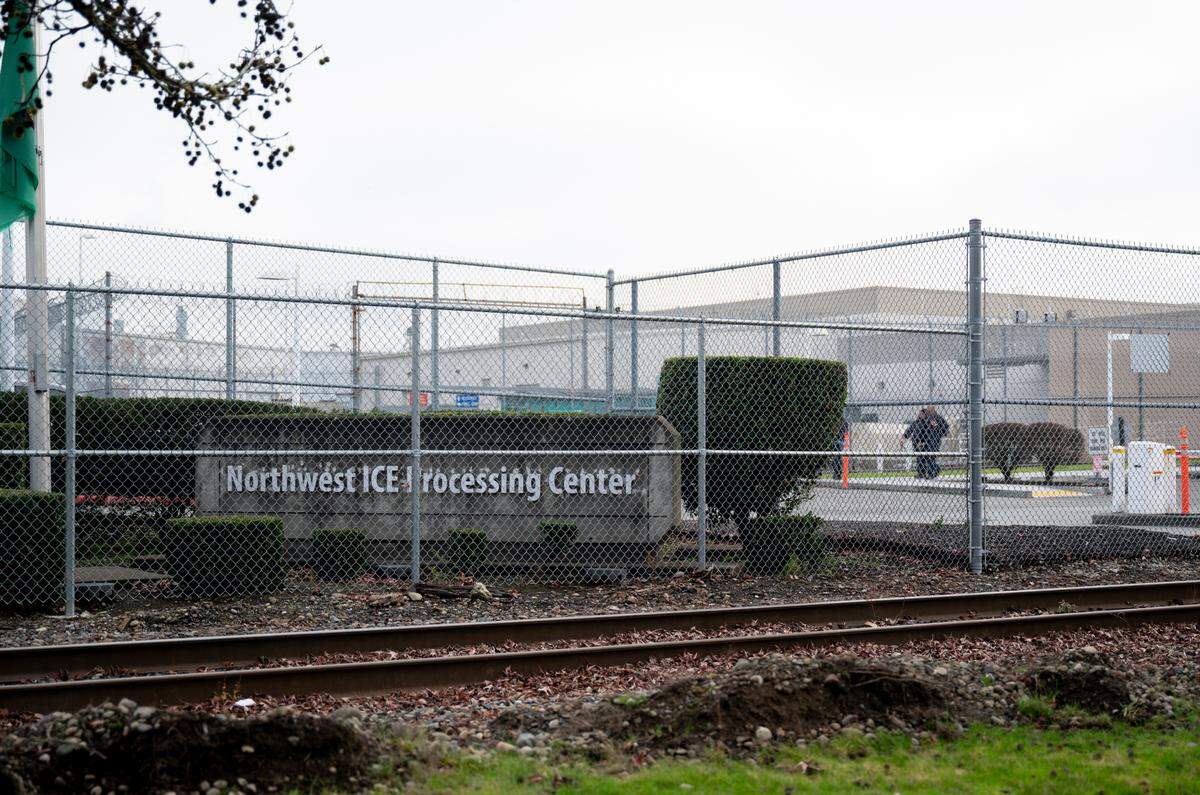
The daily average number of people detained at the Northwest ICE Processing Center has climbed in recent months. The privately-run detention facility in Tacoma had an average daily population of 661 near the end of October, according to ICE statistics. As of Dec. 23, the number was 703.
“More than ever, we have to remember that we deserve dignity and that we are worthy of love and respect, and we have to show up for each other,” Rodríguez López said.
One organization that works with detained immigrants is Advocates for Immigrants in Detention Northwest. The Tacoma-based nonprofit helps people while they’re held in detention by offering resources like phone cards to call family members or attorneys, books, yarn or other items to keep their minds occupied. When detainees are released, volunteers offer clothing, rides to the airport or temporary housing.
Lynette Crumity, the group’s executive director, said that recently the group has seen an increase in detainees held at the detention center and more deportations. Asked who she thought would be most vulnerable to deportation under the incoming Trump administration, Crumity said no one is safe, but given what she’s seen from Trump in the past, Black and brown people would be targeted first.
Crumity recalled the story of a woman who she said was held at the detention center in Tacoma for six months after she was detained during a layover at the Seattle-Tacoma International Airport after flying there from South Africa. Crumity said the woman had previously flown to Alaska from South Africa several times without issue.
“You can get picked up anywhere and everywhere, and that’s what people need to know,” Crumity said.

Whatever happens after Trump’s inauguration — he reportedly is planning more than 100 day-one executive orders on a range of policies — Crumity said she wants undocumented immigrants living in Tacoma and Pierce County to know that her organization and others are available to help.
Before Advocates for Immigrants in Detention Northwest was a registered nonprofit, Crumity said it began with people just putting supplies in the trunks of their cars and going to the detention center to hand them to whoever walked out.
“It’s a concrete jungle, and people just walk out of the gate with nothing,” Crumity said. “People could have been detained in the summer, and now it is winter and they have a pair of flip-flops because that’s what they got detained in.”
Crumity said the organization has learned that whoever is in the White House, all they can control is helping out the person in front of them or on the other end of a phone call. She said all of her volunteers are committed to helping people get to their next step, whether it be a meal, a shower or getting on a plane. She added that they are always looking for more volunteers.
“I have volunteers who literally have people living in their houses right now,” Crumity said. “So they’re, I mean, we’re all in. Whatever they want to come up with, we’re going to fight it.”
This story was originally published January 16, 2025 at 5:30 AM.