Did TPD chief ‘deliberately mislead’ city over $1K+ phone bill? Here’s what probe found
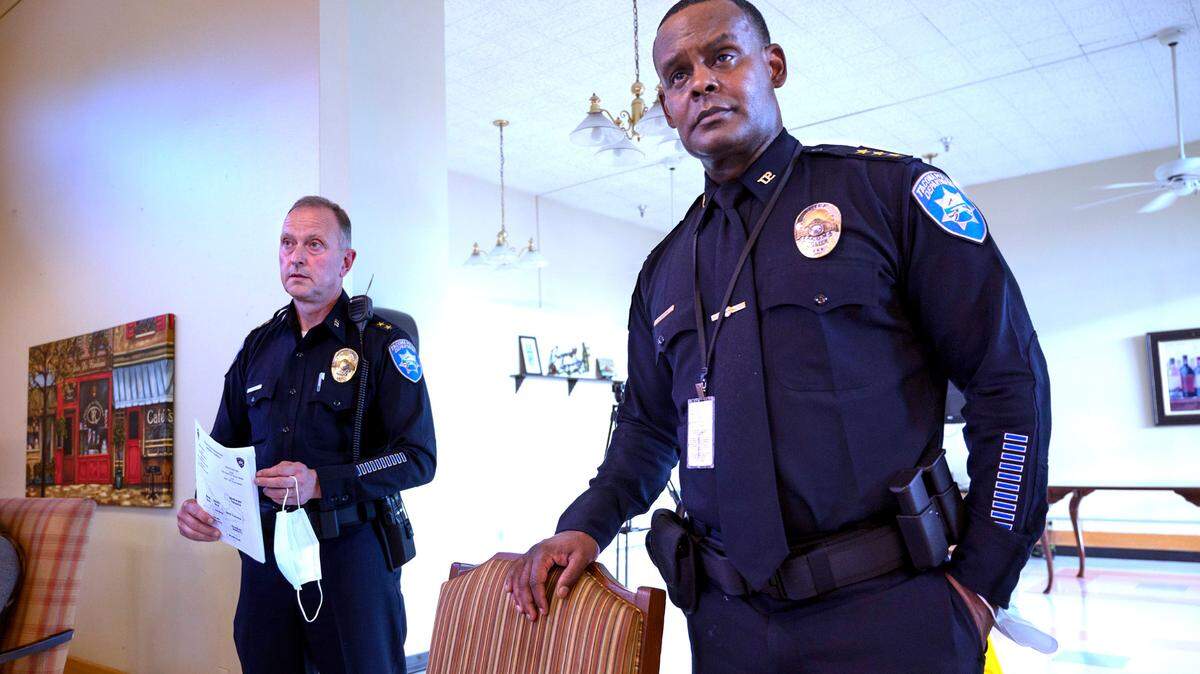
Tacoma Police Chief Avery Moore didn’t deliberately mislead two city administrators after racking up more than $1,000 in charges on his city-issued phone during an overseas summer vacation, according to an outside investigation.
The city sought to determine whether Moore lied to city officials about the charges during a September meeting.
A Dec. 11 report, authored by Seattle-based attorney Hana Kern, found “there was not a deliberate untruth stated by Moore” but noted that he could have been more clear in regard to his awareness of the pricey bill.
The report was obtained by The News Tribune this week through a public records request.
Moore was placed on paid administrative leave in September while City Manager Elizabeth Pauli investigated the top cop’s use of his work cell phone. He accumulated $1,082 in international charges in July on a nearly week-long family vacation in Sweden, The News Tribune previously reported.
Moore told city officials that he used the phone for GPS navigation because his personal phone was neither accessible nor working, according to The News Tribune’s reporting, citing internal city documents previously obtained in a public records request.
The chief apparently denied knowing of any personal charges to his work phone and said he would have paid them had he known about them, according to one document that summarized a Sept. 23 meeting attended by Pauli and a deputy city manager.
Days after that meeting, Pauli learned that Moore had received text messages from Verizon relating to the charges while he was on vacation. The apparent discrepancy prompted the city to hire an outside investigator to determine if Moore had been truthful in his statements, according to the investigative report submitted to the city last month.
The issue was essentially chalked up to semantics.
Moore purportedly knew there were charges but had intended to convey to Pauli and Deputy City Manager Hyun Kim that he didn’t know the amount owed and hadn’t seen a bill, according to the report.
“This was a misunderstanding, though Moore could have been clearer that he had been aware that charges had been incurred but that he had never been presented with the bill or made aware of the amount,” the report said. “Moore also could have been more proactive about seeking out the bill since he was aware that personal charges had been incurred.”
Messages left for Moore were not returned. The city declined to comment and pointed to prior public statements issued by Pauli and Moore after the chief returned to duty in early October.
In her statement on Oct. 2, Pauli concluded that Moore’s statements were not intended to mislead and said that he had reimbursed the city for the charges. She revealed that she had verbally counseled Moore, who she said hadn’t met the expected standards of professional judgment.
“I accept my discipline and am ready to move forward, fully committed to continuing my work with the Tacoma Police Department and serving the city that I proudly call home,” Moore said in a statement at the time.
Kern’s report does not address whether Moore should have been using his work phone for personal purposes. Tacoma Police Department policy restricts usage to official business and notes that work phones may not be taken outside of the state except for the performance of official duties.
Incidental use of a city-issued phone for personal purposes was not against policy, Pauli said, according to notes from the outside investigation.
The report also doesn’t indicate what the handful of text messages Moore said he received from Verizon had actually been read. He told city officials that they were escalating numbers that he equated to data usage, not dollar amounts, according to the report.
Moore’s work-phone usage came under scrutiny after Sgt. Henry Betts, president of Tacoma Police Union Local 6, reached out to Pauli on Sept. 19 and expressed concern about it, the report said.
On Tuesday, Betts told The News Tribune that the standard within the department should be high. He said it was the desire of union rank-and-file members to be treated similarly as Moore and other top officials in any scenario where there might be a miscommunication or discrepancy in an investigation or otherwise.
“We hope that we get the same standard that they get,” Betts said.
This story was originally published January 8, 2025 at 5:00 AM.