Debate over Tacoma apartment tax breaks continues as project gains 12-year MFTE extension
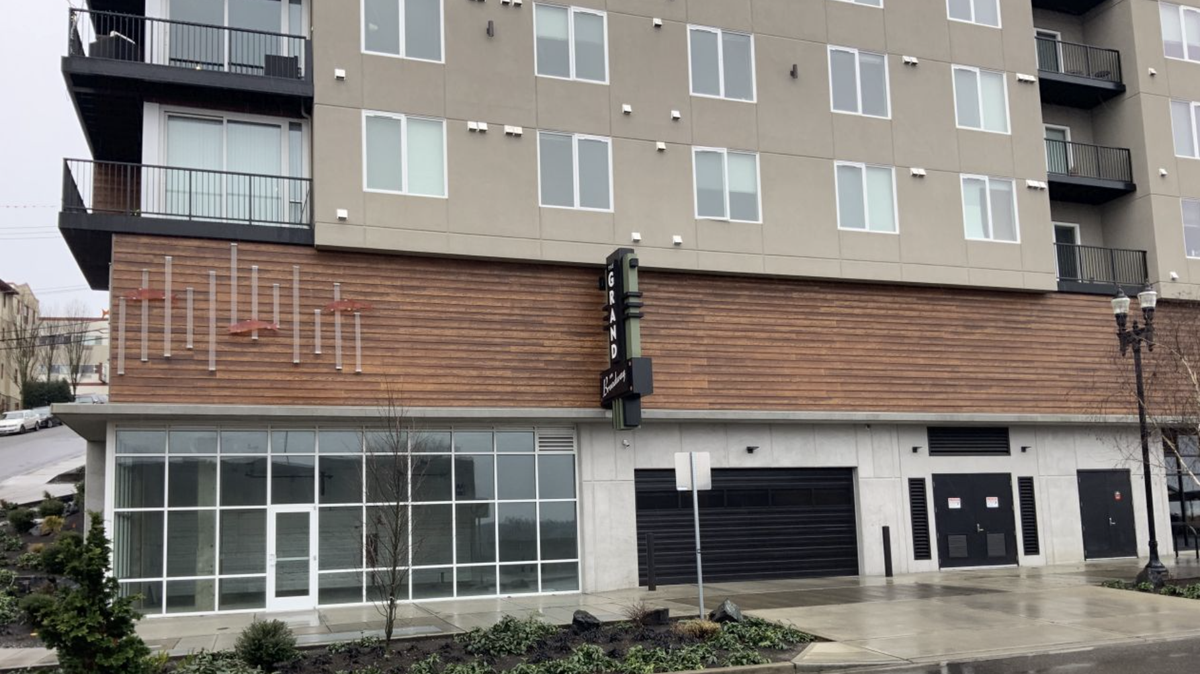
An apartment site that gained a tax exemption in spring 2015 is the latest project in Tacoma to gain an extension on that break by making some units rent restricted.
On Tuesday, Tacoma City Council approved a 12-year extension to The Grand on Broadway, 252 Broadway, which is close to the Stadium District in downtown.
The extension is an option that was introduced into the city’s multifamily property-tax exemption program a few years ago. It is a result of a change initially made at the state level, then approved by the City Council in late 2021 among other MFTE changes aimed at improving and expanding the use of the development incentive.
Projects qualify for the extension if rent-restricted units are added or maintained at a property. In this case, 20 percent of its market-rate units will become rent restricted for households whose income is at or below 70% of Pierce County AMI, adjusted for household size, as determined by HUD on an annual basis. Rent is capped at 30% of those income levels, adjusted annually.
Tuesday’s presentation showed average rents for the regulated units ranging from $1,419 for 340-490-square-foot studios, to $1,520 for 525-870-square-foot one-bedroom/bath units. The rates include utilities.
Those compare with the market rate rents listed as ranging from $1,596 for studios to $1,978 for the one-bedroom/bath units.
The 139-unit site, now operated by a mix of 11 owners that includes LLCs and individual investors, originally gained an 8-year all-market rate MFTE in April 2015. The site offers a mix of studios and one-bedroom apartments.
Construction was estimated at a cost of $22.7 million, according to figures presented at the 2015 council meeting. The site now has a total assessed value of more than $42 million, according to Pierce County Assessor-Treasurer online property valuations.
The incentive exempts projects from property taxes on the assessed improvement value for 8, 12, or 20 years based on the level of affordability provided.
Doubts registered by some people have persisted over the actual costs to the city’s coffers in offering the MFTEs, despite insistence through the years by council members that the projects more than pay for themselves via construction jobs, projected sales taxes generated by the new apartment dwellers, construction taxes and the addition of much-needed new housing.
Then-Mayor Marilyn Strickland offered a defense of the MFTE program during the 2015 meeting, stating that “this was created to try and drive growth and encourage development in very specific neighborhoods. But also I just want to dispel the myth here that these tax breaks are for million-dollar condos. This is to drive growth in very specific areas.”
Critics continued to voice opposition at Tuesday’s council meeting during public comment.
Laurie Arnold of Tacoma told the council that the tax breaks are being given to projects that have become “just finance transactions, rather than really providing housing in any meaningful sense, in my opinion, especially affordable housing.”
She added, “We all know we’ve been listening and following about our severe budget deficit, and I just don’t feel like we can afford to lose revenue in this way.”
The city late last year grappled with overcoming a $24 million deficit in its work toward adopting its latest budget.
Kit Burns of Tacoma implored the council to take another look at the numbers, stating the exemption was simply “a way to kick it down the road and not have any taxes for the next 12 years.”
Elements of the development incentive program, including the 8- and 12-year MFTEs and extensions, are under review by the council’s Government Performance and Finance Committee, led by council member John Hines.
Hines at Tuesday’s meeting noted that one of the extension’s goals is to support rent-restricted units that could otherwise revert to market rate.
“The reason the state extended this was one so that after 12 years, you don’t have a lot of units that were once rent controlled made market rate and pushing those people out of those units at the 12-year mark,” he said. “And it was also sought to be an opportunity to take a building that was market rate and provide some affordability or rent-controlled units in those market-rate developments where they otherwise are not present.”
He also underscored the benefit to units already in existence switching to rent restricted as opposed to starting from scratch in the current market environment.
“When you think about the affordability and what we’re getting versus what it would cost to just pay for those affordable units, there is a real benefit,” he said.
By the numbers
Here are the projects, including the one adopted Tuesday, that have been granted 12-year MFTE extensions following their original 8-year versions:
▪ February 2025: The Grand on Broadway, 252 Broadway, 139 units, 28 rent-restricted.
▪ May 2024: Stadium Vue35, 219-223 N. J St.: 35 units, 7 rent-restricted.
▪ April 2024: Proctor Station Apartments, 3910 N. 28th St.: 154 units, 31 rent-restricted.
▪ December 2023: Sound Heights Townhomes, 4031-4033 S. Puget Sound Ave.: 10 units, 2 rent-restricted.
▪ December 2023 Sound Heights Townhomes, 4001-4003 S. Puget Sound Ave.: 12 units, 3 rent-restricted.
The News Tribune archives contributed to this report.