Sea stars, crabs and snorting clams: What can you find in the low tide of Puget Sound?
The sun was shining on Fox Island on Tuesday afternoon, April 1, as a small group gathered by the greenish shoreline of the sand spit, looking for creatures exposed by the low tide.
From now until late August, staff with the Harbor WildWatch aquarium will give free tours of beaches around Pierce County and Tacoma during low tides, pointing out interesting sights and answering questions. While negative tides are happening this week, staff will give tours Wednesday at Titlow Beach and Purdy Sand Spit Boat Ramp around 2 p.m. and Thursday around 2:30 p.m. at Dumas Bay Sanctuary in Federal Way.”
Rachel Easton, Harbor WildWatch’s education director, said there are two high and low tides every day roughly six hours apart. The tides vary depending on the gravitational pull of the sun and moon and atmospheric pressure. During a full moon, tides tend to be higher and lower than average, she said.
Crunching along the rocky beach on April 1, Easton pointed out a host of brightly colored starfish, squishy anemones, sand dollars, snails, crabs, worms, algae and horse clams that spit water several feet in the air.
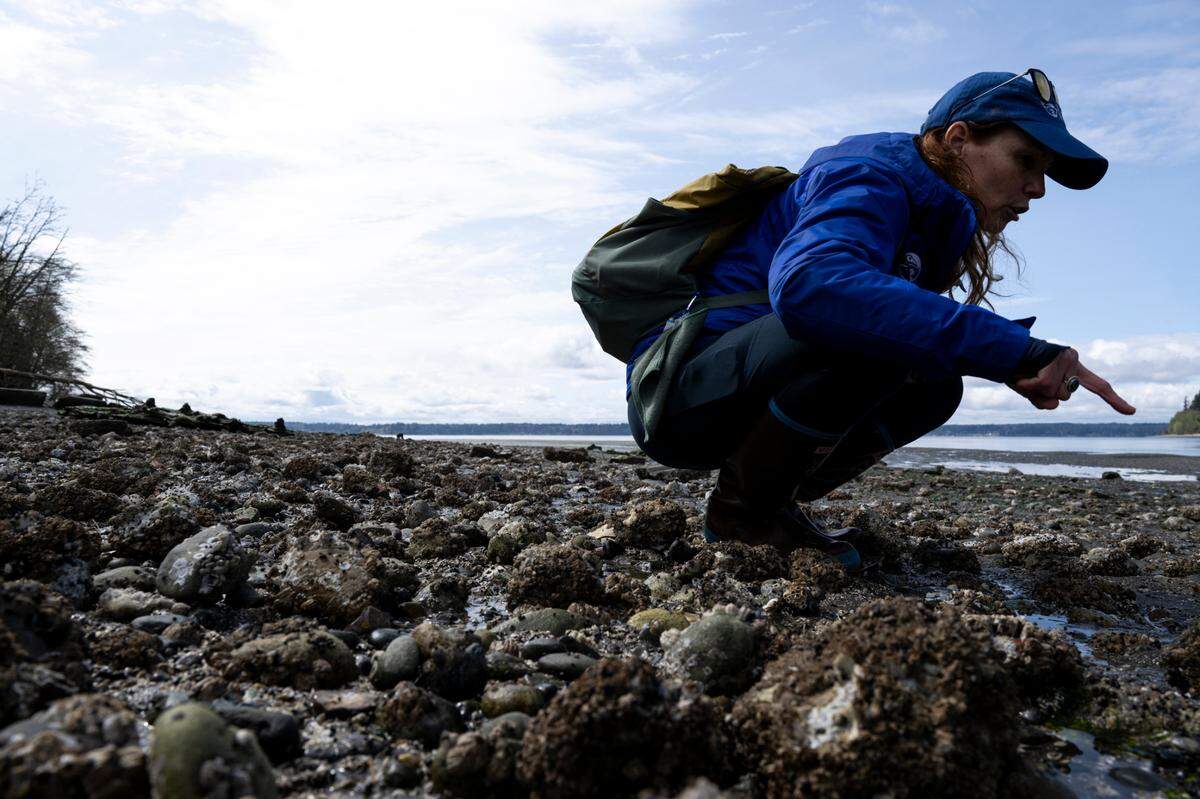
Sometimes there’s only a handful of people who will join their regular beach tours, but one Father’s Day about 600 people showed up, she said.
“Developing that sense of place is really important to the work that we do. We want people to fall in love with this place and care for it, and what better way to do that than to see what’s out here? I always kind of frame it as like, we’re introducing you to your beach neighbors,” Easton said. “You don’t have to live on the waterfront to appreciate the beach, because we have these great public spaces. My goal is just to make you fall in love with the beach the same way I like it.”
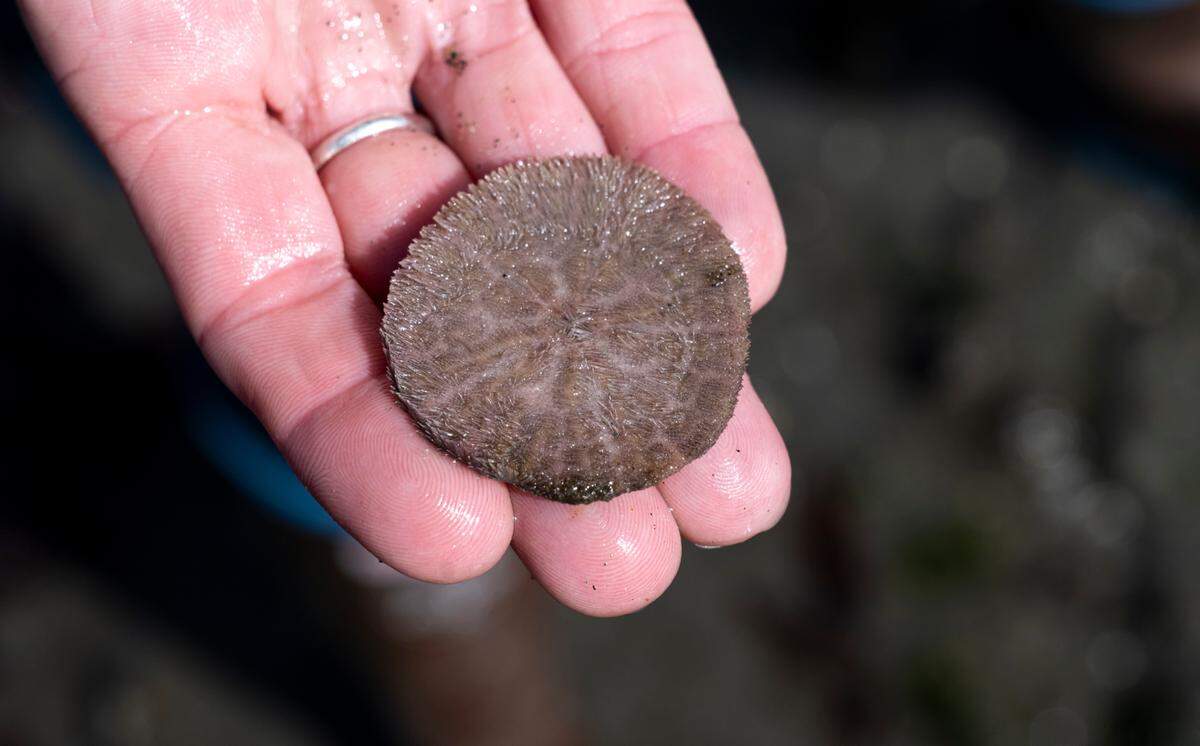
Easton said she encourages visitors to use the GUEST method when exploring low tide. “G” stands for “gentle” hands (“We like to say a one finger touch … petting it gently, like you would touch your own eyeball). “U” stands for “use your head” when lifting up rocks and be careful to not crush the animals. “E” stands for “everything stays where we find it” and “S” stands for “step lightly and safely and slowly” so as to not crush anything. “T” means “take your belongings and things you brought to the beach.”
This story was originally published April 2, 2025 at 5:30 AM.