
Trump cuts hit Girl Scout troops, youth-violence programs in Pierce County
Girl Scout troops without leaders. Programs that had seen success in curbing youth violence losing crucial staff. Field trips that won’t happen at a local wildlife refuge. Parks becoming overgrown, and new trails that won’t be finished.
Those are some of the affects residents of Tacoma and the greater Pierce County area will see after President Donald Trump’s decision to cut more than $21 million in AmeriCorps grants last month.
The AmeriCorps program is a federal service agency that has more than 200,000 members who do everything from disaster recovery to senior support, conservation, tutoring, mentorship and social work. Around 5 p.m. on April 25 program recipients nationwide received an email from AmeriCorps interim agency head Jennifer Bastress Tahmasebi that said nearly $400,000 in grants nationwide were canceled by Elon Musk’s Department of Government Efficiency “because it has been determined that the award no longer effectuates agency priorities. You must immediately cease all award activities. This is a final agency action and is not administratively appealable.”
White House spokesperson Anna Kelly has told news outlets like The Washington Post that AmeriCorps has failed audits over the years, and, “It is a target-rich environment for President Trump’s agenda to eliminate waste, fraud and abuse.” AmeriCorps did not respond to a Washington Post’s request for comment as of that article’s April 30 publish date.
Ninety-nine corps members were cut in Pierce County, according to Paige Sharp with Serve Washington, which administers the programs in the state. The News Tribune spoke with more than 10 organizations in Pierce County that were impacted, including the Imagine Justice Project, Girl Scouts of Western Washington, the Billy Frank Jr. Nisqually National Wildlife Refuge and the Washington Conservation Corps.
All said they were blind-sided by the cuts and did not receive further explanation about why their programs were eliminated. Many of the affected organizations already operated on small budgets and relied on corps members to fulfill their missions, which helped vulnerable youth, the environment, veterans, seniors, low-income people and food banks.
The abrupt cancellation also left many corps members — who are often young and living paycheck to paycheck — without stipends and valuable job experience. Members signed on expecting to receive up to about $7,000 in an education grant to use towards schooling or student-loan payments, which they will now not receive in full. Most AmeriCorps members are not eligible for unemployment benefits because they are technically not considered employees because they received living stipends rather than a wage, according to an FAQ published by AmeriCorps May 2.
Washington has joined 23 other states and Washington D.C. in a lawsuit to try to prevent the Trump administration’s dismantling of AmeriCorps. According to Gov. Bob Ferguson, there are about 1,300 AmeriCorps members at about 800 sites in Washington and more than $21 million was cut, as reported by the Seattle Times. About 32,000 corps members were impacted across the county, as was nearly $400 million in grants.
According to Serve Washington, affected organizations, including those operating in Pierce County, include:
▪ The Washington Campus Coalition for the Public Good (806 members statewide)
▪ The Washington Service Corps (450 corps members statewide)
▪ The Washington Conservation Corps (285 corps members statewide)
▪ The Washington Reading Corps (95 members statewide)
▪ The Student Conservation Association (29 members statewide)
▪ The Jesuit Volunteer Corps (27 members statewide)
▪ Imagine Justice Project/Tacoma Boat Builders (22 members in Pierce County)
▪ United Way (20 members statewide)
▪ Habitat for Humanity (20 members statewide)
▪ CivicSpark (20 members statewide)
▪ The Girl Scouts of Western Washington (19 members statewide)
▪ The Washington Association of Child Advocates (12 members statewide)
▪ The Sea Mar Community Health Centers (11 members statewide)
▪ The College Success Foundation (11 members statewide)
▪ The Washington Department of Veterans Affairs (8 members statewide)

‘The youth need the services’
The Imagine Justice Project in Pierce County has been a recipient of AmeriCorps funding since 2021. The nonprofit helps prevent violence by supporting at-risk youth, many of whom are involved in the criminal-justice system. Imagine Justice Project partners with organizations like the Tacoma Boat Builders, Alchemy Skateboarding and Hilltop Artists to give youth positive outlets and mentors, many of whom have lived experiences similar to the youth they help.
Rhonda Borba was in her second term working as a youth mentor for Tacoma Boat Builders, helping young people develop woodworking projects, as well as restoring and building boats. In the warmer months, the youth also learned to row and sail.
“A lot of these youth have never been on the water before. We just talk to them, you know, let them know that somebody cares out there,” she told The News Tribune on Wednesday. “The youth are our future. And I know in our society, there’s a lot of ongoing trauma with a lot of families, and so some of these families need support.”
Borba said many of the kids she works with have experienced violence, and some have shown her scars from gunshot wounds. Some are in foster care or were abandoned by their families. Many do not have positive adult role models, and she’s seen them become more confident through the program, Borba said.
Serving helped Borba afford gas and food. She said, “It keeps me busy, keeps my mind busy,” and the program had flexible hours if she needed to call in sick. Before she would serve 20 hours a week. Since the program was cut, Borba tries to volunteer 10 hours a week without pay because, “I don’t think a lot of these programs will be able to continue without the help from AmeriCorps.”
AmeriCorps member Arthur Fleming was in his fourth term when his position with Imagine Justice’s Consejo Counseling and Referral Services program was gutted. Fleming worked with students aged 12 to 17 in Fife and Tacoma schools helping youth with drug and alcohol use, behavioral issues and involvement in the criminal-justice system. Many of the kids have trauma and difficult home lives that cause them to lash out in other ways, he said. Some are unhoused.
“Most [of these] parents don’t have the skills themselves, because they’re drinking, they’re drugging, whatever their addiction may be, to deal with their problems that they haven’t appropriately dealt with,” he said. “And so the children, the youth, are following those same patterns. It’s just this cycle.”
As someone in recovery himself, Fleming said, he’s in a unique position to help youth make better decisions than he did and develop healthier coping mechanisms. Since his position was cut, Fleming said, he’s working with youth but without pay while finishing his degree in human services at Tacoma Community College and getting his Substance Use Disorder Professional certification.
“The youth need the services,” he said. “I want to help people who are going through what I went through. Whatever that looks like.”
Fleming said he was homeless when he started in the AmeriCorps program four years ago and knows of some people in the cohort who are today.
“It’s just sad, right, that they’re pulling these programs without a care for not only the people that are being served, but the people that are also doing the work,” he said.
Girl Scout troops may be without leaders
The cuts to the AmeriCorps program have left Girl Scout troops in Pierce County and Western Washington in the lurch as well. Six of their 15 AmeriCorps members work in Tacoma at Franklin Elementary, Fern Hill Elementary, Roosevelt Elementary and the Boys and Girls Club, said Julie Parker with the Girl Scouts of Western Washington.
One of the Girl Scouts’ biggest challenges is recruiting parent volunteers to lead troops. AmeriCorps members filled that gap, Parker said in an email this week. The 15 Washington members served as troop leaders in six communities, reaching 184 Girl Scouts in 11 schools and community centers, she said.
Abrupt cuts to the program eliminated $150,000 “in critical funding with just 11 weeks left in the school year,” Parker said. The decision also revokes $375,000 the organization planned to use to expand programs, “effectively halting our efforts to double our outreach efforts with 15 additional AmeriCorps members serving 378 youth in Title I Schools during the 2025–2026 school year,” she said.
“In many of these schools, if there’s no AmeriCorps member, there’s no troop,” Parker said. “For these families, our AmeriCorps leaders are the bridge to belonging and to leadership experiences their girls need to thrive. This program also provides crucial after school care that is free, reliable and culturally responsive. Its loss will leave many families scrambling to find alternative childcare and facing new financial burdens.”

Parker said Girl Scouts has committed to paying AmeriCorps members an hourly wage through the end of the school year in replacement of the AmeriCorps living stipends and is actively seeking emergency funding to cover the $150,000 needed to continue the programs through June. The nonprofit is also figuring out how to pivot to a new staffing model without AmeriCorps funds in the coming years, she said.
AmeriCorps members primarily helped elementary school children in Tacoma in kindergarten through fifth grade, said Monica Hodges, the AmeriCorps program director for Western Washington. Last school year was the first time the program was implemented in Tacoma, she said. Each troop has between 12 to 20 girls.
“We place those AmeriCorps members to be able to lead these after-school troops, at schools where the kids already are, and provide that Girl Scout programming that is shown to be such a benefit to development, [to] give leadership skills and STEM skills,” Hodges said. “Troop leaders tailor programming to what they’re interested in … teaching them how to work together to learn things or complete things or do these different activities. Just trying to lean in and really make them feel empowered.”
Hodges, who also served as an AmeriCorps member after she graduated college, said many girls came out of their shells and became more confident, outspoken and willing to lead after becoming Girl Scouts.
“Having trusted adults who are there to actually listen to them and bring them programming that they’re interested in really brings participation and excitement from the kids. You’ll have somebody who’s really quiet and not interested in things at the beginning just really bloom throughout the year,” she said. “We’ve been able to work with a lot of kids that wouldn’t have otherwise been able to have access to Girl Scouts and Girl Scout programming.”
The AmeriCorps cuts not only affect programming but have left members feeling shocked, devastated, anxious, without health insurance and with unanswered questions about if their job is able to continue or if they’d even be able to say goodbye to their troops, Hodges said.
“We’ve tried to keep the uncertainty from the kids as best we can,” Hodge said.
Nearby wildlife refuge to limit field trips, tours
AmeriCorps cuts also mean that the Billy Frank Jr. Nisqually National Wildlife Refuge and Grays Harbor National Wildlife Refuge will not be able host as many field trips or tours for the foreseeable future after two AmeriCorps members who led those programs were cut, said Shelby Anderson, the education specialist at the Billy Frank Jr. Nisqually National Wildlife Refuge Complex in Thurston County.
Anderson said the Grays Harbor National Wildlife Refuge education program “is run 100%” through one AmeriCorps member and the Billy Frank Jr. Nisqually National Wildlife Refuge’s education program “is run almost entirely by an AmeriCorps” member. Both programs have relied on federal funding for more than a decade, she said.
The Billy Frank Jr. Nisqually National Wildlife Refuge alone sees more than a million visitors a year, and AmeriCorps member Emma Turner expected to work with more than 6,400 students and 1,500 adult chaperones (more than 130 school groups) from September 2024 to August 2025, Anderson said.
Spring is the busiest time of the year for their education programs and “we’re already starting to see the effects,” Anderson said Thursday. “I’ve had to take over not only all that email traffic, but I’ve also had to take over the whole field trip schedule [at the Billy Frank Jr. Nisqually National Wildlife Refuge]. Our field trips here, our education program, sees 100 students a day, four or five times a week, and managing 100 students on one person is a big task.”
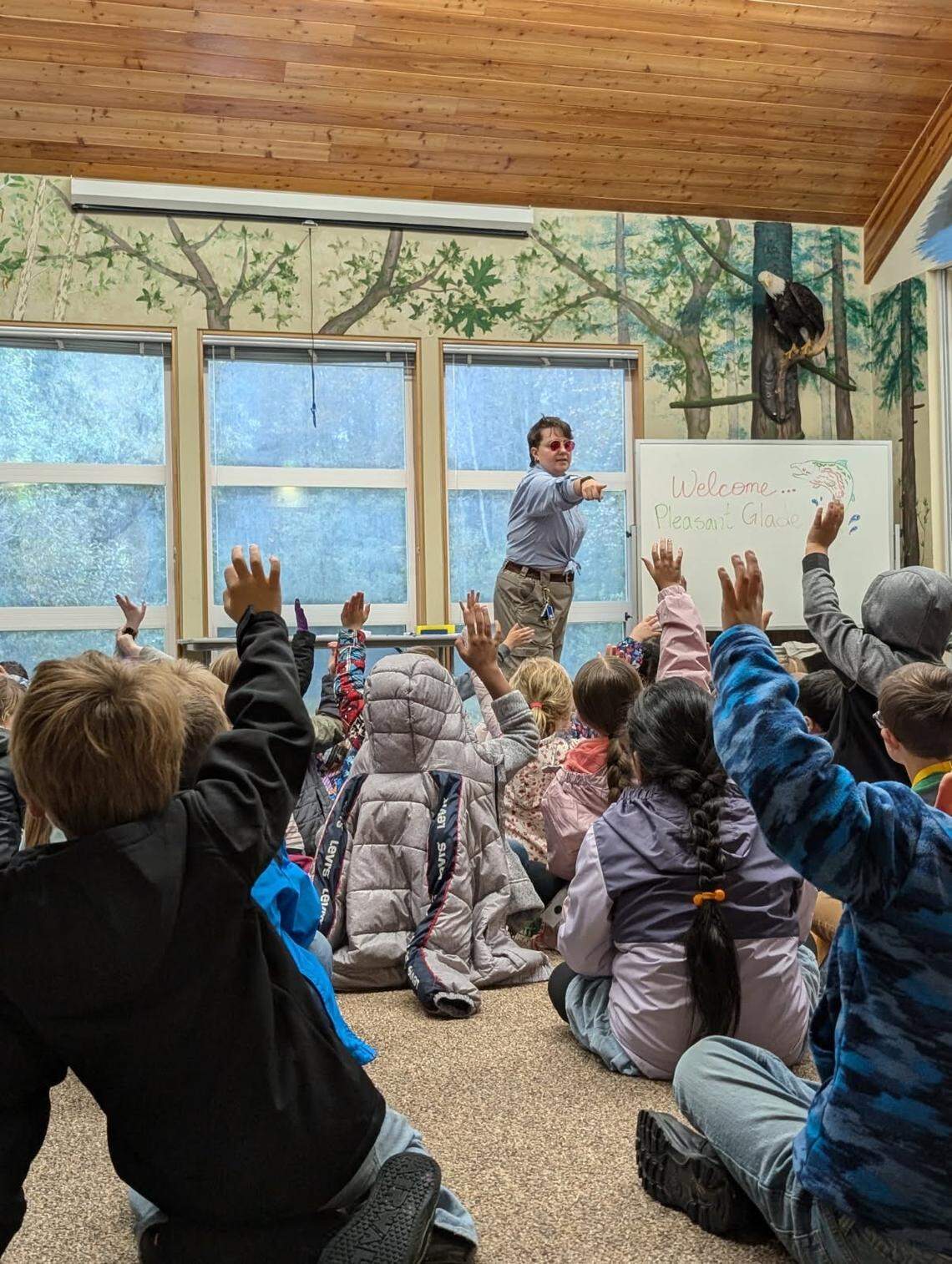
That is looking like the new normal for the duration of the school year, Anderson said, and the education program is already booked out five days a week through June 13.
“What it means for our program, really, is that we can’t take on more students. If we have a small group who wants to come, we say, ‘That’s great. You can come, but we can’t support you in any way while you’re here, just because we’re already so spread thin,’” she said. “I’ve already had to tell one person on a field trip just yesterday, ‘Look, I’d love to come on the trail with you today, and I know that that’s what we had originally planned for, but I’m just unable to, due to my current workload.’”
Since the wildlife refuges are run by federal agencies, Anderson said, “funds are basically already allocated for the year” so it’s unclear if they’ll be able to hire any additional staff. If so, “Most of the alternatives are going to be more costly, which means that we will only be able to have one educator versus having them both,” she said.
Both of the AmeriCorps members moved to Washington from out of state to serve, freshly out of college without a network here or backup plans, Anderson said. At least one member was planning to stay on for another term. Now they’re filled with uncertainty, she said.
“They’ve confessed that they’re afraid to apply to jobs, because if they get a job offer, then that means that their AmeriCorps contract is canceled,” Anderson said. ”So even if AmeriCorps does come back and they do get to finish out their term, they can’t.”
Expect more overgrown parks, trails in Pierce County
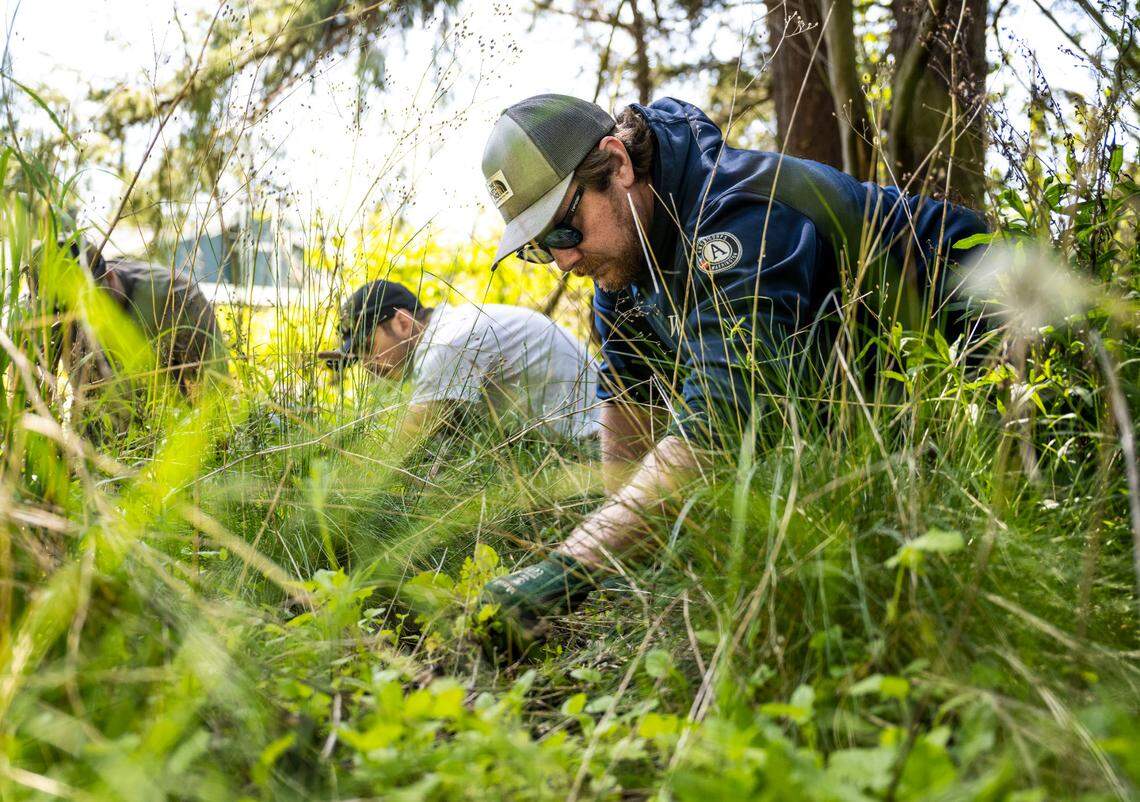
AmeriCorps funding cuts also mean members who did trail restoration, invasive-species removal, erosion control, tree planting and disaster relief will no longer be doing that work.
The News Tribune spoke with Pierce County Parks and Recreation, which had contracts with the Washington Conservation Corps (WCC), the Washington Service Corps (WSC) and the Northwest Youth Corps (which provided training and outdoor work experience for high schoolers), all of which lost federal funding.
Curt Hart, with the Washington Department of Ecology, said AmeriCorps funding made up 14% of the WCC’s most recent budget. There were 262 WCC members in Washington, and 25 worked in Pierce County in partnership with the City of Tacoma, Parks Tacoma, Mount Rainier National Park, Pierce County, Pierce Conservation District, Pierce County Parks, the Port of Tacoma and the South End Neighborhood Coalition, he said. In the last nine months alone, 76 WCC members were deployed nationwide to support disaster relief efforts in places like King County, Florida, Iowa and North Carolina, Hart said.
Ben Monte Calvo worked directly with WCC crews through the Pierce County Natural Lands Program. Volunteer crews would construct and rehabilitate trails, remove invasive species, plant thousands of trees and install native plants at sites in Graham, Parkland, University Place and the Summit-Waller neighborhood, he said. Crews were also called to places like Mount Rainier National Park when needed.
Monte Calvo said the county has had a dedicated five-member WCC crew since 2019 and a WSC crew from 2020 to 2024 before utilizing the WCC program more this year.
“A lot of our program is based on getting new natural areas open for passive use. So that usually involves soft surface trail construction,” he said. “This year we’ve been working a lot at Orangegate Park. Last year we were working at Mayfair and Meridian Habitat Park. We have big projects in Chambers Creek Canyon right now, all with the idea of constructing new trails that the public can then just use and get out in their neighborhoods and have these little green spaces that previously were not accessible to them.”
The work is important for Pierce County communities that don’t have a designated parks district taking care of green spaces like Parks Tacoma, Monte Calvo said. Not only does it give people more opportunities to be outside, it benefits habitat and makes those areas more resilient to climate change, he said.
“It’s also a job-training program for folks who want to get their foot in the door. They might have gotten their BA in the natural sciences, and they want to further their career, but they don’t have a lot of on-the-ground experience,” Monte Calvo said. “These programs were able to not only give them a wage where they can actually live in Pierce County, hopefully, but also teach them about the native plants that grow here.”

Monte Calvo said many of the AmeriCorps members had small living stipends that required them to live with roommates and use food stamps to survive. Those stipends have since gone away.
“The work that they do isn’t always glamorous, and I’m constantly trying to remind them that it is super valuable for the community and for Pierce County,” he said. “But when the message from the other side is, ‘Actually, your work isn’t valuable, and we’re going to show you exactly how much we value it,’ it can be really disheartening and really demoralizing.”
Without AmeriCorps funding, crew costs for the taxpayer are going to go “way up” or crews are going to be eliminated all together, Monte Calvo said.
He’s nervous because members already planted thousands of trees this year that need to be watered and weeded, “And if our AmeriCorps crews aren’t doing that, we’re going to have to rely on contractors or other staffing, and either way, like I said, the costs are going to go up.”
Washington Service Corps saw impacts for its 248 members, which served at 115 sites around the state with $8.1 million in grant awards, said Chris Barron with the Washington Employment Security Department. In Pierce County there are 18 WSC projects impacted, including the Washington Reading Corps program (which focused on K-12 literacy and tutoring in the Clover Park School District), work with the Emergency Food Network and St. Leo Food Connection, University of Puget Sound and the Pierce Conservation District, said WSC director Ashley Palmer on Thursday. Full-time staff involved in facilitating these programs may also be let go, Palmer said.
Dana Coggon, the executive director of the Pierce Conservation District, said Thursday the organization had seven AmeriCorps members and five WCC members who were affected. Coggon said their work was crucial to conservation work and farming work, “and our AmeriCorps members are literally the heart and soul of what we get to do.”
“There is a large book of work that we will not physically be able to do. In a lot of our work, it’s not just like one year’s impact, but it literally impacts for many, many years to come,” Coggon said. “If we don’t plant a tree today, how long is it going to take for us to get back to planting that tree? The work that we do is critical to maintaining our ecosystems for generations to come.”
Organizations ask for donations, volunteers
Palmer with the WSC said people can contact their members of Congress to ask them to support the AmeriCorps program and donate to a national emergency assistance fund to help AmeriCorps members financially.
Imagine Justice Project is accepting donations and people can inquire about volunteering with some of their host organizations online.
Hodges with the Girl Scouts of Western Washington said there are many one-time and long-term volunteer opportunities on their website at https://www.girlscoutsww.org/, including information on how to become a troop leader or make monetary donations.
Anderson with the Billy Frank Jr. Nisqually National Wildlife Refuge said people can show their support by visiting the refuge and volunteering or donating to the Friends of Nisqually National Wildlife Refuge Complex.
“My main point for why I do the work that I do: the students are our future,” Anderson said. “These kids are our future policy makers, there are future scientists, there are future teachers. And if we don’t invest in them, and we don’t invest in their natural, innate sense of wonder in the world around us, we’re not going to have these wild spaces in the future.”
This story was originally published May 11, 2025 at 5:15 AM.
