Are these Tacoma-area industries to blame for pollution in Commencement Bay?
AI-generated summary reviewed by our newsroom.
- Communities for a Healthy Bay report cites 12 facilities for missing pollution benchmarks.
- Four Port of Tacoma businesses linked to recurring stormwater violations.
- State records confirm multiple permit breaches by firms since 2022.
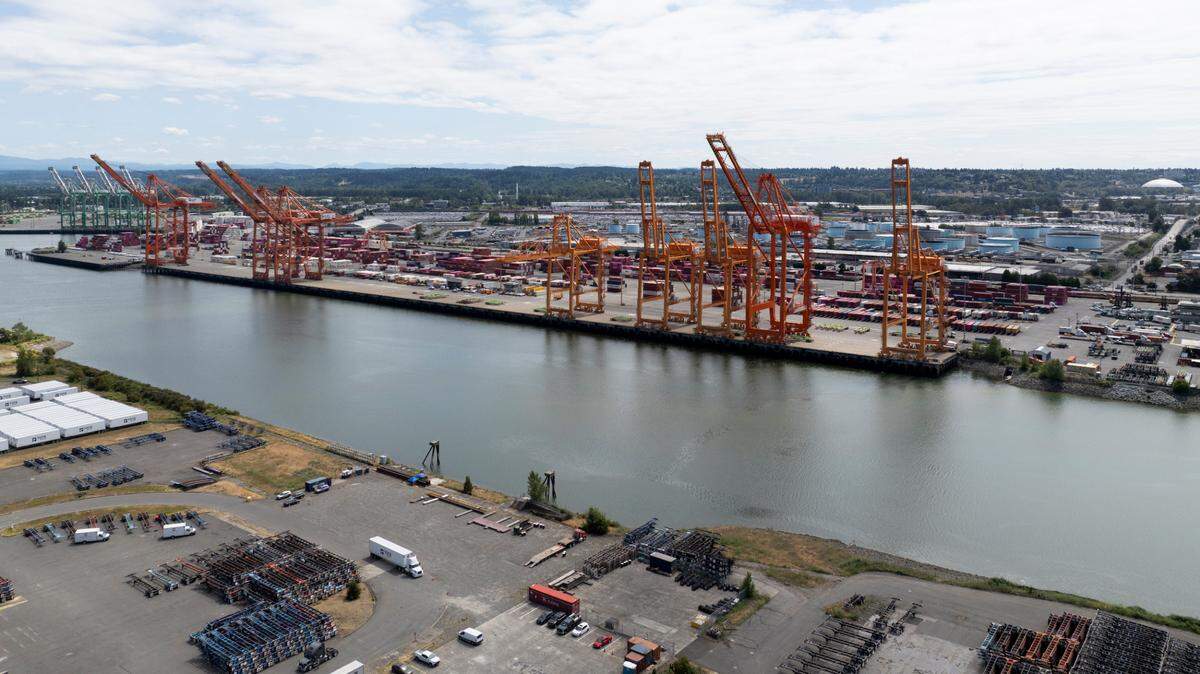
Chemical pollution from commercial facilities in and around the Tacoma Tideflats and the Port of Tacoma is bad for fish and has other adverse effects, according to a recent report from a local environmental nonprofit.
Communities for a Healthy Bay (CHB) published a “Dirty Dozen” report last month identifying 12 facilities in the South Sound that have violated environmental safeguards required by the Washington Department of Ecology and contributed to stormwater, air, soil and hazardous-waste pollution in and around Commencement Bay.
In an interview with The News Tribune last week, CHB identified Manke Lumber Co., Inc. Sumner, Tru Grit Abrasives, Inc., Quality Transport and Truck Rail Handling and Emerald Services, Inc. as the four most concerning businesses in and around the Port of Tacoma.
CHB clean water advocate Stefanie Stockwell said she created the report by using publicly available data reported to the Washington Department of Ecology and the U.S. Environmental Protection Agency to see which facilities in the Tacoma area have regularly exceeded environmental benchmarks. Communications director Ayla Janukajtis said the report’s layout was designed intentionally to be an educational tool for the public and to support legislative and policy-type conversations.
“All the benchmarks that we looked at for data are set by these administrations for human health and the environment specifically,” Stockwell said. “So if [businesses] go beyond that, they’re saying that human health is at risk.”
Melissa Malott, CHB’s executive director, said the nonprofit has been wanting to publish a “Dirty Dozen” report for years.
“I think Tacoma has this culture of being business friendly, and so what you might not get away with in Seattle, you can get away with in Tacoma,” Malott said. “The most recent really good example was the Pacific Producer. That boat could not dock any place else in the Puget Sound, and it was about to be abandoned, essentially, and they were able to dock it here, and it spilled ammonia into the Foss Waterway” in 2023.
“We don’t want to cling to the dirty industries of the past,” she said. “This report is about accountability, and it’s about showing where change needs to be made, and motivating people to step up and speak out for what they believe this community should look like.”
State Department of Ecology communications manager Brittny Goodsell told The News Tribune it’s difficult to compare different industries because they require different permits and regulations. Goodsell said the department couldn’t comment on the report’s findings because it was not authored by its staff but answered specific questions about the facilities and violations identified in the report.
Department of Ecology aquaculture specialist and statewide permit coordinator Laurie Niewolny told The News Tribune the department offers assistance to companies to help them improve and meet the required benchmarks. Before issuing a fine, the department assesses the scale of the violation and the company’s track record of violations, she said.
“It’s a very rigorous process. We have formulas for how we write up a violation. We have formulas for how much money we would assess for a fine,” Niewolny said. “We take it very seriously.”
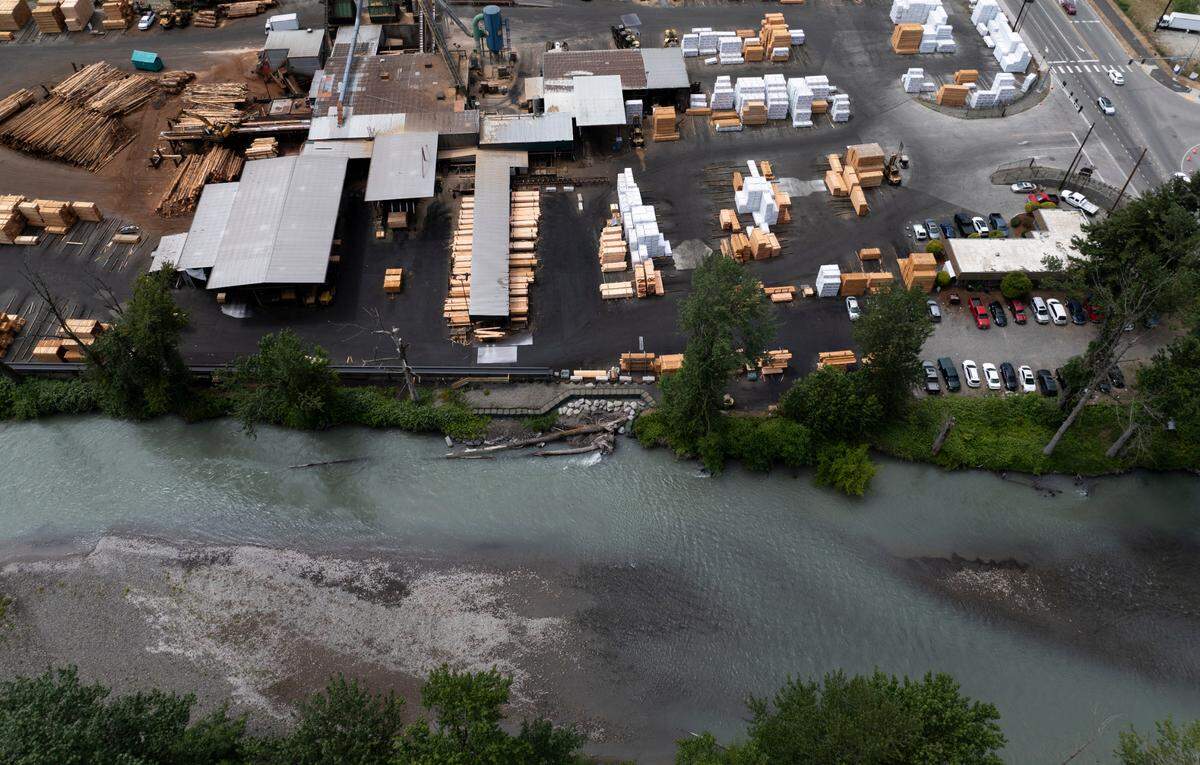
Manke Lumber in Sumner
Manke Lumber Co., Inc. (13702 Steward Road, Sumner) is a long-standing wood processing and treatment company that produces and treats lumber with various chemical preservatives. CHB said in its report that Manke has “reported copper, arsenic, chromium and oil and grease permit exceedances for most of the last 15 years,” which harm fish and other native aquatic species in the Puyallup River watershed. Additionally, CHB alleged the property contains soil and groundwater tainted with chemicals.
Representatives with Manke told The News Tribune on June 18 that the company monitors its stormwater discharge regularly and had seen improvements since the early 2000s. Project manager John McBridge denied that the company was “consistently failing” its stormwater tests and said the company received a letter from the Department of Ecology that it was following 2019 compliance orders.
A look through the Department of Ecology’s Water Quality Permitting and Reporting Information System this week showed Manke Lumber Sumner violated its stormwater permits as recently as 2024 when excess chromium, oil and grease were found. The company had eight stormwater discharge violations since 2022, in addition to four reporting violations and 20 monitoring violations.
Tru Grit Abrasives
Tru Grit Abrasives, Inc. (3701 Taylor Way in Tacoma), which operates under the name Pony Lumber Company, LLC, is “part sawmill, part abrasive manufacturer, part warehouse,” according to CHB’s report. The Port of Tacoma said Tru Grit Abrasives, Inc. is a tenant of the Northwest Seaport Alliance.
“Its site on Taylor Way in Tacoma has hosted polluting industries for nearly a century,” the report said. “Its operations span outdoor material storage, truck staging and wood product handling, all within a zone of known environmental contamination.”
CHB alleged Tru Grit Abrasives has been out of compliance for at least 35 reporting quarters from 2013 to 2024, and stormwater samples showed high levels of copper, zinc, oil, turbidity and “dangerously unbalanced pH.” Additionally, 1,800 tons of smelter waste left over from the Asarco Company’s copper smelting facility remain buried at the site.
A message The News Tribune left in person with a Tru Grit Abrasives manager requesting comment last week went unanswered.
A look through the Department of Ecology’s Water Quality Permitting and Reporting Information System this week showed Tru Grit Abrasives had eight violations for discharging excess chromium, copper and oil and grease since 2022. The company also had four reporting violations and 20 monitoring violations in the same time frame.
Tru Grit Abrasives was fined $8,000 by the Department of Ecology in December 2024 for not properly managing stormwater that flows into the Hylebos Waterway and failing to report an issue with a broken water pump as required by its permit.
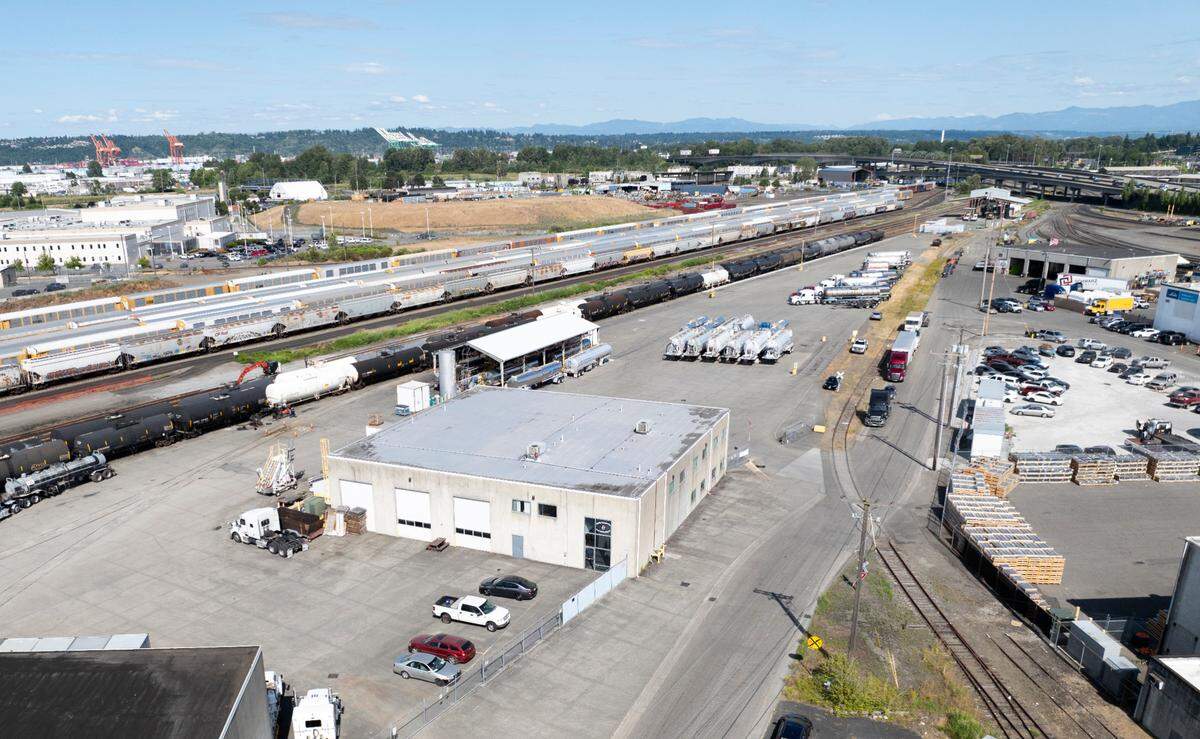
Quality Transport and Truck Rail Handling
Quality Transport and Truck Rail Handling (457 E. 18th St. in Tacoma) is a freight hub in the Port of Tacoma that moves freight from trains to trucks and vice versa. The company operates on a Superfund cleanup site, and CHB says its outdoor operations raise the risk of pollution via stormwater runoff, especially during the rainy months.
Email messages the Tacoma News Tribune left with Quality Transport and Truck Rail Handling last week went unanswered.
A look through the Department of Ecology’s Water Quality Permitting and Reporting Information System this week showed Quality Transport and Truck Rail Handling had 16 violations for discharging a significant excess of copper, zinc, turbidity and solids since 2022. In October 2024 the company reported discharging 2,800 mg/L of solids when the maximum benchmark for discharges was 30 mg/L. Quality Transport and Truck Rail Handling had four reporting violations and 20 monitoring violations since 2022.
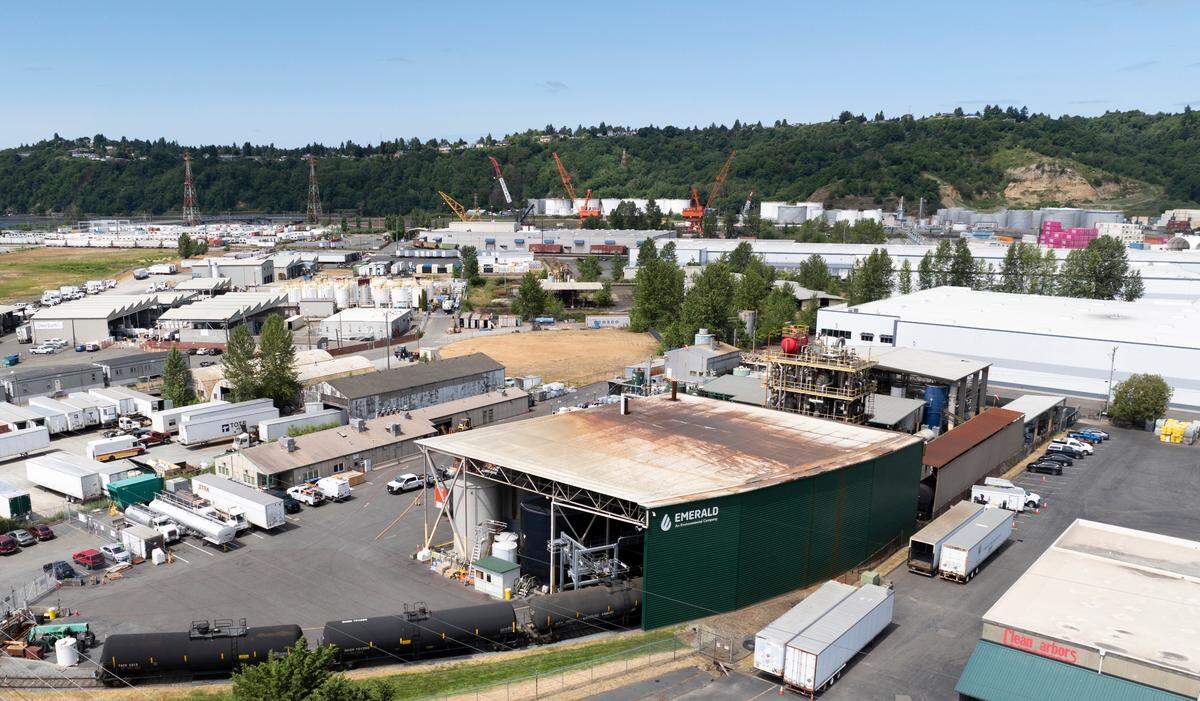
Emerald Services, Inc.
Emerald Services, Inc. (1825 E. Alexander Ave. in Tacoma), a subsidiary of Clean Harbors, is a hazardous-waste processing and oil recycling facility on the Tacoma Tideflats.
“Despite holding only a ‘minor’ air permit, Emerald consistently ranks among the highest reported air emissions in Pierce County. It releases lead, zinc, ethylene glycol and carcinogenic PAHs — compounds linked to cancer, neurological damage and childhood respiratory illness,” CHB wrote in its report. “Over the past 15 years, Emerald has exceeded its NPDES permit more than 70 times.”
CHB said Emerald Services, Inc.’s stormwater samples “routinely exceed limits for copper, ammonia, turbidity and oil — pollutants known to reduce water clarity, poison fish and accumulate in the already-impaired Commencement Bay ecosystem.”
Email messages the Tacoma News Tribune left with Emerald Services, Inc. last week went unanswered.
According to information listed by the Department of Ecology, Emerald Services Inc. had 12 violations of the Clean Water Act in the last five years and had to pay a penalty of $93,151 in 2020 after it was found the facility did not have an adequate spill prevention plan.