Here’s why dream of commercial fishing dock remains unfulfilled in Gig Harbor
AI-generated summary reviewed by our newsroom.
- Federal permit delays stall Gig Harbor's commercial fishing dock construction.
- The permitting delays stem from changing standards for environmental mitigation.
- Project costs rise as city revises plans and adjusts to federal regulations.
It started as a dream.
Over a decade later, it’s still just a dream.
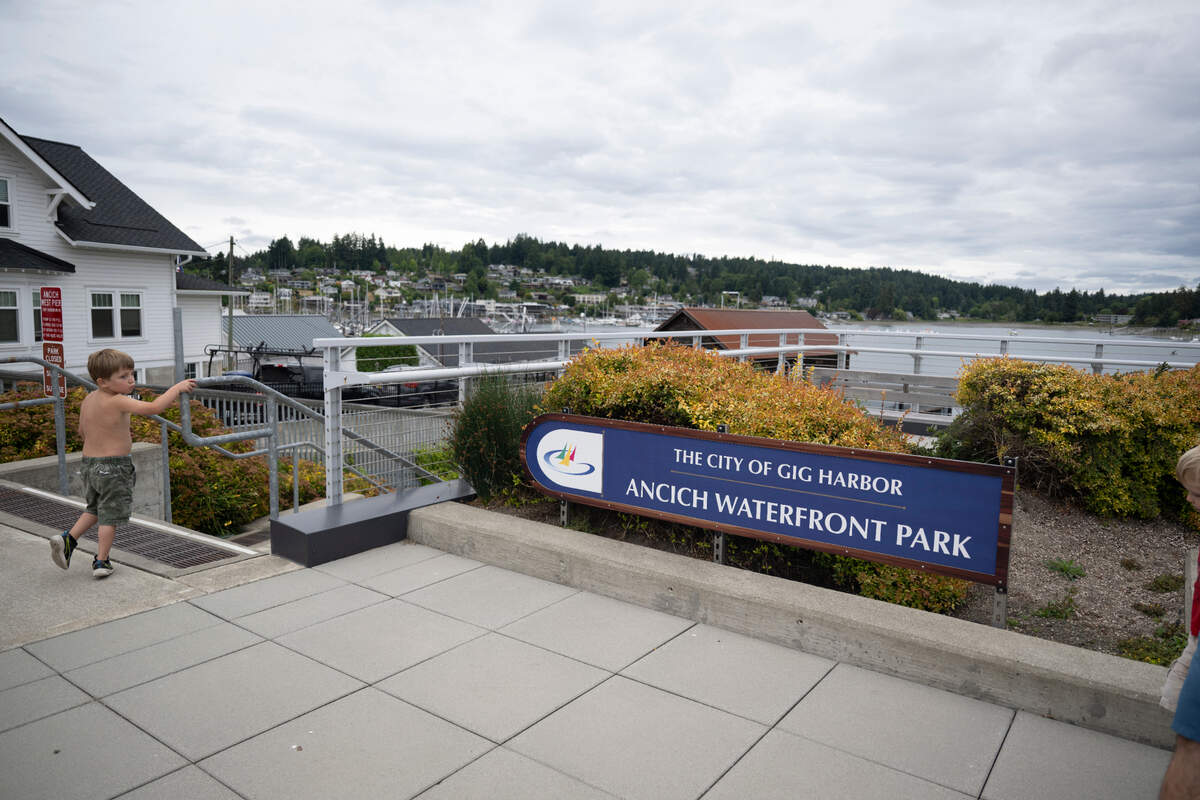
Perhaps no project is closer to the heart of Gig Harbor than its Commercial Fishing Homeport, a public dock that would provide dedicated moorage for commercial fishing vessels at Ancich Waterfront Park.
Those vessels and the people and families who operate them have long been regarded as core to Gig Harbor’s maritime heritage. Many of the city’s earliest commercial-fishing families were Croatian immigrants who moved to the area in the early 20th century, building docks as well as netsheds to store their nets and fishing gear, according to the Washington Trust for Historic Preservation and the city’s website.
Seventeen of those netsheds still stand, several as working netsheds and several converted to other uses such as a waterfront restaurant and an educational tour site.
In 2013, the city started planning what would become the homeport project. Since then, the dock has yet to materialize, though the city has completed a feasibility study, chosen a concept design from that study and submitted its third version of a mitigation plan to show federal agencies how the city will limit the project’s impact on the marine environment.
With no permit in hand, the city can’t put the project out to bid, which City Administrator Katrina Knutson told The News Tribune in an email officials had hoped to do in the spring and begin construction this summer.
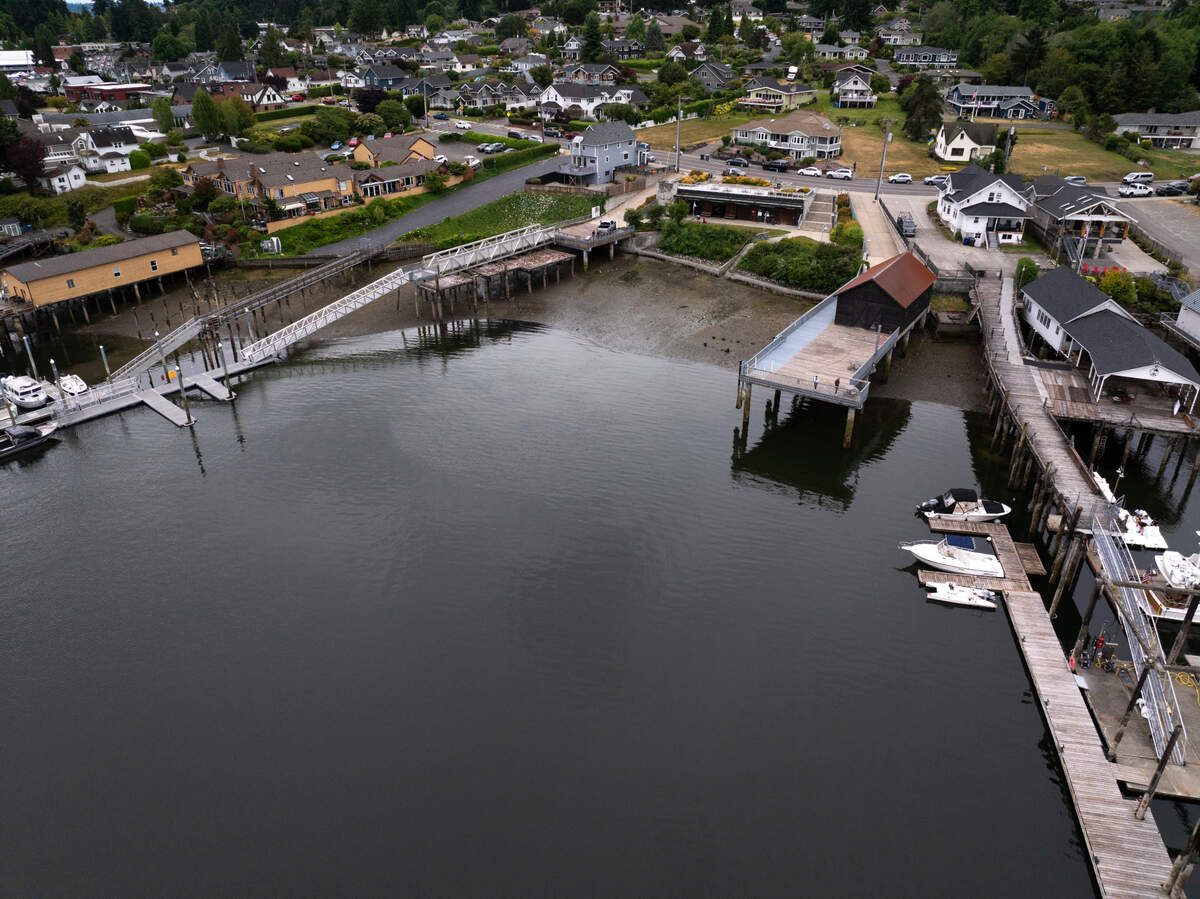
Standing on Ancich Pier, from which the homeport would extend, Gig Harbor public works director Jeff Langhelm gestured to the site of the project he’s spent nearly half of his career with the city working on. The city began to restore the aging Ancich Pier and Netshed in 2017, and Langhelm remembers how the project came together with the homeport in mind.
One corner of the pier is supposed to accommodate a crane to help fishermen load and unload equipment, he explained. Underfoot, part of the pier is made of metal grating to let light through to the water below, while another part is made of wood so that it won’t catch on nets while fishermen are mending them. If you look over the edge, there are two metal pieces where the gangway is supposed to connect.
Each piece is a visible reminder of the city’s vision, just out of reach.
City’s environmental plan doesn’t meet federal standards
Progress has been stymied in the federal review process evaluating the new dock’s impact on the marine environment.
The U.S. Army Corps of Engineers is responsible for issuing a permit the city needs to start building the homeport, based on biological opinions from federal agencies including the U.S. Fish and Wildlife Service and National Marine Fisheries Service. Gig Harbor is critical habitat for salmon and several other species managed by the U.S. Fish and Wildlife Service, said Shelia Fourman, Chief of Public Affairs for the U.S. Army Corps of Engineers Seattle District.
Fourman said the U.S. Army Corps of Engineers has been working with the city since 2022 on the homeport project. It’s not uncommon for consultations with the federal services to take two years, though the duration for each project differs on a case-by-case basis, she said.
Langhelm explained that when the city started engaging with the federal agencies responsible for issuing a biological opinion on the project’s impacts, the agencies wanted the city to focus on treating stormwater runoff. Then, the city learned there was kelp growing near the existing pier that it needed to address. Most recently, a letter from the U.S. Fish and Wildlife Service says that the mitigation plan doesn’t meet the requirements for protecting two species listed under the Endangered Species Act, the bull trout and marbled murrelet, a type of seabird.
“The mitigation that the federal agencies will allow has changed,” Langhelm said. “ ... so we just don’t know what is acceptable mitigation. And it’s not (the federal agencies’) job to tell us what acceptable mitigation will be. It’s our job to propose it.”
He said that a mitigation calculator was introduced some time ago, requiring the city to shift its approach. The U.S. Fish and Wildlife Service letter mentions the calculator, saying that the city needs to obtain a certain number of “credits” based on the calculator’s findings. The National Marine Fisheries Service introduced the calculator in 2020 to determine the amount of mitigation needed to minimize habitat loss for salmon from shoreline development, per the agency’s news release.
In previous city overwater projects, Langhelm said he remembers mitigation as a simpler process involving the removal of over-water structures, debris from the seabed and pilings.
“And it was pretty quick and easy,” he said. “But they didn’t get into the level of detail that the calculator does today.”
The calculator works by representing the negative impact a project will have on a habitat as “debits,” according to the National Marine Fisheries Service website. Developers can cancel out those debits by obtaining an equal number of “credits,” which are improvements to the affected habitat or to another comparable habitat in the Puget Sound area. Providers including the Puget Sound Partnership offer credits to developers for sale.
Langhelm said he was surprised by the number of credits that the city needs for the homeport project — approximately 503, according to the letter from U.S. Fish and Wildlife Service.
In 2021, the City Council voted to leave an old, dilapidated structure at the neighboring Jerkovich Pier site standing, though it’s visibly crumbling, because the state Department of Fish and Wildlife said the city might be able to apply the credits gained from removing the old pier to the mitigation required for the homeport. It turns out that removing that pier would only give the city “a fraction” of the credits it needs, Langhelm now says.
Meanwhile, the project as a whole keeps getting more expensive.
“Every time we have to redo our mitigation plan — we’re in version three now — we have to pay the consultant more money,” Langhelm said. “We only scoped to have one mitigation plan.”
He also noted the rising cost of construction materials and mitigation.
In an email, Langhelm wrote that “the city has spent $230,466 on consultant contracts” since 2022 and expects to spend “at least another $3.5 million on construction of the facility.”
The 2025-2026 city budget fully funds construction of the homeport. Funding sources include $1.13 million from Hospital Benefit Zone funding, $150,000 from a Port of Tacoma grant, a $200,000 donation from the Gig Harbor Commercial Fishermen’s Civic Club and $2 million from real estate excise tax revenue.
Commercial fisherman Guy Hoppen grew up on the waterfront and has been a long-time advocate for the homeport, which will be the city’s only public moorage space for commercial fishing vessels upon completion. Like many other commercial fishermen in the area, Hoppen currently moors his vessel at a privately-owned dock. His son also has a commercial fishing vessel but moors it in Seattle because of the lack of space in the harbor, he told The News Tribune.
The issue of limited space for commercial fishing vessels isn’t unique to Gig Harbor, and rising property values make it challenging for everyone, not just commercial fishermen, to buy property on the waterfront, according to Hoppen.
“We’re the last place that I know of on the west coast of the United States that relies on private property for moorage of a fleet this size,” Hoppen said.
He added that the homeport would have multiple outcomes for the community. The plan is for the homeport to be accessible to the public, including the floats and the moorage area, along with the fixed pier and Ancich Netshed, so that people could watch fishermen at work and mending their nets. He also emphasized the economic value that commercial-fishing vessels add to local communities and said the homeport would help the city retain “the occupational tradition of commercial fishing that defines Gig Harbor.”
Hoppen estimated that there’s about 20 commercial fishing vessels that moor in Gig Harbor, though some come and go. Up to 17 commercial fishing vessels would be able to moor at the homeport under the current design, the city’s website says.