Video shows seal with an orange float on its back in Tacoma. What is it?
AI-generated summary reviewed by our newsroom.
- WDFW and NOAA researchers track 44 harbor seals to study diet and behavior.
- Seals carry satellite tags and floats to gather data and retrieve devices later.
- Study runs through December 2025; findings expected to publish in 2026.
You may have spotted a seal with an orange float attached to its back at Point Defiance Park in recent days. A Reddit user posted a video of a seal swimming in a body of water at the park with a bright object on it.
The adult male seal shown in the video has a tracking device on it, Washington Department of Fish and Wildlife’s (WDFW) lead marine mammal researcher, Casey Clark said in an email to The News Tribune on July 1.
Researchers from WDFW and the National Oceanic and Atmospheric Administration (NOAA) are collaborating with the Nisqually Tribe, the Port Gamble S’Klallam Tribe and Long Live the Kings in a study called the Pinniped Predation on Salmonids Project. The purpose of this project is to collect data on harbor seals’ lifestyles and salmon survival, Clark told The News Tribune on July 8.
“The purpose of this research is to learn more about the diets, movements, habitat use, and haul out behaviors of harbor seals at the mouths of the Nisqually, Duckabush, and Dosewallips rivers,” he said in the email.
Harbor seals are protected by the Marine Mammal Protection Act (MMPA), according to NOAA’s website. This means it’s illegal for people to capture, hunt, or harass this species without a permit.
A permit granted by the National Marine Fisheries Service allowed the researchers to conduct their study that began in September 2024, Clark said.
The seals are outfitted with satellite transmitters on their back or left flippers, Clark said.
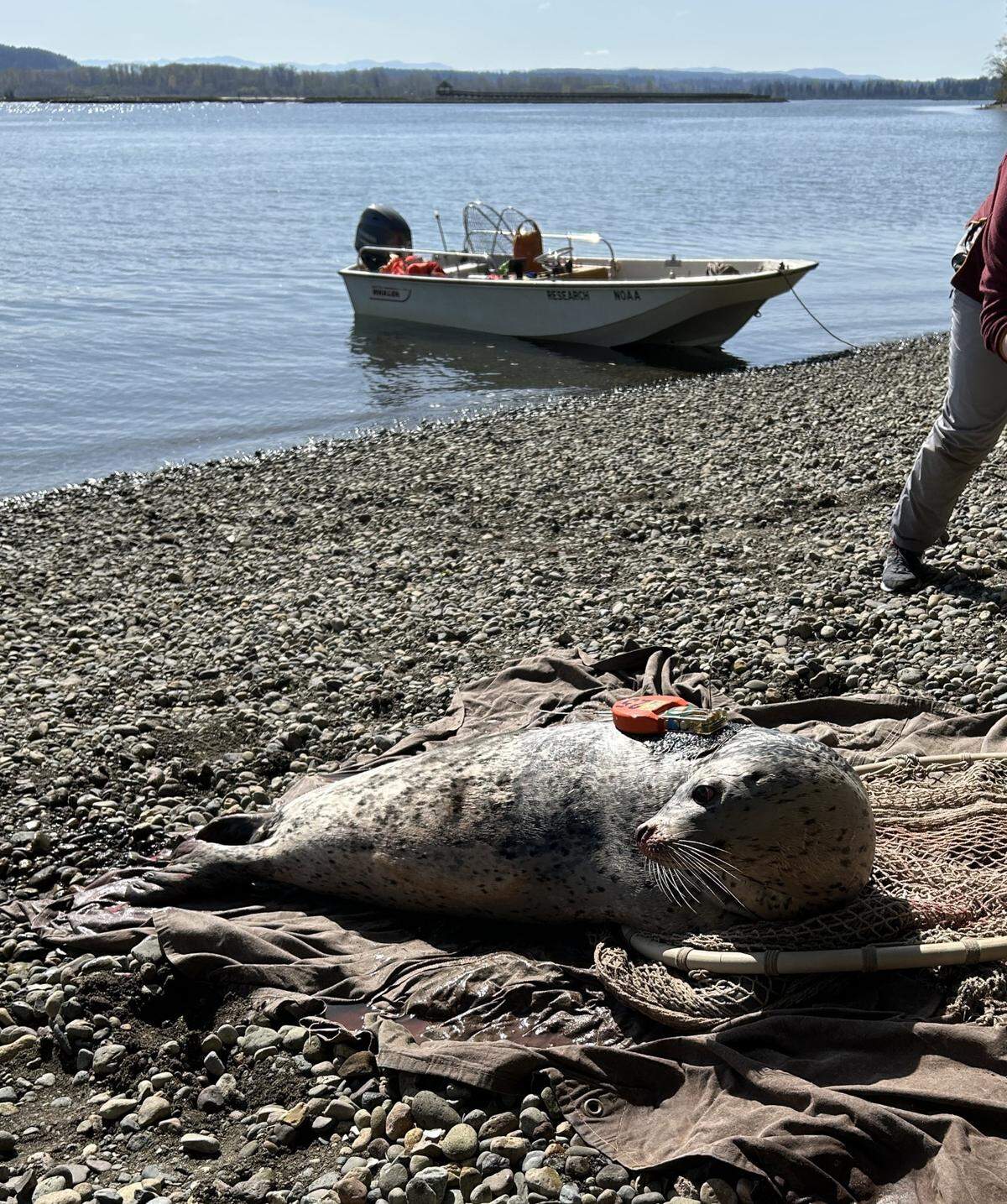
The thumb-sized mounted back tag is designed to provide in-depth information about the seal’s movement and habits in water. This device is glued to the seal’s fur and typically falls off in late summer to early fall when they molt, he said. The orange float is intended to recover the back tags when they fall off the seal’s body.
The flipper-mounted tag lasts about a year until the hardware rusts and the device falls off. It’s not as extensive as the back tag because it only collects data on land. Researchers use the flipper tag more often than the back tag because it’s safer for smaller seals.
44 seals were tagged in Nisqually Delta and Hood Canal for this project, he said. To tag seals, researchers capture them on land with nets and give them a sedative to calm them as the tags are glued on, Clark said.
Most seals usually stay in the area where they were tagged, but others explore other places. The seal spotted in Point Defiance was originally tagged in Nisqually Delta but wandered off to Pierce County for two to three months, Clark said. Another seal joined him throughout that period, but they both returned to Nisqually.
Along with the tracking tags, researchers use other methods to collect data about seals. “Our drone flights and scat sampling are helping us to monitor the entire populations of seals that live around the mouths of the Nisqually, Duckabush, and Dosewallips rivers,” Clark said in the email.
So far, researchers have observed through the seals’ feces that they eat fish, squid and shrimp, Clark said. These results vary by location and the time of the year.
Within this project, NOAA researchers and other partners are gathering information about the salmon population and their survival. Together, these teams will assess how the harbor seal’s diet affects the local salmon population, Clark said.
Data collection will conclude this December and the results of the study will be examined and shared in 2026, Clark said. “We will know more about these populations once we have analyzed the results of our research,” he said.
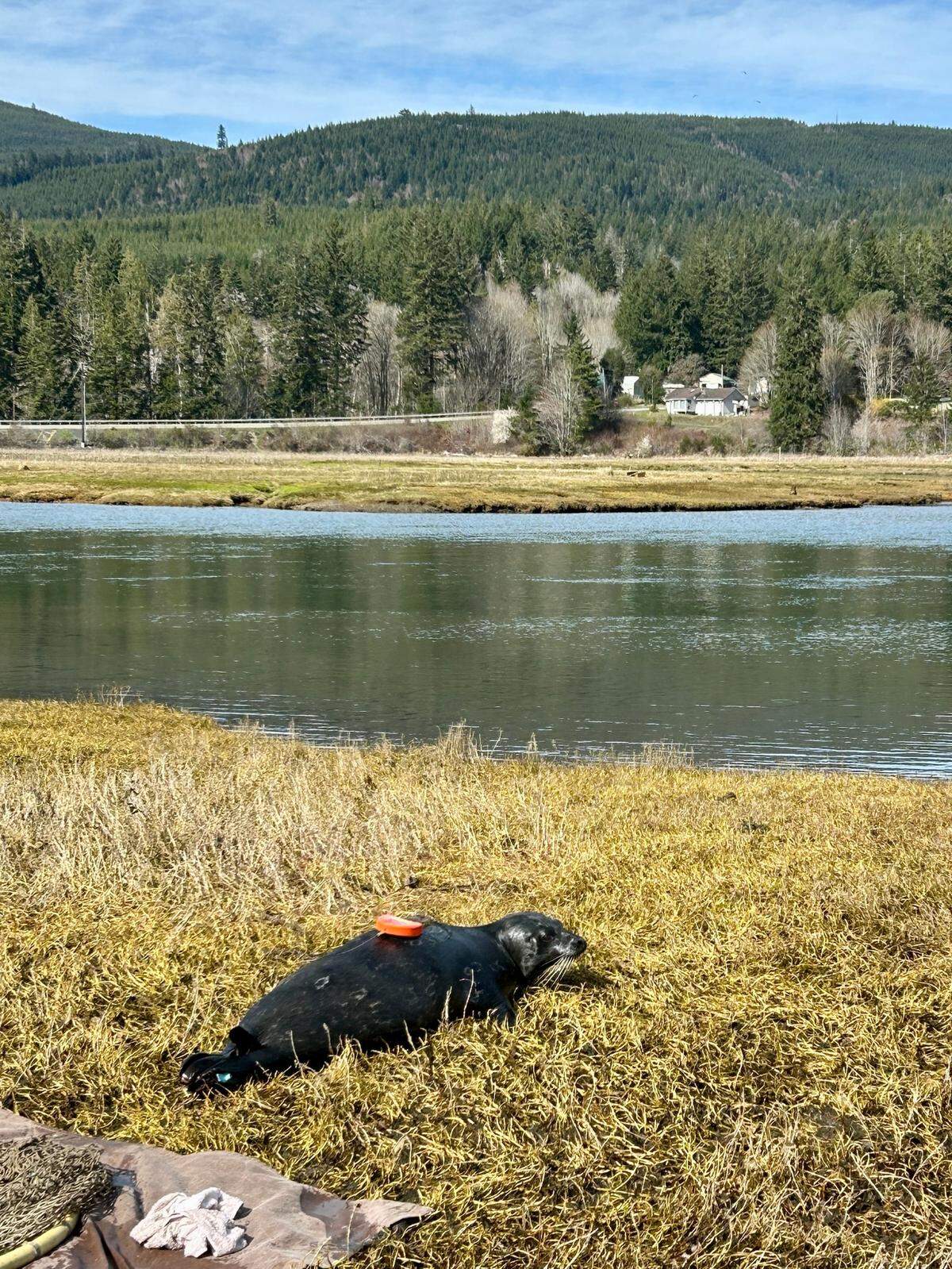
Editor’s note: Photo captions on an earlier version of this article misidentified the location of the seals in the photos. The photos were taken at the Nisqually River and Duckabush River. The seals pictured are wearing the same data collection devices as a seal seen recently at Point Defiance.
This story was originally published July 8, 2025 at 2:54 PM.