Where are the best spots to see orcas in Pierce County? Tips for shore sightings
AI-generated summary reviewed by our newsroom.
- Pierce County offers key orca viewing spots like Point Defiance and Purdy Bridge.
- Reported orca sightings to the Orca Network nearly doubled from 2022 to 2024.
- Whale watchers advised to track sightings and be willing to travel for best success.
Randy Witter has had a lot of success seeing orcas in the south Puget Sound.
“I was down fishing with my son one day and saw my first fin,” Witter said about the moment that sparked his passion for looking for the impressive marine mammals. “And I was like, that’s an orca.”
The Key Peninsula resident said he has easy access to the Carr Inlet area from where he lives. He’s often able to tell when orcas are approaching and headed to the Purdy Spit, and is now a regular contributor to online reports of orca sightings operated by the Orca Network. The Puget Sound nonprofit runs a popular Facebook group, the Orca Network Community Group, which had 75,500 members as of July 7. The organization aims to connect people to whales and other marine mammals in the Pacific Northwest, per their website. They also advocate for the conservation of Southern Resident orcas, which are endangered.
.jpg "Bigg’s killer whale ‘Jack’ in Puget Sound. Alli Montgomery, FRS Clipper (PWWA).jpg")
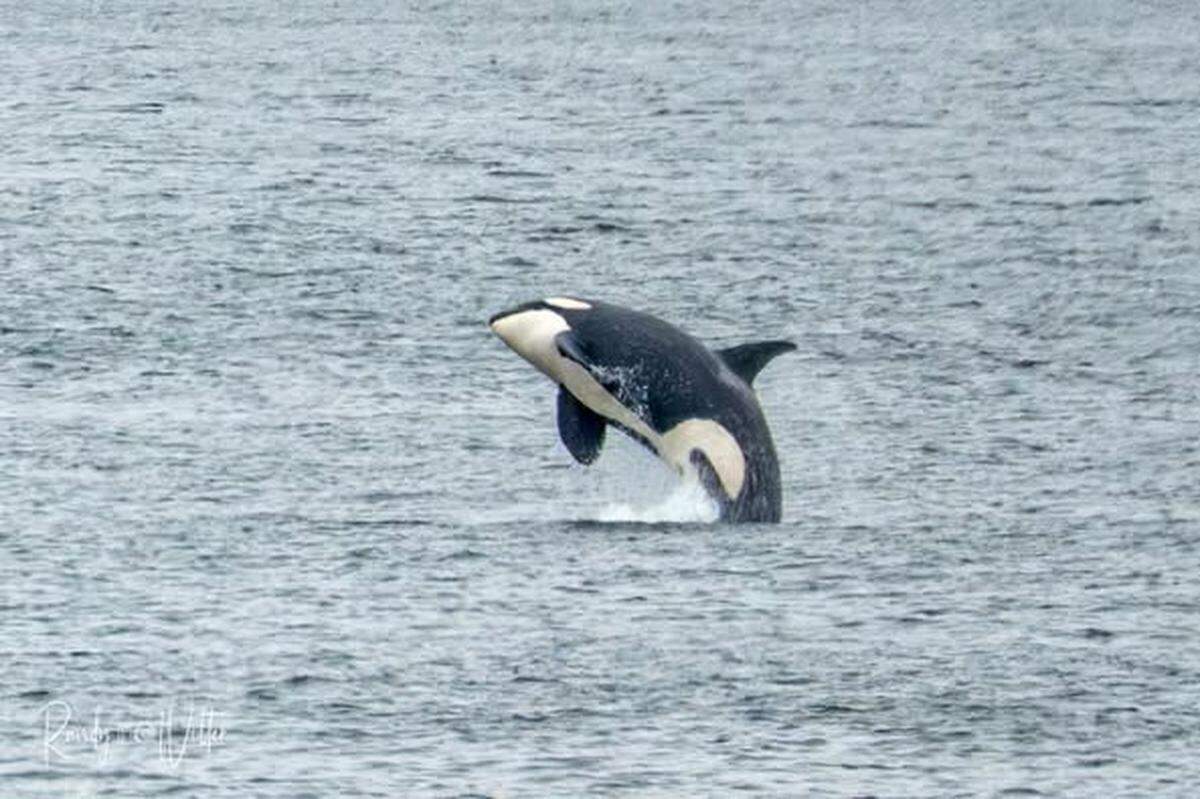
Witter said he uses a telephoto lens to take high-quality photos of the orcas he sees from the shore. Most of the time, the orcas he sees are a quarter mile to a mile and a half away, but he wants to see one much nearer — close enough for a “fully sharp and close-up picture,” he said.
“I’m still chasing that perfect picture close-up that I can frame and put in my house,” Witter said.
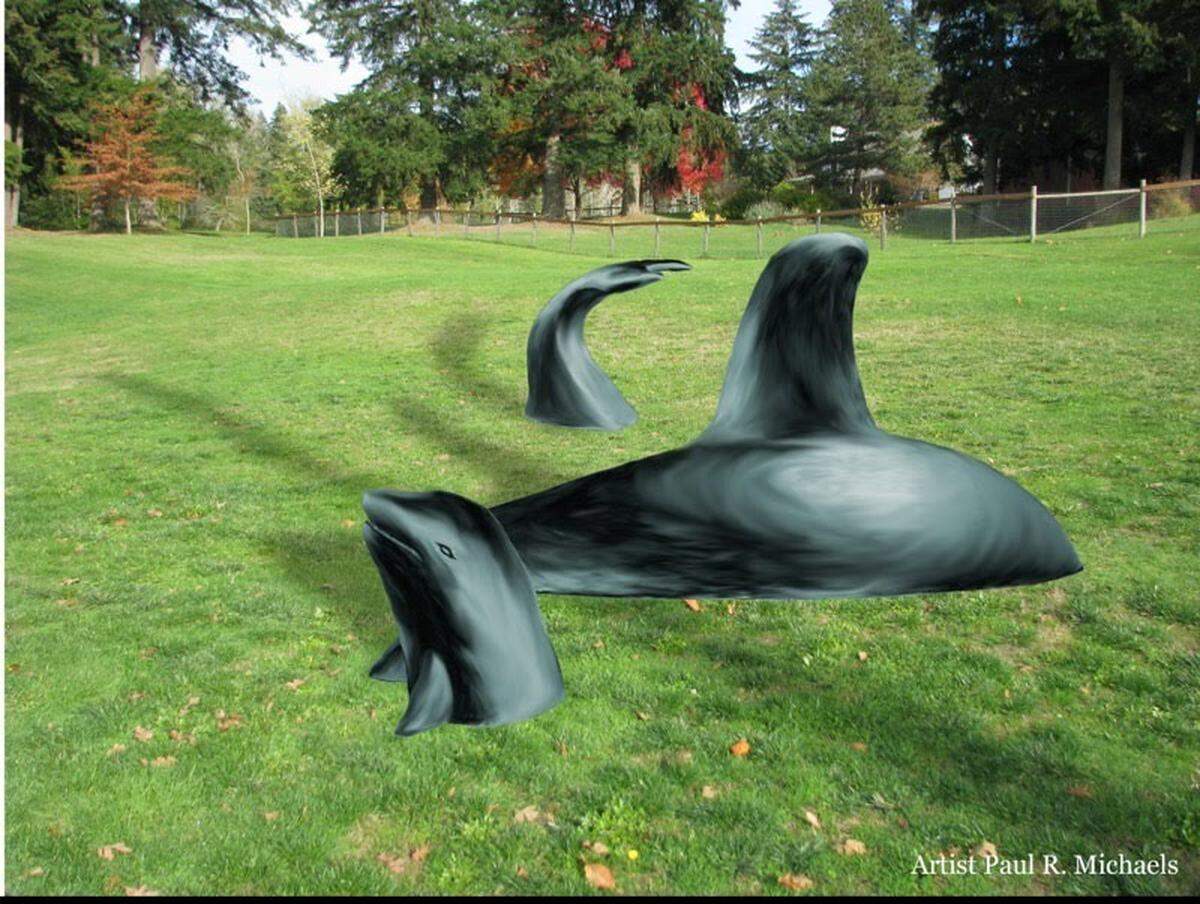
Witter recently contributed to a fundraising campaign on the Key Peninsula to bring a new bronze orca sculpture installation to Gateway Park, a large public park in Wauna off of state Route 302. According to the campaign website, the sculpture will feature a baby orca’s head, a parent orca’s tail and another parent orca’s back and dorsal fin breaching the grass.
The whole project is expected to cost some $120,000, and had a few thousand dollars in the coffers when Key Peninsula Council Beautification Project President Kathy Lyons spoke with a reporter on July 7. Lyons is spearheading the orca installation project and said she came up with the idea to bring the sculptures to the park.
When orcas swim under the Purdy Bridge, everybody stops their cars and starts taking pictures and videos, she said. She recalled being stuck in that traffic herself and seeing the police come out and tell people to keep moving.
“Oh, there is such a love for orcas out here,” she said.
The News Tribune spoke with Rachel Haight, co-coordinator of Orca Network’s Whale Sighting Network, to learn the best spots to catch a glimpse of orcas in the south Puget Sound.
Best spots to see orcas
Haight listed several popular viewpoints in Pierce County for seeing the whales:
▪ Point Defiance Park: People have seen the whales from “up high” here, Haight said. Try Five Mile Drive, which loops around the park and provides access to several viewpoints marked on the Parks Tacoma map. Despite the name, the outer loop of Five Mile Drive is only open to pedestrians, bicyclists, and other non-motorized traffic. Cars have been permanently prohibited since May 2022, due to the safety risks of ongoing erosion and instability of the bluffs, The News Tribune reported.
▪ Owen Beach: Located at Point Defiance Park, the shore drops off sharply into the water, “so the orcas sometimes will come and hug the shore really close, as well as humpbacks,” Haight said.
▪ Dune Peninsula: Also near Point Defiance Park, this area provides a sweeping view of East Passage, heading toward Seattle, and both Dalco Passage and the entrance of Colvos Passage to the west of Vashon Island. Haight said “it gives you just a nice view of being able to see where the whales are coming from and where they might be headed.”
▪ Browns Point Lighthouse Park and Ruston Way: The park is 4.03 acres, features a historic lighthouse, and provides access to the waterfront. “Sometimes (the orcas will) come in really close to the lighthouse and they’ll curve into Commencement Bay,” Haight said. At that point, the orcas will usually travel parallel along Ruston Way and may be visible from “any spot along that road,” like Tacoma Chinese Reconciliation Park or nearby restaurants, she continued.
Watching the whales from bridge passes is also becoming more popular, Haight said.
▪ Tacoma Narrows Bridge: You can park at War Memorial Park and walk 14 minutes to the bridge, per Google Maps. The eastbound span of the bridge is open to foot traffic and has a path for bicycles and pedestrians via the Scott Pierson Trail.
▪ Fox Island Bridge: This bridge is the only access point to Fox Island, which is home to some 3,900 residents per 2020 census data. The bridge can get crowded, and Haight recommended that visitors be mindful of the speed limit and neighborhoods on the island. The Fox Island Fishing Pier is another good viewing point on the island, she said.
▪ Purdy Bridge: Whales have gone up Carr Inlet into Henderson Bay in the past, Haight said: “There’s been a couple times in the past years they go under the Purdy Bridge and go in the lagoon there.”
▪ Kopachuck State Park is closed to the public until August 2025 for construction, but has been a good viewing spot in the past, according to Haight.
Tips for spotting orcas
If you’ve been looking for orcas but keep missing them, you’re not alone.
“I and many others miss these orcas by just mere minutes at a time,” Haight said.
.jpg "Bigg’s killer whale brothers Amir & Indy. Alli Montgomery, FRS Clipper (PWWA).jpg")
But she’s also seen a dramatic increase in reported orca sightings in her three years working for the Orca Network. The number of yearly sightings has nearly doubled — from around 7,800 in 2022 to 13,800 in 2024, she told The News Tribune via a text message. Meanwhile, their community Facebook group keeps growing, she said.
Her advice to hopeful orca-seekers: Pay attention to the sightings others have reported, know that whales can arrive at any time and be prepared to travel. You may need to drive a few hours.
“If you have a limited amount of time, honestly getting on a whale watch boat is probably your best option, just because they have the freedom to go to a lot of different spots,” she said, later adding that they recommend any tour from companies that are part of the Pacific Whale Watch Association. “But if you’re trying to remain on shore and view them that way, then you definitely have to put in more effort and be willing to definitely travel.”
What you want to do is get ahead of the orcas by predicting where they’ll go next, after someone reports a sighting, Haight explained.
“For example, if they were southbound at Browns Point Lighthouse, you wouldn’t go to Browns Point Lighthouse,” she said. “You try to go to Point Defiance, to get in front of them and be where they will be. So you give yourself a little bit of time.”
Yes, the orcas can change direction at any point, but they tend to travel in “a consistent direction,” she added. So if they’re going south, you’ll want to head to the next viewing spot south.
Timing is everything, and it’s helpful to take some time to educate yourself on Puget Sound and figure out where you should head next and the travel time to get there, she said. See someone with binoculars? Ask for help, she encouraged. Many people in the whale-watching community are willing to recommend “next spots to go and where to look,” she said.
She emphasized how helpful a larger network of orca observers can be. In 13 years, she’s only spotted orcas or whales at random around 10 times, but she’s seen them hundreds of times following up on reports from others, she said.
If you’ve arrived at a good spot but no fins are breaching the waves, how long should you wait?
Consider how many people might be out that day, Haight said. A sunny Saturday will likely have a lot of people with eyes on the water. If the orcas disappear from an area and no one sees them in that area for some time, they could be traveling somewhere else.
“So if you’re miles away, like you’re 10 miles away from the last sighting, it’s going to be hours,” she said. “But if you’re within three miles or less, definitely keep your eyes out, because they could be coming into view.”
Her parting advice: “definitely bring binoculars” because the orcas are often far away. The photos and videos on social media represent “the best of the best,” she said. “I definitely want people to go in with realistic expectations that a lot of times they’re not that close.”
But that likelihood doesn’t stop her from being persistent in her own search for the marine creatures.
“ ... we joke a lot that sometimes I’ll spend days going out and looking for the orcas, and they’re just super far away, and you can barely see them day after day,” she said. “But I’ll still keep going back out, just hoping they’ll be closer the next day. You can never get enough.”
Besides their Facebook group, the Orca Network also offers a paid alert subscription. For $25 every 12 months, you can get real-time or near real-time call/text alerts of orcas in your zone. They’re also testing out a new platform called Circle to share real-time sightings as an alternative to the Facebook group, Haight said. You can join their Whale Sighting Network on Circle by creating an account or view reported sightings without any login necessary.
Puget Sound Whale Sightings is another Facebook group that shares sightings of whales, with some 84,600 members as of July 10.
The Whale Alert app is free to the public and also allows users to report whale sightings. That app was launched to prevent vessel strikes with whales, according to a webpage about the app from the International Fund for Animal Welfare.
Editor’s note: A previous version of this story misstated the distance from shore that Key Peninsula resident Randy Witter said he sees orcas. He said he typically sees them a quarter mile to a mile and a half away.
This story was originally published July 14, 2025 at 5:30 AM.