Slavic, Ukrainian refugees in Tacoma face uncertainty as state funding dries up
AI-generated summary reviewed by our newsroom.
- Tacoma Slavic Association faces staff cuts after losing $548K in county funds and expiring federal aid.
- Thousands of Slavic refugees received aid from TSA across Pierce and King counties.
- Decreased immigration support raises fears of detention, delays critical help.
The center for the Tacoma Slavic Association was full of activity the morning of July 24 as children played and their parents sat at desks, hoping to get connected to resources to help them get adjusted to life in the United States.
Their work is expected to get harder after a loss of county funds and the recent passage of President Trump’s “big, beautiful bill” that cuts federal assistance to programs like Medicaid and SNAP.
Since Russia invaded Ukraine in February 2022 and the end of last year, more than 245,000 documented refugees from Ukraine arrived in the United States. Although that immigration rate has slowed, the need for resources and community hasn’t — especially as immigrants fear deportation or detention by the U.S. Immigration and Customs Enforcement, according to the Tacoma Slavic Association.
Sitting in an office inside the Slavic Christian Center on July 24, TSA executive director Olga Piddubna was dwarfed by stacked boxes of donated diapers, formula, towels, shampoo, bedding, baby wipes and water bottles. Since 2022, Tacoma Slavic Association has offered case management, resource navigation, basic supplies and informative workshops to thousands of Slavic immigrants and their families.
Pierce County Human Services awarded the Slavic Association grants totaling $548,000 from February 2024 through June 2025 to provide those services, said county spokesperson Libby Catalinich. That immigrant and refugee services funding came from the state Department of Commerce, but it was not renewed, Catalinich told The News Tribune.
“Human Services prepared a request for refugee and immigrant stabilization and resettlement services for the 2026-2027 biennial budget. Due to current financial circumstances and the fact that it cannot be considered a core County service, the department did not submit this for consideration,” Catalinich said via email. “The department is not aware of any other funding opportunities for these services at this time, but notes that the state does have immigrant and refugee services funding that agencies can apply for directly.”

The loss of funding, in addition to $343,000 of federal grant money set to expire in September, means Tacoma Slavic Association has lost four of its 18 part-time resource navigators, Piddubna said. That will mean longer wait times for families needing crucial information about medical benefits, housing, food and job assistance, she said. Piddubna said she is trying hard not to turn anyone away.
From February 2022 to July 2024, the association served more than 2,363 people in Pierce, King and other surrounding counties. That includes more than 1,861 people from Ukraine, more than 320 people from Russia, 85 Moldovians and dozens of others from Belarus, Uzbekistan, Kazakhstan and Kyrgyzstan, according to the association.
Many immigrants have found employment and started their own businesses with help from the association, in addition to attending and graduating college, learning English and finding jobs to support themselves and their families, Piddubna said.
“We are humans looking for a better life, right? People immigrated here because they were looking for a better life. If the country is not able to provide a stable life to families who can then contribute to that country, those families are willing to leave,” she said. “They are looking for a place they can stay and contribute.”
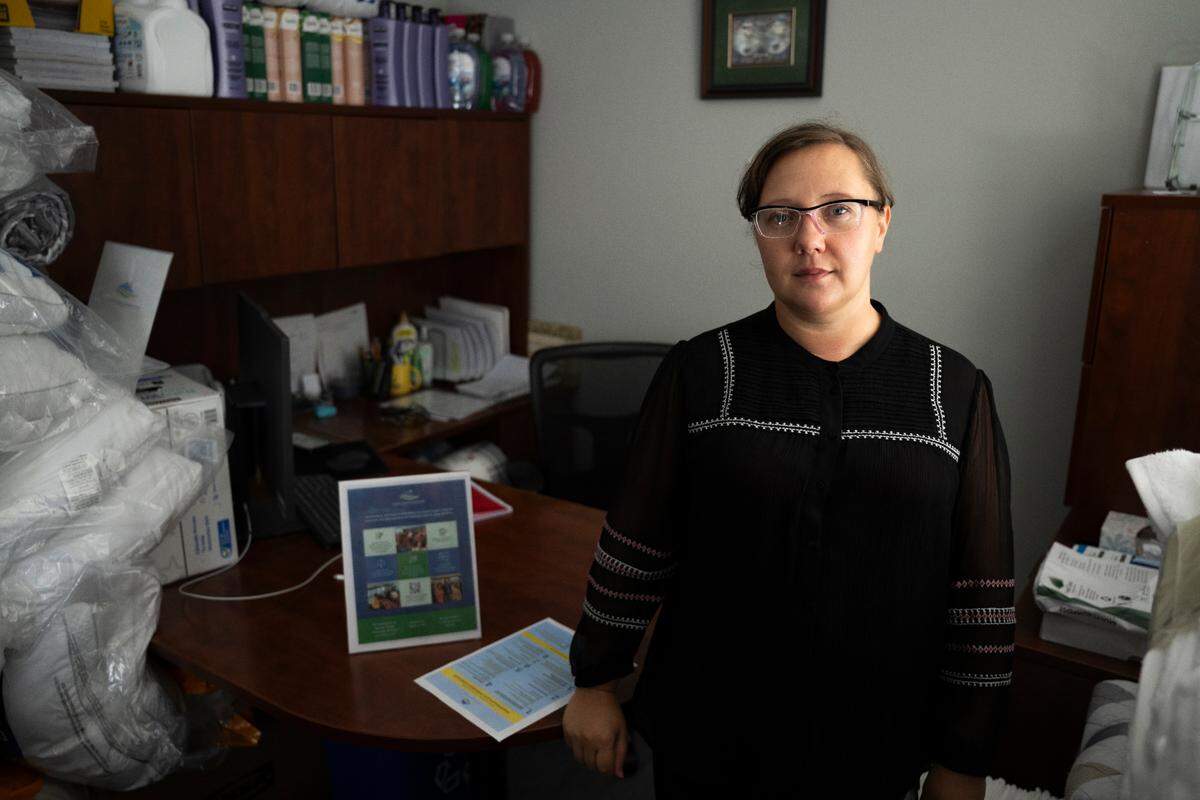
Piddubna is a Ukrainian immigrant who moved to the United States at age 19 with her family, fleeing religious persecution in 2005. Although she held an engineering degree in Ukraine, Piddubna — like many immigrants — found her degree wasn’t accepted in the United States and had to start over when she arrived in Tacoma. Many of the thousands of Slavic immigrants she helps encounter the same barriers she did when she arrived.
Now 20 years later, Piddubna works as a registered nurse at the St. Joseph Medical Center, delivers babies in the Neonatal Intensive Care Unit and teaches nursing at Bates Technical College. Piddubna is also a homeowner, teaches Sunday school and is mother to six children, the youngest of whom is 3.
“We have a lot of immigrants who are highly educated and are interested in continuing to work hard in order to continue their education or even obtain a new education,” she said. “Who’s going to explain it to them? Who is going to share the knowledge? How to adapt? If you’re going to go to a different country and you want to thrive and prosper, is somebody going to explain to you how to run a business? Nobody’s going to do it, but we do.”
It takes years for immigrants to feel adjusted and settled in a new country, Piddubna said. Piddubna said some immigrant families she helps are so fearful of ICE they are afraid to go outside. Tacoma Slavic Association has uniquely been able to build trust in the Slavic community because in part it is based out of the Slavic Christian Center, she said. The association has been holding “Know your rights” workshops with local law firms as well.
Moving forward, Piddubna said the association is exploring other grant opportunities. Those who want to donate, volunteer or access resources can visit their website at https://slavicaid.org/.