A new 60-unit tiny home village for the homeless opens in Tacoma
AI-generated summary reviewed by our newsroom.
- Kingfisher Village opens with 60 tiny homes to transition Tacoma’s homeless population.
- Pierce County contributed over $1.9M to cover site development and infrastructure.
- LIHI will provide 24/7 staffing, case management, and on-site amenities for residents.
A new 60-unit tiny home village has opened near Tacoma’s South Hosmer Street, with the goal of providing transitional housing for those living in encampments.
On July 23, local leaders and housing advocates gathered to celebrate the opening of the Kingfisher Village at 1824 S. 84th St.
According to Low-Income Housing Institute, the site cost $2 million to construct. The tiny homes were built with help from volunteers, including high school students.
According to Pierce County Human Services spokesperson Kari Moore, the county contributed more than $1.9 million to fund the property acquisition and some initial capital costs for the site development, including infrastructure, grading and utility installation.
Some of the funding was made available to Pierce County through the Washington State Department of Commerce’s Right of Way Encampment Resolution Program. The program, previously called the Rights-of-Way Safety Initiative, provides funding to local governments to support programs aimed at reducing encampments in public areas.
According to LIHI, the village will serve individuals and couples that are experiencing homelessness in the Tacoma area. People are referred to Kingfisher Village as part of the state’s Encampment Resolution program in cooperation with Pierce County and City of Tacoma.
The facility is owned and operated by LIHI, one of the largest affordable-housing providers in the Puget Sound Region. LIHI has built and operated several tiny home villages to serve the unhoused around the region, including one at 6th Avenue and Orchard Street in Tacoma.
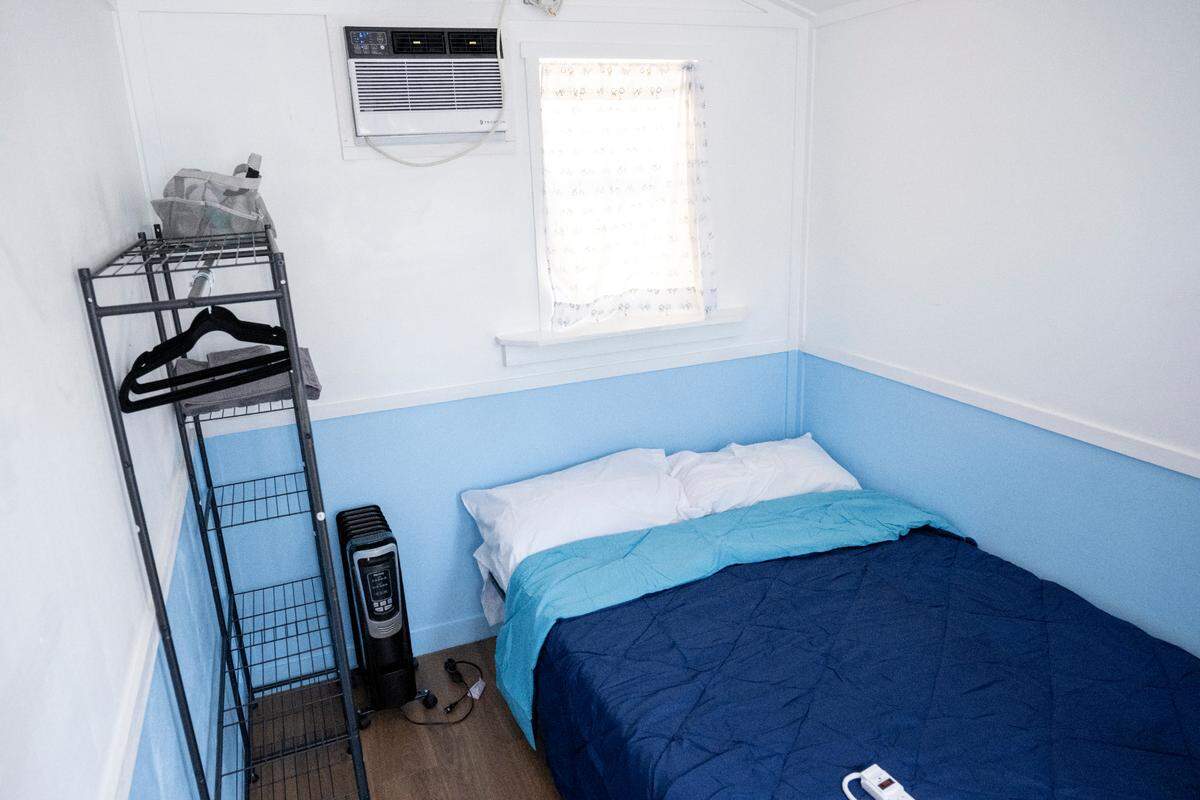
John Brown, a program manager for LIHI, told The News Tribune the tiny houses are 8-feet by 12-feet wide, are insulated and contain heat and air-conditioning units. The homes will include beds, personal storage, outlets and Wi-Fi access.
He said tiny homes are constructed at an estimated cost of between $6,000 and $7,000 each.
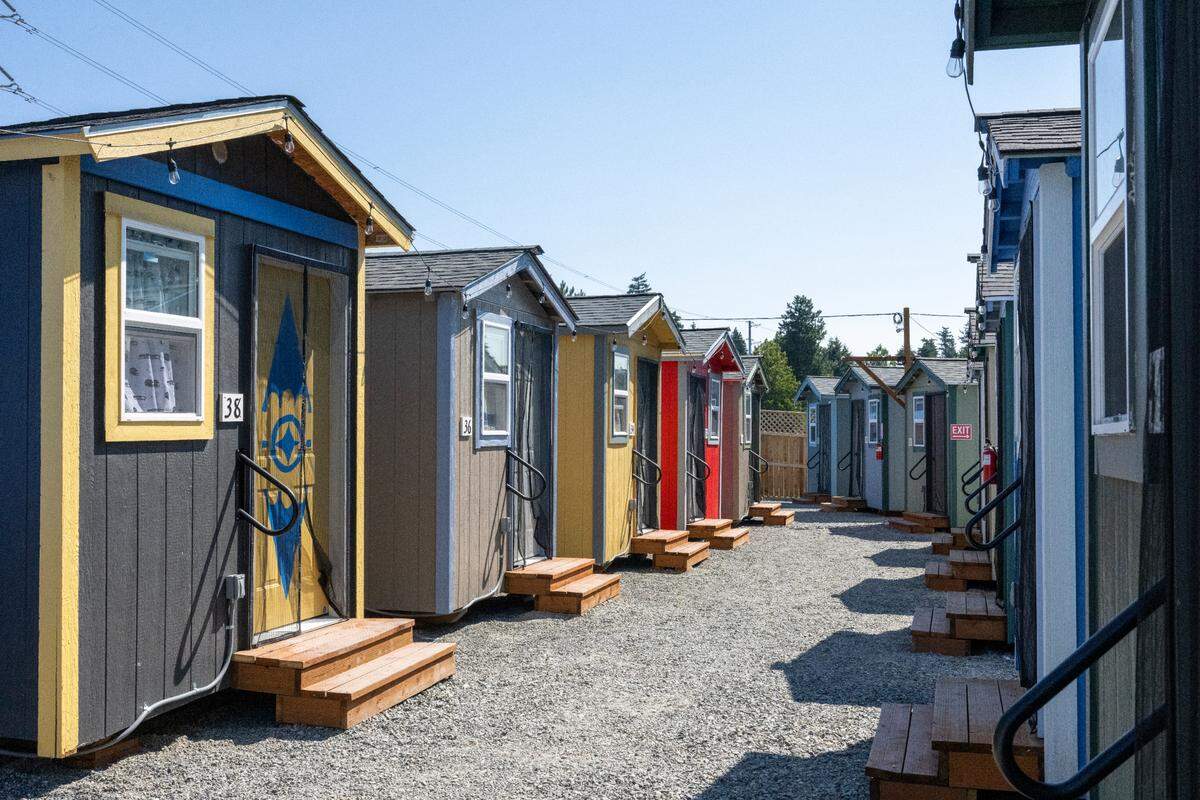
The facility includes a shared common dining area and kitchen, laundry facilities, eight shared bathrooms and is ADA compliant with ramps and wheelchair accessible pathways.
The village has one entrance and security cameras to ensure community safety, according to LIHI.
Brown told The News Tribune that LIHI met with the Hosmer Business Association ahead of the opening of Kingfisher Village to collect community feedback. He said some business owners expressed concerns regarding the village, while others expressed excitement and support.
The Hosmer Business Association did not respond to The News Tribune’s request for comment about the hopes and concerns regarding the village.
Hosmer Street has previously been a hot bed for homeless encampments and transients, causing frustration for local business owners.
According to LIHI, residents at Kingfisher Village will get case management from on-site staff, and the facility will have at least two staff on site at all hours. In 2024, the Hosmer Business Association hired a security firm to sweep encampments on nearby private property.
Kingfisher Village is adjacent to South Lakeshore Christian Church. On July 23, Pastor Vic deLeon said a prayer at the village’s opening ceremony and called it the “beginning of a good relationship” between the church and the new transitional community.
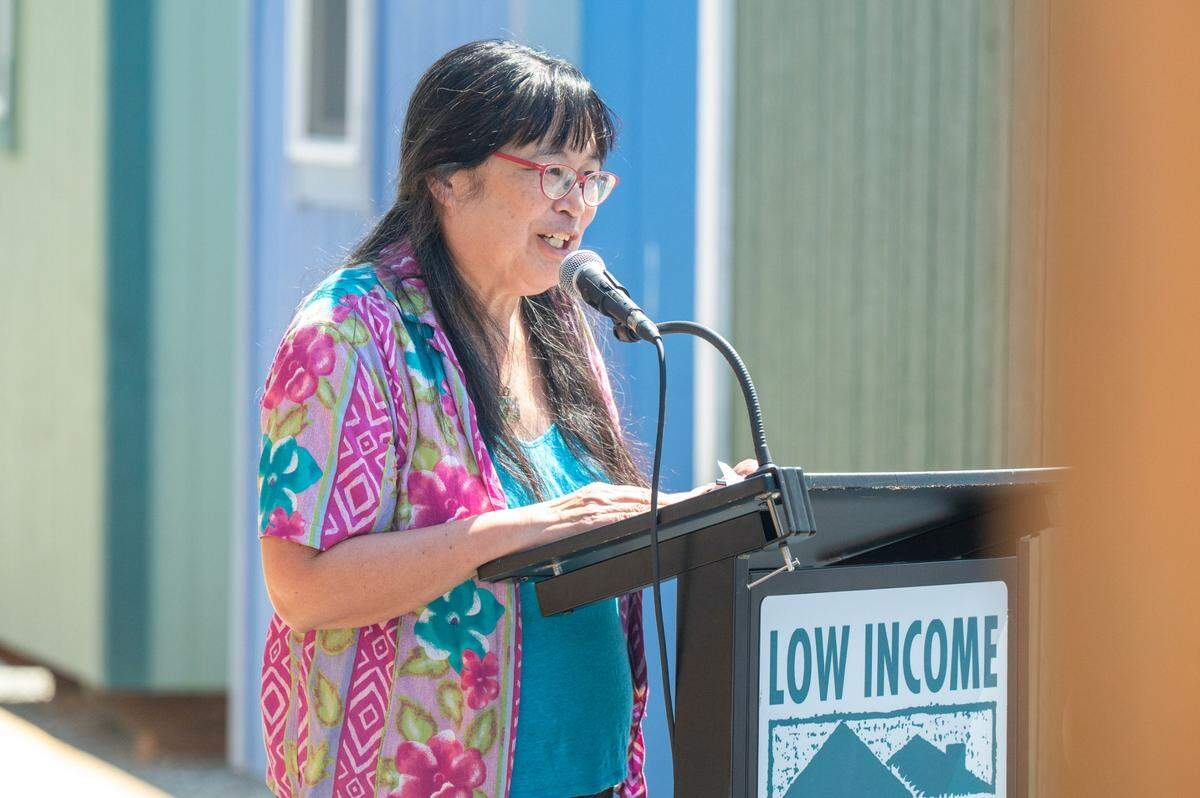
LIHI director Sharon Lee also spoke during the opening ceremony on July 23. She said the village, like LIHI’s other villages, will serve as transitional housing for people who were previously living in encampments, and they will receive support in finding long-term housing.
On July 23, Pierce County Executive Ryan Mello attested to the success of LIHI’s tiny home village efforts.
“This model works,” Mello said. “It works to move people into the next phase of their housing journey.”
Kimberly Soto previously lived at LIHI’s tiny village at 6th and Orchard. Soto said she became homeless after her fiance died. While living unhoused, she had surgery on her hip and recovered while living in her car.
“Without tiny homes, I don’t know where I would have been,” she said at the July 23 event. “It was not good, but they helped me and lifted me up, got me back on track. I needed to do that to get back into a place, and I will be forever grateful to them.”
Soto is now a resident at LIHI’s Patsy Surh Place, an affordable-housing complex in Tacoma’s Lincoln District.
Victoria Woodards, mayor of the City of Tacoma, said the long-term plan for the Kingfisher Village property is to build an affordable-housing project there.
“This is not just a wish,” Woodards said on July 23. “I’ve seen it and I know it’s something they can do.”