Did Tacoma’s smelter turn men into serial killers? A book explores the question
AI-generated summary reviewed by our newsroom.
- “Murderland,” a new book, links serial killers in the Pacific Northwest to a Tacoma smelter.
- The book explores the connection between lead exposure and violent crime.
- It focuses largely on the city’s Asarco copper smelter, which shut down in 1985.
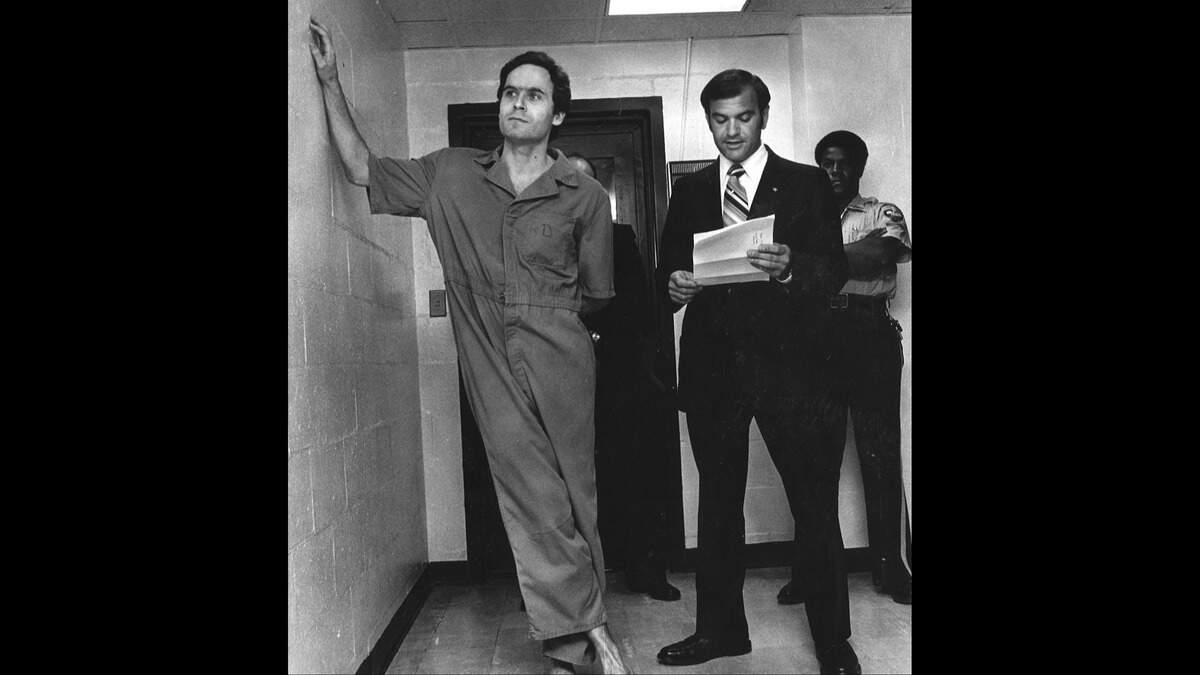
Notorious serial killer Ted Bundy grew up in the toxic plume of Tacoma’s copper smelter, not unlike the polluted air of Jack the Ripper’s coal-burning London.
“London is Tacoma before Tacoma is even a gleam in a Guggenheim’s eye,” author Caroline Fraser writes in her new book, “Murderland: Crime and Bloodlust in the Time of Serial Killers.”
Fraser, who hails from Mercer Island, investigates the link between repeat violent offenders and their exposure to lead, arsenic and other dirty materials in her true-crime nonfiction focused on Tacoma’s infamous Asarco industrial plant and the prevalence of serial killers from the Pacific Northwest.
In the late 1800s, the plant began processing mainly lead ores from local mines and switched in 1912 to copper, yielding inorganic arsenic, according to the book. The smelter, which bordered Ruston and north Tacoma, emitted lead and arsenic for several decades as the centerpiece of a company town before it was shut down in 1985 and later redeveloped as the residential and retail hub known as Point Ruston.
The plant’s long-menacing presence over Tacoma, “a place where paraphilias flourish like fungi,” is a central theme of “Murderland” and woven between stories of dangerous men who have lived within the plume’s path.
Bundy, who later confessed to killing more than two-dozen women but is suspected in the deaths of many others, was a teenager in 1961 living in the city’s Skyline neighborhood, near lead levels that were “astonishingly high,” according to the book.

At the same time, Gary Ridgway, the “Green River Killer” who would eventually plead guilty to 48 counts of first-degree aggravated murder, was a boy residing in a plume-affected area by Sea-Tac Airport that was also burdened by highway and jet-fuel fumes. Charles Manson, the infamous cult leader who orchestrated nine murders, including of actress Sharon Tate, was first a prisoner serving time for federal check forgery on McNeil Island, where the smelter’s particulates had been drifting into the earth since 1890, the book notes.
“Murderland” details several other convicted killers with Tacoma or Tacoma-adjacent connections or who were exposed to smelter byproducts — including “The Night Stalker” Richard Ramirez, who grew up within an Asarco plant’s plume in El Paso.
There was “a remarkable number” of serial killings in the 1970s, and many were clustered in the northwestern United States and/or anywhere with smelters or heavy traffic, according to the book. It describes Tacoma’s plume as “clinging to the southern reaches of Puget Sound like a dirty bathtub ring.”
In an interview, Fraser, 64, said she didn’t think that lead exposure on its own could prompt somebody to descend into a murderous spree.
“With every individual, it’s going to be different, but I think it’s certainly a factor,” she said.

The notion that lead poisoning could breed serial killers is represented as the worst-case scenario of its effects, she acknowledged. Lead has a host of neurological and physical health risks.
“Murderland” cites studies that have linked lead exposure to aggression, psychopathy and crime or found that exposure during childhood was tied to the loss of brain volume, particularly notable in men, including in the part that regulates cognition and behavior.
Fraser also writes about a common occurrence found in maps from the U.S. Environmental Protection Agency’s “Dirt Alert” program, which is meant to address contamination left by Tacoma’s copper smelter and three other plumes in Washington state.
“Every one of those plumes, including the most remote and least populated site on the Columbia, has hosted the activities of one or more serial rapists or murderers,” she writes.
Fraser, who was formerly on the editorial staff of The New Yorker and holds a doctorate in English and American literature from Harvard University, now lives in New Mexico. “Murderland” originated from her memories of living on Mercer Island and wanting to explore what contributed to the instability of the period, she said.
“It was a difficult time, the 1970s, in a lot of ways. There was a lot of violence in the country as a whole and in Washington state,” she said. “And it was remembering certain incidents that inspired me to take a closer look at that time.”
The number of serial killers in the United States topped out in the 1980s after rising in each preceding decade, according to data presented in the book.
There were specific themes in “Murderland” that Fraser said she’d like readers to reflect on.
“This was an era when violence against women was treated differently. It was really the beginning of the point where law enforcement and the judicial system first started to register rape, for example, as a more serious crime,” she said. “And I think we’re still in the middle of this process. I don’t think we’ve come out the other side.”
Fraser also hopes that readers would take note of corporate responsibility, saying that she was unprepared to discover the extent of corporate carelessness toward causing pollution and harm to surrounding communities.
“I was expecting a certain degree of indifference,” she said. “But I think it went beyond that.”
“Murderland” is a 480-page national bestseller published by Penguin Press, an imprint of Penguin Random House. The hardcover version of the book is being sold for $32.
This story was originally published August 18, 2025 at 5:00 AM.