Pierce County sheriff says jail is in ‘terrible’ condition. Take a look inside
AI-generated summary reviewed by our newsroom.
- Pierce County jail suffers from aging infrastructure and deferred maintenance.
- Lawsuits have identified sewage issues and healthcare failures.
- Staffing shortages and regulations on body scanners hinder jail operations.
About an hour into a Wednesday afternoon media tour of the Pierce County Jail, officials led reporters to a high-security cell block that is the subject of a federal lawsuit over jail conditions, particularly sewage backflows that allegedly persisted for years.
Officials with the Pierce County Sheriff’s Office had gone back and forth over whether news reporters would be allowed to see the area due to the ongoing litigation. What could be seen from where corrections deputies were posted to monitor the people housed here was a theme of the day’s tour — it is clearly an aging jail that could use improvement, but if there were any glaring health, safety or security issues, they were not visible.
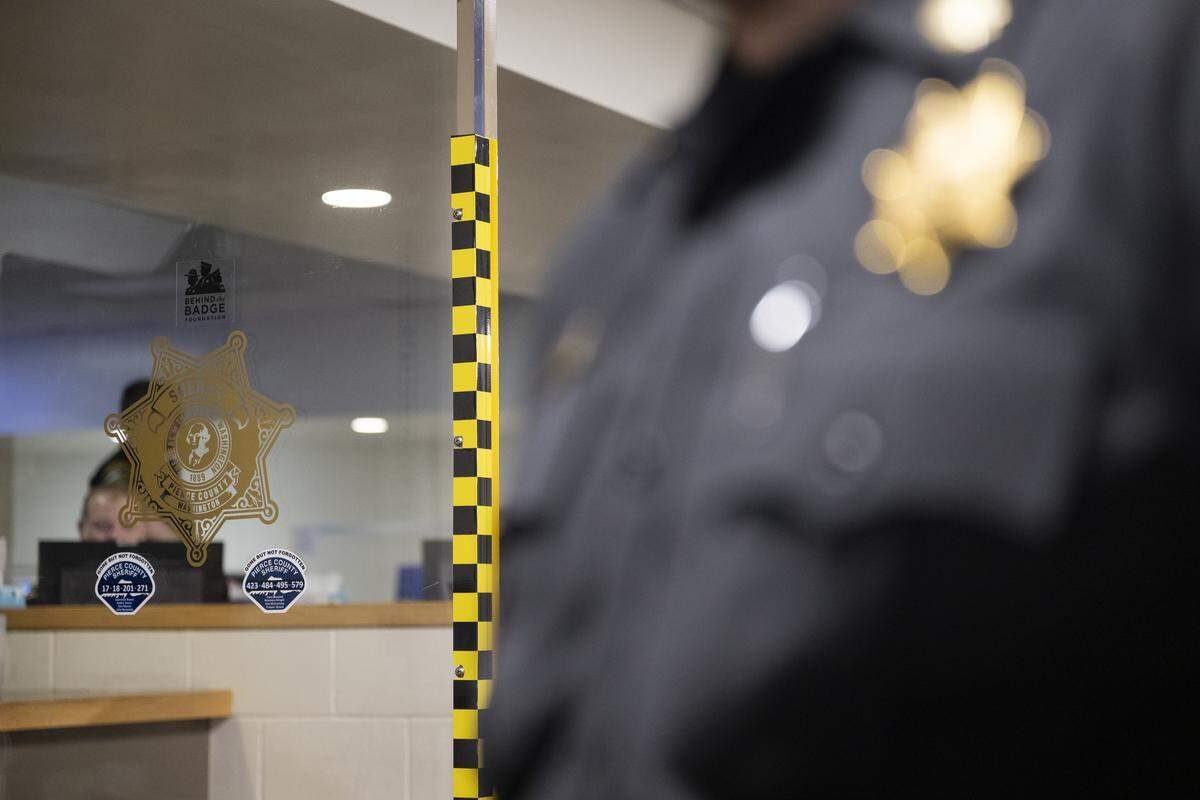
Sheriff Keith Swank recently invited The News Tribune and a news photographer, Steve Hickey, to see the county jail after Swank suggested it was worth an “investigative story” related to “the terrible condition it is in from decades of deferred maintenance,” and referring to an ongoing lawsuit against the jail.
The hour-and-a-half tour of the “main jail” at 910 Tacoma Ave. S. and the “new jail” (built in the early 2000s and abutting the main jail to the west) was led by Bureau Chief of Corrections Douglas Watkins and Maj. Forest Ake, who heads up the new jail’s operations. Swank was along for part of the walkthrough but had to leave for scheduled news interviews.
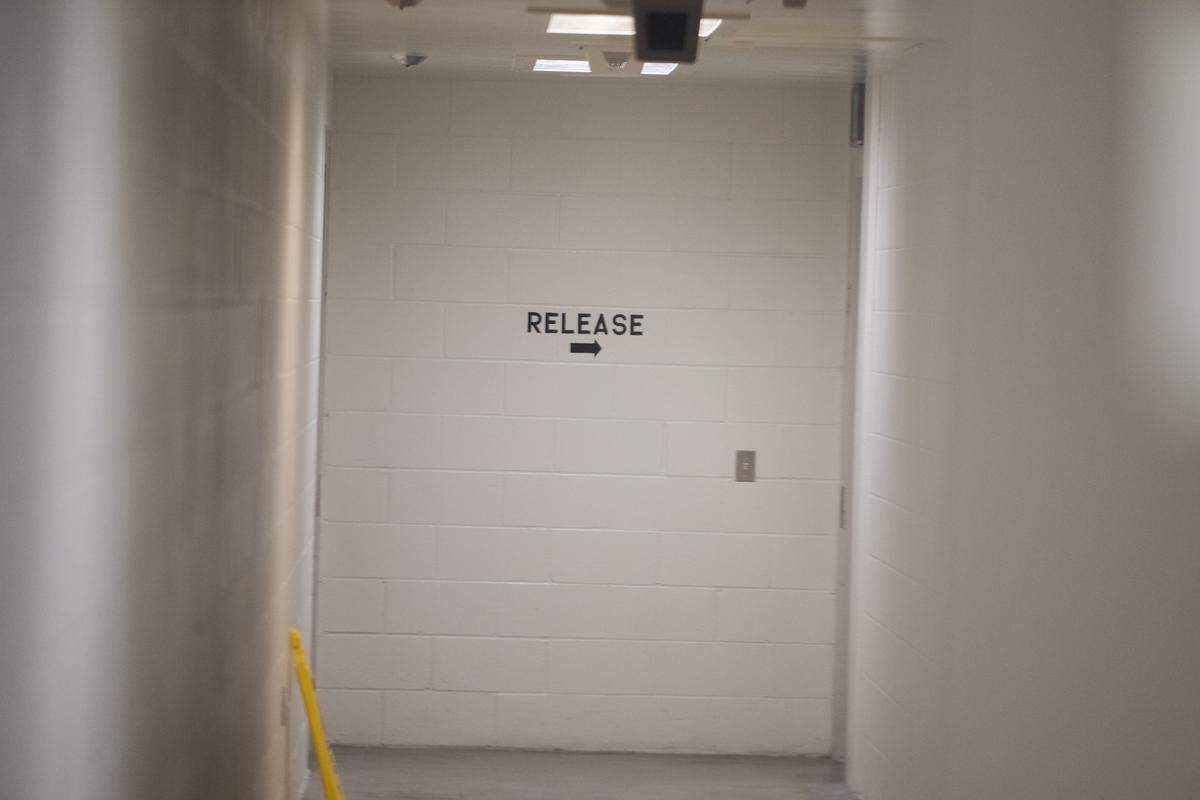
Reporters were shown booking, dorm-style low-security housing, a converted training room for staff, the clinic, maximum-security housing, an overflow unit for solitary confinement, rooms where inmates can appear for court hearings via video, an enclosed recreation yard on the roof and an out-of-use visitation area. The Corrections Bureau stopped in–person visitation during the COVID-19 pandemic in favor of installing kiosks in housing areas for paid video calls.
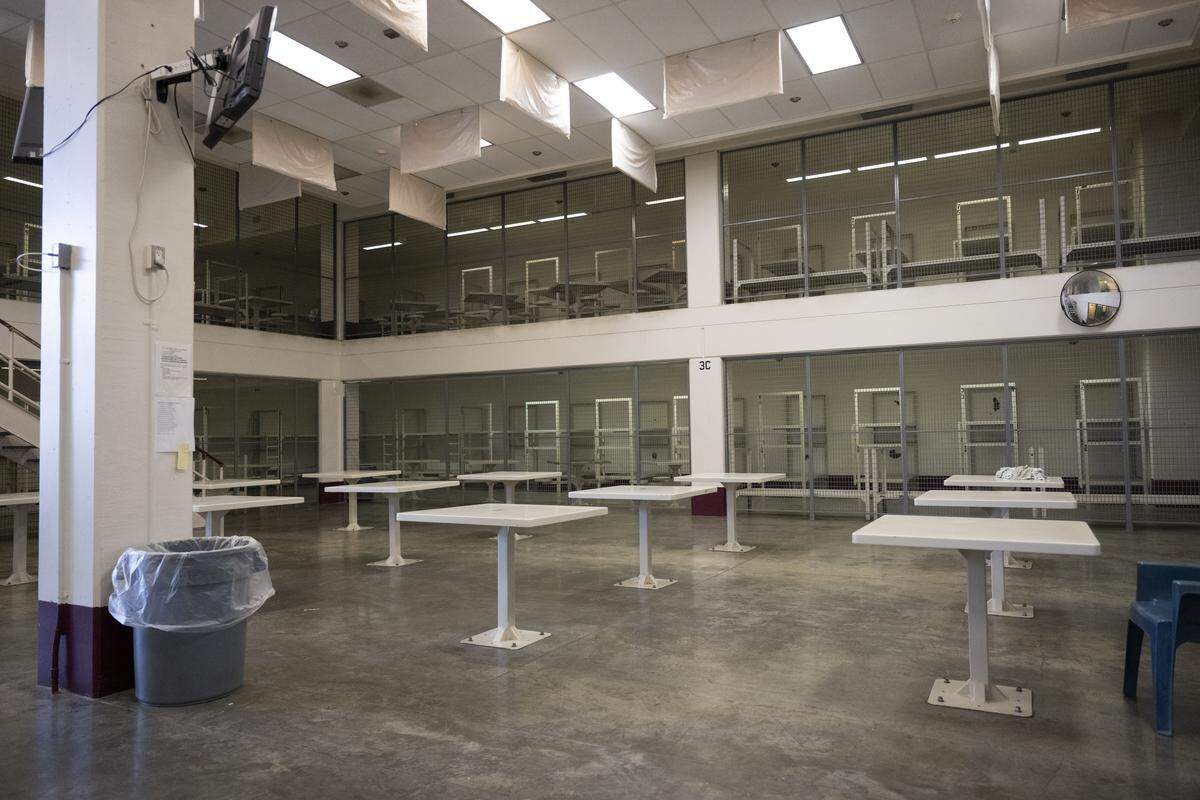
The jail houses people awaiting trial on criminal charges or serving sentences of less than a year. It has a budgeted capacity for nearly 1,300 inmates, according to Watkins. Ake said the average daily population is 876. It’s hard to say how representative of a typical day the jail was on Wednesday. The facility appeared clean and orderly.
“We do call it the old jail — it’s aging,” Watkins said of the main jail. “We do have Facilities, who are keeping it running as best as they can, but it does need an investment and or maybe replacement down the road.”
The one maintenance issue reporters saw Wednesday was in a cell block where crews were securing a table to the floor in a common area.
Lawsuit over plumbing
The ongoing lawsuit concerning the jail’s plumbing issues was filed in the U.S. District Court for Western Washington in 2023. It’s a class action whose lead plaintiff has been a defendant in 18 criminal cases in Pierce County since 2004, which often had him detained at the jail. The lawsuit describes him as mentally ill, and he has been housed in a mental health unit multiple times, including as recently as May 2023.
The plaintiff described toilets overflowing with sewage, mold in the shower and an overwhelming stench of sewer gases. Documents produced in the civil case showed corrections staff also reported a “rotten gas smell” in other parts of the jail causing headaches and sickness in 2016.
Whether those issues have been addressed is unclear. The one condition upon which reporters were allowed to see the third-floor main jail cell block the plaintiff had been housed in was that officials could not answer questions.
Those cell blocks are clustered into three units, A, B and C, making a sort of horseshoe shape around a control booth for corrections deputies. Walking toward the control area through two sets of barred doors that slid open with a loud buzz, Ake pointed out interview rooms where attorneys or other professionals can meet with inmates.
No smell was noticeable from where the deputies stood. There were three mop buckets outside one unit, but mop buckets were also seen outside cell blocks in other parts of the jail.
Jail units split into tiers
The cells in each unit are split into upper and lower tiers with small common areas outside of them with a couple of tables. Watkins said the B unit had been converted several years ago to Level 1 housing, the highest security level where only one inmate is allowed out of a cell at a time to use a phone or shower. Otherwise they are locked in their cells for 23 hours a day.
“Generally that’s our Level 1 mental health, so they need to be in Level 1 housing, but they might have acute mental health issues going on,” Wakins said.
Also housed in that block, Watkins said, was a general population mental health unit.
“That’s where, in working with classifications and our mental health team that [Ake] spoke about, it will determine if they need to be separate, but still getting the same privileges as the general population, but we keep them with like or similar type of inmates as far as mental health,” Watkins said.
Beyond housing conditions, the jail has faced scrutiny for the quality of healthcare offered to inmates. Healthcare services are provided by a contractor, NaphCare, and earlier this year a federal jury found it needed to pay $25 million in damages to a former inmate whose leg was amputated after providers missed signs of a severe blood clot in 2018.
A tour of the clinic was brief. It is staffed 24-7, Ake said, and a dental unit is available four days a week. Reporters passed a deputy station that Ake said helps coordinate the flow of inmates according to a medical provider list. In the dental unit, a patient was lying on his back while being treated.
“They’re here to provide emergency dental services,” Ake said. “You’re not getting a crown. You’re not getting a filling. You’re getting a temp or he’s yanking it. Most of the time it’s antibiotic because of an infection, but they do great work for us. Probably the first time some people have been to the dentist in who knows when.”
Throughout the tour, reporters passed corrections deputies escorting inmates and a break room with a Batman sticker labeling it the “jailer’s batcave.” Staffing remains one of the biggest challenges for the Corrections Bureau, Watkins said, necessitating mandatory overtime on a daily basis. He said there are 38 vacancies out of 245 budgeted corrections positions. According to budget documents for the 2024-2025 biennium, Facilities Management’s expenditures for the main jail and new jail are budgeted at a little more than $9.1 million. The Corrections Bureau’s budget for that period is just under $151 million.
“A lot of people like overtime, but they want to control it,” Watkins said. “They don’t want to be told, ‘Sorry you can’t go home today,’ but because of the type of facility we run here, I can’t decide we won’t just staff 4 North and not get their time out — they’re just going to be on 24-hour lockdown — we’re just not going to do that.”
Perhaps Swank’s biggest gripe during the tour was a body-scanning device in the booking area. It is meant to search for drugs or weapons that could be hidden inside someone’s body but can’t be used to its full potential. New state rules took effect this year regulating the level of radiation that can be administered through security-screening systems in jails and detention facilities.
“Therefore the scanner is really obsolete. It doesn’t do what it’s supposed to do,” Swank said.
Corrections staff still use the scanner, but they can’t operate it at the highest resolution the machine is capable of. Ake said something dense, such as hard plastic or metal, would show up, but powder and other soft objects are “virtually impossible” to see.
This story was originally published September 15, 2025 at 5:30 AM.