Questions raised over cost, efficacy of expanding Tacoma’s camping ban
AI-generated summary reviewed by our newsroom.
- Council advances amendment to expand no-camp zones around shelters, parks.
- Members warn expansion may conflict with homelessness strategy and services.
- Officials note fewer shelter beds, rising unhoused counts and fiscal strain.
Some Tacoma City Council members have reservations about an amendment that would expand areas in which homeless encampments are prohibited.
While, council member John Hines says his proposal is about community safety and mitigating the impact of encampments, other council members expressed concerns about the amendment’s alignment with the city’s homeless strategy and the unconsidered costs it could have.
In October 2022, the Tacoma City Council passed an ordinance that prohibits camping and the storage of personal belongings in a 10-block radius around temporary shelters and all public property within 200 feet of Tacoma’s rivers, waterways, creeks, streams and shorelines. Under the ordinance, violators face fines of up to $250 and up to 30 days in jail.
At the beginning of October, Hines proposed an amendment to expand the camping ban to within 10 blocks of permanent shelters, temporary shelters and transitional housing as well as establish a five-block buffer zone around public schools, parks and libraries.
After feedback from his peers on the council, Hines amended the proposal on Oct. 8 to reduce the no-camping buffers around public schools, parks and libraries from five blocks to two blocks. Buffer zones surrounding shelters outside the downtown core would be reduced from 10 blocks to five blocks.
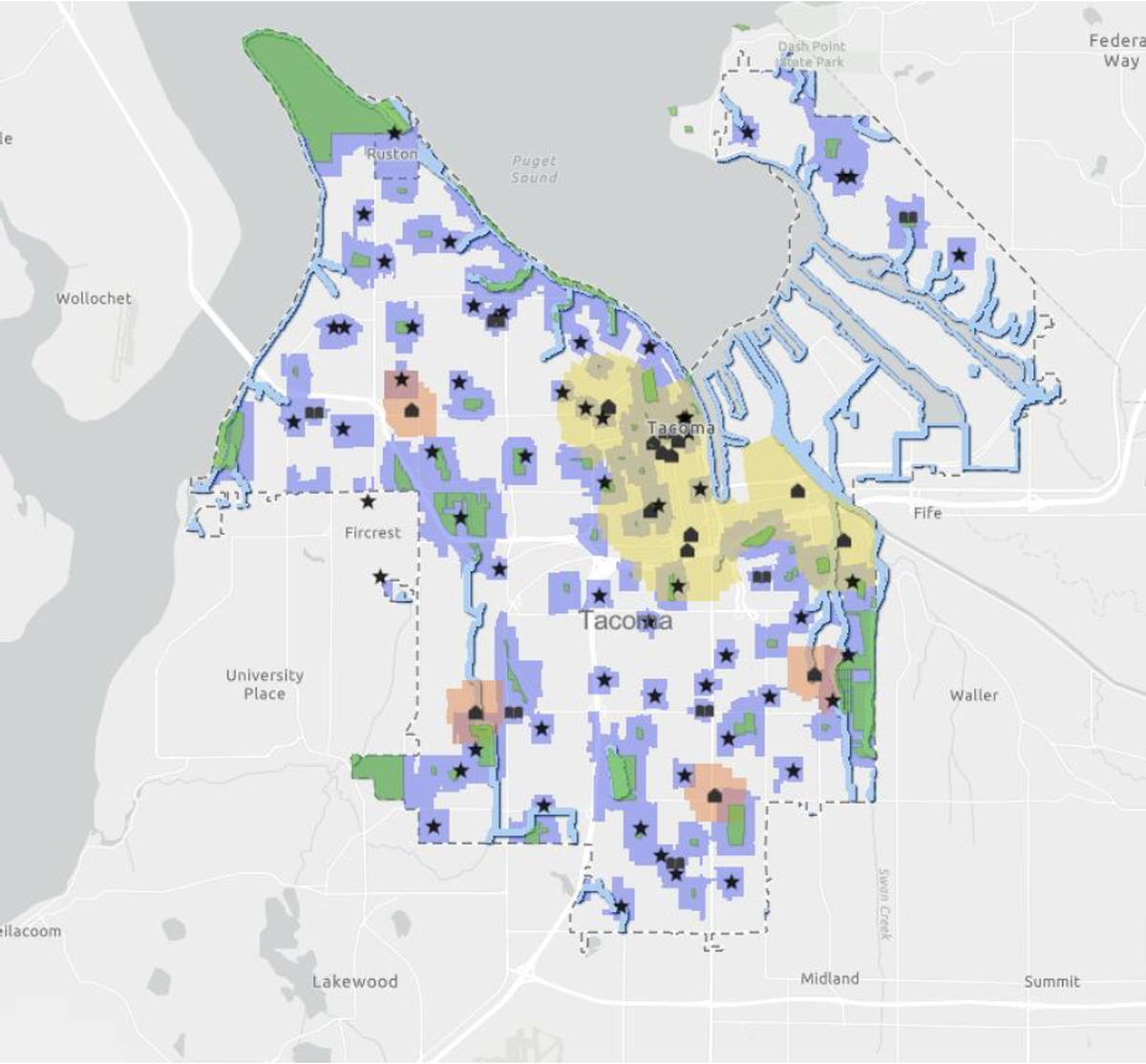
The amendment would entirely prohibit encampments in the downtown area and the Hilltop neighborhood.
In an interview with The News Tribune, Hines said he proposed the expansion because of recent closures of temporary shelters, which have reduced the number of camping-prohibited spaces across the city.
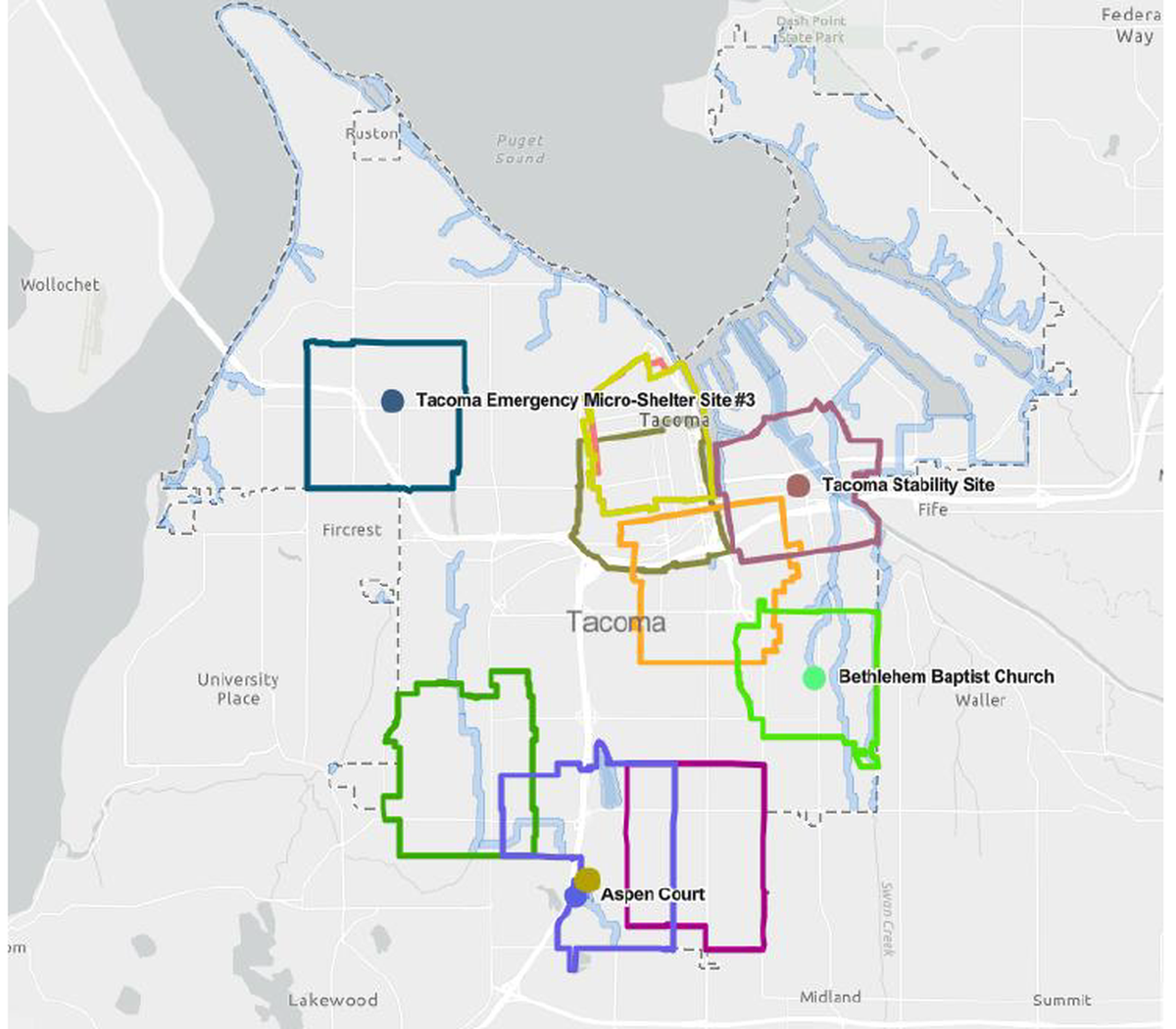
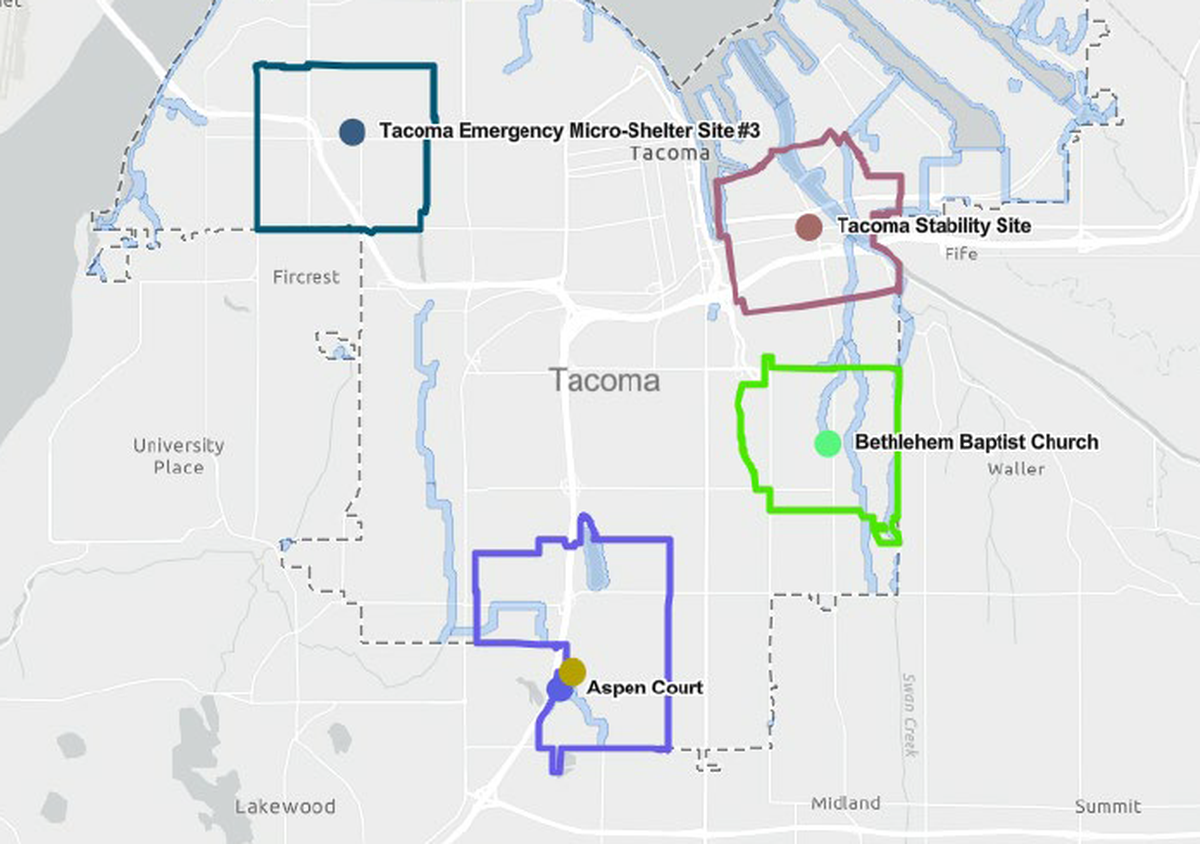
According to the proposal, the city lost five buffer zones from 2024 to 2025 — almost all of which shared overlapping areas in downtown, south and east Tacoma.
“This plan is not about ending homelessness. I am a firm believer that the way we end homelessness is by providing shelter and housing for folks in our community,” Hines told the City Council during its Oct. 14 study session. “But I think the challenge we are looking at with some of our encampments is that encampments are not safe.”
Hines said encampments have negative impacts on both the community and those who live inside them.
“I understand that a key component of how we get rid of encampments and have fewer people living on our streets is shelter, housing and services,” he said on Oct. 14. “But, even if we had enough shelter beds, housing, and places for people to be, we would still need a camping ordinance to address the impacts of some of the people camping and living unhoused on our streets.”
Not all council members on board
During the Oct. 14 study session, City Council member Jamika Scott, raised concerns that the proposal is not working in tandem with the city’s plan to address homelessness.
“What we are missing from the conversation is just a discussion around how we can also improve our approach around ‘services first,’ around permanent supportive housing, around all the things we state as our mission,” Scott told the council.
The proposal to increase the spaces in the city where the unhoused are not allowed to camp comes at a time when the number of shelter beds in Tacoma is at its lowest since the pandemic.
The city has 860 beds, according to a quarterly report from the city’s Neighborhood and Community Services Department. The city had about 1,099 shelter beds as of the beginning of 2025 before closing a handful of shelters due to funding shortfalls.
“Yes, we may be breaking up larger encampments, but what I am not hearing necessarily is that encampments are going away,” Scott said.
According to Pierce County’s annual survey of those living homeless in the region, the number of those living unhoused has continued to increase since Tacoma implemented the camping ban. In 2023, 2,148 people were counted living unhoused; in 2024, 2,661 people were identified as unhoused; and in 2025, 2,995 people living unhoused were counted.
Tacoma is recognized to host the broad majority of shelter and homeless services in Pierce County and accounts for the broad majority of those living unhoused in the region.
“It just feels like [we are] having this conversation absent of the other conversations we should be having around our issue with homelessness, housing insecurity in general and getting the people the services they need around substance abuse, mental health and other issues,” Scott said. “Those two things are connected in the mind of the community.”
While the amendment to the ordinance contends the proposal would have little to no fiscal impact, Deputy Mayor Kiara Daniels said that the changes to the policy would certainly come with increased costs as the city expands its enforcement.
Hines said he anticipates the city’s homeless outreach team would have a workload equal to what it was before the shelters closed in 2025, which reduced the amount of buffer zones.
Despite having the outreach team at full capacity, it reported making fewer contacts in 2025 due to focused efforts in the four remaining buffer zones. The team also reported increased service acceptance and shelter placement rates during that time.
The proposed amendment also dictates that anyone who is cited be referred to the city’s therapeutic court if eligible. Therapeutic courts connect participants with treatment services and community resources instead of traditional sentencing, such as jail or fines.
Daniels said the proposal would lead to increased referrals to the therapeutic courts and would require additional funding to support its operation.
“There is an impact fiscally to this, and I think that impact gets in the way of what we had talked about earlier as having a homelessness strategy and not being able to fund it. How do we balance the two if we are spending so much money on just cleaning up the same sites over and over?” Daniels said to the council. “The issue that I have with this is that, again, I don’t know that it solves the issue.”
She said the city has budgeted $11 million to enforce the camping ban through funding of contracted encampment removals and increased operation of the city’s homeless outreach team. With funding shortfalls leading to the closure of hundreds of shelter beds in 2025, Daniels suggested the funding could be used to better support the city’s homelessness services.
“I live where it is banned, and we still see encampments,” she told the council. “It’s the same folks not having a place to go because we don’t have enough low-barrier [shelter] sites. The vision of our homelessness strategy is that we have places for people to go.”