‘Could be problematic.’ Did Sheriff Swank alter records submitted to the court?
AI-generated summary reviewed by our newsroom.
- Judge found Sheriff Swank appeared to alter texts submitted to records officer.
- Court noted state law prohibits willfully or unlawfully altering public records.
- Review determined most emails and texts between Swank and private attorney not privileged.
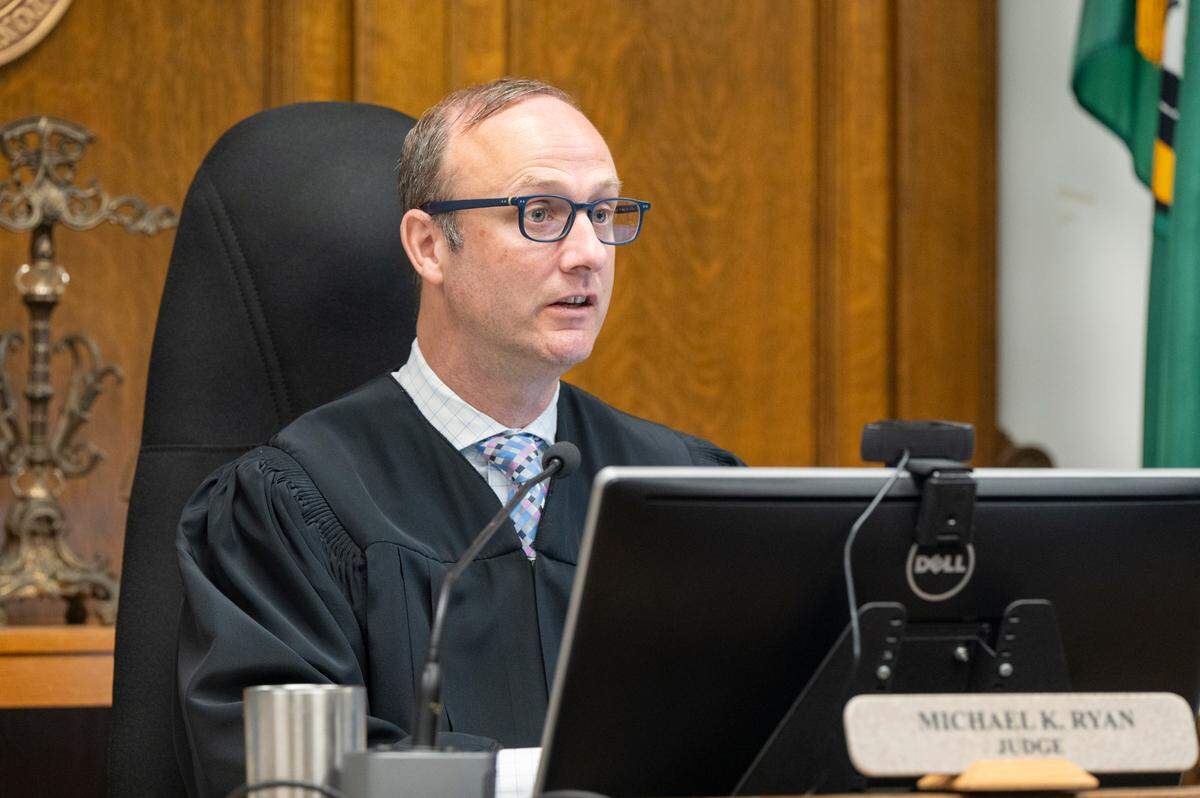
A King County judge has said that Pierce County Sheriff Keith Swank appears to have altered text messages he was asked to hand over to a public records officer in an effort to remove messages that could be perceived as offensive.
Superior Court Judge Michael Ryan wrote in a court order dated Oct. 22 that altering a public record “could be problematic” and referred to a state law that states willfully or unlawfully altering such records is a felony. Court documents don’t say what could have been offensive about the allegedly doctored text messages.
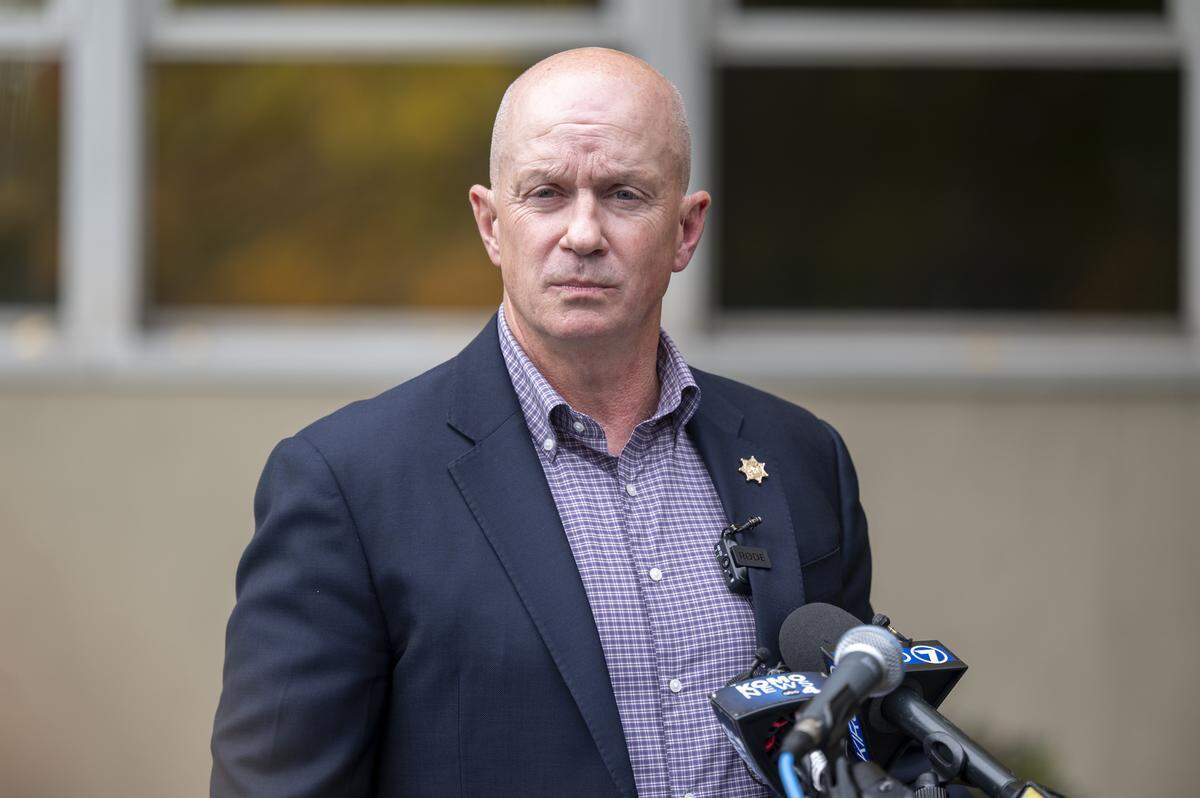
In a phone call Friday afternoon, Swank told The News Tribune he had not seen Ryan’s court order but that he had turned over all of his communications to a public records officer.
“Whenever I got the order from the public records to release everything, I, to the best of my ability, copied with a screenshot of everything — I’m not an expert, and they don’t have anybody to give me a hand with this — screenshot of everything and sent it forward,” Swank said.
Ryan is overseeing a lawsuit Pierce County Prosecutor Mary Robnett brought against the private attorney attempting to represent Swank and his interests, Joan Mell. Robnett has alleged that Mell is invading her office by purporting to represent Swank in his official capacity and in June obtained a preliminary injunction barring her from doing so.
Mell has argued that state law does not make the county prosecutor the sole legal representative of all county officials and that speaking on behalf of Swank and representing his interests is protected by the First Amendment and the Washington Constitution. A hearing on whether Robnett’s lawsuit should be dismissed under a state law designed to protect free speech from being threatened by lawsuits is scheduled for Oct. 31.
Earlier this month, Mell was subpoenaed to submit all of her communications with Swank to the court, and she turned over 214 pages of emails and 15 pages of text messages. Ryan reviewed the messages to determine if any were afforded confidentiality protections such as attorney-client privilege.
Mell claimed that she believed all the emails and texts were privileged. Ryan’s Oct. 22 order from in-camera review found that almost none of the documents were covered by the privileges Mell had invoked.
In sometimes lengthy footnotes, Ryan also identified a number of problems.
Most notable was the revelation that Swank might have altered a public record. The finding comes from an email Swank sent a public records officer for the Sheriff’s Office on Sept. 15, in which Swank asserted: “ALL my records with Ms. Mell are either privileged or personal and are not subject to disclosure.” Attached were numerous texts between Swank and Mell.
“It is noteworthy that Sheriff Swank did not provide all his text messages with Ms. Mell to the Public Records Officer,” Ryan wrote in a footnote.
Comparing texts provided by Swank with texts provided by Mell, Ryan said, it appeared that Swank altered his text messages to take out texts that some might perceive to be offensive.
Swank said Friday that if something was missing he would go back through it again and resend his communications with Mell.
“I didn’t omit anything on purpose, and I don’t know of anything that was omitted, and I don’t know which phone records or text messages Joan Mell sent in,” Swank said. “I have no communication with her about any of this stuff.”
Reached by phone, Mell was incensed that Ryan had used his order to comment on whether Swank had provided all of his text messages to a public records officer. She said Ryan had lost his mind.
“In-camera review is supposed to be agnostic — it’s like, disclose it or don’t, period.” Mell said. “He is so in violation of sheriff’s clients rights.”
Mell said being forced to turn over communications with a client was wrong for “so many reasons.” She said people in the community should be “terrified.”
“It goes against everything I believe to be correct about being an attorney and protecting the clients and counseling and guiding them and giving them a place safe and secure to vet their concerns and come up with reasonable options for addressing total abuse of rights and bullying and intimidation,” Mell said.
Production of the emails and texts comes after Mell tried and failed to obtain an emergency stay from the Washington State Supreme Court that would have put a hold on a previous order permitting Robnett to subpoena Mell to obtain the communications.
Mell wanted the pause to remain in effect until the state Supreme Court made a ruling on her petition asking it to prevent Ryan from forcing her to disclose client communications. Denying the emergency stay Oct. 10, Supreme Court Commissioner Michael E. Johnson called Mell’s petition “deeply flawed.”
Ryan has said whether Mell has the authority to form an attorney-client relationship with Swank is at the heart of Robnett’s lawsuit. In his Oct. 22 order, he found that Swank and Mell had formed such a relationship on May 21, but he said nothing in the order should be construed as a finding on whether that relationship was appropriate.
“That is the essence of the case,” Ryan wrote.
Mell asked The News Tribune to listen to an expert who she said could explain how all of her communications with Swank were privileged and that Swank’s rights had been violated.
The expert is Leland Ripley, a longtime Washington lawyer who was chief disciplinary counsel for the Washington State Bar Association in the 1980s and ‘90s. He said Mell did have an attorney-client relationship with Swank, and all that’s required for it to exist is for a non-lawyer to contact a lawyer seeking information about legal things.
“The Prosecutor’s Office seems to approach this whole issue with the idea that, well, he always has to have the prosecuting attorney giving him legal advice, and he can’t from anybody else,” Ripley said. “I don’t know of any authority that would support that argument.”
Asked about Ryan’s summation of the case being about whether Mell had the authority to form an attorney-client relationship with Swank, Ripley said he didn’t know of anything that deprives any citizen, including the sheriff, from obtaining private legal advice.
Ripley said there’s a clear conflict because Swank doesn’t trust Robnett and doesn’t think he’s getting valid advice. And trust, Ripley said, is the core of the attorney-client relationship.
As for Ryan’s analysis of why each of Mell’s emails and texts with Swank aren’t privileged, Ripley said he hadn’t seen the communications, so he couldn’t comment. He did say that based on the order, Ryan wasn’t using the most current Rules of Professional Conduct. Those rules describe when a lawyer shall not reveal information related to their representation of a client.
This story was originally published October 25, 2025 at 5:00 AM.