Will there be enough food? Local food banks brace for worst as shutdown drags on
AI-generated summary reviewed by our newsroom.
- SNAP benefits expire Nov. 1, 2025, driving sharp surge at Pierce County food banks
- Emergency Food Network reports 16M+ pounds distributed and demand rising
- Food banks face donation shortfalls as federal programs and donations shrink
Lines to food pantries in Tacoma and Pierce County were snaking around the block Wednesday as food banks brace for a sharp influx of visitors as benefits from the national Supplemental Nutrition Assistance Program are expected to expire on Saturday, Nov. 1.
Nearly 118,000 residents in Pierce County and close to 930,000 in the state receive benefits from the Basic Food program, Washington state’s name for the combination of federally-funded Supplemental Nutrition Assistance Program (SNAP) and the state-funded Food Assistance Program for Legal Immigrants (FAP). About 42 million Americans are on SNAP. The cuts come as the federal government enters day 30 of a nearly unprecedented government shutdown over partisan budget conflicts.
On Tuesday, Washington state joined more than two dozen other states to sue the Trump administration for “illegally” halting SNAP aid, despite having $6 billion in contingency funding Trump could tap into to keep benefits rolling through the shutdown. Gov. Bob Ferguson announced on Tuesday he would direct nearly $2.2 million each week to bolster Washington food banks starting Nov. 3 if federal funding remains suspended.
The cuts to SNAP couldn’t come at a worse time, local food bank staff say.
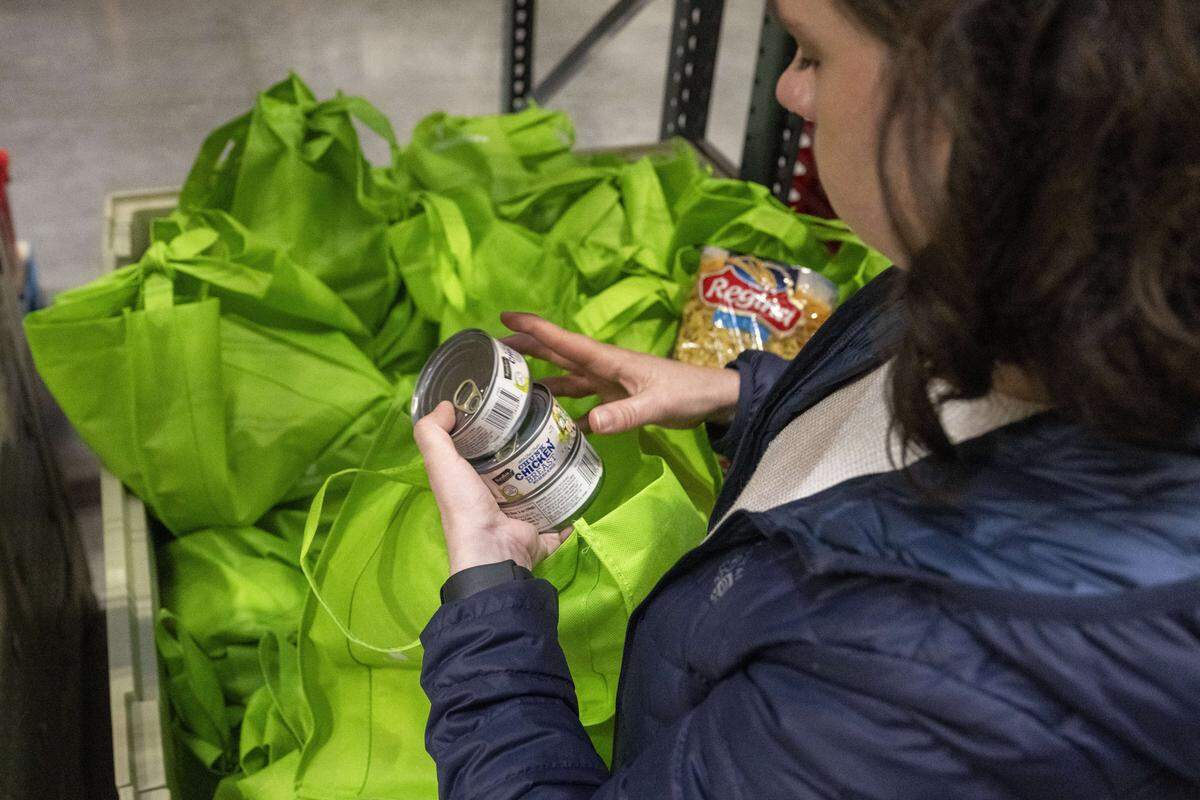
Pierce County has seen a record-breaking increase in visitors to food banks, a rise that has grown since the onslaught of the COVID-19 pandemic. Donations have not kept up with demand, and food banks this week were scrambling to figure out how they will respond when SNAP recipients are expected to join the tens of thousands of others regularly going hungry.
Find a map of food banks in Pierce County in addition to other resources online.
‘We had no idea it could get worse’
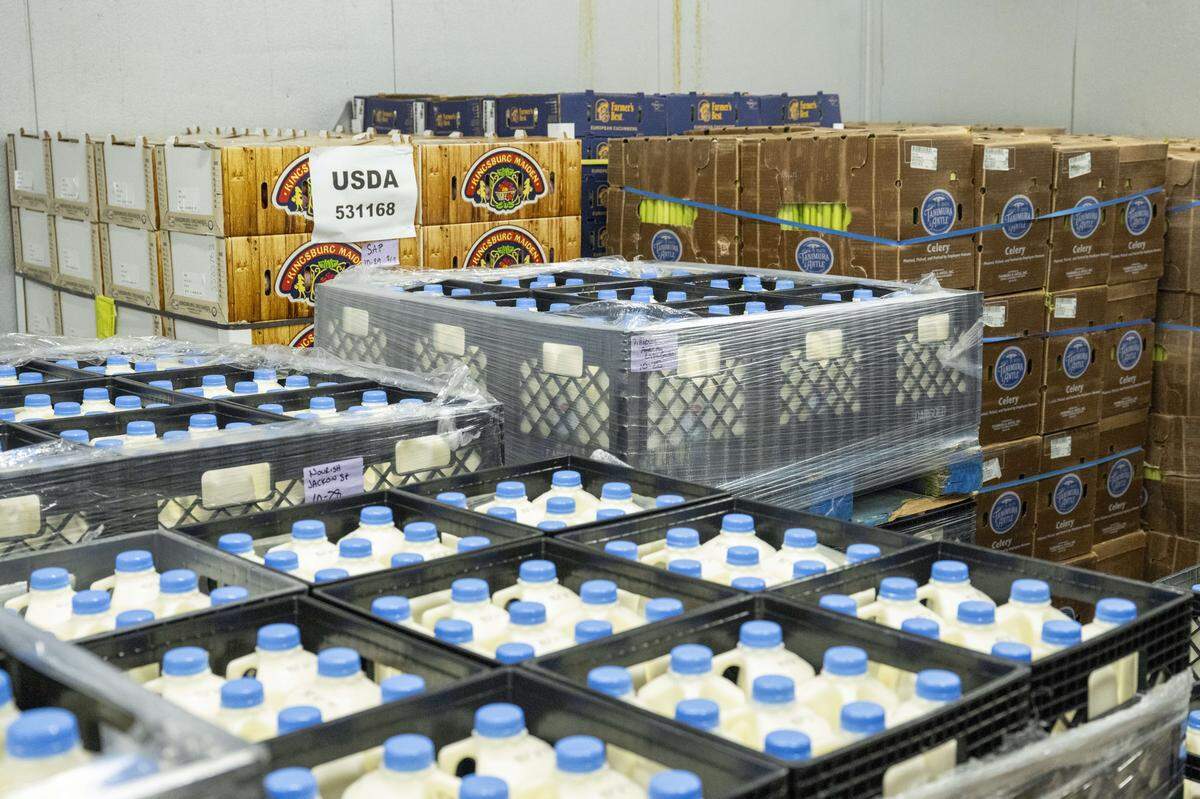
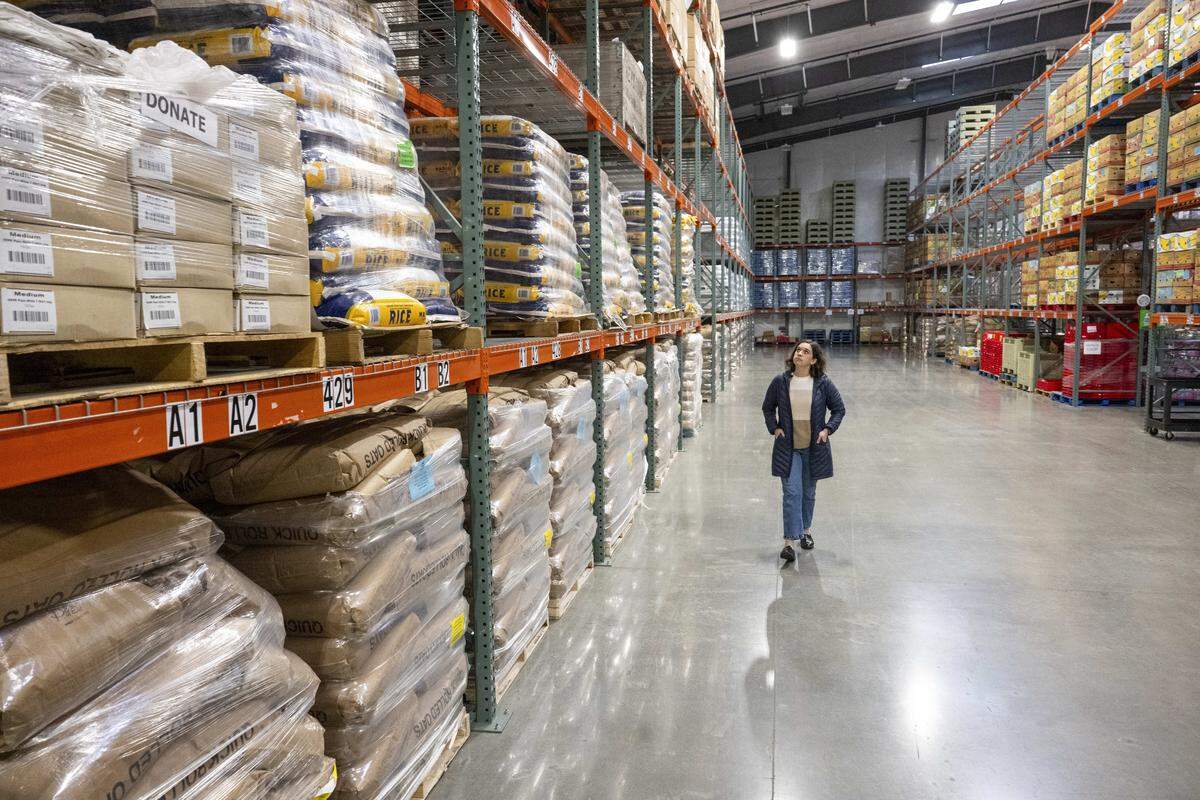
During a tour of it storage warehouses on Tuesday, Emergency Food Network staff said they have distributed more than 16 million pounds of food to Pierce County residents so far this year, 3 million pounds more than projected.
The Emergency Food Network is the largest nonprofit food distributor in Pierce County and partners with more than 75 local food pantries and distribution centers from the Key Peninsula to Roy to Graham. In 2023 the nonprofit sounded the alarm to the Pierce County Council, saying poverty and hunger had skyrocketed following the COVID-19 pandemic. Two years later, the situation is even worse, officials with the nonprofit said.
“We are doing about 400% above what we anticipated that we would have to do in food distribution for this year,” said deputy director Lianna Olds. “That is largely because we did not anticipate SNAP benefits being cut. We did not anticipate [the Women, Infants and Children program] being cut. We did not anticipate a federal shutdown. We did not anticipate a Big, Beautiful Budget Bill that resulted in us cutting multiple programs, including costing us 18 truckloads of food for the year.”
Since the COVID-19 pandemic, the number of people needing food keeps growing year after year, despite a drop in food donations, Olds said. In 2023, Olds said, nonprofits like the Emergency Food Network dealt with the end of COVID relief funding and American Rescue Plan Act dollars (part of a $1.9 trillion stimulus package to help local governments and agencies recover from the pandemic).
“We had no idea knowing that it could get worse,” Olds said. “Beyond just ending those programs, [the federal government] has also gone in and other [Washington State Department of Agriculture] and [United States Food and Nutrition Service] programs have closed. That is what we’re trying to cope with at this point.”
Olds said SNAP is a “cornerstone” of the emergency food system. Organizations like the Emergency Food Network were “supposed to be an accessory,” she said.
“There’s no food pantry in the country that is set up to serve our community without SNAP,” said Emergency Food Network’s director of development Claire Aijian. “SNAP is what keeps people from going to the food pantries. So without SNAP, more people are going to go to a system that was already serving more people than it ever had before.”
Over the past couple of months, Emergency Food Network has tried to gather as many donations as possible in anticipation of SNAP benefits ending.
“What’s going to happen is we’re going to take whatever resources that we possibly can gather, and we’re going to push them out as quickly as we possibly can, and it’s not going to be enough,” Olds said. “And so there are going to be people who don’t get, or get less, for very long amounts of time, until there’s nothing available to give.”
As inflation eats paychecks, donations dry up
More Pierce County residents are seeing their rent, grocery and utility costs increase and their wages stagnate. That means more people are having to make the difficult choice to forgo food to pay for things like medicine, rent and car payments, Olds said. Many people are one missed paycheck or medical bill away from poverty, Aijian said.
The Emergency Food Network primarily helps families (who often have at least one working parent), the elderly, federal workers and unhoused people, but they have been seeing more single people, military members, young people and others who have never dealt with food insecurity before, Olds said.
“It’s not a bunch of grifters. It’s people who are trying their best to get out of a bad situation that they’re in by no fault of their own. Or they can’t afford to pay for that car repair or buy that critical medicine or pay the rent and eat or feed [their] kids,” said Sue Potter, the CEO of Nourish Pierce County, which operates six food banks and 17 mobile food-bank sites. “We see active-duty military. We see veterans. We see people who work two jobs. We see teachers and people who work for schools. We see people who work for healthcare organizations, the housekeeping people at hotels, catering, restaurants, a lot of service industry people.”
One in four Washington residents have to use a food bank, Olds said.
“There is nothing to be ashamed of because the reality is somebody that you know has probably had to use the food bank this year, or they’re going to use the food bank before the end of the year,” she said. “The shame isn’t in having to go use the food bank. The shame is living in a society that requires that we have to visit a food bank in order to feed our families.”
The Emergency Food Network, like many other food banks, gets much of its produce and food donations from larger grocery stores and businesses that donate food that is close to its sell-by date. Those companies are now using tools like Artificial Intelligence to cut back on excess purchases, which means food banks are seeing fewer donations despite increased need, Olds said. Fewer people are volunteering and donating food than in 2020, Aijian added.
Potter said after the USDA froze or cancelled about $500 million from its Emergency Food Assistance Program (TEFAP) in March, which has meant food banks like Nourish have been short on donated food for over a year now. Nourish relied on the TEFAP program to distribute food like meat, whole grains, healthy food and canned goods families plan their meals around, “things that would cost the food banks a lot of money if they had to purchase them on their own,” she said.
Another big hit for local food banks was cuts to the We Feed Washington pilot program through the Washington State Department of Agriculture, which partnered with local farmers and food producers to distribute food to food banks and schools, said Dawn Whitman, director of the St. Leo Food Connection in Tacoma.
“We’re really trying to figure out how to source more food when we don’t necessarily have the money to always purchase it, and that’s a real challenge. I’ve never seen us with so little food,” said Potter, noting that food prices also have gone up. “I don’t want to get political on this, but food is a universal need for all living and breathing animals. So let’s put aside all the differences and just know that nobody can be productive, survive, be healthy, without nutritional food.”
How to help
The Emergency Food Network has a list of food banks and resources on its website, https://www.efoodnet.org/. Sites are always looking for volunteers and donations.
As reported by The News Tribune, the donations food banks need the most are meals that are healthy, easy-to-open and to prepare, in addition to baby formula and hygiene products.
Many food bank staff emphasized that without the help of the federal government, neighbors will have to rely on each other.
“[People] can host food drives, [collect] cash donations. I highly encourage them to look at the food pantries and food banks near them. Those are their direct neighbors who need that food right now,” Olds said. “Yes, they can always contact us. We’re always happy to have people join us, but everybody needs to look around in their immediate vicinity and get involved in helping.”
This story was originally published October 30, 2025 at 5:30 AM.