Science and soccer balls: UPS professor studies the physics of the World Cup
Every four years, soccer fans around the world glue their eyes to LED screens as they watch their favorite teams compete against each other for the chance to win the coveted FIFA World Cup trophy.
It’s an enormous event. Over 1 billion people tuned in to the final between France and Argentina in 2022, according to FIFA.
But out of all the factors that go into putting on the most-watched sports event in the world, the consistency that comes from a soccer ball’s aerodynamic design is one that might not cross the average viewer’s mind.
But it does for University of Puget Sound Visiting Physics Professor John Eric Goff.
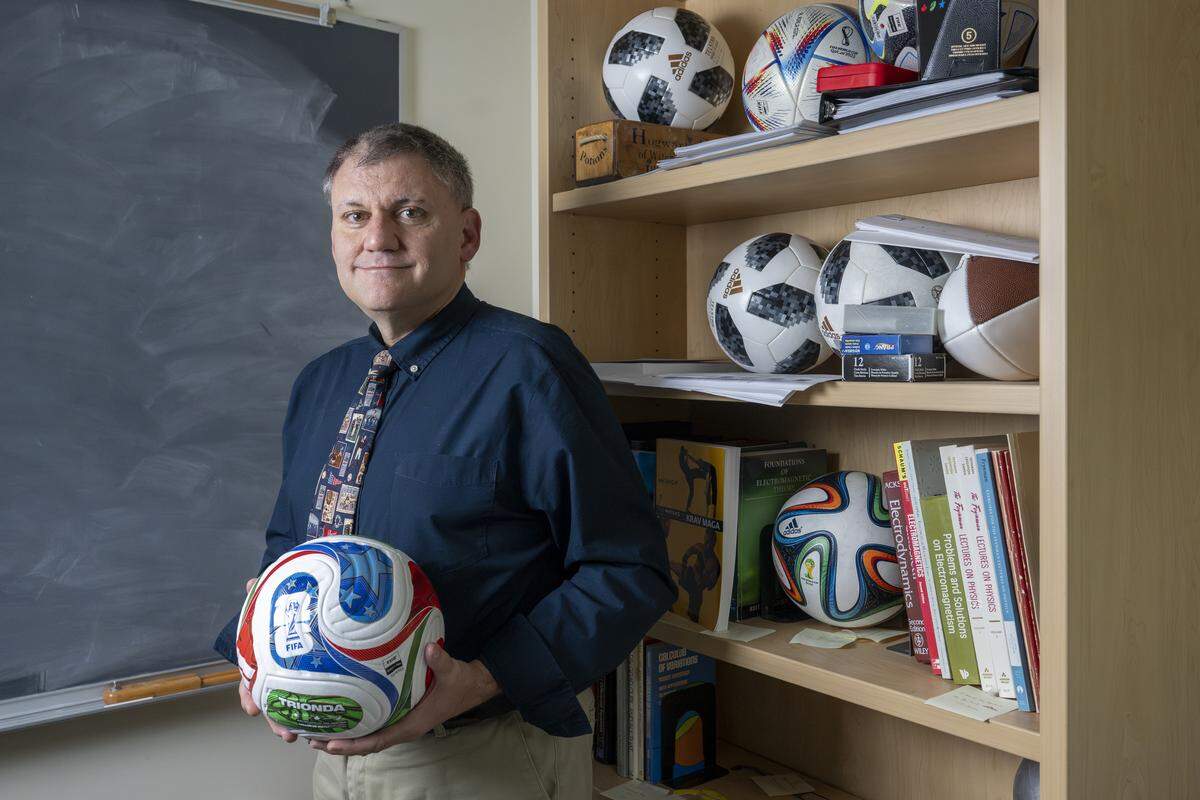
Since 2010, Goff and his research group in Japan have performed independent tests using physics to ensure the new ball designs don’t hinder players’ performance.
Adidas designs a new soccer ball for every cup. It’s come a long way from the stereotypical 32-panel black and white sphere. Every four years designers combine the latest technology with the host country’s symbolism to produce a unique, optimized ball. But sometimes, the innovations lead to faults.
Goff’s research on the World Cup began after players noticed inconsistencies with the movement of the Jabulani ball designed for the 2010 World Cup in South Africa. After players kicked the eight-paneled ball, it would appear to move through the air at a uniform speed then slow down.
This proved to be a frustrating quirk for the players. For something as renowned as the FIFA World Cup, the stakes are too high to ignore even the smallest idiosyncrasies in function, Goff said.
“It’s the most important piece of equipment. It has to fly,” he said. “It cannot behave in ways that the players aren’t used to.”
That’s where physics comes in. Goff and his research group studied the ball using wind tunnel testing, a process that involves placing the ball in a simulated tunnel and observing how it interacts with aerodynamic forces.
They found the issue — it was too smooth.
“All of the unique patterns on the ball, the grooves, the surface, texturing, all of this plays a role in the aerodynamics, how much air drag there is, or if it’s spinning, how easy it is to curve,” Goff said.
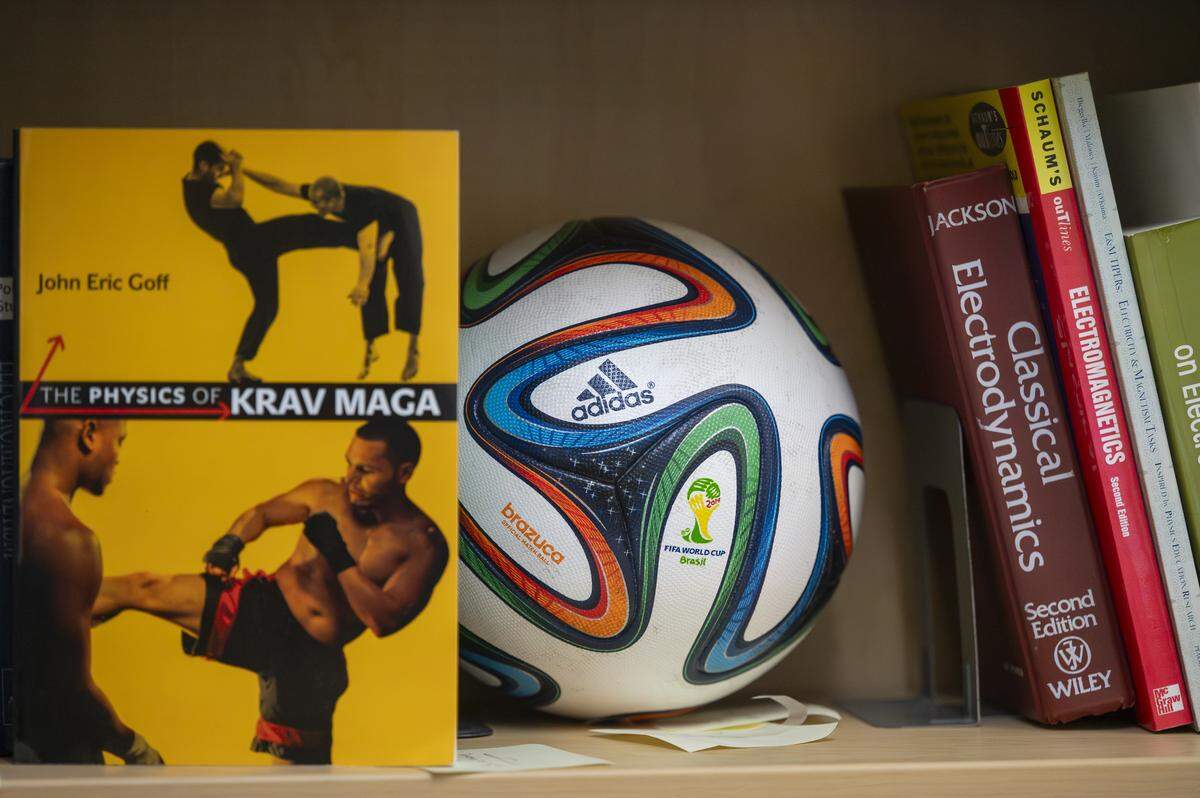
They sent their research to Adidas, and for the following 2014 FIFA World Cup in Brazil, the designers updated the new Brazuca ball with longer seams and a rougher surface, resulting in more predictable plays.
Goff and his team have researched each FIFA World Cup ball since, ensuring that the modern designs don’t bring unforeseen challenges.
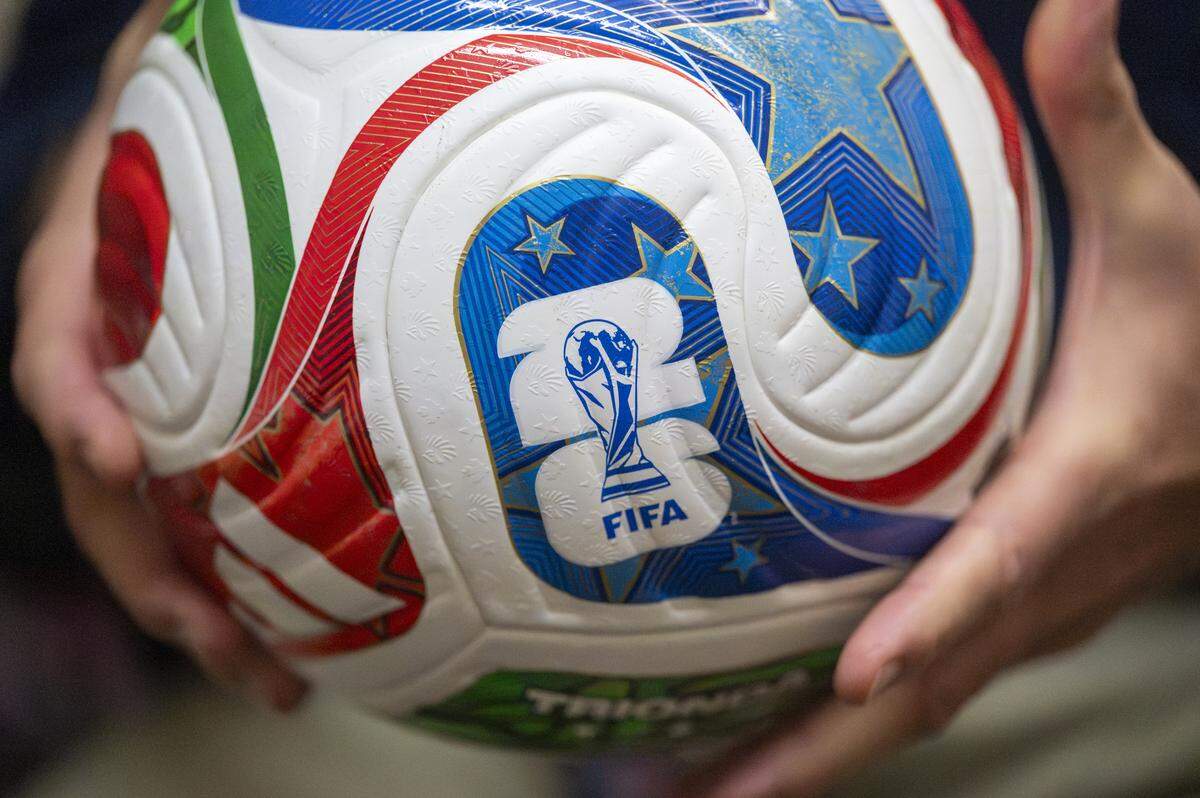
The 2026 ball design, known as the Trionda, reflects its arrival at a pivotal time in soccer history.
FIFA World Cup 26 will be the first to occur in multiple countries instead of one, with matches taking place across Canada, the United States and Mexico. The Trionda features a red maple leaf, a blue star and green eagle to symbolize their respective legacies.
To roughen the edges and give the ball a better grip, the three sections representing the countries are surrounded by winding ridges and covered in small textural icons.
But it’s not just what’s on the outside that matters. The inside of the ball contains a small measuring device that can sense whenever it’s kicked, dribbled or headbutted by the player within two milliseconds. Using that data, along with AI, Video Assistant Referees are able to make calls during the games with faster speed and greater accuracy.
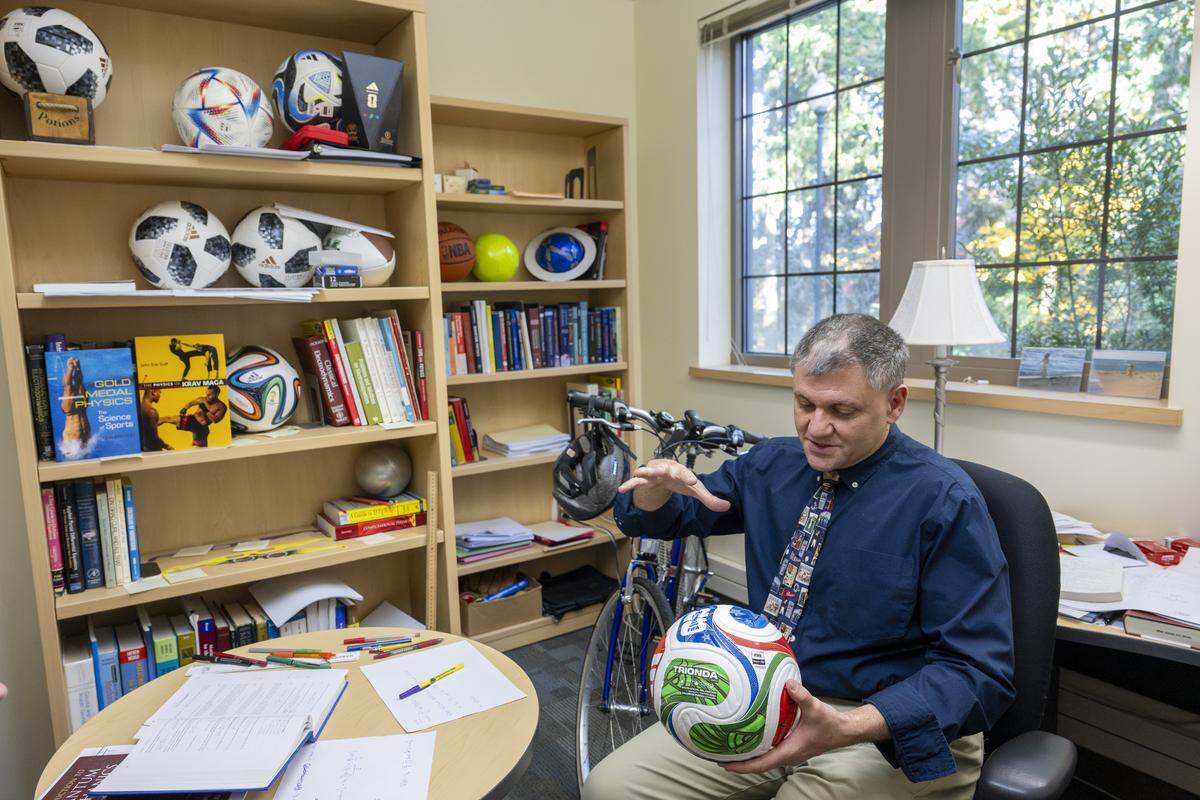
Goff doesn’t just research the physics of soccer. He “dabbles in all the sports,” having previously researched the physics of Tour de France riders, baseball fields and even the self-defense practice Krav Maga.
Physics and sports intersect with each other often, and having a baseline understanding of the science is beneficial for any sports player, Goff said.
“The laws of physics constrain everything we do, whether we’re doing sports or not,” he said. “So it’s not saying that you need to have the ability to solve all the equations and do all this kind of computational work, but having a qualitative understanding, kind of an intuitive physics, is really important to know.”