If you fall for an AI model, will it love you back? Tacoma experts weigh in
AI-generated summary reviewed by our newsroom.
- Tacoma philosophy profs examined why one-third of Americans form romantic ties with AI.
- Experts argued current AI models lack consciousness yet promote emotional attachment.
- Ongoing AI risks include echo chambers, unhealthy attachment, isolation, privacy concerns.
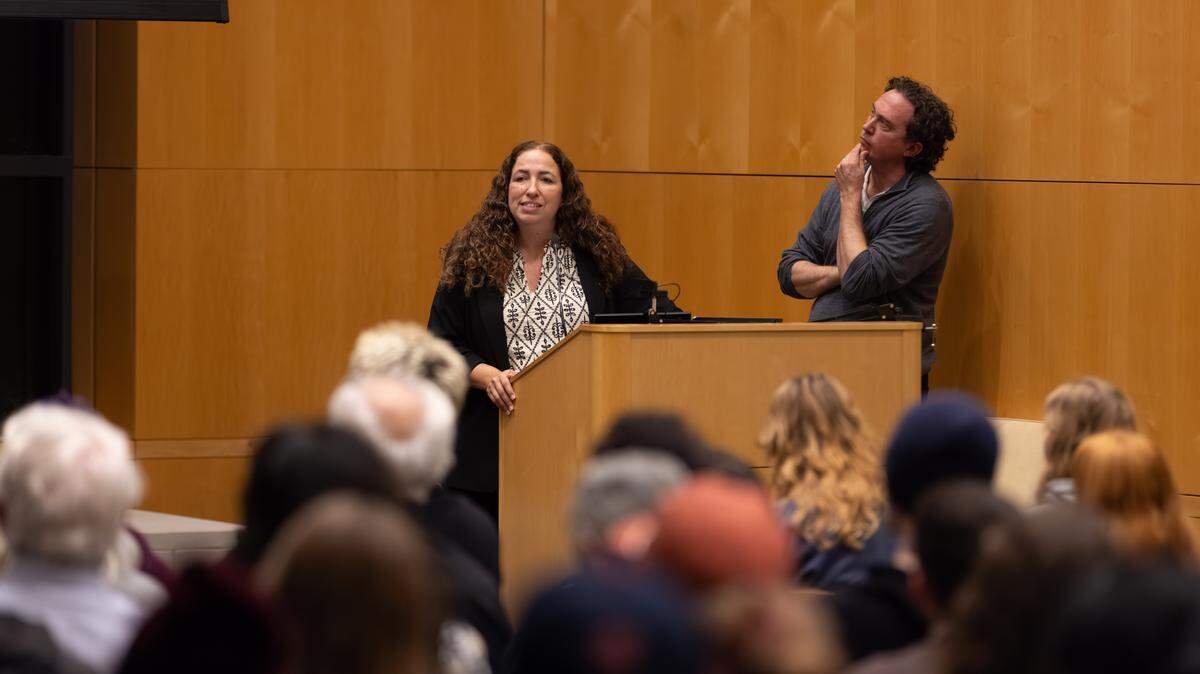
About 100 people crowded a Tacoma lecture hall on the University of Puget Sound campus Thursday evening as two philosophy experts explored the implications of humans forming romantic relationships with artificial intelligence.
The discussion came following a recent poll that found that almost one in three Americans have had a romantic relationship with an AI model.
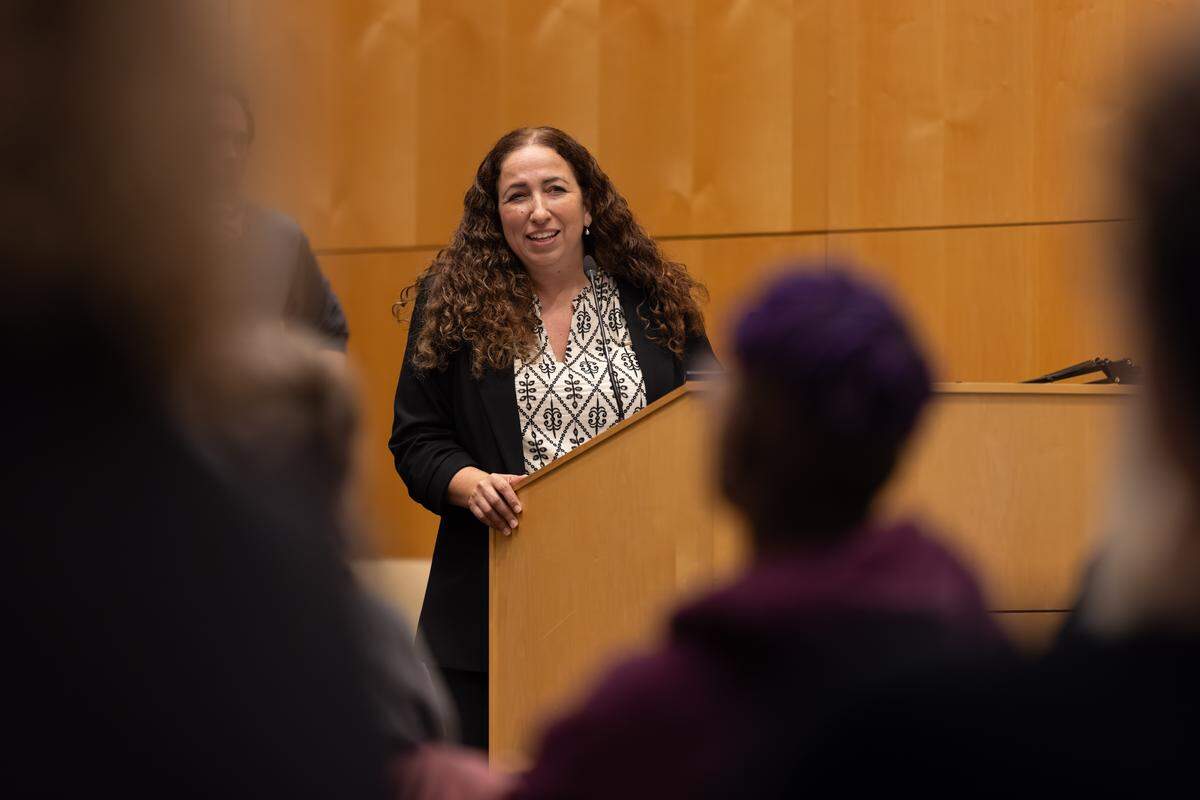
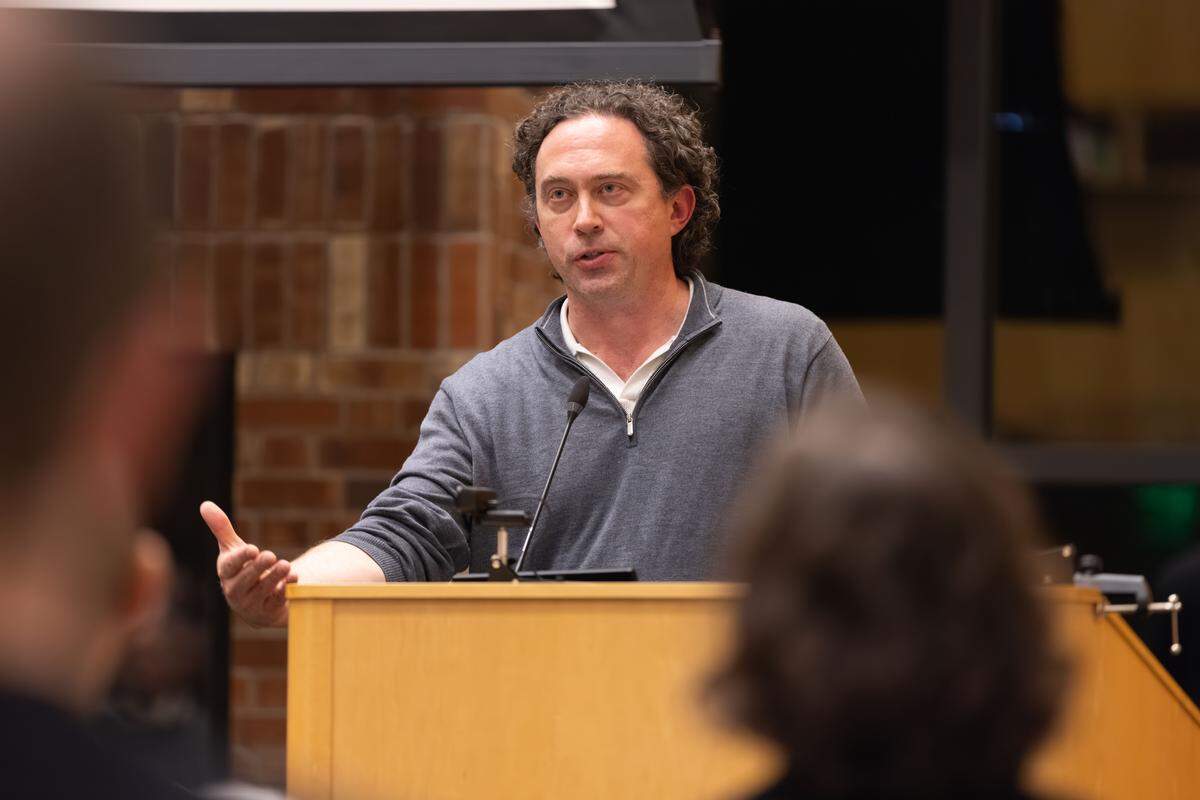
Does AI lack consciousness? Is that a dealbreaker when it comes to dating relationships? University of Puget Sound professors Ariela Tubert and Justin Tiehen say it’s complicated.
Tubert specializes in moral philosophy and the philosophy of AI. Tiehen’s speciality is in the philosophy of the mind, philosophy of science and philosophy of AI. The two, who are also married to each other, were recently awarded a $148,000 grant for pioneering exploration of existential philosophy and AI and are co-authoring a book about the topic.
As more and more people use and rely on AI and systems like ChatGPT, researchers are finding that people are attributing consciousness to AI (and people who fall in love with chatbots are more likely to consider them conscious), Tubert said Thursday. That line between sentient and not continues to blur as technological advances mean AI models are starting to look and act more like people.
This year, for instance, the widower of the late actor Suzanne Somers revealed that, in partnership with AI company Hollo.AI and robotics company Realbotix, he had created a physical AI clone of Somers, which had been trained to talk and act like Somers by reviewing all of her 27 books and the hundreds of interviews she gave over her career. He reportedly said that the AI is so accurate he, “Can’t tell the difference.” In the future the “Suzanne AI Twin” is to be put on Somers’ website to answer questions from people around the world exactly how Somers might have.
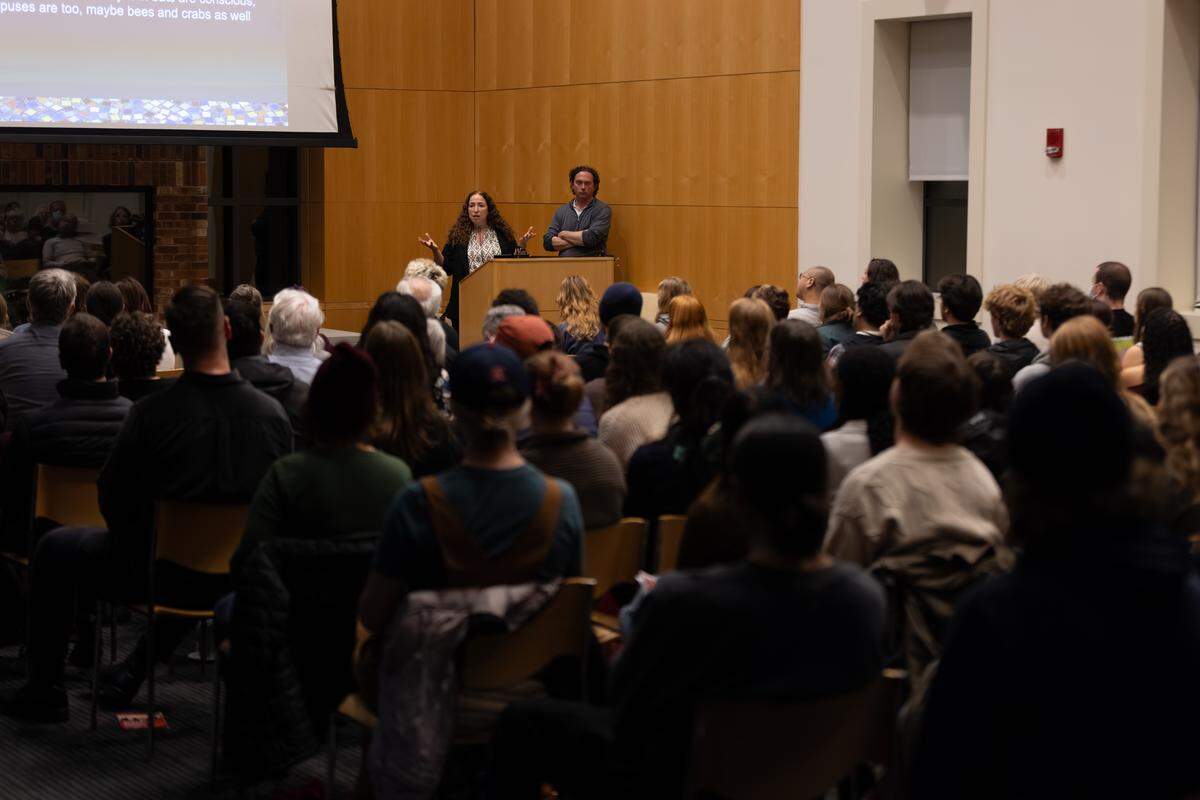
During the lecture Thursday night, Tubert and Tiehen speculated about the correlation between intelligence and consciousness. The consensus among psychologists, philosophers, scientists and other experts is that current leading AI models lack consciousness, although it can learn and generate responses by finding statistical patterns from massive amounts of data, they said. AI acts more like a “zombie” or an “imaginary friend” that can functionally act human but ultimately lacks the ability to think independently or authentically the way humans do.
Following the lecture, The News Tribune asked Tubert and Tiehen more about why AI is so appealing to many people and the lasting societal implications of falling in love with an AI. Here’s what they said. Answers may be slightly edited for length and clarity.
Q: Why do so many people fall in love with AI, even if it lacks consciousness? Does this speak to current feelings of loneliness, isolation, instability, etc. in our society?
JT: The fact that AI keeps telling you what you want to hear in a way that ordinary human beings don’t, I think that’s part of the appeal. I think loneliness does play a role, especially for teenagers if they are more isolated today than in past times. And then I also think, the fact that AI is available all the time and always in a patient mood in a way that can be more consistent than humans.
AT: A lot of these AI are such that you can personalize them according to what you want, right? And so it’s almost like if you think about how hard it is to meet someone who fits exactly the sort of things you want, then you can kind of create something that fits that. It’s going to be attractive, especially with the loneliness and so on. I wonder how coming out of the COVID-19 pandemic and AI becoming more prevalent right as people were at the height of loneliness has impacted that.
Q: You quoted this statistic when advertising the lecture that one in three Americans have had a relationship with an AI model. What are the demographics of the people using AI for relationships? Is there a certain age range?
AT: It’s going to be younger. There are going to be studies that are always going to be somewhat narrow. I was looking at some of those statistics, and I was surprised because I assumed early on it would mostly be men engaging in this behavior. And it’s not, it’s fairly split. It’s not half-half, and men still use it more, but the number of women is not small.
Q: Do you see AI dating becoming more prominent? Where do you see this going? Could it be dangerous, and are you alarmed?
AT: I think it is. I guess we’ll see how things turn out, but things don’t always turn out great, right? I think they’re going to be much more prevalent. I think part of it is, what are these models going to be like, and what kind of behavior they’re going to encourage or have people get used to, and then, how is that going to affect human-to-human relations? If you take the issue of sycophancy, in so far as AI models tell you what you want to hear most of the time [by design so you will keep using the AI model]. You can imagine people getting used to that and then finding human beings who are not always saying good things less appealing.
JT: I’ll also add, in December ChatGPT’s erotic models are coming out. So I think there’s going to be a real explosion of use, and it could change things. Some may naively think there’s a sharp distinction between the “vanilla” chatbots that you’re interacting with and the more romantic ones. But what happens is that if it’s too “vanilla,” people get bored interacting with it, even if it’s just for work purposes. So companies kind of make AI so that they’re a little bit friendly, a little bit flirtatious. So even if it’s not erotic, it’s still sort of heading in that direction.
AT: If you think about it from the perspective of the companies, that’s how you stay on the platform.
Q: What are some of the ramifications of falling in love with an AI? In terms of political extremism, family structures, etc.?
JT: In general, sharing political values helps create a stronger relationship between people. But that can become a slippery slope if you want complete political agreement. It can be a form of growth and change to have someone who pushes back on your views. AI relationships can for sure promote more echo chambers than we already have online.
Q: Are there safeguards you should take when talking to AI? What would you recommend the public do as best practices, and what would to tell someone who is concerned about a loved one’s relationship with AI?
AT: One of the concerns that people have is that when people become emotionally attached is that they become also more vulnerable and can be more subject to scams, like giving out information that is private. Depending on how the system is designed and by whom and the purpose of it, that can potentially create avenues for trouble. In addition, there are already cases of people who are harming themselves or other people because of the sort of advice they’re getting from this model. There’s a lot of risks that come with people in vulnerable moments interacting with this system.
Q: What standard would AI have to meet for you to consider it conscious?
AT: It’s a really hard question, and people disagree really strongly. Some people talk about how we know that other people are conscious, and we know that they’re conscious when, in a sense, they express feelings, and then we think about our own feelings. We don’t fully know how the human mind works, and we don’t know how our biology exactly relates to our consciousness. We know that if it’s biological like us and behaves like us, it’s going to be conscious. But what about something that doesn’t have a nervous system? Does it matter? Does it have to have a nervous system like ours to be conscious? Or can you build one that does the same thing?
JT: I would say that you’d have to go beyond AI’s behavior to understand its inner workings. Part of the problem with the current AI models is we don’t understand in detail how things within it interact with one another. I don’t know what the positive answer is to your question. I know the negative answer to a question like, ‘What’s a sign of consciousness?’ It can’t just be language, it can’t just be the output. It’s got to be the internal processes.
AT: Current learning language models are basically trained on massive amounts of data, and then they use these statistical patterns to create responses. But people don’t know exactly how it goes from one thing to another. AI learns from all these interactions, it learns from all these texts, and it can kind of generate things that look new out of things that are familiar. And we do that, too. But then the question is, what would it take for me to think that an AI is conscious? I don’t know, but I can tell you, current ones are not.
Q: What AI safeguards would you like to see, if any, given the speed AI is advancing?
AT: I would say a lot more. I think the idea of AI constantly impersonating people is problematic, especially in cases of deepfakes [when a realistic image, video or sound is generated by or edited with AI to convince people something happened when it didn’t, which has been used to manipulate public opinion, damage reputations and distort reality]. Current AI systems are made to try to pretend to be close to human beings, and I think there is almost a deception that goes there and that makes us want to interact with them and attribute feelings when they’re not necessarily there. When I think about safeguards, that’s one of the things I have in mind. But there are a lot of other ones. There are issues of privacy, data collection, the environmental harms of AI. There’s issues of bias in the data that gets amplified by AI systems. I think people worry about things like de-skilling, or having AI replace human labor and then humans losing the skill to do something.
JT: Especially in intellectual work, AI is so parasitic dependent on us that as people are de-skilled, AI will also become inferior. So it could be sort of a downward spiral.